Link Copied!
J. C. D. Clark Quotes (1951-)
Actor
About J. C. D. Clark
Jonathan Charles Douglas Clark (born 28 February 1951) is a British historian of both British and American history. He was an undergraduate at Downing College, Cambridge. Having previously held posts at Peterhouse, Cambridge and All Souls College, Oxford into 1996, he has since held the Joyce C. and Elizabeth Ann Hall Distinguished Professorship of British History at the University of Kansas.
Best J. C. D. Clark Quotes
Shortest
Earliest
Explore our curated collection of the most famous and impactful J. C. D. Clark quotes.
“The rebellions of the 1640s delayed the rise of the English monarchy, but failed to stop it.”

“The House of Commons under the Georges was far more susceptible to manipulation than it had ever been under Charles I, or even Charles II and James II.”
“The model of the atomised, acquisitive individual, dealing with others only through secularised market relations regulated by self-interest, is disastrously inadequate as an account of how real men behaved in real societies, as real historians ultimately discerned.”
“In the 19th and 20th centuries, continental Europe was swept by grandiose ideologies and, after their exhaustion, is hurrying towards anti-nationalist federalism. England, by contrast, was largely unmoved by these ideologies, and still retains a stubborn patriotism.”
“County studies have succeeded in proving that there was no self-sufficient impetus to rebellion (let alone revolution) within the English counties. The English Civil War, we can then see, was the result of a "domino effect" produced by successful rebellions in Scotland and Ireland.”

“Indignation is a powerful weapon. With it, the English empiricists saw off the continental system-builders: Comte, Hegel, Marx, Croce, Treitschke, Braudel. The best English historians, by contrast, have been superbly negative and slashingly reductionist, ripping down airy continental nonsense with sharp, scholarly hooks.”
“This perception of a hierarchical order, which was an orthodoxy in England into the early nineteenth century, suddenly seemed far more persuasive once the idea had been abandoned that eighteenth-century England was a peculiarly modern society by European standards, and that it was so not least as a result of the bourgeois revolution of the 1640s.”

“It seemed, then, that to ask the question, "why was there a revolution in the 1640s?" was first to reify the notion, then to beg the question: we had been drawn to explain not so much what happened, as the reification itself. The idea of the Civil War as a revolution was breaking down.”
“The joys and despairs not of romance but of house ownership are the staples of English conversation... Investment potential alone does not explain the cult status that house ownership occupies in the imaginations of the English: it has much older and more emotional roots. Not only do the English wish to own rather than rent, they own with a peculiar relish, and take a special delight in bricks and mortar which no financial asset of equal value could ever give. "An Englishman's home is his castle." This resounding phrase still echoes in our society.”

“The love affair of the British with their national institutions is no limp romanticism but an appreciation of the way that institutions embody and perpetuate, as well as symbolise, a certain way of doing things. That is why a predilection for hereditary peers and against high inheritance taxes is an affirmation of family integrity. That is why an established Church is widely endorsed, even by other Christian denominations, as an official acknowledgement that law is more than technical convention. That is why the national history curriculum has become a potent symbol of society's right corporately to affirm a vision of itself.”
“The rebellion of 1688 was not a bid for a weak monarchy, but for a Protestant monarchy. Consequently, the legislative expressions of that attempt which followed had much to do with religion, but little to do with placing limitations on the monarchy's prerogative in other spheres. Discounting the libertarian rhetoric which 1688–9 generated on the part of a small but vocal minority, it is possible to see that the effective powers of the Crown continued to grow.”
“Francis Fukuyama, that emblematic American commentator of the 1980s, gave only the last and most optimistic version of this benign intellectual isolationism. His vision of the irresistible triumph of American liberal capitalism around the world was normally read by Americans as an assurance that their victory would be bloodless. Everyone would soon largely agree with them... The most perceptive alternative analysis was that of the American political scientist Samuel P. Huntington. His new model for international relations predicted a world divided into armed and antagonistic blocs on religious lines. Huntington's was the best argument, but it was Fukuyama who wrote the bestseller.”

“Far from seizing the initiative for the Commons, early-eighteenth-century Whigs (who comprised the majority of MPs) were more concerned that the chief agent of all initiatives in government, the Crown, should not be seized by the Stuart dynasty. The reinstatement of Jacobitism as a profoundly important issue was a major achievement of recent scholarship in the early-Hanoverian field.”
“In any period, as we now see, we have been asked to believe that the rich are always getting richer, the poor always getting poorer, the middle class always rising, the aristocracy always about to disintegrate. The old scenario no longer convinces: it fails to identify and date the real transformations which did occur. Revisionist historians of the ancien regime in England, 1660–1832, being aware that "class" emerged as a terminology only in the last decade or so of their period, and then only as a minority dialect, looked back with incredulity and amazement on the Old Guard in the early-Stuart period, labouring to explain the English Revolution in terms of class conflict, of rising or declining classes, or the aspirations of a bourgeoisie.”
“Despite its dubious ancestry, the word "revolution" by now has a Pavlovian effect on some historians: applied to any event, it leads at once to eager expectations of radical structural change, profound discontinuity, a sweeping away of the old order. We may indeed wonder whether England has ever experienced a revolution in the extensive terms of the social scientists' definitions in the 1640s, 1688 or 1714, or even under the later impact of "Industry". How much was destroyed in the Civil War? Apart from the large extent to which royalist peers and gentry retained their estates, local studies suggest the widespread and deeply rooted survival of Anglican religious loyalties and practices, even reinvigorated by the experience of persecution.”
“The monarchy is not the only target: from right to left, across a spectrum from the police via the church to the BBC, such bodies seem to be valued chiefly as targets. Yet institutions such as these are peculiarly important in the social fabric of unrevolutionised Britain just as they are peculiarly unimportant in societies such as America that have had the slate wiped clean by a great social upheaval... [N]o nation can exist without some modest pride in its institutions and its achievements, and Everyman as well as the Prince has an interest in being free to feel at one with what he coolly and neutrally observes. Political correctness does to our national culture what the architecture of brutalism did to our urban landscape. The Prince was right again.”
“To attempt to write the history of liberalism before the 1820s is thus, in point of method, akin to attempting to write the history of the eighteenth-century motor car. There were, of course, forms of transport which performed many of the functions which the motor car later performed, the sedan chair among them. Yet to explain the sedan chair as if it were an early version of the motor car, and by implication to condemn it for failing so lamentably to evolve into the motor car, is to turn a modern error of scholarly method into a failure of men in a past society.
To stretch explanatory categories so far that they lose their specific reference and become mere holdalls for our ahistorical assumptions about the eternal nature of human motivation is to condemn us merely to explore the inner landscape of the assumptions and to deny us any perception of a need to locate those assumptions in time.”
To stretch explanatory categories so far that they lose their specific reference and become mere holdalls for our ahistorical assumptions about the eternal nature of human motivation is to condemn us merely to explore the inner landscape of the assumptions and to deny us any perception of a need to locate those assumptions in time.”

“Like other opponents of patriotism, Price failed to understand it: his critique was, consequently, ineffective. The new secular religion of universal benevolence never took hold in George III's England, and England in consequence never experienced the opposite swing of the pendulum: that flood of anti-Napoleonic romantic nationalism that swept Europe in the 19th-century, with its glorification of the impersonal nation state or the metaphysical race. England persisted with a national consciousness far more akin to its traditional patriotism, focused on institutions such as the monarchy rather than on an abstract nationalism, and upheld by Anglican religion rather than by secular romanticism or racialist theorisings.”
“Like most things under threat today, our experience of it began with the Reformation. Medieval England was part of European Christendom: it never developed a unitary concept of sovereignty while the papacy effectively claimed jurisdiction over things that were God's. The break with Rome made the difference, and Henry VIII's Act in Restraint of Appeals contained the key phrase "the Realm of England is an empire"—that is, a jurisdiction from which there was no appeal... English lawyers responded to these events by devising a new attitude to the integrity of the state. Sovereignty was not a concept that had emerged in the Roman law tradition of the continent which continued for centuries to include a host of local and corporate privileges, immunities and independent jurisdictions. The English common law swept all these away and created a single, level playing field.”

“History uncovers the inter-relatendess of problems which practical men seek to isolate: recent crises should remind us how mutually dependent monarchy, church and Parliament still are if each is to survive. And their mutual dependence is a clue to their importance. Republicans disagree, for they see the crown as an anachronistic survival, left perched on top of a society already secular and republican to the core. As so often, this half truth is rather less than half true. Whatever the traumas of the 1640s or 1830s, they hardly ranked with 1776, 1789 or 1917: much survives, in the machinery of government (the Queen's peace, the Queen's ministers, unpoliticised armed forces), in manners (deferential more than egalitarian), values (altruistic more than radical-individualist), even speech (the Queen's English rather than cultural pluralism). Tony Benn is right to see England as essentially unrevolutionised; that indeed is his problem. England's differences from societies republican in their essence are still wide.”
“PCism...is about manipulating public doctrine for private ends. The form it takes depends on the nature of national values. In America, PCism derives from three unchallengeable ideals. The ideal of equality is used to promote the interests of women and racial minorities, often ending in very inegalitarian provisions such as quotas. Collective moral improvement is used selectively to deny people what will supposedly harm them, formerly alcohol, soon tobacco. The sanctity of the individual is interpreted to demand parity of esteem for unconventional lifestyles, especially homosexuality, and can be exploited in all sorts of ways through the new sexual harassment industry. In Britain, the pattern is different. None of these things have gained nearly as much ground as in the United States, but the same technique of making a sectional self-interest unchallengeable and using totalitarian methods to inhibit criticism is used in favour of regional cultures against metropolitan culture; used in our endlessly various class war by plebeians against patricians, and, especially, used in that strange crusade of denigration of our national institutions.”
“Strong leaders, even absolute monarchs, owe their strength to a natural social constituency rather than to an authoritarian personality. For Charles, it was the nexus of squire and parson that fuelled the uncompromising counter-revolution of populist Anglicanism. These were the men, like the Vicar of Bray, for whom Good King Charles's days were golden, at least in retrospect. At the time, they found him often reluctant to go as far as they wished in persecuting Catholics and Dissenters. Only later did Charles's reign assume the golden glow of nostalgia, as unhappy Tories under the first two Georges sought a stylish archetype which would highlight, by contrast, the Hanoverian boorishness. Then, Charles's rule came to seem a symbol of the triumph of indulgence, pleasure and tolerance over rigour, earnestness and bigotry. But at the time, it was a much more ambiguous affair.”
“It has been traditional in British historiography to trace industrial growth and technological innovation to the sturdy virtues of bourgeois individualism, and especially to the individualism of Protestant-democratic England... [T]he example of Japan in our time refutes the necessity of any such connection, for Japan has demonstrated the possible industrial dynamism of a highly deferential society, indeed a society which has only recently masked the values and practices of a divine-right monarchy. It is perhaps possible in the changed climate of the 1980s to re-emphasise the extent to which England's commercial and industrial achievement in the eighteenth and nineteenth centuries rested not only on success in war, averting revolution and eliminating French competition, but also on the virtues of loyalty, diligence, discipline, subordination and obedience in the work-place, whether factory, mine or office (indeed the British economy was eventually overtaken by others which practised these virtues to a higher degree). But such practices had already been elevated to the status of social ideals within the Anglican-aristocratic nexus; and it was the military elite, not the nation of shopkeepers, which won the wars. The values of nineteenth-century industrial society owed far more to the values of the ancien regime than the Victorians were prepared to admit.”

“The English had a well-developed historiography that traced the deeds and achievements of Englishmen (and some women, notably Boadicea and Queen Elizabeth I) over many centuries. The cult of the English common law was already ancient, and was revitalised by texts like Matthew Hale's The History of the Common Law of England (1713) and William Blackstone's Commentaries on the Laws of England (1765–9). But the biggest body of literature outlining a shared experience concerned the English church. It was here especially that an image of a free, Protestant people was worked out and sustained, whether in best-sellers like John Foxe's Book of Martyrs (1559 and many later editions) or in heavyweight theological texts like Richard Hooker's Of the Laws of Ecclesiastical Polity (1593; first complete edition, 1662). Between them, these texts kept alive the interpretation long ago placed on English history by the Venerable Bede (d.735) in his Historia ecclesiastica gentis Anglorum that its unifying theme was providential destiny and survival in the face of overwhelming odds.”

“Far from being uplifted by their history, the Scots have over many centuries been strikingly bad at maintaining and developing a useful sense of national identity. Worse, Scotland lost much of the self-image it once possessed. Medieval Scotland was a considerable achievement of dynastic politics over poverty and localism. It boasted four universities to England's two, and into the 16th century, Scottish culture was famous across Europe. This mental world of renaissance latinity sustained a Scots identity built around dynastic history and religion rather than the folk culture of Robert Burns. It was this which went disastrously wrong...
The Glorious Revolution, ardently espoused by Scots Presbyterians, began the break-up and suppression of this high culture of latinity, episcopalianism and dynastic legitimacy. With dour thoroughness, episcopalians and nonjurors were expelled from their posts as clergy, schoolmasters and academics, and were subjected to lasting and effective persecution.
Presbyterians hailed William III, and later the Hanoverians, as saviours of their religious and civil liberties; but, far more than in England, Scots were divided. Presbyterianism survived at the cost of sacrificing a national identity which had grown up in another mental world.”

J. C. D. Clark Quotes by Topic
Find exactly what you are looking for by browsing this categorized list of J. C. D. Clark quotes by topic.
J. C. D. Clark on English Civil War
“County studies have succeeded in proving that there was no self-sufficient impetus to rebellion (let alone revolution) within the English counties. The English Civil War, we can then see, was the result of a "domino effect" produced by successful rebellions in Scotland and Ireland.”

J. C. D. Clark on Whigs (British political party)
“Locke was not typical of Whig argument: most Whigs argued not from natural law, as he did, but from historic legal precedent that the Crown in Parliament had often regulated the succession in the past, and might do so again. Even this legal argument could end in the same extreme conclusion that ultimate sovereignty lay with the people, who chose governments by contract. Tories tried to press Whig doctrine to this conclusion; Whigs resisted. Basic to the Whigs' popular appeal was a widespread, visceral, unthinking English anti-Catholicism, plus a better-informed, if paranoid, concern about the growth of "arbitrary power".”

What J. C. D. Clark Said About Others
Discover personal opinions J. C. D. Clark shared regarding contemporaries.
J. C. D. Clark on Lewis Namier 3 quotes
“Namier, as a careful student of the Newcastle Papers, seems to have realised that transitions were occurring in the 1750s which transformed the Whig v. Tory alignment of the early eighteenth century into the multi-factional pattern which characterised the 1760s... A possible charge against Namier is that despite this youthful insight he did not afterwards object when his pupils and colleagues suggested that a Namierite analysis in terms of factions applied to much larger areas of the eighteenth century than that which it was devised to fit.”

J. C. D. Clark on Thomas Warton
“Thomas Warton's History of English Poetry was published in three volumes in 1774, 1778 and 1781. It was both a major landmark of scholarship and a decisive intervention in the cultural politics of its age: for the first time, the achievement of English poetry from Chaucer to the Elizabethans was retrieved and made accessible, and the ground was prepared for a shift in hegemonic style which the Romantics exploited.”

J. C. D. Clark on Noel Annan, Baron Annan
“Noel Annan captures the last generation's spirit in his wide-ranging, superficial but annoyingly perceptive book Our Age. This was the ethic of the inheriting classes, the public school and Oxbridge intelligentsia and Civil Service élite. Its members staffed the bureaucracies and the media, devised the welfare state, dismembered the Empire, and sanctioned the plural society. They called themselves the great and good.”
J. C. D. Clark on Samuel Johnson
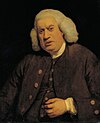
“Johnson...was not merely a learned classicist among other classicists; he was the last great English man of letters able to write Latin verse to a high standard of technical and literary excellence, the last whose cultural inheritance was more a classical than a vernacular literature. His stature as a writer and a scholar of the Latin language had profound implications for his writings in English and for their social purpose.”
J. C. D. Clark on Pindar
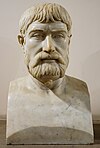
“Of Greek poets only one, Pindar, expressed the full range of ideals which achieved so much prominence in the last decades of the eighteenth and the first decades of the nineteenth century. The themes of military victory, national glory, personal triumph and emancipation linked with the freedom of the community were enforced in Pindar with a 'vehement intensity' which spoke to the new aesthetic; and in England the first poet to respond to these widening opportunities was Gray.”
J. C. D. Clark on G. M. Trevelyan
“Narrative technique was the natural vehicle for such influential historians of the two eras as G. M. Trevelyan and Basil Williams, yet whatever their other professional gifts it is now impossible to examine their narratives without a mounting sense of frustration at the shallowness, the superficiality and glibness of much of their writing, their willingness to skate over ignorance with a commonly received form of words, and to evade important problems with a well-turned generalisation.”

J. C. D. Clark on Francis Fukuyama
“Francis Fukuyama, that emblematic American commentator of the 1980s, gave only the last and most optimistic version of this benign intellectual isolationism. His vision of the irresistible triumph of American liberal capitalism around the world was normally read by Americans as an assurance that their victory would be bloodless. Everyone would soon largely agree with them... The most perceptive alternative analysis was that of the American political scientist Samuel P. Huntington. His new model for international relations predicted a world divided into armed and antagonistic blocs on religious lines. Huntington's was the best argument, but it was Fukuyama who wrote the bestseller.”

J. C. D. Clark on Charles II of England
“Strong leaders, even absolute monarchs, owe their strength to a natural social constituency rather than to an authoritarian personality. For Charles, it was the nexus of squire and parson that fuelled the uncompromising counter-revolution of populist Anglicanism. These were the men, like the Vicar of Bray, for whom Good King Charles's days were golden, at least in retrospect. At the time, they found him often reluctant to go as far as they wished in persecuting Catholics and Dissenters. Only later did Charles's reign assume the golden glow of nostalgia, as unhappy Tories under the first two Georges sought a stylish archetype which would highlight, by contrast, the Hanoverian boorishness. Then, Charles's rule came to seem a symbol of the triumph of indulgence, pleasure and tolerance over rigour, earnestness and bigotry. But at the time, it was a much more ambiguous affair.”

J. C. D. Clark on Charles Grey, 2nd Earl Grey
“Charles Grey was the most consistent political failure of his age. When he became prime minister in 1830, aged 66, he had sat in parliament for 44 years, yet had spent only 15 months in office. Finally, he had his chance. Given power at last, he used it to destroy the political system that had excluded him for so long. And that had excluded his uncles, cousins and aunts: in all, it was claimed that Grey named 20 of his relatives to appointments, sinecures or pensions during the ministry of 1830–34, from which they netted a cool £202,892 6s 2d... Since G. M. Trevelyan published his classic biography in 1920, Grey has been splendidly debunked by modern scholarship. Instead of the logical and long-planned culmination of Grey's career, the 1832 Reform Bill now stands as the short-term product of political contingency. As late as February 1830, he warned his elder son not to get involved with parliamentary reform: "You cannot rely on the support of the people."”
J. C. D. Clark on Christopher Hill (historian)
“Lesser historians, timid or inhibited, aimed at correctness; Hill had wider ends to serve. He has served that cause with more profound influence on his time than any of his peers. Among the English Marxist historians, that galaxy of talent from the 1960s, Hill was and is a prince of academe... Now that Marxism can no longer harm, the point is not to refute Hill but to appreciate him. Every scrap of his writing is to be treasured; every essay, every review overflows with historical skill. Every part of his work includes the whole. This collection of studies focuses on crime, and crime seen from the viewpoint of the ordinary man as social protest. This thesis is not new: its classic formulation was by E. P. Thompson 20 years ago. Nor am I more persuaded now than I was then: it strikes me as an Alice in Wonderland vision in which all the criminals are victims and all their victims become criminals. I am not persuaded that "the land-less" were "the law-less". Court records show that the poor are the chief victims of crime, however much Hill's literary sources romanticise criminals as Robin Hoods. Yet this hardly seems to matter beside the learning and deftness with which Hill makes his theme so fascinating.”

J. C. D. Clark on Richard Hooker
“The foundation document, in Anglican perception, had been provided by Richard Hooker... Of the Laws of Ecclesiastical Polity, the first and greatest apologia for Anglicanism, was published in instalments (1594, 1597, 1648, 1662); the political Book VIII countered the hostile thesis that "unto no civil prince or governor there may be given such power of ecclesiastical dominion as by the laws of the land belongeth unto the supreme regent thereof". It proceeded from the assumption that "there is not any man of the Church of England but the same man is also a member of the commonwealth; nor any man a member of the commonwealth, which is not also of the Church of England" (ch. 1.2). This, indeed, constituted the political aspect of the Anglican via media... Political involvement in the life of the Church could not validly be described as Erastianism, it was argued. The monarch was anointed and clothed in priestly vestments at his coronation; Parliament was a lay synod. Both were part of the Church, not separate and secular agencies subordinating the Church to their control. But Hooker's doctrine contained a fatal flaw: it was ambiguous about the title of the "chief Governor" on whom the whole system depended, and even appeared to recognise conquest and de facto power. Providence, though heavily emphasised, might point in more than one direction.”

Quotes About J. C. D. Clark
Gain deeper perspective through quotes about J. C. D. Clark from others.
Jeremy Black on J. C. D. Clark
“Jonathan Clark is the most controversial historian of his generation. In his English Society, 1688–1832, he reopened debate about Hanoverian England, by asserting the centrality of religious belief and ideology. Clark's Revolution and Rebellion sought to link political developments and historical controversies in the 17th and 18th centuries, and, in doing so, took issue with most British scholars of the period.”
Boyd Hilton on J. C. D. Clark
“J. C. D. Clark has argued that "the radical critique" of the late Hanoverian constitution "had its origins in theology, not economics". In his view, establishment thought was seeped in the doctrines of Filmer and Leslie, that all political and social authority derived from the first two persons of the Trinity, being enshrined in the fatherhood which God bestowed on Adam, and in the Apostolic Church to which Christ gave power of the keys. Consequently, those who rejected the doctrine of the Trinity – heterodox Dissenters such as Deists, Arians, Socinians, and Unitarians – struck right at the political heart of the regime, unlike middle-class Lockean radicals who dealt it merely glancing blows. After about 1800 the old regime began to be undermined, but in Clark's view this was not so much by "the progressive advance of a liberal mood shared by all", as by demographic and social changes. It was eventually destroyed by the legislation of 1828–9, which Clark describes as marking a "final and sudden betrayal"... Clark can claim that the legislation of those years destroyed the unitary state and opened a door to religious pluralism, through which not only orthodox Dissenters but also heterodox Dissenters, and eventually Jews, atheists, and free thinkers, could pass.”
John Kenyon on J. C. D. Clark
“In an epoch-making study entitled English Society 1688–1832: Ideology, Social Structure and Political Practice during the Ancien Regime, published in 1985, he forcefully argued that eighteenth-century England, its policy based on a close alliance between the monarchy, the aristocracy and the church, was an "ancien regime", indistinguishable from contemporary France, for instance, or even Spain. What it was not was some sort of forward-looking experiment in constitutional monarchy and representative government. Thus the final collapse of this ancien regime was heralded not by the parliamentary Reform Act of 1832 but by the repeal of the Test and Corporation Acts in 1830 [sic], when England ceased to be a confessional state. In the same way he argued for the close identification of political radicalism with religious nonconformity, in contradiction to E. P. Thompson's Tawneyesque The Making of the English Working Class, published in 1963 and well established as a classic. Clark's theories have provoked a great deal of opposition, not eased by his confrontational technique and acerbity of manner, but he has to be taken seriously, and it must be rare indeed for a scholar of his age (born in 1951) to have two major historical conferences and two issues of different professional journals entirely devoted to a discussion of his theories. We must never forget that his work runs in parallel with the excellent but more conventional work of John Cannon, Ian Christie, Paul Langford and others, but there is no doubt that he has put a new spin on British eighteenth-century studies, and it is safe to say that they will never be the same again.”
About J. C. D. Clark
Jonathan Charles Douglas Clark (born 28 February 1951) is a British historian of both British and American history. He was an undergraduate at Downing College, Cambridge. Having previously held posts at Peterhouse, Cambridge and All Souls College, Oxford into 1996, he has since held the Joyce C. and Elizabeth Ann Hall Distinguished Professorship of British History at the University of Kansas.