J. Bradford DeLong Quotes (1960-)

Actor

About J. Bradford DeLong

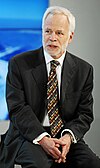
James Bradford DeLong (born June 24, 1960) commonly known as Brad DeLong, is a professor of Economics and chair of the Political Economy major at the University of California, Berkeley.

Best J. Bradford DeLong Quotes

Shortest
Earliest

Explore our curated collection of the most famous and impactful J. Bradford DeLong quotes.
“Fifteen years ago, I found it easy to be in favor of international capital mobility -- the free flow of investment financing from one country to another. Then it was easy to preach for an end to all systems of controls on capital that hindered this flow. Now it is harder.”
J. Bradford DeLong
“Economists’ instincts are that uncertainty about current prices, future prices, and the real meaning of nominal trade-offs between the present and the future; distortions introduced by the failure of government finance to be inflation-neutral; windfall redistributions; and the focusing of attention not on preferences, factors of production, and technologies but on predicting the future evolution of nominal magnitudes must degrade the functioning of the price system and reduce the effectiveness of the market economy at providing consumer utility. The cumulative jump in the price level as a result of the inflation of the 1970s may have been very expensive to the United States in terms of the associated reduction in human welfare.”
J. Bradford DeLong
“In my view, Marx has trapped himself. He has been primed to expect a deeper layer of real reality underneath mere appearances. And he has chosen the wrong model of the underlying real reality--the labor theory of value, which is simply not a very good model of the averages around which prices fluctuate. Socially-necessary labor power usually serves as an upper bound to value--if something sells for more, then a lot of people are going to start making more of them, and the prices at which it trades are going to fall. But lots of things sell for much less than the prices corresponding to their socially-necessary labor power lots of the time. And so Marx vanishes into the swamp which is the attempt to reconcile the labor theory of value with economic reality, and never comes out.”
“[W]e have crossed a great divide, between what we used to do in all of previous human history and what we do now. Utopia, it is true, this is not. I imagine Bellamy would be at once impressed and disappointed.
The economic historian Richard Easterlin helps explain why. ...With our increasing wealth, what used to be necessities become matters of little concern ...conveniences turn into necessities. Luxuries turn into conveniences. And we humans envision and then create new luxuries. ...He saw humanity on a hedonic treadmill: "...the triumph of economic growth is not a triumph of humanity over material wants; rather, it is a triumph of material wants over humanity." ...[T]his hedonic treadmill is one powerful reason why, even when all went very well, we only slouched rather than galloped toward utopia.”

J. Bradford DeLong
“The Good Economist Hayek is the thinker who has mind-blowing insights into just why the competitive market system is such a marvelous societal device for coordinating our by now 7.2 billion-wide global division of labor. Few other economists imagined that Lenin’s centrally-planned economy behind the Iron Curtain was doomed to settle at a level of productivity 1/5 that of the capitalist industrial market economies outside. Hayek did so imagine. And Hayek had dazzling insights as to why. Explaining the thought of this Hayek requires not sociology or history of thought but rather appreciation, admiration, and respect for pure genius.

The Bad Economist Hayek is the thinker who was certain that Keynes had to be wrong, and that the mass unemployment of the Great Depression had to have in some mysterious way been the fault of some excessively-profligate government entity (or perhaps of those people excessively clever with money–fractional-reserve bankers, and those who claim not the natural increase of flocks but rather the interest on barren gold). Why Hayek could not see with everybody else–including Milton Friedman–that the Great Depression proved that Say’s Law was false in theory, and that aggregate demand needed to be properly and delicately managed in order to make Say’s Law true in practice is largely a mystery. Nearly everyone else did: the Lionel Robbinses and the Arthur Burnses quickly marked their beliefs to market after the Great Depression and figured out how to translate what they thought into acceptable post-World War II Keynesian language. Hayek never did.
My hypothesis is that the explanation is theology: For Hayek, the market could never fail. For Hayek, the market could only be failed. And the only way it could be failed was if its apostles were not pure enough.”

J. Bradford DeLong

J. Bradford DeLong Quotes by Topic

Find exactly what you are looking for by browsing this categorized list of J. Bradford DeLong quotes by topic.

J. Bradford DeLong on Individualism and Economic Order 2 quotes

“Hayek’s great contribution is this: Competitive markets without externalities populated by well-informed self-regarding rational individuals generate highly productive outcomes because the market has powerful emergent properties that make it an extremely powerful and incentive-compatible societal mechanism for eliciting the revelation, aggregation, and transmission of information about resources, capabilities, needs and desires.”
J. Bradford DeLong
View all 2 quotes on Individualism and Economic Order →

J. Bradford DeLong on Friedrich Hayek and dictatorship 2 quotes
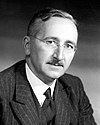
“Hayek says that the problem with classical liberalism was that it was not pure enough. The government needed to restrict itself to establishing the rule of law and to using antitrust to break up monopolies. It was the overreach of the government beyond those limits, via central banking and social democracy, that caused all the trouble. A democratic government needs to limit itself to rule of law and antitrust–and perhaps soup kitchens and shelters. And what if democracy turns out not to produce a government that limits itself to those activities? Then, Hayek says, so much the worse for democracy. A Pinochet is then called for to, in a Lykourgan moment, minimalize the state.”
J. Bradford DeLong
View all 2 quotes on Friedrich Hayek and dictatorship →

J. Bradford DeLong on Invention

“The invention of inventing, it turns out, produces yet more inventions.”
J. Bradford DeLong

J. Bradford DeLong on Scientific realism

“There is something there. But just because your theory is good does not mean that the entities in your theory are "really there", whatever that might mean...”

J. Bradford DeLong on Travel

“After 1870, sending a family member across the ocean to work became a possibility open to all save the very poorest of European households. ...The production and trade globalization of the late 1800s was fueled by one hundred million people leaving their continent of origin to live and work elsewhere. Never before or since have we seen such a rapid proportional redistribution of humanity around the globe.”
J. Bradford DeLong

J. Bradford DeLong on Rail transport

“Before the railroad... you simply could not transport agricultural goods more than one hundred miles by land. By that mile marker, the horses or oxen would have eaten as much as they could pull. Either you found a navigable water course... or you were stuck in bare self-sufficiency for all of your staples. ...[O]verwhelmingly, what you wore, ate, and used to pass your hours was made within your local township, or dearly bought.”
J. Bradford DeLong

J. Bradford DeLong on Imperialism

“[B]y 1870 the logic of empire seemed to be ebbing. There was little in the way of luxuries that could not be made more cheaply in the industrial core. Plus, it became more expensive to conquer than to trade. But empires are not built on logic alone, and... they continued to grow. Conquering, controlling, exploiting, and... a general debasing, continued. ...By 1870 the difference in power between imperial metropole and subjected colony had become immense... The improvements in transport and communications made war and conquest and occupation vastly easier.”
J. Bradford DeLong

J. Bradford DeLong on Utopia

“[W]e have crossed a great divide, between what we used to do in all of previous human history and what we do now. Utopia, it is true, this is not. I imagine Bellamy would be at once impressed and disappointed. The economic historian Richard Easterlin helps explain why. ...With our increasing wealth, what used to be necessities become matters of little concern ...conveniences turn into necessities. Luxuries turn into conveniences. And we humans envision and then create new luxuries. ...He saw humanity on a hedonic treadmill: "...the triumph of economic growth is not a triumph of humanity over material wants; rather, it is a triumph of material wants over humanity." ...[T]his hedonic treadmill is one powerful reason why, even when all went very well, we only slouched rather than galloped toward utopia.”
J. Bradford DeLong

J. Bradford DeLong on Economic growth
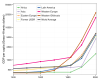
“[W]e have crossed a great divide, between what we used to do in all of previous human history and what we do now. Utopia, it is true, this is not. I imagine Bellamy would be at once impressed and disappointed. The economic historian Richard Easterlin helps explain why. ...With our increasing wealth, what used to be necessities become matters of little concern ...conveniences turn into necessities. Luxuries turn into conveniences. And we humans envision and then create new luxuries. ...He saw humanity on a hedonic treadmill: "...the triumph of economic growth is not a triumph of humanity over material wants; rather, it is a triumph of material wants over humanity." ...[T]his hedonic treadmill is one powerful reason why, even when all went very well, we only slouched rather than galloped toward utopia.”
J. Bradford DeLong

J. Bradford DeLong on Spain

“Europe—or rather Spain and Portugal—started building empires in the 1500s. ...[T]hey had interlocking systems—religious, political, administrative and commercial—that together reinforced the reasons to seek power in the form of political conquest. Empire building made political-military, ideological-religious, and economic sense. Spain's conquistadors set out to serve the king, to spread the word of God, and to get rich. Other adventurers and wannabe imperialists from elsewhere... did not have such a strong set of interlocking incentives and capabilities. ...The Portuguese—and the Spanish, and later the Dutch, French, and British—had it all, gold, guns, God, and kings, working together. ...1500 to 1770 was an Imperial-Commercial Age, with imperialism and globalization advancing along all their dimensions ...for great good and great ill.”
J. Bradford DeLong

What J. Bradford DeLong Said About Others

Discover personal opinions J. Bradford DeLong shared regarding contemporaries.

J. Bradford DeLong on John Kenneth Galbraith 3 quotes

“At the beginning of the twenty-first century, it has become clear who John Kenneth Galbraith really is: Sisyphus, constantly pushing the boulder of social-democratic enlightenment up the hill. But the hill, it turns out, is too steep, and Galbraith not mighty enough.”
J. Bradford DeLong
View all 3 quotes on John Kenneth Galbraith →

J. Bradford DeLong on Joseph Schumpeter 2 quotes
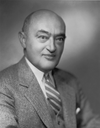
“Empire was the equivalent of a modern-day sports team... The military aristocracy loved to play, and the people loved to watch. Schumpeter hated this. And he thought that it was on the way out—that as people became richer and more prosperous, the burgeois virtues would win, and the drive for empire would die. Schumpeter expected the con to end, and a peaceful, less aristocratic, less imperial, less bloodthirsty twentieth century. He was wrong.”
J. Bradford DeLong
View all 2 quotes on Joseph Schumpeter →

J. Bradford DeLong on Karl Polanyi 2 quotes

“Now I am not sure how right Polanyi is: it is not clear to me that the shift has been as large as he thinks it has. And when "embeddedness" was used in the past to enforce transactions at a "just price", it usually seems to me to have been cover for thugs-with-spears (or thugs-with-idols) getting things on favorable terms from merchants, artisans, and peasants: it is far from clear that a decline in "embeddedness" is a bad thing. But I do think it is an interesting point.”
J. Bradford DeLong
View all 2 quotes on Karl Polanyi →

J. Bradford DeLong on John Maynard Keynes 2 quotes
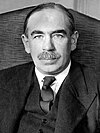
“The belief that monetary instability--inflation and deflation--is the principal, or at least a principal, cause of other economic evils; the hope that sound monetary principles can be identified and, when identified, would greatly diminish uncertainty and risk; the focus on the job of the public sector being to provide the private economy with a stable measuring-rod and a stable environment--all these are core ideas of whatever we choose to call monetarism. Keynes believed these ideas very, very strongly in the mid-1920s. And his Tract on Monetary Reform is a review of economic theory and a look at the economic problems of post-WWI Europe through this set of monetarist spectacles.”
J. Bradford DeLong
View all 2 quotes on John Maynard Keynes →

J. Bradford DeLong on Friedrich Hayek 2 quotes

“The basic problem is that there are three Hayeks:the--absolutely brilliant--price-system-as-information-aggregator Hayek. the--absolutely bonkers--business-cycle "liquidationist" Hayek. the--absolutely wrong--social-democracy-is-evil Hayek.The first was a genius. The second was a moron--his could never make his arguments cohere either conceptually or empirically, but he kept doubling down on them and wound up in infinite reputational bankruptcy. The third was wrong--I would say blinded ex ante by ideology, others would say proved wrong ex post by events.The problem is that the modern-day Hayekians are by-and-large uninterested in the good Hayek (1), and interested only in the bad Hayeks (2) and (3)...”
J. Bradford DeLong
View all 2 quotes on Friedrich Hayek →

J. Bradford DeLong on Edmund Burke

“For Burke, conservatism is a sometimes useful rhetorical and practical-political weapon, not a set of principles. Burke is, I think, best understood as and is useful and worth reading precisely because he is not Oakeshott: Burke is Whig measures in Tory guise.”
J. Bradford DeLong

J. Bradford DeLong on Niall Ferguson

“Has Niall Ferguson learned anything since 2011. Has he marked his beliefs to market in any way? Does he show any signs of needing to inform his readers of his awful forecasting track record? Or of having any moral foundations under what he writes other than his post-modern relativistic amorality?”
J. Bradford DeLong

J. Bradford DeLong on Henry David Thoreau
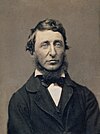
“For Thoreau, the fact that it took him a day to walk or ride into Boston was a benefit—part of living deliberately. But his was the point of view of a rich guy, or at least of a guy without a family to care for, and for whom Ralph Waldo Emerson's second wife, Lidian Jackson, was willing to bake pies.”
J. Bradford DeLong

J. Bradford DeLong on Augusto Pinochet

“Friedman, by contrast, hates and fears a government that prohibits use of recreational drugs in your home almost as much as he hates and fears a government that won't let you undersell your politically-powerful competitors. For Friedman, Pinochet is a bad--an aggressive, powerful military dictator--whose evil the Chicago Boys can curb by persuading him to adopt laissez-faire policies.”
J. Bradford DeLong

J. Bradford DeLong on Michel Foucault

“I openly avow myself the pupil of that mighty thinker Michel Foucault, and even here and there coquette with the modes of expression peculiar to him. But at least for my purposes his useful ideas suffer a certain mystification in his hands: he presents them upside-down, as it were. They must be turned right side up again, if you would discover the rational kernel within the mystical shell.”
J. Bradford DeLong

J. Bradford DeLong on Paul Krugman

“Critics of Paul Krugman call him acerbic and boastful, unfair on the attack and unwilling to make concessions on the defense, certain that he is correct, and always sure that those who disagree are mendacious or foolish (or both). And I cannot deny that these criticisms are accurate. But all these are outweighed by one fact: he is almost always--not always, but almost always--right. He is the closest thing to an heir to John Maynard Keynes we have today.”
J. Bradford DeLong

J. Bradford DeLong on Robert Skidelsky, Baron Skidelsky

“Let me start with a commercial: Robert Skidelsky’s John Maynard Keynes: Hopes Betrayed, John Maynard Keynes: The Economist as Saviour, and John Maynard Keynes: Fighting for Britain are an extraordinarily wonderful set of biographies—everyone, I think, should read them: you should read a 2000 page biography of somebody at least once, and Keynes is at least as good a subject as anyone and better than almost everyone, and Skidelsky is a truly exceptional biographer.”

About J. Bradford DeLong

James Bradford DeLong (born June 24, 1960) commonly known as Brad DeLong, is a professor of Economics and chair of the Political Economy major at the University of California, Berkeley.