J. Howard Moore on Wild animal suffering
← Back to J. Howard Moore Profile
“All over the non-human world, with few exceptions, each being seeks the satisfaction of his own desires, if not with positive disregard for the happiness and misery of the rest of the universe, at least with sincere unconcern. There is no courtesy, sympathy, or amenity there—a cold, heartless, implacable world of strangers.”
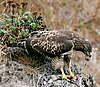
“Hardships have come. They have come from the inanimate universe in the form of floods, fires, frosts, accidents, diseases, droughts, storms, and the like; from other species, who were competitors or enemies; and from unbrotherly members of the same species. Some have survived, but the great majority have perished. Only a fraction, and generally an appallingly small fraction, of each generation of a species have lived to maturity.”
“There is, in fact, but one great crime in the universe, and most of the instances of terrestrial wrong-doing are instances of this crime. It is the crime of exploitation—the considering by some beings of themselves as ends, and of others as their means—the refusal to recognize the equal, or the approximately equal, rights of all to life and its legitimate rewards—the crime of acting toward others as one would that others would not act toward him. For millions of years, almost ever since life began, this crime has been committed, in every nook and quarter of the inhabited globe.”
“Yes, do as you would be done by—and not to the dark man and the white woman alone, but to the sorrel horse and the gray squirrel as well; not to creatures of your own anatomy only, but to all creatures. You cannot go high enough nor low enough nor far enough to find those whose bowed and broken beings will not rise up at the coming of the kindly heart, or whose souls will not shrink and darken at the touch of inhumanity. Live and let live. Do more. Live and help live. Do to beings below you as you would be done by beings above you. Pity the tortoise, the katydid, the wild-bird, and the ox. Poor, undeveloped, untaught creatures! Into their dim and lowly lives strays of sunshine little enough, though the fell hand of man be never against them. They are our fellow-mortals. They came out of the same mysterious womb of the past, are passing through the same dream, and are destined to the same melancholy end, as we ourselves. Let us be kind and merciful to them.”
“The preponderance of egoism in the natures of living beings is the most mournful and immense fact in the phenomena of conscious life. It has made the world the kind of world it would have been had the gods actually emptied their wrath vials upon it. Brotherhood is anomalous, and, even in its highest manifestations, is but the expression of a veiled and calculating egoism. Inhumanity is everywhere. The whole planet is steeped in it. Every creature faces an inhospitable universeful, and every life is a campaign. It has all come about as a result of the mindless and inhuman manner in which life has been developed on the earth. It has been said that an individual of unlimited faculties and infinite goodness and power made this world and endowed it with ways of acting, and that this individual, as the world's executive, continues to determine its phenomena by inspiring the order of its events. But one cannot help thinking sometimes, when, in his more daring and vivid moments, he comes to comprehend the real character and condition of the world, what a discrepancy exists between the reputation of this builder and his works, and cannot help wondering whether an ordinary human being with only common-sense and insight and an average concern for the welfare of the world would not make a great improvement in terrestrial affairs if he only had the opportunity for a while.”
“The chief activities of beings, both human and non-human, are put forth, directly or indirectly, for the purpose of procuring food. The suppression, entire or partial, of one being by another for nutritive purposes is, therefore, the form of the most frequent and excessive egoism. The lowly forms of life—the worms, echinoderms, mollusks, and the like—are, for the most part, vegetarians. So, also, are prevalently the insects, birds, rodents, and ungulates. These creatures are not, as a rule, aggressively harmful to each other, chiefly indifferent. But upon these inoffensive races feed with remorseless maw the reptilia, the insectivora, and the carnivora. These being-eaters cause to the earth-world its bloodiest experiences. It is their nature (established organically by long selection, or, as in the case of man, acquired tentatively) to subsist, not on the kingdom of the plant, the natural and primal storehouse of animal energy, but on the skeletons and sensibilities of their neighbors and friends. The serpent dines on the sparrow and the sparrow ingulfs the gnat; the tiger slays the jungle-fowl and the coyote plunders the lamb; the seal subsists on fish and the ursus maritimus subsists on seal; the ant enslaves the aphidae and man eats and enslaves what can not get away from him. Life riots on life—tooth and talon, beak and paw. It is a sickening contemplation, but life everywhere, in its aspect of activity, is largely made up of the struggle by one being against another for existence—of the effort by one being to circumvent, subjugate, or destroy another, and of the counter effort to reciprocate or escape.”