Link Copied!
Isaac Bashevis Singer Quotes (2008-)
Writer, Singer
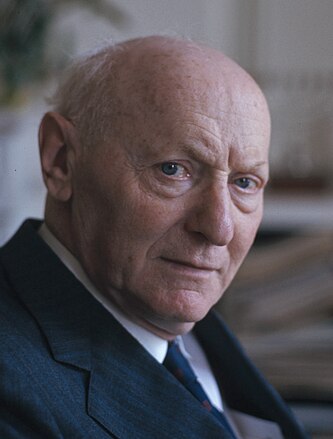




About Isaac Bashevis Singer
Isaac Bashevis Singer (Yiddish: יצחק באַשעװיס זינגער or יצחק בת־שבֿעס זינגער; pseudonym: Icek Hersz Zynger;His press card—a document issued by the Pariser Haint (The Parisian Day), a daily on the Rue du Faubourg-du-Temple to which he had sometimes contributed from Warsaw—was issued to that name; Florence Noiville (2008), Isaac B. Singer: A Life, Northwestern University Press, p. 65. born 21 November 1902 as Icek Zynger, died 24 July 1991) was a Polish-American writer of short stories and novels in Yiddish; he used his mother's name in devising his penname "Bashevis" (son of Bathsheba). He received the Nobel Prize in Literature in 1978.
Best Isaac Bashevis Singer Quotes
Shortest
Earliest
Explore our curated collection of the most famous and impactful Isaac Bashevis Singer quotes.
“Take three quarts of duck's milk...”

“The analysis of character is the highest human entertainment.”




“When I was a little boy, they called me a liar, but now that I am grown up, they call me a writer.”
“I am thankful, of course, for the prize and thankful to God for each story, each idea, each word, each day.”

“If Moses had been paid newspaper rates for the Ten Commandments, he might have written the Two Thousand Commandments.”

“I don't invent characters because the Almightly has already invented millions… Just like experts at fingerprints do not create fingerprints but learn how to read them.”

“I have many times resigned myself to never finding a true way out. But a new hope always emerges telling me that it is not yet too late for all of us to take stock and make a decision. I was brought up to believe in free will.”

“I know as a writer how valuable a tool is the wastebasket. Perhaps God throws away many experiments before He finds the right expression. Perhaps we are the discards — or we could be the part He keeps. This mystery is what keeps us all going, to see what happens in the next chapter.”
“As often as Herman had witnessed the slaughter of animals and fish, he always had the same thought: in their behavior toward creatures, all men were Nazis. The smugness with which man could do with other species as he pleased exemplified the most extreme racist theories, the principle that might is right.”
“There are some who call Yiddish a dead language, but so was Hebrew called for two thousand years. It has been revived in our time in a most remarkable, almost miraculous way. Aramaic was certainly a dead language for centuries but then it brought to light the Zohar, a work of mysticism of sublime value.”

“I am not ashamed to admit that I belong to those who fantasize that literature is capable of bringing new horizons and new perspectives — philosophical, religious, aesthetical and even social. In the history of old Jewish literature there was never any basic difference between the poet and the prophet. Our ancient poetry often became law and a way of life.”

“Yiddish has not yet said its last word. It contains treasures that have not been revealed to the eyes of the world. It was the tongue of martyrs and saints, of dreamers and Cabalists — rich in humor and in memories that mankind may never forget. In a figurative way, Yiddish is the wise and humble language of us all, the idiom of frightened and hopeful Humanity.”
“Not only has our generation lost faith in Providence but also in man himself, in his institutions and often in those who are nearest to him. In their despair a number of those who no longer have confidence in the leadership of our society look up to the writer, the master of words. They hope against hope that the man of talent and sensitivity can perhaps rescue civilization. Maybe there is a spark of the prophet in the artist after all.”

“Although I came to doubt all revelation, I can never accept the idea that the Universe is a physical or chemical accident, a result of blind evolution. Even though I learned to recognize the lies, the clichés and the idolatries of the human mind, I still cling to some truths which I think all of us might accept some day. There must be a way for man to attain all possible pleasures, all the powers and knowledge that nature can grant him, and still serve God — a God who speaks in deeds, not in words, and whose vocabulary is the Cosmos.”

Isaac Bashevis Singer Quotes by Topic
Find exactly what you are looking for by browsing this categorized list of Isaac Bashevis Singer quotes by topic.
Isaac Bashevis Singer on Vegetarianism 4 quotes
View all 4 quotes on Vegetarianism →Isaac Bashevis Singer on Chickens
Isaac Bashevis Singer on Night
Isaac Bashevis Singer on Reincarnation
Isaac Bashevis Singer on Poets
Isaac Bashevis Singer on Jewish vegetarianism
Isaac Bashevis Singer on Animals
“As often as Herman had witnessed the slaughter of animals and fish, he always had the same thought: in their behavior toward creatures, all men were Nazis. The smugness with which man could do with other species as he pleased exemplified the most extreme racist theories, the principle that might is right.”

Isaac Bashevis Singer on Animal rights
“As often as Herman had witnessed the slaughter of animals and fish, he always had the same thought: in their behaviour toward creatures, all men were Nazis. The smugness with which man could do with other species as he pleased exemplified the most extreme racist theories, the principle that might is right.”
Isaac Bashevis Singer on Mercy
“How can we pray to God for mercy if we ourselves have no mercy? Every kind of killing seems to me savage and I find no justification for it. I believe that the religion of the future will be based on vegetarianism. As long as people will shed the blood of innocent creatures there can be no peace, no liberty, no harmony between people. Slaughter and justice cannot dwell together.”

Isaac Bashevis Singer on Clarity
“Children don't read to find their identity, to free themselves from guilt, to quench the thirst for rebellion or to get rid of alienation. They have no use for psychology.... They still believe in God, the family, angels, devils, witches, goblins, logic, clarity, punctuation, and other such obsolete stuff.... When a book is boring, they yawn openly. They don't expect their writer to redeem humanity, but leave to adults such childish illusions.”

What Isaac Bashevis Singer Said About Others
Discover personal opinions Isaac Bashevis Singer shared regarding contemporaries.
Isaac Bashevis Singer on Yiddish 2 quotes
“People ask me often, 'Why do you write in a dying language?' [...] I like to write ghost stories and nothing fits a ghost better than a dying language. The deader the language the more alive is the ghost. Ghosts love Yiddish and as far as I know, they all speak it. Secondly, not only do I believe in ghosts, but also in resurrection. I am sure that millions of Yiddish speaking corpses will rise from their graves one day and their first question will be: "Is there any new Yiddish book to read?" For them Yiddish will not be dead. [...] Yiddish may be a dying language but it is the only language I know well. Yiddish is my mother language and a mother is never really dead.”
Quotes About Isaac Bashevis Singer
Gain deeper perspective through quotes about Isaac Bashevis Singer from others.
Alain Brossat on Isaac Bashevis Singer
“Basically, this modern Yiddish literature detected and depicted a paradox that casts a sharp light on the situation of Yiddishkeit at the start of the new century: it was a literature of rupture that the rabbis rejected as impious, a literature turned towards the realities of life, towards the world of the underdog, but if it testifies in this way to the earthquakes that were shaking Yiddishland, it did not take flight beyond the linguistic and cultural frontiers of this world and set foot in universal culture. Though very many Jews in Poland were moved by reading Adam Mickiewicz, how many Polish intellectuals between the two wars were aware of Peretz? This literature remained entirely focused on the Yiddish world, its fund of religious mythology, its customs and traditions, a literature that prospered at the heart of the crisis this world was undergoing, for the exclusive use of those who were its direct witnesses or its agents. Curiously, it is only posthumously, one could say, decades after the disappearance in fire and blood of the world from which it arose, that this literature has begun to enter the pantheon of human culture in general, and, paradox of paradoxes, the broad non-Yiddish-speaking public has begun to discover Sholem Aleichem and Shalom Asch by way of Isaac Bashevis Singer.”
Melanie Kaye/Kantrowitz on Isaac Bashevis Singer
“What is rarely known except by scholars is the range and variety of the pre-Holocaust Ashkenazi communities of Europe: traditional, socialist, communist; Orthodox and secular; capitalist and worker; Yiddish-speaking and/or fluent in the vernacular of wherever they lived: Russian, Polish, French, Czech, German. ... There is a whole literature, not just Nobel Prize winner Isaac Bashevis Singer, or Sholem Aleykhem whose Tevye stories hit Broadway as Fiddler on the Roof, but also brilliant narrative writers and experimental poets such as Chaim Grade, Kadia Molodowsky, Anna Margolin, Mani Leyb, Itsik Manger, and a host of others.”
Chava Rosenfarb "Sholem Asch on Isaac Bashevis Singer
“Sholem Asch and Isaac Bashevis Singer reflected through the prism of their personalities and unique talents the soul of the jew as a human being, and in this way they became universal writers.”
Ilan Stavans Introduction on Isaac Bashevis Singer
“The only famous Yiddish stories from Latin America I'm able to make people invoke are the handful of ones by the masters Sholem Aleichem, Sholem Asch, and Isaac Bashevis Singer. They are set in, or at least refer to, Argentina (and on occasion in an eternally rainy Brazil) and invariably deal with the Jewish prostitution ring-la trata de blancas.”
Ruth Wisse on Isaac Bashevis Singer
“Once Jews no longer obeyed the imperatives of their religion, they were virtually obliged to create new forms of identity, turning accommodation from means to end. Literature was a proving ground for the reinvention of the self. One-tenth of the Nobel Prize winners for literature in the twentieth century were born Jews, but only two of them-Shmuel Yosef Agnon (1966) and Isaac Bashevis Singer (1978)-wrote in a Jewish language and only about half thought of themselves as Jews.”
Source on Isaac Bashevis Singer 7 quotes
“Isaac Bashevis Singer, who recently won the Nobel Prize for Literature, is the one author by whom thousands of people the world over will measure both Yiddish literature and Jewish culture. Unfortunately, readers who are unfamiliar with Jewish history and culture may assume that Singer's portrayal of pre-war Polish Jewry is an authentic representation of reality. It is, instead, a rather distorted picture of shtetl and city life, reflecting fringe elements of that society rather than the norm. Singer is not interested in the ordinary life of the average Jew. His preoccupation with sex, for example, was hardly characteristic of the hard-working Jews of Eastern Europe, who had to wage a daily struggle for mere survival. His focus is not on the values or realities of Jewish life but on the aberrations of human psychology. Unlike nineteenth-century Jewish writers who, while critical of Jewish life, believed in Jewish values and in the possibility of preserving them, Singer is a pessimistic modernist who believes all humans are essentially depraved.”
About Isaac Bashevis Singer
Isaac Bashevis Singer (Yiddish: יצחק באַשעװיס זינגער or יצחק בת־שבֿעס זינגער; pseudonym: Icek Hersz Zynger;His press card—a document issued by the Pariser Haint (The Parisian Day), a daily on the Rue du Faubourg-du-Temple to which he had sometimes contributed from Warsaw—was issued to that name; Florence Noiville (2008), Isaac B. Singer: A Life, Northwestern University Press, p. 65. born 21 November 1902 as Icek Zynger, died 24 July 1991) was a Polish-American writer of short stories and novels in Yiddish; he used his mother's name in devising his penname "Bashevis" (son of Bathsheba). He received the Nobel Prize in Literature in 1978.