Link Copied!
Indira Gandhi Quotes (1917-1984)
Politician, King






About Indira Gandhi
Indira Priyadarshini Gandhi (November 19, 1917 – October 31, 1984) was an Indian politician and a central figure of the Indian National Congress. She was the 3rd prime minister of India and was also the first and, to date, only female prime minister of India. Indira Gandhi was the daughter of Jawaharlal Nehru, the 1st prime minister of India. She served as prime minister from January 1966 to March 1977 and again from January 1980 until her assassination in October 1984, making her the second longest-serving Indian prime minister after her father.
Best Indira Gandhi Quotes
Shortest
Earliest
Explore our curated collection of the most famous and impactful Indira Gandhi quotes.
“My father was a statesman, I'm a political woman. My father was a saint. I'm not.”

“India wants to avoid a war at all costs but it is not a one-sided affair, you cannot shake hands with a clenched fist.”
“There are moments in history when brooding tragedy and its dark shadows can be lightened by recalling great moments of the past.”

“To be liberated, woman must feel free to be herself, not in rivalry to man but in the context of her own capacity and her personality.”

“The greatest successes of Soviet active measures in India remained the exploitation of the susceptibility of Indira Gandhi and her advisers to bogus CIA conspiracies against them.”



“I’m not for nationalization because of the rhetoric of nationalization, or because I see in nationalization the cure-all for every injustice. I’m for nationalization in cases where it’s necessary.”

“India under Indira Gandhi was also probably the arena for more KGB active measures than anywhere else in the world, though their significance appears to have been considerably exaggerated by the Centre, which overestimated its ability to manipulate Indian opinion.”

“We believe in freedom with a passion that only those who have been denied it for so long can understand it, We believe in equality because so many in our nation have been denied for so long, we believe in human worth for that is the basis for all our current work in India.”
“All unprejudiced persons objectively surveying the grim events in Bangladesh since March 25 have recognized the revolt of 75 million people, a people who were forced to the conclusion that neither their life, nor their liberty, to say nothing of the possibility of the pursuit of happiness, was available to them.”
“We make no discrimination against the adherent of any religion. All faiths are entitled to equal protection and equal respect. This we have named "Secularism", which entitles each Indian to pursue his own belief and learn more about his own creed. But it also requires him to extend the same right to persons of other religions.”

“As for the position they held in this war ... well, I think they’ve been more skillful than the Americans. Certainly they’ve had a lighter touch—had they wanted to, they could have done more for Pakistan. Isn’t that so? It was the Americans who sent the Seventh Fleet into the Bay of Bengal, not the Chinese.”
“Look, I don’t see the world as something divided between right and left. And I don’t at all care who’s on the right or left or in the center. Even though we use them, even though I use them myself, these expressions have lost all meaning. I’m not interested in one label or the other—I’m only interested in solving certain problems, in getting where I want to go. I have certain objectives.”
“Yes, it’s true. It’s true that Joan of Arc was my dream as a little girl. I discovered her toward the age of ten or twelve, when I went to France. I don’t remember where I read about her, but I recall that she immediately took on a definite importance for me. I wanted to sacrifice my life for my country. It seems like foolishness and yet ... what happens when we’re children is engraved forever in our lives.”

“However, I had recently had the impression they were changing—not so much by becoming less pro-Pakistan as by becoming less anti-India. I was wrong. My visit to Nixon did anything but avert the war. It was useful only to me. The experience taught me that when people do something against you, that something always turns out in your favor. At least you can use it to your advantage. It’s a law of life—check it and you’ll see it holds true in every situation of life. ... And do you know why I won this war? Because my army was able to do it, yes, but also because the Americans were on the side of Pakistan.”
“In India, women have never been in hostile competition with men-even in the most distant past, every time a woman emerged as a leader, perhaps as a queen, the people accepted her. As something normal and not exceptional. Let’s not forget that in India the symbol of strength is a woman; the goddess Shakti. Not only that—the struggle for inde pendence here has been conducted in equal measure by men and by women. And when we got our independence, no one forgot that. In the Western world, on the other hand, nothing of the kind has ever happened—women have participated, yes, but revolutions have always been made by men alone.”

“The KGB, in Kalugin’s view, was more successful than the CIA, partly because of its skill in exploiting the corruption which became endemic under Indira Gandhi’s regime. As Inder Malhotra noted, though corruption was not new in India: People expected Indira Gandhi’s party, committed to bringing socialism to the country, to be more honest and cleaner than the old undivided Congress. But this turned out to be a vain hope. On the contrary, compared with the amassing of wealth by some of her close associates, the misdeeds of the discarded Syndicate leaders, once looked upon as godfathers of corrupt Congressmen, began to appear trivial.”

“I am here today, I may not be here tomorrow. But the responsibility to look after national interest is on the shoulder of every citizen of India. I have often mentioned this earlier. Nobody knows how many attempts have been made to shoot me, lathis have been used to beat me. In Bhubaneswar itself, a brickbat hit me. They have attacked me in every possible manner. I do not care whether I live or die. I have lived a long life and I am proud that I spend the whole of my life in the service of my people. I am only proud of this and nothing else. I shall continue to serve until my last breath and when I die, I can say, that every drop of my blood will invigorate India and strengthen it.”
“India had barely become independent, in 1947, when Pakistan invaded Kashmir, which at the time was ruled by a maharajah. The maharajah fled, and the people of Kashmir, led by Sheikh Abdullah, asked for Indian help. Lord Mountbatten, who was still governor general, replied that he wouldn’t be able to supply aid to Kashmir unless Pakistan declared war, and he didn’t seem bothered by the fact that the Pakistanis were slaughtering the population. So our leaders decided to sign a document by which they bound themselves to go to war with Pakistan. And Mahatma Gandhi, apostle of nonviolence, signed along with them. Yes, he chose war. He said there was nothing else to do. War is inevitable when one must defend somebody or defend oneself.”

“Happiness is such a fleeting point of view—there’s no such thing as continual happiness. There are only moments of happiness—from contentment to ecstasy. And if by happiness you mean ecstasy ... Yes, I’ve known ecstasy, and it’s a blessing to be able to say it because those who can say it are very few. But ecstasy doesn’t last long and is seldom ever repeated. If by happiness you mean an ordinary contentment, then yes—I’m fairly contented. Not satisfied—contented. Satisfied is a word I use only in reference to my country, and I’ll never be satisfied for my country. For this reason I go on taking difficult paths, and between a paved road and a footpath that goes up the mountain, I choose the footpath. To the great irritation of my bodyguards.”

Indira Gandhi Quotes by Topic
Find exactly what you are looking for by browsing this categorized list of Indira Gandhi quotes by topic.
Indira Gandhi on Nazi analogies 3 quotes
View all 3 quotes on Nazi analogies →Indira Gandhi on Anti-Indian sentiment 2 quotes
“The prime minister sliced into Pakistan, which, she declared, based its existence on stoking hostility to India. Pakistan had long felt that it would get U.S. support no matter what it did, encouraging Pakistani “adventurism and Indophobia.” She complained that Pakistan turned every issue into a clash between Hindus and Muslims: “Indophobia was clothed in the metaphysics of holy wars and the defence of Islam.””

Indira Gandhi on Patriotism
“We would rather starve than sell our national honor.”

Indira Gandhi on Question
Indira Gandhi on Game
“All my games were political games; I was, like Joan of Arc, perpetually being burned at the stake.”

Indira Gandhi on History
“There are moments in history when brooding tragedy and its dark shadows can be lightened by recalling great moments of the past.”

Indira Gandhi on Work
“My grandfather once told me that there were two kinds of people: those who do the work and those who take the credit. He told me to try to be in the first group; there was much less competition.”

Indira Gandhi on Nationalization
“I’m not for nationalization because of the rhetoric of nationalization, or because I see in nationalization the cure-all for every injustice. I’m for nationalization in cases where it’s necessary.”
Indira Gandhi on The Emergency (India)
““We were not able to capture even 10 per cent of the RSS workers. They all have gone underground and the RSS did not disperse even after the ban, on the contrary it was striking roots in new areas like Kerala”.”

Indira Gandhi on Secularism in India
“We make no discrimination against the adherent of any religion. All faiths are entitled to equal protection and equal respect. This we have named "Secularism", which entitles each Indian to pursue his own belief and learn more about his own creed. But it also requires him to extend the same right to persons of other religions.”

Indira Gandhi on Centrism
“Look, I don’t see the world as something divided between right and left. And I don’t at all care who’s on the right or left or in the center. Even though we use them, even though I use them myself, these expressions have lost all meaning. I’m not interested in one label or the other—I’m only interested in solving certain problems, in getting where I want to go. I have certain objectives.”
Indira Gandhi on Left-wing politics
“Look, I don’t see the world as something divided between right and left. And I don’t at all care who’s on the right or left or in the center. Even though we use them, even though I use them myself, these expressions have lost all meaning. I’m not interested in one label or the other—I’m only interested in solving certain problems, in getting where I want to go. I have certain objectives.”

What Indira Gandhi Said About Others
Discover personal opinions Indira Gandhi shared regarding contemporaries.
Indira Gandhi on Jawaharlal Nehru
“My father was a statesman, I'm a political woman. My father was a saint. I'm not.”

Indira Gandhi on Joan of Arc
“Yes, it’s true. It’s true that Joan of Arc was my dream as a little girl. I discovered her toward the age of ten or twelve, when I went to France. I don’t remember where I read about her, but I recall that she immediately took on a definite importance for me. I wanted to sacrifice my life for my country. It seems like foolishness and yet ... what happens when we’re children is engraved forever in our lives.”

Indira Gandhi on Zail Singh
“The honour has gone to a veteran soldier in the flight of freedom, and a man of the people. He is a man of humble origin but his achievements are impressive. Through unflinching devotion to the cause of freedom and development, and readiness to suffer for it, he has won the people’s trust. being so close to the soil and with his understanding of the weaker people's problems, and robust common sense, the President elect can be depended upon to serve the constitution with earnestness and dignity.”
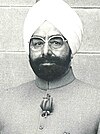
Indira Gandhi on Fakhruddin Ali Ahmed
“A man of high principles, he worked for the country long and loyally, adding lustre to our traditions of tolerance and selfless service. A devout Muslim, he personified compassion and humanity which are the core of all religions and was thus an illustrious symbol of our secularism. He labored with utter devotion for the uplift of his state and soon his field of work expanded to embrace the entire country. He dealt with every issue with patience, calm and a sense of fairplay. In many delicate international missions which he undertook on behalf of the Government, his earnestness and dignity enhanced India’s prestige.”
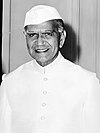
Indira Gandhi on Richard Nixon
“The truth is that I spoke clearly to Mr. Nixon [about the situation of the Bangladesh Liberation war]... I told him without mincing words that we couldn't go on with ten million refugees on our backs, we couldn't tolerate the fuse of such and explosive situation any longer. Well, Mr. Heath, Mr. Pompidou, and Mr. Brandt had understood very well. But not Mr. Nixon. The fact is that when the others understand one thing, Mr. Nixon understands another. I suspected he was very pro-Pakistan. Or rather I knew that the Americans had always been in favor of Pakistan—not so much because they were in favor of Pakistan, but because they were against India.”

Indira Gandhi on Zakir Hussain (politician)
“No one in our national life symbolized so well a national units as he [Dr Zakir Huassin] who had said “The whole of India is my home and all its citizens are his family”...He stood as symbol of multiculturalism. He raised the standard of public life by his word and deed. He was the last member of the generation that had not attained greatness simply on account of their contribution to the freedom struggle. Rather, he was one of those who had achieved greatness by dedicating himself to noble ideals. He was not a mere follower. Rather, he was a pioneer, full of new and creative ideas. He firmly believed that we are inheritors of our best tradition and glorious achievements. Beauty in all its splendor and charm was embodied in him.”
Indira Gandhi on Gandhi
“India had barely become independent, in 1947, when Pakistan invaded Kashmir, which at the time was ruled by a maharajah. The maharajah fled, and the people of Kashmir, led by Sheikh Abdullah, asked for Indian help. Lord Mountbatten, who was still governor general, replied that he wouldn’t be able to supply aid to Kashmir unless Pakistan declared war, and he didn’t seem bothered by the fact that the Pakistanis were slaughtering the population. So our leaders decided to sign a document by which they bound themselves to go to war with Pakistan. And Mahatma Gandhi, apostle of nonviolence, signed along with them. Yes, he chose war. He said there was nothing else to do. War is inevitable when one must defend somebody or defend oneself.”

Indira Gandhi on Louis Mountbatten, 1st Earl Mountbatten of Burma
“India had barely become independent, in 1947, when Pakistan invaded Kashmir, which at the time was ruled by a maharajah. The maharajah fled, and the people of Kashmir, led by Sheikh Abdullah, asked for Indian help. Lord Mountbatten, who was still governor general, replied that he wouldn’t be able to supply aid to Kashmir unless Pakistan declared war, and he didn’t seem bothered by the fact that the Pakistanis were slaughtering the population. So our leaders decided to sign a document by which they bound themselves to go to war with Pakistan. And Mahatma Gandhi, apostle of nonviolence, signed along with them. Yes, he chose war. He said there was nothing else to do. War is inevitable when one must defend somebody or defend oneself.”
Indira Gandhi on Rajiv Gandhi
“Some months ago when I was at Metheran, Masi [aunt] wrote saying that she had heard from some Parsis that it was written in their ancient book that a Hindu of high family would marry into a Parsi family [here, a 'Hindu of high family' is Indira and 'Parsi' is Firoz, son of sunni Nawab Khan] and their son would do great things - religious reform and so on. Masi asked me to inquire into the matter but it quite slipped my mind. Last evening my mother in law [meaning Nawab Khan's so called Parsi wife, converted to islam at the time of her nikaah] came in a state of great excitement. She had also heard something of the sort, a slightly different version. According to her, the son was the reincarnation of the Shah Behram of Persia. Baby's [meaning Rajiv Gandhi's] patri [horoscope] has arrived. I am enclosing it. It is written in Gujarati but I suppose you will be able to get it read. I am enclosing an English translation of the jyotishi's remarks. I am sending all this registered - please do the same when you return it. The good thing about it is supposed to be that there are five planets in one house.”
Quotes About Indira Gandhi
Gain deeper perspective through quotes about Indira Gandhi from others.
Hannah Arendt on Indira Gandhi
“Before Washington, Indira Gandhi stopped in New York, where she dazzled Hannah Arendt, herself a longtime critic of British rule in India. The political theorist breathlessly described Gandhi as “very good-looking, almost beautiful, very charming, flirting with every man in the room, without chichi, and entirely calm—she must have known already that she was going to make war and probably enjoyed it even in a perverse way. The toughness of these women once they have got what they wanted is really something!””

Ali Bhutto on Indira Gandhi 2 quotes
“Mrs. Gandhi has only one dream: to take over the whole subcontinent, to subjugate us... I don’t even respect her. To me she’s a mediocre woman with a mediocre intelligence. There’s nothing great about her; only the country she governs is great. I mean, it’s the throne that makes her seem tall, though actually she is very small. And also the name she bears. Believe me, if she was prime minister of Ceylon, she’d be nothing but another Mrs. Bandaranaike [who] got there by the simple fact of being Bandaranaike’s widow, and Mrs Gandhi by the simple fact of being Nehru’s daughter.”
Hamid Dalwai on Indira Gandhi
“The unceremonious exit of Mr. M.C. Chagla from her Cabinet and the relaxation of the rule prohibiting polygamy among Muslim employees of the Central Government are but two examples of the concessions she [Indira Gandhi] is making to Muslim communalism.”
Nanaji Deshmukh on Indira Gandhi
“In the end, Indira Gandhi has earned her name as a great martyr on the doorsteps of history. With her courage and efficiency, she demonstrated that only she understood the realities of our corrupt and divided society and was capable of uniting the country dominated by rotten politics. She was a great woman and in her valiant death, she has become greater.”
Michael Foot on Indira Gandhi
“Indira Gandhi was the least egotistical great statesman I ever met. She hardly ever talked about herself; she could reduce all personal questions to a proper perspective. She was much more interested in the great political questions: the way the world was going, how the unity of her beloved India could be preserved, how the poverty of her people could be broken, how nuclear annihilation could be averted.”

Just As I Am : The Autobiography of Billy Graham on Indira Gandhi
“Billy Graham details his 1972 trip to India and his meeting with Indira Gandhi during that trip in his autobiography. About his mandate to meet Indira Gandhi, Graham writes: President Nixon, at the request of the American consul in New Delhi, had personally asked me to seek an interview with Prime Minister Indira Gandhi, in part to find out from her what kind of ambassador she wanted from America. He asked me to notice every single thing about her—the movement of her hands, the expression on her face, how her eyes looked. “When you’ve finished the interview,” he said to me, “go to the American embassy and dictate your report to me.” And so, when I visited with Mrs. Gandhi in the Indian capital, I put the question to her. She told me she wanted someone who understood economics, who had the ear of the President, and who had influence in Congress. This I reported to the President. He later appointed Daniel Patrick Moynihan. Whether my report influenced the President’s decision, I never learned.”
Hitchens on Indira Gandhi
“The future patroness of compulsory sterilization had become, in the meantime, head of the government.”
Jacqueline Kennedy on Indira Gandhi
“She's a real prune—bitter, kind of pushy, horrible woman.”
Neil Kinnock on Indira Gandhi
“She was a woman of immense stature whose life was full of turmoil, challenge and great achievement. From the age of 12, when she joined the non-co-operation movement, her whole life was given to securing the emancipation of her country, first in the struggle for independence and then in the even more monumental task of economic and political development. Mrs. Gandhi knew, in the words of her friend, Aneurin Bevan, that political liberty is the by-product of economic sufficiency. In that knowledge she fought a lifelong contest against poverty and against war, the bringer of poverty. For nearly 20 years...Indira Gandhi was the most important figure in that country. Throughout that time the principles that guided her were devotion to the maintenance of parliamentary democracy and determination to produce tolerance and common purpose out of the diversity and distinctiveness of the peoples of India.”

Sant Harcharan Singh Longowal on Indira Gandhi
“The question before us is not whether Indira Gandhi should continue to be prime minister or not. The point is whether democracy in this country is to survive or not. The democratic structure stands on three pillars, namely a strong opposition, independent judiciary and free press. Emergency has destroyed all these essentials.”
B.K.Nehru on Indira Gandhi
Nuclearweaponarchive.org on Indira Gandhi
“In keeping with the great secrecy involved in India's efforts to develop and test its first nuclear explosive device, the project employed no more than 75 scientists and engineers working on it in the period from 1967 to 1974. Of course this does not count the thousands of individuals required to build and operate the infrastructure supporting BARC and to produce the plutonium for the device. Outside of those actually working on the project, only about three other people in India knew of it - Prime Minister Indira Gandhi, her trusted adviser and former principal secretary P.N. Haksar, and her current principal secretary D.P. Dhar. No government ministers, including the Defense Minister, were informed. The implosion system was designed to compress the core to twice its normal density. The lenses that were developed used the fast-slow explosive design pioneered by the U.S. in World War II. Like the Gadget exploded at Trinity in 1945, they used an RDX-TNT mixture as the fast explosive, with baratol (barium nitrate and TNT) used as the slow explosive. Chengappa describes the inner slow explosive component as being in the shape of "Shiva ling am" -- a phallus in Hindu religious art which is squat and blunt in form. The device used 12 lens, which is described by Chengappa [pg. 182]: "the way the explosives were placed around the plutonium sphere resembled the petals of the lotus". This presumably indicates that each hemisphere of the implosion system consisted of 6 longitudinal lens segments (asymmetric diamond shaped lenses) joined together at the pole so that they formed triangular teeth at the equator which interlocked with the opposite hemisphere. This design is simpler and less sophisticated than the 32-lens "soccer ball" system developed by the U.S. during World War II.”
David Owen on Indira Gandhi
Margaret Thatcher on Indira Gandhi 2 quotes
“This despicable act has robbed India of a great and courageous leader. Daughter of Pandit Nehru, one of the pioneers of India's independence, she led her country for a total of 16 years as Prime Minister, a period which saw India's emergence as an industrial power as well as a major influence in world affairs. Her death has also robbed the Commonwealth of a statesman of outstanding stature and experience.”

About Indira Gandhi
Indira Priyadarshini Gandhi (November 19, 1917 – October 31, 1984) was an Indian politician and a central figure of the Indian National Congress. She was the 3rd prime minister of India and was also the first and, to date, only female prime minister of India. Indira Gandhi was the daughter of Jawaharlal Nehru, the 1st prime minister of India. She served as prime minister from January 1966 to March 1977 and again from January 1980 until her assassination in October 1984, making her the second longest-serving Indian prime minister after her father.