Link Copied!
Ilya Prigogine Quotes (1917-2003)
About Ilya Prigogine
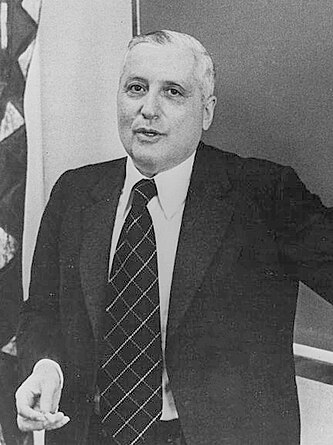
Ilya Prigogine (25 January 1917 – 28 May 2003) was a Belgian physical chemist of Russian-Jewish origin, noted for his work on dissipative structures, complex systems, and irreversibility. Prigogine's work most notably earned him the 1977 Nobel Prize in Chemistry, as well as the Francqui Prize in 1955 and the Rumford Medal in 1976.
Best Ilya Prigogine Quotes
Shortest
Earliest
Explore our curated collection of the most famous and impactful Ilya Prigogine quotes.
“Coherent behavior is the characteristic feature of biological systems.”
“The evolution of a physicochemical system leads to an equilibrium state of maximum disorder.”

“We have seen that the formation and maintenance of self-organizing systems are compatible with the laws of physical chemistry.””
“The ideas of nonequilibrium order and of the search for stability extend Darwin’s concept back to the prebiotic stage by redefining the “fittest”.”
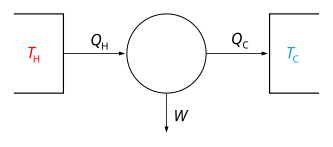
“The functional order maintained within living systems seems to defy the Second Law; nonequilibrium thermodynamics describes how such systems come to terms with entropy.”

“In an isolated system, which cannot exchange energy and matter with the surroundings, this tendency is expressed in terms of a function of the macroscopic state of the system: the entropy.””

“The problem of time in physics and chemistry is closely related to the formulation of the second law of thermodynamics. Therefore another possible title of this lecture could have been: “the macroscopic and microscopic aspects of the second law of thermodynamics””
“It is a remarkable fact that the second law of thermodynamics has played in the history of science a fundamental role far beyond its original scope. Suffice it to mention Boltzmann’s work on kinetic theory, Planck’s discovery of quantum theory or Einstein’s theory of spontaneous emission, which were all based on the second law of thermodynamics”

“The probability that at ordinary temperatures a macroscopic number of molecules is assembled to give rise to the highly ordered structures and to the coordinated functions characterizing living organisms is vanishingly small. The idea of spontaneous genesis of life in its present form is therefore highly improbable, even on the scale of the billions of years during which prebiotic evolution occurred.”
“My colleague Paul Glansdorff and I have investigated the problem as to if the results of near-equilibrium can be extrapolated to those of far - from-equilibrium situations and have arrived at a surprising conclusion: Contrary to what happens at equilibrium, or near equilibrium, systems far from equilibrium do not conform to any minimum principle that is valid for functions of free energy or entropy production.”
“Given my interest in the concept of time, it was only natural that my attention was focused on the second principle, as I felt from the start that it would introduce a new, unexpected element into the description of physical world evolution. No doubt it was the same impression illustrious physicists such as Boltzmann and Planck would have felt before me. A huge part of my scientific career would then be devoted to the elucidation of macroscopic as well as microscopic aspects of the second principle, in order to extend its validity to new situations, and to the other fundamental approaches of theoretical physics, such as classical and quantum dynamics.”
Ilya Prigogine Quotes by Topic
Find exactly what you are looking for by browsing this categorized list of Ilya Prigogine quotes by topic.
Ilya Prigogine on Entropy (thermodynamics) 4 quotes
View all 4 quotes on Entropy (thermodynamics) →
Ilya Prigogine on Self-organizing systems
“We have seen that the formation and maintenance of self-organizing systems are compatible with the laws of physical chemistry.””
Ilya Prigogine on Escherichia coli
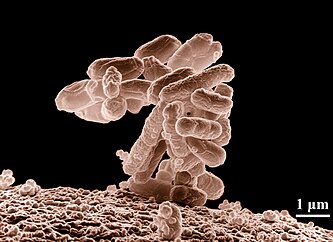
“Oscillatory reactions of the epigenetic type are also well known. They occur as a consequence of regulatory processes at the cellular level. Proteins are generally stable molecules, whereas catalysis is a very fast process. Thus, it is not unusual for the protein level in a cell to be too high, in which case other bodily substances act to suppress the synthesis of macromolecules. Such feedback gives rise to oscillations and has been studied in detail in, for example, the regulation of the lactose operon in the bacterium Escherichia coli.”

Quotes About Ilya Prigogine
Gain deeper perspective through quotes about Ilya Prigogine from others.
Marilyn Ferguson on Ilya Prigogine
“We are at a very exciting moment in history, perhaps a turning point, said Ilya Prigogine, who won the 1977 Nobel prize for a theory that describes transformations, not only in the physical sciences but also in society—the role of stress and "perturbations" that can thrust us into a new, higher order. Science, he said, is proving the reality of a deep cultural vision. The poets and philosophers were right in their intimations of an open, creative universe. Transformation, innovation, evolution—these are the natural responses to crisis.”

Obituaries: Ilya Prigogine on Ilya Prigogine
“Prigogine was also concerned with the broader philosophical issues raised by his work. In the 19th century the discovery of the second law of thermodynamics, with its prediction of a relentless movement of the universe toward a state of maximum entropy, generated a pessimistic attitude about nature and science. Prigogine felt that his discovery of self-organizing systems constituted a more optimistic interpretation of the consequences of thermodynamics. In addition, his work led to a new view of the role of time in the physical sciences.”
Misattributed Quotes
Quotes mistakenly credited to Ilya Prigogine
“The statistical probability that organic structures and the most precisely harmonized reactions that typify living organisms would be generated by accident, is zero.”
About Ilya Prigogine
Ilya Prigogine (25 January 1917 – 28 May 2003) was a Belgian physical chemist of Russian-Jewish origin, noted for his work on dissipative structures, complex systems, and irreversibility. Prigogine's work most notably earned him the 1977 Nobel Prize in Chemistry, as well as the Francqui Prize in 1955 and the Rumford Medal in 1976.