“
An attempt to look at New York from a car failed. We were driving along rather dark and gloomy streets. Sometimes something was buzzing like hell under my feet, sometimes something rumbled overhead. When we stopped at traffic lights, the sides of the cars next to us obscured everything. The driver turned around several times and asked for the address. Apparently, he was worried about our English. Sometimes he looked at us encouragingly, and his face said: “Nothing, you won’t get lost! No one has ever lost in New York.”
— Ilf and Petrov
What It Means
This is a placeholder explanation generated by the low-overhead model. It interprets "An attempt to look at New York from a car failed. We were driving along rather dark and gloomy streets. Sometimes something was buzzing like hell under my feet, sometimes something rumbled overhead. When we stopped at traffic lights, the sides of the cars next to us obscured everything. The driver turned around several times and asked for the address. Apparently, he was worried about our English. Sometimes he looked at us encouragingly, and his face said: “Nothing, you won’t get lost! No one has ever lost in New York.”" in the context of "" to mean that wisdom is timeless.
Source:
The 'What it means' explanation text was generated by Google Gemini Flash (accessed January 19, 2026). https://gemini.google.com/app
Tags
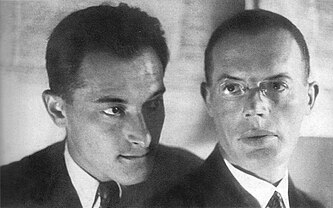
About Ilf and Petrov
Ilya Ilf (Ilya Arnoldovich Feinsilberg, 1897–1937) and Yevgeny Petrov (Yevgeniy Petrovich Katayev, 1902–1942) were two Soviet prose authors of the 1920s and 1930s. They did much of their writing together, and are almost always referred to as "Ilf and Petrov". The duo were arguably the most popular satirical writers in the Soviet period.
View all quotes →