Link Copied!
Ida B. Wells Quotes (1862-1931)
Leader
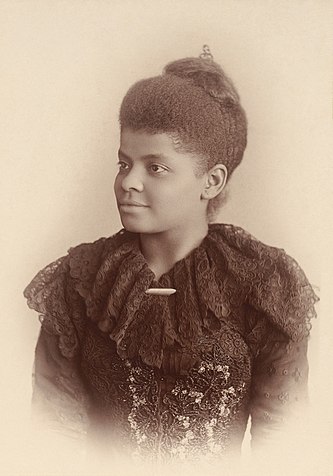
About Ida B. Wells
Ida Bell Wells-Barnett (July 16, 1862 – March 25, 1931) was an African-American investigative journalist, educator, and an early leader in the civil rights movement.
Best Ida B. Wells Quotes
Shortest
Earliest
Explore our curated collection of the most famous and impactful Ida B. Wells quotes.
“Virtue knows no color line, and the chivalry which depends upon complexion of skin and texture of hair can command no honest respect.”

Unsourced — Primary work/page citation not yet verified in the QuotesCosmos archive. Per our Unnamed Sources & Verification Policy, quotes without confirmed primary editions are explicitly marked Unsourced while under editorial review.
“During the slave regime, the Southern white man owned the Negro body and soul. It was to his interest to dwarf the soul and preserve the body.”
Unsourced — Primary work/page citation not yet verified in the QuotesCosmos archive. Per our Unnamed Sources & Verification Policy, quotes without confirmed primary editions are explicitly marked Unsourced while under editorial review.
“The government which had made the Negro a citizen found itself unable to protect him. It gave him the right to vote, but denied him the protection which should have maintained that right.”

Unsourced — Primary work/page citation not yet verified in the QuotesCosmos archive. Per our Unnamed Sources & Verification Policy, quotes without confirmed primary editions are explicitly marked Unsourced while under editorial review.
“If labor is withdrawn capital will not remain. The Afro-American is thus the backbone of the South. The white man's dollar is his god, and to stop this will be to stop outrages in many localities.”
Unsourced — Primary work/page citation not yet verified in the QuotesCosmos archive. Per our Unnamed Sources & Verification Policy, quotes without confirmed primary editions are explicitly marked Unsourced while under editorial review.
“So frequent and serious has the grave charge of rape become, there should be full investigation of every such accusation which is considered sufficient excuse for the most diabolical outrage and torture.”
Unsourced — Primary work/page citation not yet verified in the QuotesCosmos archive. Per our Unnamed Sources & Verification Policy, quotes without confirmed primary editions are explicitly marked Unsourced while under editorial review.
“a religious staying off of the growing evil of the race — the excursion business — will do more to overthrow the odious Jim Crow laws of our statute books than all the railroad suits which are prosecuted.”
Unsourced — Primary work/page citation not yet verified in the QuotesCosmos archive. Per our Unnamed Sources & Verification Policy, quotes without confirmed primary editions are explicitly marked Unsourced while under editorial review.
“the birth of letters was witnessed on the Dark Continent, but centuries of intervening darkness have removed most of the traces of fabled lore, wealth and prowess of the ancient Egyptians, Carthaginians and Ethiopians.”
Unsourced — Primary work/page citation not yet verified in the QuotesCosmos archive. Per our Unnamed Sources & Verification Policy, quotes without confirmed primary editions are explicitly marked Unsourced while under editorial review.
“In slave times the Negro was kept subservient and submissive by the frequency and severity of the scourging, but, with freedom, a new system of intimidation came into vogue; the Negro was not only whipped and scourged; he was killed.”

Unsourced — Primary work/page citation not yet verified in the QuotesCosmos archive. Per our Unnamed Sources & Verification Policy, quotes without confirmed primary editions are explicitly marked Unsourced while under editorial review.
“the lyncher has become so bold, he has discarded his mask and the secrecy of night, has left the out-of-the-way village and invaded the jails and penitentiaries of our largest cities, and hung and tortured his victims on the public streets.”
Unsourced — Primary work/page citation not yet verified in the QuotesCosmos archive. Per our Unnamed Sources & Verification Policy, quotes without confirmed primary editions are explicitly marked Unsourced while under editorial review.
“No class of American citizens stands in greater need of the humane and thoughtful consideration of all sections of our country than do the colored people, nor does any class exceed us in the measure of grateful regard for acts of kindly interest in our behalf.”

Unsourced — Primary work/page citation not yet verified in the QuotesCosmos archive. Per our Unnamed Sources & Verification Policy, quotes without confirmed primary editions are explicitly marked Unsourced while under editorial review.
“Gentlemen of the National Press Association, you have the press — what will you do with it? Upon your answer depends the future welfare of your race. Can you stand in comparative idleness, in purposeless wrangling, when there is earnest, practical, united work to be done?”
Unsourced — Primary work/page citation not yet verified in the QuotesCosmos archive. Per our Unnamed Sources & Verification Policy, quotes without confirmed primary editions are explicitly marked Unsourced while under editorial review.
“How many such have gone down to a violent death without anything to chronicle the true facts in their case, will never be known. Besides, a respectful, yet firm demand for race rights is absolutely necessary among those whom they live, and through no agency can it so well be heard as the newspaper.”
Unsourced — Primary work/page citation not yet verified in the QuotesCosmos archive. Per our Unnamed Sources & Verification Policy, quotes without confirmed primary editions are explicitly marked Unsourced while under editorial review.
“Unfavorable as were these conditions in the latter part of 1761, just before the birth of American freedom, arose our first contribution to literature. So strange were the conditions under which this race flower throve, we were not surprised at the doubt of her contemporaries as to whether she wrote the poems credited to her.”
Unsourced — Primary work/page citation not yet verified in the QuotesCosmos archive. Per our Unnamed Sources & Verification Policy, quotes without confirmed primary editions are explicitly marked Unsourced while under editorial review.
“If indeed “the pen is mightier than the sword,” the time has come as never before that the wielders of the pen belonging to the race which is so tortured and outraged, should take serious thought and purposeful action. The blood, tears and groans of hundreds of the murdered cry to you for redress; the lamentations, distress and want, of numberless widows and orphans appeal to you to do the only thing which can be done — and which is the first step toward revolution of every kind — the creation of a healthy public sentiment.”
Unsourced — Primary work/page citation not yet verified in the QuotesCosmos archive. Per our Unnamed Sources & Verification Policy, quotes without confirmed primary editions are explicitly marked Unsourced while under editorial review.
“If it could be established, a fearlessly edited press is one of the crying necessities of the hour. Such a journal, edited in the midst of such conditions as exist in the South, can better give the facts, than out of it, or than the press dispatches will do. True, such a one might have to be on the hop, skip and jump but the seed planted even though the sower might not tarry to watch its growth, can never die. At present only one side of the atrocities against a defenceless people is given, and with all the smoothing over is a bad enough showing.”
Unsourced — Primary work/page citation not yet verified in the QuotesCosmos archive. Per our Unnamed Sources & Verification Policy, quotes without confirmed primary editions are explicitly marked Unsourced while under editorial review.
“The Afro-American needs to be taught the power of union, to realize his own strength; how to utilize that strength to secure to himself his inherent rights as did the plebeians of Rome. He makes the money of the South, but has never been taught that a husbanding of resources will cease to enrich gigantic corporations at his own expense. Intelligently directed, by exercise of this power alone, the race can do much to bring about a change in race condition. The sudden withdrawal of the labor force of any one community, paralyzes the industry of that community.”

Unsourced — Primary work/page citation not yet verified in the QuotesCosmos archive. Per our Unnamed Sources & Verification Policy, quotes without confirmed primary editions are explicitly marked Unsourced while under editorial review.
“The belief has been constantly expressed in England that in the United States, which has produced Wm. Lloyd Garrison, Henry Ward Beecher, James Russell Lowell, John G. Whittier¹5 and Abraham Lincoln there must be those of their descendants who would take hold of the work of inaugurating an era of law and order. The colored people of this country who have been loyal to the flag believe the same, and strong in that belief have begun this crusade. To those who still feel they have no obligation in the matter, we commend the following lines of Lowell on "Freedom."”
Unsourced — Primary work/page citation not yet verified in the QuotesCosmos archive. Per our Unnamed Sources & Verification Policy, quotes without confirmed primary editions are explicitly marked Unsourced while under editorial review.
“The assertion has been substantiated throughout these pages that the press contains unreliable and doctored reports of lynchings, and one of the most necessary things for the race to do is to get these facts before the public. The people must know before they can act, and there is no educator to compare with the press. The Afro-American papers are the only ones which will print the truth, and they lack means to employ agents and detectives to get at the facts. The race must rally a mighty host to the support of their journals, and thus enable them to do much in the way of investigation.”
Unsourced — Primary work/page citation not yet verified in the QuotesCosmos archive. Per our Unnamed Sources & Verification Policy, quotes without confirmed primary editions are explicitly marked Unsourced while under editorial review.
“For years this association has met and concentrated itself with talking, and we returned to our respective homes with no tangible or practical work in hand — until the thinking portion of the race has classed press conventions with all other race conventions which meet, resolve and dissolve. If in face of daily occurrences we can still do only this, the charge against us is not without foundation. The time for action has come. Let the association tax itself to hire a detective, who shall go to the scene of each lynching, get the facts as they exist in each case of outrage — especially where the charge of rape is made — furnish them to the different papers of the association and those so situated shall publish them to the world.”
Unsourced — Primary work/page citation not yet verified in the QuotesCosmos archive. Per our Unnamed Sources & Verification Policy, quotes without confirmed primary editions are explicitly marked Unsourced while under editorial review.
“The race as such must be taught the value of emigration, both to relieve the congested condition which obtains, and to better their own condition by coming in contact with newer ideas, higher standards and people who have the desire to be something. They must be led to go out in the boundless west where they will develop the manhood which lies dormant with nothing to call it into exercise. The Afro-American must be taught that there is one potent, never-failing method of dealing with prejudice; when you touch a white man’s pocket, you touch his heart and his prejudices all melt away. Before the almighty dollar he worships as to no other deity, and through this weakness, a taking away of this idol, the Afro-American can effect a bloodless revolution.”
Unsourced — Primary work/page citation not yet verified in the QuotesCosmos archive. Per our Unnamed Sources & Verification Policy, quotes without confirmed primary editions are explicitly marked Unsourced while under editorial review.
“This is the greatest need of all among the masses of the South — the need of the press as an educator. Children of a larger growth, the masses of our people have never been taught the first rudiments of an education, much less the science of civil government. The vast army who make the industrial wealth of the South to-day have had neither the experience of slavery nor the training of the school-room, to teach them some valuable lessons, yet they are citizens in name, making history every day for the race. Some of them are seemingly content with their lot, but it is the contentment of ignorance in which the white landlord strives to keep them, by pandering in all ways to the most depraved instincts, and especially by the aid of liquor can exert the influence.”
Unsourced — Primary work/page citation not yet verified in the QuotesCosmos archive. Per our Unnamed Sources & Verification Policy, quotes without confirmed primary editions are explicitly marked Unsourced while under editorial review.
“so imperative is the necessity for leading the race up to the clear heights of thought, then down into the valley of action, that if persecuted and driven from one place, we must set up the printing press in another and continue the great work till the evils we suffer are removed or the people better prepared to fight their own battles. Laboring to fill our columns with matter beneficial and calculated to stimulate thought, and cultivate race reading, the next move is to take all legitimate steps to circulate our journals among the people we hope to benefit. Many of our best journals adopt the first plan while ignoring the second. They do not seem to grasp the truth that they must not only champion race rights, but cultivate a taste for reading among the people whose champions they are.”
Unsourced — Primary work/page citation not yet verified in the QuotesCosmos archive. Per our Unnamed Sources & Verification Policy, quotes without confirmed primary editions are explicitly marked Unsourced while under editorial review.
“To read the white papers the Afro-American is a savage that is getting away from the restraint of the inherent fear of the white man which controlled his passions, and from whom women and children now flee as from a wild beast. This impression has gained ground from the white papers, and has blasted race reputation in many quarters. The Afro-American journal has not troubled itself to counteract that opinion — those of the South because they dare not in many cases, and those of other sections seeming to care not. But not only the reputation of individuals but that of the race is involved. The clearing of this odium attached to the race name is not only the duty of one section but belongs to all, and the National Press Association should no longer sit idly waiting for the garbled accounts of the Associated Press, which it in turn gives the world.”

Unsourced — Primary work/page citation not yet verified in the QuotesCosmos archive. Per our Unnamed Sources & Verification Policy, quotes without confirmed primary editions are explicitly marked Unsourced while under editorial review.
“The few contributions we have made to literature have not seemed to stem the tide of prejudice, nor have the efforts of Cable and Donelly changed the place in literature given to us by Mrs. Stowe, Joel Harris, Opie Reid. Nowhere do we find spread to the world’s gaze a work that portrays Afro-American life in its true likeness. Twenty-five years of freedom have furnished novel coloring and strange situations out of which to evolve a strong, vigorous sketch of Afro-American life at its best, and illustrate the genius which has dominated the rapid progress. The splendid mental and literary equipment of some of our finest scholars; the fragments of verse and prose of which we catch fleeting glimpses now and then, encourages the hope that from the race will yet come forth the masterpiece which, measured by the literature of the world, shall stamp its author a genius and at the same time elevate the Afro-American in literature.”

Unsourced — Primary work/page citation not yet verified in the QuotesCosmos archive. Per our Unnamed Sources & Verification Policy, quotes without confirmed primary editions are explicitly marked Unsourced while under editorial review.
“Therefore, we demand a fair trial by law for those accused of crime, and punishment by law after honest conviction. No maudlin sympathy for criminals is solicited, but we do ask that the law shall punish all alike. We earnestly desire those that control the forces which make public sentiment to join with us in the demand. Surely the humanitarian spirit of this country which reaches out to denounce the treatment of the Russian Jews, the Armenian Christians, the laboring poor of Europe, the Siberian exiles and the native women of India-will not longer refuse to lift its voice on this subject. If it were known that the cannibals or the savage Indians had burned three human beings alive in the past two years, the whole of Christendom would be roused, to devise ways and means to put a stop to it. Can you remain silent and inactive when such things are done in our own community and country? Is your duty to humanity in the United States less binding?”

Unsourced — Primary work/page citation not yet verified in the QuotesCosmos archive. Per our Unnamed Sources & Verification Policy, quotes without confirmed primary editions are explicitly marked Unsourced while under editorial review.
“For nearly twenty years lynching crimes, which stand side by side with Armenian and Cuban outrages, have been committed and permitted by this Christian nation. Nowhere in the civilized world save the United States of America do men, possessing all civil and political power, go out in bands of 50 to 5,000 to hunt down, shoot, hung or burn to death a single individual, unarmed and absolutely powerless. Statistics show that nearly 10,000 American citizens have been lynched in the past 20 years. To our appeals for justice the stereotyped reply has been that the government could not interfere in a state matter. Postmaster Baker’s case was a federal matter, pure and simple. He died at his post of duty in defense of his country’s honor, as truly as did ever a soldier on the field of battle. We refuse to believe this country, so powerful to defend its citizens abroad, is unable to protect its citizens at home. Italy and China have been indemnified by this government for the lynching of their citizens. We ask that the government do as much for its own.”
Unsourced — Primary work/page citation not yet verified in the QuotesCosmos archive. Per our Unnamed Sources & Verification Policy, quotes without confirmed primary editions are explicitly marked Unsourced while under editorial review.
“It is a well established principle of law that every wrong has a remedy. Herein rests our respect for law. The Negro does not claim that all of the one thousand black men, women and children, who have been hanged, shot and burned alive during the past ten years, were innocent of the charges made against them. We have associated too long with the white man not to have copied his vices as well as his virtues. But we do insist that the punishment is not the same for both classes of criminals. In lynching, opportunity is not given the Negro to defend himself against the unsupported accusations of white men and women. The word of the accuser is held to be true and the excited bloodthirsty mob demands that the rule of law be reversed and instead of proving the accused to be guilty, the victim of their hate and revenge must prove himself innocent. No evidence he can offer will satisfy the mob; he is bound hand and foot and swung into eternity. Then to excuse its infamy, the mob almost invariably reports the monstrous falsehood that its victim made a full confession before he was hanged.”
Unsourced — Primary work/page citation not yet verified in the QuotesCosmos archive. Per our Unnamed Sources & Verification Policy, quotes without confirmed primary editions are explicitly marked Unsourced while under editorial review.
“The realm of fiction yet remains undisturbed by the Afro-Americans as a positive factor in a permanent way. This is much to be regretted, because he occupies so large a position, as a negative force. With slavery for a subject, Mrs. Harriet Beecher Stowe gave America its strongest work of fiction, but the Afro-American there represented, though true in its delineation to the life it represented, does not represent the Afro-American of to-day. Our best literary friends have failed to do it, so ineradicable is prejudice; it is not in their power to understand that the Afro-American is a man with all the attributes of manhood. They have viewed us with a white man’s glasses so long, seeing only the ignorant and humble side, there seems no other perspective for them. Thus it is that to the world at large the conviction is widespread that we are a menial, servile, happy-go-lucky race, given to petty thievery or humble, forgiving and submissive, as was “Uncle Tom.” The literature of the day has so portrayed us. The greatest [claim] to literary merit of the new corps of Southern writers is their skill in portraying the plantation and servant side of race character by the aid of negro dialect.”
Unsourced — Primary work/page citation not yet verified in the QuotesCosmos archive. Per our Unnamed Sources & Verification Policy, quotes without confirmed primary editions are explicitly marked Unsourced while under editorial review.
“By an amendment to the Constitution the Negro was given the right of franchise, and, theoretically at least, his ballot became his invaluable emblem of citizenship. In a government "of the people, for the people, and by the people," the Negro's vote became an important factor in all matters of state and national politics. But this did not last long. The southern white man would not consider that the Negro had any right which a white man was bound to respect, and the idea of a republican form of government in the southern states grew into general contempt. It was maintained that "This is a white man's government," and regardless of numbers the white man should rule. "No Negro domination" became the new legend on the sanguinary banner of the sunny South, and under it rode the Ku Klux Klan, the Regulators, and the lawless mobs, which for any cause chose to murder one man or a dozen as suited their purpose best. It was a long, gory campaign; the blood chills and the heart almost loses faith in Christianity when one thinks of Yazoo, Hamburg, Edgefield, Copiah, and the countless massacres of defenseless Negroes, whose only crime was the attempt to exercise their right to vote.”
Unsourced — Primary work/page citation not yet verified in the QuotesCosmos archive. Per our Unnamed Sources & Verification Policy, quotes without confirmed primary editions are explicitly marked Unsourced while under editorial review.
“The very frequent inquiry made after my lectures by interested friends is. "What can I do to help the cause?" The answer always is, "Tell the world the facts." When the Christian world knows the alarming growth and extent of outlawry in our land, some means will be found to stop it. The object of this publication is to tell the facts, and friends of the cause can lend a helping hand by aiding in the distribution of these books. When I present our cause to a minister, editor, lecturer, or representative of any moral agency, the first demand is for facts and figures. Plainly, I can not then hand out a book with a twenty-five cent tariff on the information contained. This would be only a new method in the book agents' art. In all such cases it is a pleasure to submit this book for investigation, with the certain assurance of gaining a friend to the cause. There are many agencies which may be enlisted in our cause by the general circulation of the facts herein contained. The preachers, teachers, editors and humanitarians of the white race, at home and abroad, must have facts laid before them, and it is our duty to supply these facts. The Central Anti-Lynching League, Room 9, 128 Clark St., Chicago, has established a Free Distribution Fund, the work of which can be promoted by all who are interested in this work. Anti-lynching leagues, societies and individuals can order books from this fund at agents' rates. The books will be sent to their order, or, if desired, will be distributed by the League among those whose cooperative aid we so greatly need. The writer hereof assures prompt distribution of books according to order, and public acknowledgment of all orders through the public press.”
Unsourced — Primary work/page citation not yet verified in the QuotesCosmos archive. Per our Unnamed Sources & Verification Policy, quotes without confirmed primary editions are explicitly marked Unsourced while under editorial review.
“A fifteen year old girl in Rayville, Louisiana, suspected of poisoning a white family is promptly hung on that suspicion; three reputable citizens of Memphis, Tenn., were taken from the jail and shot to death for prospering too well in business and defending themselves and property; one of the journals which was a member of your organization has been silenced by the edict of the mob which declared there shall be no such thing as “Free Speech” in the South. Within the past two weeks, honest, hardworking, land owning men and women of the race have been hung, shot, whipped and driven out of communities in Texas and Arkansas for no greater crime than that of too much prosperity. Indeed one almost fears to pick up the daily paper in which it is an unusual thing not to see recorded some tale of outrage or blood, with the Negro always the loser. The President of the United States announces himself unable to do anything to stay this “Reign of Terror,” and the race in the localities in which these outrages occur are nearly always unable to protect themselves; the local authorities will not extend to them the protection they demand. The President and Congress have been petitioned, race indignation has vented itself in impassioned oratory and public meetings. But denouncing the flag as dirty and dishonored which does not protect its citizens, and repudiating the national hymn because it is a musical lie, has not stopped the outrages. Politics have been eschewed, civil rights given up, (rights which are dearer than life itself) and even life itself has been sacrificed on the altar of Southern hate, and still there is no peace. The assassin’s bullet and ku-klux whip is still heard and the sight of the hangman’s noose with an Afro-American dangling at the end, is becoming a familiar object to the eyes of young America.”
Unsourced — Primary work/page citation not yet verified in the QuotesCosmos archive. Per our Unnamed Sources & Verification Policy, quotes without confirmed primary editions are explicitly marked Unsourced while under editorial review.
Ida B. Wells Quotes by Topic
Find exactly what you are looking for by browsing this categorized list of Ida B. Wells quotes by topic.
Ida B. Wells on Mob 4 quotes
“The mob spirit has grown with the increasing intelligence of the Afro-American.”

Unsourced — Primary work/page citation not yet verified in the QuotesCosmos archive. Per our Unnamed Sources & Verification Policy, quotes without confirmed primary editions are explicitly marked Unsourced while under editorial review.
What Ida B. Wells Said About Others
Discover personal opinions Ida B. Wells shared regarding contemporaries.
Ida B. Wells on Phillis Wheatley
“Unfavorable as were these conditions in the latter part of 1761, just before the birth of American freedom, arose our first contribution to literature. So strange were the conditions under which this race flower throve, we were not surprised at the doubt of her contemporaries as to whether she wrote the poems credited to her.”

Unsourced — Primary work/page citation not yet verified in the QuotesCosmos archive. Per our Unnamed Sources & Verification Policy, quotes without confirmed primary editions are explicitly marked Unsourced while under editorial review.
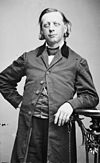
Ida B. Wells on Henry Ward Beecher
“The belief has been constantly expressed in England that in the United States, which has produced Wm. Lloyd Garrison, Henry Ward Beecher, James Russell Lowell, John G. Whittier¹5 and Abraham Lincoln there must be those of their descendants who would take hold of the work of inaugurating an era of law and order. The colored people of this country who have been loyal to the flag believe the same, and strong in that belief have begun this crusade.”
Unsourced — Primary work/page citation not yet verified in the QuotesCosmos archive. Per our Unnamed Sources & Verification Policy, quotes without confirmed primary editions are explicitly marked Unsourced while under editorial review.
Ida B. Wells on William Lloyd Garrison
“The belief has been constantly expressed in England that in the United States, which has produced Wm. Lloyd Garrison, Henry Ward Beecher, James Russell Lowell, John G. Whittier¹5 and Abraham Lincoln there must be those of their descendants who would take hold of the work of inaugurating an era of law and order. The colored people of this country who have been loyal to the flag believe the same, and strong in that belief have begun this crusade.”

Unsourced — Primary work/page citation not yet verified in the QuotesCosmos archive. Per our Unnamed Sources & Verification Policy, quotes without confirmed primary editions are explicitly marked Unsourced while under editorial review.
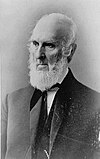
Ida B. Wells on John Greenleaf Whittier
“The belief has been constantly expressed in England that in the United States, which has produced William Lloyd Garrison, Henry Ward Beecher, James Russell Lowell, John G. Whittier and Abraham Lincoln there must be those of their descendants who would take hold of the work of inaugurating an era of law and order. The colored people of this country who have been loyal to the flag believe the same, and strong in that belief have begun this crusade.”
Unsourced — Primary work/page citation not yet verified in the QuotesCosmos archive. Per our Unnamed Sources & Verification Policy, quotes without confirmed primary editions are explicitly marked Unsourced while under editorial review.
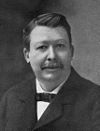
Ida B. Wells on Joel Chandler Harris
“The few contributions we have made to literature have not seemed to stem the tide of prejudice, nor have the efforts of Cable and Donelly changed the place in literature given to us by Mrs. Stowe, Joel Harris, Opie Reid. Nowhere do we find spread to the world’s gaze a work that portrays Afro-American life in its true likeness. Twenty-five years of freedom have furnished novel coloring and strange situations out of which to evolve a strong, vigorous sketch of Afro-American life at its best, and illustrate the genius which has dominated the rapid progress. The splendid mental and literary equipment of some of our finest scholars; the fragments of verse and prose of which we catch fleeting glimpses now and then, encourages the hope that from the race will yet come forth the masterpiece which, measured by the literature of the world, shall stamp its author a genius and at the same time elevate the Afro-American in literature.”
Unsourced — Primary work/page citation not yet verified in the QuotesCosmos archive. Per our Unnamed Sources & Verification Policy, quotes without confirmed primary editions are explicitly marked Unsourced while under editorial review.
Quotes About Ida B. Wells
Gain deeper perspective through quotes about Ida B. Wells from others.
Bettina Aptheker on Ida B. Wells 2 quotes
“Ida B. Wells and Mary Church Terrell, two women who helped shape the main contours of the civil-rights movement in the United States in the twentieth century.”

Unsourced — Primary work/page citation not yet verified in the QuotesCosmos archive. Per our Unnamed Sources & Verification Policy, quotes without confirmed primary editions are explicitly marked Unsourced while under editorial review.
Cristina Beltrán on Ida B. Wells
“Reporting on mob violence in New Orleans, Ida B. Wells-Barnett looked to capture the wild freedom and impunity that white rioters felt in engaging in violent assaults and disobeying the various calls to maintain order. Writing on the practices of lynching and mob violence, Wells-Barnett stressed how white democracy gave ordinary Americans the opportunity to break the law with impunity. Du Bois aptly characterizes this era of mob violence as "a sort of permissible Roman holiday for the entertainment of vicious whites." Pointing to the fact that in the span of four days, more than a thousand African Americans in New Orleans were injured and fifteen were killed, Wells-Barnett writes, “During the entire time the mob held the city in its hands and went about holding up street cars and searching them, taking from them colored men to assault, shoot, and kin, chasing colored men upon the public square... breaking into the homes of defenseless colored men and women and beating aged and decrepit men and women to death, the police and the legally-constituted authorities showed plainly where their sympathies were, for in no case reported through the daily papers does there appear the arrest, trial and conviction of one of the mob for any of the brutalities which occurred. The ringleaders of the mob were at no time disguised.... The murderers still walk the streets of New Orleans, well known and absolutely exempt from prosecution.”
Unsourced — Primary work/page citation not yet verified in the QuotesCosmos archive. Per our Unnamed Sources & Verification Policy, quotes without confirmed primary editions are explicitly marked Unsourced while under editorial review.
The Red Record on Ida B. Wells
“Dear Miss Wells: Let me give you thanks for your faithful paper on the lynch abomination now generally practiced against colored people in the South. There has been no word equal to it in convincing power. I have spoken, but my word is feeble in comparison. You give us what you know and testify from actual knowledge. You have dealt with the facts with cool, painstaking fidelity, and left those naked and uncontradicted facts to speak for themselves. Brave woman! you have done your people and mine a service which can neither be weighed nor measured. If the American conscience were only half alive, if the American church and clergy were only half Christianized, if American moral sensibility were not hardened by persistent infliction of outrage and crime against colored people, a scream of horror, shame, and indignation would rise to Heaven wherever your pamphlet shall be read. But alas! even crime has power to reproduce itself and create conditions favorable to its own existence. It sometimes seems we are deserted by earth and Heaven-yet we must still think, speak and work, and trust in the power of a merciful God for final deliverance. Very truly and gratefully yours, Frederick Douglass”
Unsourced — Primary work/page citation not yet verified in the QuotesCosmos archive. Per our Unnamed Sources & Verification Policy, quotes without confirmed primary editions are explicitly marked Unsourced while under editorial review.
Amy Goodman on Ida B. Wells
“More than a century ago, the legendary muckraking African American journalist Ida B. Wells risked her life when she began reporting on the epidemic of lynchings in the Deep South...She wrote: Georgia heads the list of lynching states." Some things never change: the American Bar Association has singled out Georgia's racial disparities in capital-offense sentencing, saying that it has allowed inadequate defense counsel and been "virtually alone in not providing indigent defendants sentenced to death with counsel for state habeas proceedings."”

Unsourced — Primary work/page citation not yet verified in the QuotesCosmos archive. Per our Unnamed Sources & Verification Policy, quotes without confirmed primary editions are explicitly marked Unsourced while under editorial review.
Nikole Hannah-Jones on Ida B. Wells
“I have long said and claimed Ida B. Wells-Barnett as my spiritual godmother. She was honestly the first example of a Black woman doing the type of journalism that I wanted to do, which should tell you how undiverse or nondiverse the field of investigative reporting is, that I didn’t actually know living examples of Black women investigative reporters when I was young. So, she was a pioneering investigative journalist who really brought the scourge of lynching to a global audience. She would go into towns where a Black man or woman had just been lynched, and she would interview people, and she would document. And she was actually one of the early data reporters, because she started to collect data on how many lynchings were occurring, what were the reasons given for those lynchings, and then what did her reporting show. She also was a true intersectional woman. She was a suffragist and had to fight both for women’s rights to vote and against the racism within the suffragist movement. She was a civil rights activist. She was a co-founder of the National Association for the Advancement of Colored People, where she had to fight against gender discrimination as a Black woman. And so, in so many ways, she was just this pioneering woman who fought for civil rights and equal rights across many fronts. And she was a woman who was largely reviled by white media. And I have in my Twitter bio that I’m a nasty — a slanderous and nasty-minded mulattress, because that’s what The New York Times, where I work, called Ida B. Wells while she was engaging in her anti-lynching crusade. So I take great strength from knowing that the attacks on me and the attacks on my work are really just part of a lineage of what happens when Black women and Black women journalists dare to challenge power and challenge authority. So, to receive the acknowledgment for this work about the Black experience on the same day that Ida B. Wells-Barnett, who like so many Black journalists never received the acknowledgment that they deserved, was just deeply gratifying, because I do my work in service of them.”

Unsourced — Primary work/page citation not yet verified in the QuotesCosmos archive. Per our Unnamed Sources & Verification Policy, quotes without confirmed primary editions are explicitly marked Unsourced while under editorial review.





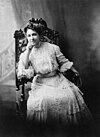
About Ida B. Wells
Ida Bell Wells-Barnett (July 16, 1862 – March 25, 1931) was an African-American investigative journalist, educator, and an early leader in the civil rights movement.