Link Copied!
I. Bernard Cohen Quotes (1914-2003)
Author
About I. Bernard Cohen
I. Bernard Cohen (1 March 1914 – 20 June 2003) was the Victor S. Thomas Professor of the history of science at Harvard University and the author of many books on the history of science and, in particular, Isaac Newton.
Best I. Bernard Cohen Quotes
Shortest
Earliest
Explore our curated collection of the most famous and impactful I. Bernard Cohen quotes.
“Galileo had the experience of beholding the heavens as they actually are for perhaps the first time, and wherever he looked he found evidence to support the Copernican system against the Ptolemaic, or at least weaken the authority of the ancients. This shattering experience—of observing the depths of the universe, of being the first mortal to know what the heavens are actually like—made so deep an impression... that it is only by considering the events of 1609... that one can understand the subsequent direction of his life.”
“The pioneering practitioners of the new science knew that they were producing a new kind of knowledge and so they declared this newness in the titles of their books and articles. Thus we have Galileo's Two New Sciences, Boyle's New Experiments, Kepler's New Astronomy, and Tartaglia's New Science. When Ben Jonson presented a masque entitled "News from the New World," his new world was not the newly found continent of North America, but the new world of science, the world revealed by the telescope of Galileo.”

“The seventeenth century witnessed the birth of modern science as we know it today. The science was something new, based on a direct confrontation of nature by experiment and observation. But there was another feature of the new science—a dependence on numbers, on real numbers of actual experience.
...The ancients knew a few numerical laws... But prior to the Scientific Revolution, the goal of science (or the study of nature) was not to seek laws of nature expressed in terms of numbers or number relations. ...the new science ...not only found laws based on numbers but they were also willing to express these laws in terms of higher powers of numbers—squares and cubes.”
...The ancients knew a few numerical laws... But prior to the Scientific Revolution, the goal of science (or the study of nature) was not to seek laws of nature expressed in terms of numbers or number relations. ...the new science ...not only found laws based on numbers but they were also willing to express these laws in terms of higher powers of numbers—squares and cubes.”

“Isaac Newton deserves to be included in a series of companions to major philosophers even though he was not a philosopher in the sense in which Descartes, Locke, and Kant were philosophers. That is, Newton made no direct contributions to epistemology or metaphysics that would warrant his inclusion in the standard list of major philosophers of the seventeenth and eighteenth centuries – Descartes, Spinoza, Locke, Leibniz, Berkeley, Hume, and Kant – or even in a list of other significant philosophers of the era – Bacon, Hobbes, Arnauld, Malebranche, Wolff, and Reid. The contributions to knowledge that made Newton a dominant figure of the last millennium were to science, not to philosophy.”
“His conflict with the Catholic Church arose because deep in his heart Galileo was a believer. There was for him no path of compromise, no way to have separate secular and theological cosmologies. If the Copernican system was true as he believed, what else could Galileo do but fight with every weapon he had in his arsenal... to make his Church accept a new system of the universe. ...In the contrast between Galileo's heroic stand when he tried to reform the cosmological basis of orthodox theology and his humbled, kneeling surrender when he disavowed his Copernicanism, we may sense the tremendous forces attendant on the birth of modern science.”

“Of the many references to Newton in 18th-century electrical writings only a small number were to the Principia, the greater part by far were to the Opticks. This was true not alone of the electrical writings but also in other fields of experimental enquiry. ...[The Opticks] would allow the reader to roam, with great Newton as his guide, through the major unresolved problems of science and even the relation of the whole world of nature to Him who had created it. ...'''in the Opticks Newton did not adopt the motto... —''Hypotheses non fingo'''''; I frame no hypotheses—but, so to speak, let himself go, allowing his imagination full reign and by far exceeding the bounds of experimental evidence.”
“By contrast, Galileo, the other legendary scientific figure of the era, not only published the most compelling critique of Aristotelian scholasticism in his Dialogues on the Two Chief World Systems, but in the process turned the issue of the epistemic authority of theology versus the epistemic authority of empirical science into a hallmark of modern times. Although Newton clearly sympathized with Galileo, he wrote virtually nothing critical of the Aristotelian tradition in philosophy, and the immense effort he devoted to theology was aimed not at challenging its epistemic authority, but largely at putting it on a firmer footing. Newton made no direct contributions to philosophy of a similar magnitude. Indeed, from his extant writings alone Newton has more claim to being a major theologian than a major philosopher.”

“Opticks was out of harmony with the ideas of 19th-century physics. ...an exposition of the "wrong" (i.e., corpuscular) theory of light,—even though it also contained many of the basic principles of the "correct" (i.e., wave) theory. Not only had Newton erred in his choice... but also he apparently had found no insuperable difficulty in simultaneously embracing features of two opposing theories. ...by adopting a combination of the two theories at once, he had violated one of the major canons of 19th-century physics... Today our point of view is influenced by the theory of photons and matter waves, or the... complementarity of Niels Bohr; and we may read with a new interest Newtons ideas on the interaction of light and matter or his explanation of the corpuscular and undulatory aspects of light.”

I. Bernard Cohen Quotes by Topic
Find exactly what you are looking for by browsing this categorized list of I. Bernard Cohen quotes by topic.
I. Bernard Cohen on Scientific revolution 4 quotes
“The pioneering practitioners of the new science knew that they were producing a new kind of knowledge and so they declared this newness in the titles of their books and articles. Thus we have Galileo's Two New Sciences, Boyle's New Experiments, Kepler's New Astronomy, and Tartaglia's New Science. When Ben Jonson presented a masque entitled "News from the New World," his new world was not the newly found continent of North America, but the new world of science, the world revealed by the telescope of Galileo.”
I. Bernard Cohen on Kinetic theory of gases
“The influence of Quetelet's ideas spread throughout the sciences, even to the physical sciences. The two primary founders of the modern kinetic theory of gases, based on considerations of probability, were James Clerk Maxwell and Ludwig Boltzmann. Both acknowledged their debt to Quetelet. ...[H]istorians generally consider the influence of the natural sciences on the social sciences, whereas in the case of Maxwell and Boltzmann, there is an influence of the social sciences on the natural sciences, as Theodore Porter has shown.”
I. Bernard Cohen on Geocentric model
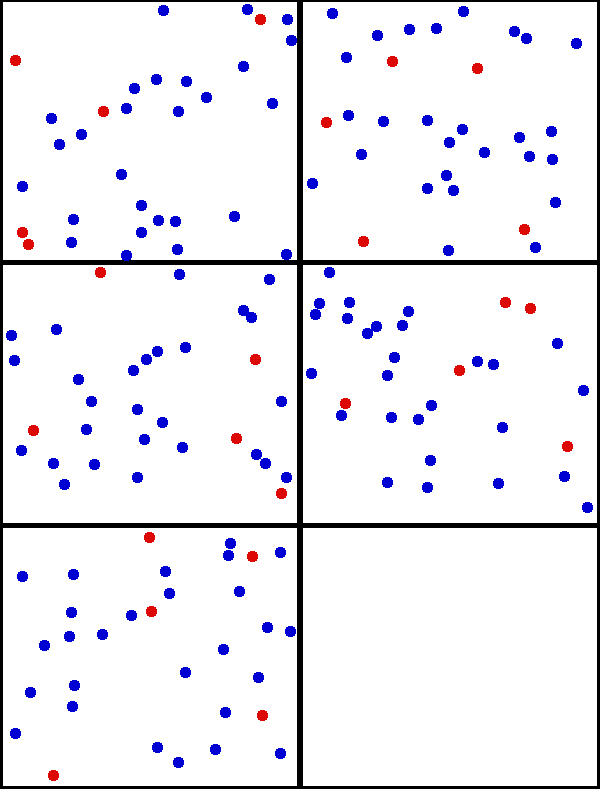
“Galileo had the experience of beholding the heavens as they actually are for perhaps the first time, and wherever he looked he found evidence to support the Copernican system against the Ptolemaic, or at least weaken the authority of the ancients. This shattering experience—of observing the depths of the universe, of being the first mortal to know what the heavens are actually like—made so deep an impression... that it is only by considering the events of 1609... that one can understand the subsequent direction of his life.”
I. Bernard Cohen on Phlogiston theory
“One of the most fundamental principles of Lavoisier's chemistry was the use of numbers, notably in relation to what we often call today the principle of conservation of mass... The principle implies that the experimenter must not only keep account of all the reacting solids and liquids, but also the gases—that is, all of the products. ...This rule led to quantitative experiments. Lavoisier was not the first person to use numbers in chemistry but he was a pioneer in using such numerical measurements as the basis of his system of chemistry. ...When Lavoisier first announced this law, chemists generally believed in... "phlogiston" which supposedly entered into chemical reactions (such as combustion) but had no weight. It was a radical step, therefore, for Lavoisier to base a system of chemistry on a balance of weights and to maintain that chemistry is not concerned with weightless "substances." ...this was indeed a chemical revolution.”

What I. Bernard Cohen Said About Others
Discover personal opinions I. Bernard Cohen shared regarding contemporaries.
I. Bernard Cohen on Galileo Galilei 2 quotes
“The pre-Galilean thinkers were... concerned with motion in the sense used by Aristotle. For them, "motion" was any process in which there was transmission from any state or condition to another state. Thus the process of aging, the change in a person's degree of wisdom, or the growth in the weight of a boy could all be considered examples of motion. By contrast Galileo was concerned with physical motion, motion involving a change of place... One of the major kinds of motion that Galileo studied was the motion of free fall.”

I. Bernard Cohen on Isaac Newton 2 quotes
“Of the many references to Newton in 18th-century electrical writings only a small number were to the Principia, the greater part by far were to the Opticks. This was true not alone of the electrical writings but also in other fields of experimental enquiry. ...[The Opticks] would allow the reader to roam, with great Newton as his guide, through the major unresolved problems of science and even the relation of the whole world of nature to Him who had created it. ...'''in the Opticks Newton did not adopt the motto... —''Hypotheses non fingo'''''; I frame no hypotheses—but, so to speak, let himself go, allowing his imagination full reign and by far exceeding the bounds of experimental evidence.”

I. Bernard Cohen on Ben Jonson
I. Bernard Cohen on Pierre Charles Alexandre Louis
“Pierre Charles Alexandre Louis should be honored as a primary author of the "numerical method." By "numerical method" he meant that the stages of disease and therapeutic outcomes should be expressed in terms of numbers and not merely as a set of verbal descriptions. ...This method seems so sensible that it is difficult to see why it was resisted by the medical establishment.”

I. Bernard Cohen on James Clerk Maxwell
“The influence of Quetelet's ideas spread throughout the sciences, even to the physical sciences. The two primary founders of the modern kinetic theory of gases, based on considerations of probability, were James Clerk Maxwell and Ludwig Boltzmann. Both acknowledged their debt to Quetelet. ...historians generally consider the influence of the natural sciences on the social sciences, whereas in the case of Maxwell and Boltzmann, there is an influence of the social sciences on the natural sciences, as Theodore Porter has shown.”


Quotes About I. Bernard Cohen
Gain deeper perspective through quotes about I. Bernard Cohen from others.
Owen Gingerich on I. Bernard Cohen
“Proud of being the first American to receive a doctorate expressly in the history of science (as opposed to writing a thesis for a history department), I Bernard Cohen went on to lead the professionalization of the discipline and to establish a flagship history of science department at Harvard.”
About I. Bernard Cohen
I. Bernard Cohen (1 March 1914 – 20 June 2003) was the Victor S. Thomas Professor of the history of science at Harvard University and the author of many books on the history of science and, in particular, Isaac Newton.