Heraclitus (c. 500 BC) as quoted by Sir Thomas Little Heath, A History of Greek Mathematics, Vol. 1, p.65, citing Diog. L. ix. 1 (Fr. 40 in Vorsokratiker i3, p. 86. 1-3).
“
Much learning does not teach wisdom; otherwise it would have taught Hesiod and Pythagoras, and again Xenophanes and Hecataeus.
— Heraclitus on Pythagoras
What It Means
This is a placeholder explanation generated by the low-overhead model. It interprets "Much learning does not teach wisdom; otherwise it would have taught Hesiod and Pythagoras, and again Xenophanes and Hecataeus." in the context of "Heraclitus (c. 500 BC) as quoted by Sir Thomas Little Heath, A History of Greek Mathematics, Vol. 1, p.65, citing Diog. L. ix. 1 (Fr. 40 in Vorsokratiker i3, p. 86. 1-3)." to mean that wisdom is timeless.
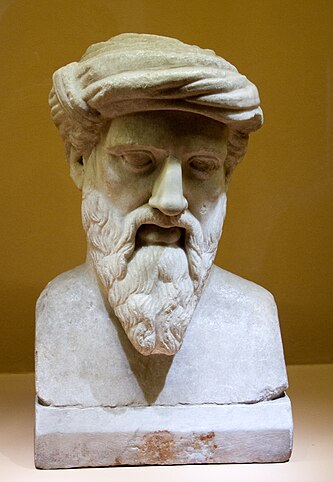
Source: Wikiquote: "Pythagoras" (Quotes about Pythagoras)
The 'What it means' explanation text was generated by Google Gemini Flash (accessed January 18, 2026). https://gemini.google.com/app
Tags

About Heraclitus
Heraclitus of Ephesus (Ἡράκλειτος, Herakleitos; c. 535 BC – 475 BC) was a Greek philosopher, known for his doctrine of change being central to the universe, and for establishing the term Logos (λόγος) in Western philosophy as meaning both the source and fundamental order of the Cosmos.
About Heraclitus
Heraclitus of Ephesus (Ἡράκλειτος, Herakleitos; c. 535 BC – 475 BC) was a Greek philosopher, known for his doctrine of change being central to the universe, and for establishing the term Logos (λόγος) in Western philosophy as meaning both the source and fundamental order of the Cosmos.
View all quotes →