Link Copied!
Henry St John, 1st Viscount Bolingbroke Quotes (1678-1751)
Philosopher, King
About Henry St John, 1st Viscount Bolingbroke
Henry St John, 1st Viscount Bolingbroke (September 16, 1678 – December 12, 1751) was an English statesman and philosopher.
Best Henry St John, 1st Viscount Bolingbroke Quotes
Shortest
Earliest
Explore our curated collection of the most famous and impactful Henry St John, 1st Viscount Bolingbroke quotes.

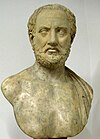
“They (Thucydides and Xenophon) maintained the dignity of history.”

“The landed men are the true owners of our political vessel, the moneyed men are no more than passengers in it.”
“Our world seems to be, in many respects, the bedlam of every other system of intelligent creatures.”
“The minister [ Robert Walpole] preaches corruption aloud and constantly, like an impudent missionary of vice.”

“[N]o human institution can arrive at perfection, and the most that human wisdom can do, is to procure the same or greater good, at the expence of less evil.”

“The manners of our fore-fathers were, I believe, in many respects better: they had more probity perhaps, they had certainly more show of honour, and greater industry.”
“The shortest and surest way of arriving at real knowledge is to unlearn the lessons we have been taught, to mount the first principles, and take nobody's word about them.”

“A peace must be had; and all mankind sees plainly now, in how vile a manner former opportunities were neglected of making a better than at this hour we have reason to expect.”
“Like other amphibious animals, we must come occasionally on shore: but the water is more properly our element, and in it, like them, as we find our greatest security, so we exert our greatest force.”
“To what higher station, to what greater glory can any mortal aspire, than to be, during the whole course of his life, the support of good, the controul of bad government, and the guardian of public liberty?”

“It is the modest, not the presumptuous, inquirer who makes a real and safe progress in the discovery of divine truths. One follows Nature and Nature's God; that is, he follows God in his works and in his word.”
“I have read somewhere or other, — in Dionysius of Halicarnassus, I think, — that history is philosophy teaching by examples.”

“My aim is to fix this principle, that limitations on a crown ought to be carried as far as it is necessary to secure the liberties of a people; and that all such limitations may subsist, without weakening or endangering monarchy.”
“There must be an absolute, unlimited, and uncontroulable power lodged somewhere in every government; but to constitute monarchy, or the government of a single person, it is not necessary that this power should be lodged in the monarch alone.”
“The French may improve their natural wealth and power by the improvement of trade and commerce. We can have no wealth, nor power by consequence, as Europe is now constituted, without the improvement of them, nor in any degree but proportionably to this improvement.”

“There have been periods when our government continued free, with strong appearances of becoming absolute. Let it be your glory, my Lord, and that of the new generation springing up with you, that this government do not become absolute at any future period, with the appearances of being free.”
“The service of our country is no chimerical, but a real duty. He who admits the proofs of any other moral duty, drawn from the constitution of human nature, or from the moral fitness and unfitness of things, must admit them in favour of this duty, or be reduced to the most absurd inconsistency.”
“[I]t is a pretty shocking observation that the Queen is to be the guarantee for a loan of this extraordinary nature made by the Dutch, and especially at a time, when under pretence of disability they directly refuse to furnish their quotas for the sea service, in spight of the obligations of all sorts, which lye upon them to do otherwise.”

“The obligation of submission to both, is discoverable by so clear and so simple an use of our intellectual faculties, that it may be said properly enough to be revealed to us by God; and tho both these laws cannot be said properly to be given by Him, yet our obligation to submit to the civil law is a principal paragraph in the natural law, which he has most manifestly given us.”
“Neither Montaigne in writing his essays, nor DesCartes in building new worlds, nor Burnet in framing an antedeluvian earth, no nor Newton in discovering and establishing the true laws of nature on experiment and a sublimer geometry, felt more intellectual joys; than he feels who is a real patriot, who bends all the force of his understanding, and directs all his thoughts and actions, to the good of his country.”

“You may observe yourself...what a difference there is between the true strength of this nation and the fictitious one of the Whigs. How much time, how many lucky incidents, how many strains of power, how much money must go to create a majority of the latter; on the other hand, take but off the opinion that the Crown is another way inclined, the church interest rises with redoubled force, and by its natural genuine strength.”
“I think, and every wise and honest man in generations yet unborn will think, if the history of [thi]s administration descends to blacken our annals, that the greatest iniquity of the minister [ Robert Walpole] , on whom the whole iniquity ought to be charged, since he has been so long in possession of the whole power, is the constant endeavour he has employed to corrupt the morals of men.”
Henry St John, 1st Viscount Bolingbroke Quotes by Topic
Find exactly what you are looking for by browsing this categorized list of Henry St John, 1st Viscount Bolingbroke quotes by topic.
Henry St John, 1st Viscount Bolingbroke on History 2 quotes
View all 2 quotes on History →
Henry St John, 1st Viscount Bolingbroke on Error
Henry St John, 1st Viscount Bolingbroke on Prejudice
“The confirmed prejudices of a thoughtful life are as hard to change as the confirmed habits of an indolent life; and as some must trifle away age because they have trifled away youth, others must labour on in a maze of error, because they have wandered there too long to find their way out.”
Quotes About Henry St John, 1st Viscount Bolingbroke
Gain deeper perspective through quotes about Henry St John, 1st Viscount Bolingbroke from others.
Edmund Burke on Henry St John, 1st Viscount Bolingbroke
“Who now reads Bolingbroke? Who ever read him through? ... I do not often quote Bolingbroke, nor have his works in general, left any permanent impression on my mind. He is a presumptuousness and a superficial writer. But he has one observation, which in my opinion, is not without depth and solidity. He says, that he prefers a monarchy to other governments; because you can better ingraft any description of republic on a monarchy than any thing of monarchy upon the republican forms. I think him perfectly in the right.”

Earl of Chesterfield on Henry St John, 1st Viscount Bolingbroke
“He engaged young, and distinguished himself in business; and his penetration was almost intuition. I am old enough to have heard him speak in parliament. And I remember that, though prejudiced against him by party, I felt all the force and charms of his eloquence. Like Belial in Milton, “he made the worse appear the better cause.” All the internal and external advantages and talents of an orator are undoubtedly his. Figure, voice, elocution, knowledge, and, above all, the purest and most florid diction, with the justest metaphors and happiest images, had raised him to the post of Secretary at War, at four-and-twenty years old, an age at which others are hardly thought fit for the smallest employments.”
Benjamin Disraeli on Henry St John, 1st Viscount Bolingbroke
“Lord Bolingbroke, one of the ablest men who ever lived, was a firm and uncompromising Tory, and he advocated triennial Parliaments. He said that without this there was no security for the people, no integrity for the constitution.”

F. H. Hinsley on Henry St John, 1st Viscount Bolingbroke
“Bolingbroke was typical not only in his attempt to define the true interests of the state but also in his use of the analogy between the political society and the family to assert that not unity but discord was the natural relationship between states. The personal needs of men were met by the development of society out of the family. Self-love, which originally assisted this development and produced separate societies, then ensured that the development would spread no further. "The great commonwealth of mankind cannot be brought under one government, nor subsist without any." As Bolingbroke used these views to make himself an early advocate of a maritime, insular, colonial Great Britain, intervening in European affairs only when her interest in the balance of power required it, so the continental writers of his time completely abandoned the traditional belief in Christendom or Europe as a structure above or at least additional to its component states.”
Thomas Jefferson on Henry St John, 1st Viscount Bolingbroke
“He was called indeed a tory; but his writings prove him a stronger advocate for liberty than any of his countrymen, the whigs of the present day. Irritated by his exile, he committed one act unworthy of him, in connecting himself momentarily with a prince rejected by his country. But he redeemed that single act by his establishment of the principles which proved it to be wrong... Lord Bolingbroke's...is a style of the highest order. The lofty, rhythmical, full-flowing eloquence of Cicero. Periods of just measure, their members proportioned, their close full and round. His conceptions, too, are bold and strong, his diction copious, polished and commanding as his subject. His writings are certainly the finest samples in the English language, of the eloquence proper for the Senate. His political tracts are safe reading for the most timid religionist, his philosophical, for those who are not afraid to trust their reason with discussions of right and wrong.”

Alexander Pope on Henry St John, 1st Viscount Bolingbroke
“Awake, my St. John, leave all meaner thingsTo low ambition, and the pride of kings.Laugh when we must, be candid when you can,And vindicate the ways of God to man.”

Jonathan Swift on Henry St John, 1st Viscount Bolingbroke 2 quotes
“I think Mr. secretary St. John the greatest young man I ever knew: wit, capacity, beauty, quickness of apprehension, good learning, and an excellent taste; the best orator in the house of commons, admirable conversation, good nature, and good manners; generous, and a despiser of money. His only fault is, talking to his friends in way of complaint of too great load of business, which looks a little like affectation; and he endeavours too much to mix the fine gentleman, and the man of pleasure, with the man of business. What truth and sincerity he may have, I know not.”
G. M. Trevelyan on Henry St John, 1st Viscount Bolingbroke
“With the signing of the Treaties of Utrecht, Bolingbroke's one great achievement in the world of action was accomplished. The rest of his political career, after a Niagara leap into rebellion, was to be lost in shallows and in miseries. But he stands in history as the man who, by courses however devious and questionable, negotiated a Peace which proved in the working more satisfactory than any other that has ended a general European conflict in modern times.”

About Henry St John, 1st Viscount Bolingbroke
Henry St John, 1st Viscount Bolingbroke (September 16, 1678 – December 12, 1751) was an English statesman and philosopher.