Link Copied!
Henry Fairfield Osborn Quotes (1857-1935)

About Henry Fairfield Osborn
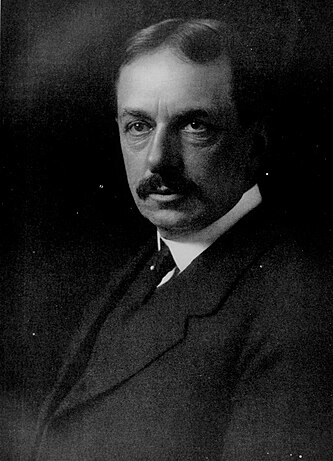
Henry Fairfield Osborn (August 8, 1857 – November 6, 1935) was an American geologist, paleontologist, and eugenicist. He described and named the Ornitholestes in 1903, Tyrannosaurus in 1905, the Pentaceratops in 1923, and the Velociraptor in 1924.
Best Henry Fairfield Osborn Quotes
Shortest
Earliest
Explore our curated collection of the most famous and impactful Henry Fairfield Osborn quotes.


“Today the earth speaks with resonance and clearness and every ear in every civilized country of the world is attuned to its wonderful message of the creative evolution of man, except the ear of William Jennings Bryan; he alone remains stone-deaf, he alone by his own resounding voice drowns the eternal speech of nature.”
“Direct observation of the testimony of the earth ... is a matter of the laboratory, of the field naturalist, of indefatigable digging among the ancient archives of the earth's history. If Mr. Bryan, with an open heart and mind, would drop all his books and all the disputations among the doctors and study first hand the simple archives of Nature, all his doubts would disappear; he would not lose his religion; he would become an evolutionist.”
“Every breath you draw, every accelerated beat of your heart in the emotional periods of your oratory depend upon highly elaborated physical and chemical reactions and mechanisms which nature has been building up through a million centuries. If one of these mechanisms, which you owe entirely to your animal ancestry, were to be stopped for a single instant, you would fall lifeless on the stage. Not only this, but some of your highest ideals of human fellowship and comradeship were not created in a moment, but represent the work of ages.”
“Care for the race, even if the individual must suffer — this must be the keynote of our future. This was the guiding principle which underlay all the discussions of the Second International Congress of Eugenics in 1921. Not quantity but quality must be the aim in the development of each nation, to make men fit to maintain their places in the struggle for existence. We must be concerned above all with racial values; every race must seek out and develop and improve its own racial characteristics. Racial consciousness is not pride of race, but proper respect for the Purity of race is today found in but one nation — the Scandinavian.”
“The fossil hunter must first of all be a scientific enthusiast. He must be willing to endure all kinds of hardships, to suffer cold in the early spring and the late autumn and early winter months, to suffer intense heat and the glare of the sun in summer months, and he must be prepared to drink alkali water, and in some regions to fight off the attack of the mosquito and other pests. He must be something of an engineer in order to be able to handle large masses of stone and transport them over roadless wastes of desert to the nearest shipping point; he must have a delicate and skilful touch to preserve the least fragments of bone when fractured; he must be content with very plain living, because the profession is seldom, if ever, remunerative, and he is almost invariably underpaid; he must find his chief reward and stimulus in the sense of discovery and in the despatching of specimens to museums which he has never seen for the benefit of a public which has little knowledge or appreciation of the self-sacrifices which the fossil hunter has made.”

“The Earth Speaks, clearly, distinctly, and, in many of the realms of Nature, loudly, to William Jennings Bryan, but he fails to hear a single sound. The earth speaks from the remotest periods in its wonderful life history in the Archaeozoic Age, when it reveals only a few tissues of its primitive plants. Fifty million years ago it begins to speak as “the waters bring forth abundantly the moving creatures that hath life.” In successive eons of time the various kinds of animals leave their remains in the rocks which compose the deeper layers of the earth, and when the rocks are laid bare by wind, frost, and storm we find wondrous lines of ascent invariably following the principles of creative evolution, whereby the simpler and more lowly forms always precede the higher and more specialized forms.
The earth speaks not of a succession of distinct creations but of a continuous ascent, in which, as the millions of years roll by, increasing perfection of structure and beauty of form are found; out of the water-breathing fish arises the air-breathing amphibian; out of the land-living amphibian arises the land-living, air-breathing reptile, these two kinds of creeping things resembling each other closely. The earth speaks loudly and clearly of the ascent of the bird from one kind of reptile and of the mammal from another kind of reptile.
This is not perhaps the way Bryan would have made the animals, but this is the way God made them!”

Henry Fairfield Osborn Quotes by Topic
Find exactly what you are looking for by browsing this categorized list of Henry Fairfield Osborn quotes by topic.
Henry Fairfield Osborn on Theologians
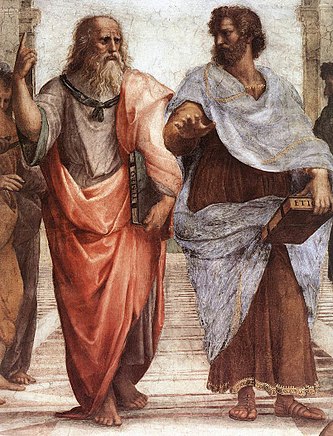
“Plainly as the direct or instantaneous Creation of animals and plants appeared to be taught in Genesis, Augustine read this in the light of primary causation and the gradual development from the imperfect to the perfect of Aristotle. This most influential teacher thus handed down to his followers opinions which closely conform to the progressive views of those theologians of the present day who have accepted the Evolution theory. In proof of this Greek influence we find that Augustine also adopted some of the Greek notions of the spontaneous generation of life. In the Middle Ages analogous views were held by Erigena, Roscellinus, William of Occam, Albertus Magnus; and Augustine was finally followed by Aquinas, who is now one of the leading authorities of the Church. Bruno struck out into an altogether different vein of thought.”

What Henry Fairfield Osborn Said About Others
Discover personal opinions Henry Fairfield Osborn shared regarding contemporaries.
Henry Fairfield Osborn on Augustine of Hippo 3 quotes
“Augustine thus sought a naturalistic interpretation of the Mosaic record, or potential rather than special creation, and taught that in the institution of Nature we should not look for miracles but for the laws of Nature.”

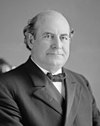
Henry Fairfield Osborn on William Jennings Bryan 3 quotes
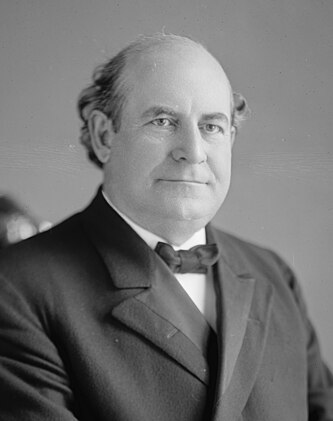
“Today the earth speaks with resonance and clearness and every ear in every civilized country of the world is attuned to its wonderful message of the creative evolution of man, except the ear of William Jennings Bryan; he alone remains stone-deaf, he alone by his own resounding voice drowns the eternal speech of nature.”
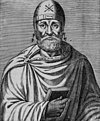
Henry Fairfield Osborn on Philo
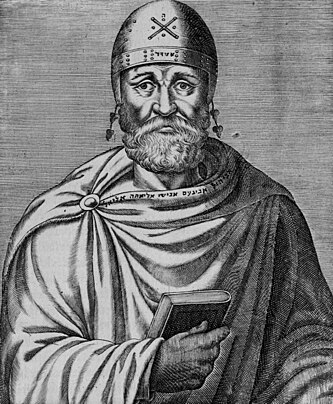
“Philo of Alexandria introduced in the first century what has been described as the 'Hellenizing of the Old Testament,' or the allegorical method of exegesis. By this, as Erdmann observes, the Bible narrative was found to contain a deeper, and particularly an allegorical interpretation, in addition to its literal interpretation; this was not conscious disingenuousness but a natural mode of amalgamating the Greek philosophic with the Hebraic doctrines.”
About Henry Fairfield Osborn
Henry Fairfield Osborn (August 8, 1857 – November 6, 1935) was an American geologist, paleontologist, and eugenicist. He described and named the Ornitholestes in 1903, Tyrannosaurus in 1905, the Pentaceratops in 1923, and the Velociraptor in 1924.