Link Copied!
Helmut Kohl Quotes (1930-2017)
Politician
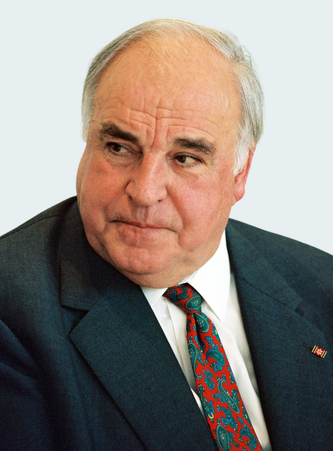


About Helmut Kohl
Helmut Josef Michael Kohl (3 April 1930 – 16 June 2017) was a German statesman and politician of the Christian Democratic Union (CDU) who served as Chancellor of Germany from 1982 to 1998 (of West Germany, 1982–1990; and of reunified Germany, 1990–1998) and as chairman of the CDU from 1973 to 1998. Kohl's 16-year tenure is the longest of any German Chancellor since Otto von Bismarck, and oversaw the end of the Cold War, the German reunification and the creation of the European Union.
Best Helmut Kohl Quotes
Shortest
Earliest
Explore our curated collection of the most famous and impactful Helmut Kohl quotes.
“I am not the one trying to speed things up. We are being driven.”
“Entscheidend ist, was hinten rauskommt.
• Translation: The crucial thing is what comes out at the end.”
• Translation: The crucial thing is what comes out at the end.”

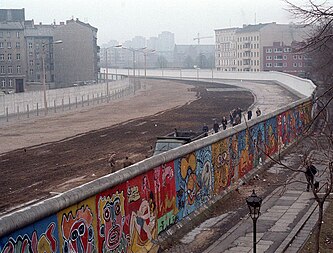
“The Berlin Wall is perhaps the most visible expression of the moral gulf between free democracy and totalitarian dictatorship.”
“Das ist der schlimmste Präsident seit Hermann Göring.
• Translation: This is the worst president since Hermann Göring.”
• Translation: This is the worst president since Hermann Göring.”
“Wir gehen nach Berlin – aber nicht in eine neue Republik.
• Translation: We will move to Berlin - but not to a new republic.”
• Translation: We will move to Berlin - but not to a new republic.”
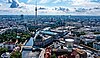
“Von deutschem Boden muss in Zukunft immer Frieden ausgehen.
• Translation: In all future, only peace may come from German soil.”
• Translation: In all future, only peace may come from German soil.”
“Die Visionäre von gestern sind die Realisten von heute.
• Translation: The visionaries of yesterday are the realists of today.”
• Translation: The visionaries of yesterday are the realists of today.”
“Die neue Armut ist eine Erfindung des sozialistischen Jet-sets
• Translation: The new poverty is an invention of the socialist Jet-set.”
• Translation: The new poverty is an invention of the socialist Jet-set.”
“Erträge und Kosten müssen im richtigen Verhältnis zueinander stehen.
• Translation: Revenue and cost have to be in the right relation to each other.”
• Translation: Revenue and cost have to be in the right relation to each other.”

“Die deutsche Einheit und die europäische Einigung sind zwei Seiten ein und derselben Medaille.
• Translation: The German Reunification and unification of Europe are two sides of the same coin.”
• Translation: The German Reunification and unification of Europe are two sides of the same coin.”
“Das ist eine klassische journalistische Behauptung. Sie ist zwar richtig, aber sie ist nicht die Wahrheit.
• Translation: This is a typical journalistic statement: It is correct, but it is not the truth.”
• Translation: This is a typical journalistic statement: It is correct, but it is not the truth.”
“Wir werden die Arbeitslosigkeit und die Zahl der in Deutschland lebenden Ausländer um die Hälfte reduzieren.
• Translation: We will cut in half unemployment and the number of foreigners living in Germany.”
• Translation: We will cut in half unemployment and the number of foreigners living in Germany.”
“Die Existenzgrundlage unseres Landes geht kaputt, wenn erst die Schleusen für die Ausländer geöffnet sind.
• Translation: The means of existence of our country will break down, once the watergates are open to the foreigners.”
• Translation: The means of existence of our country will break down, once the watergates are open to the foreigners.”
“Eine erfolgreiche Industrienation, das heißt eine Nation mit Zukunft, lässt sich nicht als kollektiver Freizeitpark organisieren.
• Translation: A successful industrial nation, meaning a nation with future, can not be organized as a collective holiday resort.”
• Translation: A successful industrial nation, meaning a nation with future, can not be organized as a collective holiday resort.”
“Die jungen Leute in Deutschland haben kein Problem mit dem Judentum. Ich gehe ja auch manchmal mit meinen beiden Jungs über den jüdischen Friedhof in Oggersheim.
• Translation: The young people of Germany have no problem with Judaism. I too, with my two sons sometimes walk across the Jewish cemetery in Oggersheim.”
• Translation: The young people of Germany have no problem with Judaism. I too, with my two sons sometimes walk across the Jewish cemetery in Oggersheim.”

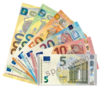
“I knew that I could never win a referendum in Germany. We would have lost a referendum on the introduction of the Euro. That's quite clear. I would have lost and by seven to three…. If a Chancellor is trying to push something through, he must be a man of power. And if he's smart, he knows when the time is ripe. In one case – the Euro – I was like a dictator ... The Euro is a synonym for Europe. Europe, for the first time, has no more war.”
“Durch eine gemeinsame Anstrengung wird es uns gelingen, Mecklenburg-Vorpommern und Sachsen-Anhalt, Brandenburg, Sachsen und Thüringen schon bald wieder in blühende Landschaften zu verwandeln, in denen es sich zu leben und zu arbeiten lohnt.
• Translation: By a common effort, we will soon succeed in tranforming Mecklenburg-Vorpommern and Sachsen-Anhalt, Brandenburg, Sachsen and Thüringen into blossoming landscapes, where it is worth to live and work.”
• Translation: By a common effort, we will soon succeed in tranforming Mecklenburg-Vorpommern and Sachsen-Anhalt, Brandenburg, Sachsen and Thüringen into blossoming landscapes, where it is worth to live and work.”
Helmut Kohl Quotes by Topic
Find exactly what you are looking for by browsing this categorized list of Helmut Kohl quotes by topic.
Helmut Kohl on Berlin Wall 4 quotes
“I am not the one trying to speed things up. We are being driven.”

Helmut Kohl on German reunification 2 quotes
“I am not the one trying to speed things up. We are being driven.”

Helmut Kohl on Germany 2 quotes
“As long as there is a wall, barbed wire and orders to shoot, there can be no talk of normality in Germany.”

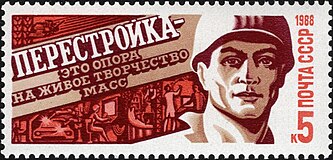
Helmut Kohl on Perestroika
“General Secretary Gorbachev’s policy of restructuring brings with it, for the first time since the end of World War II, a justifiable hope of overcoming the East-West conflict.”

Quotes About Helmut Kohl
Gain deeper perspective through quotes about Helmut Kohl from others.
Jeremy Black on Helmut Kohl
“Once democratised, Communism had become redundant, and the same process affected the very state of East Germany. Currency union with West Germany took effect on 1 July, East Germany came to an end as a separate state on 3 October, and all-German elections followed on 2 December 1990. Thatcher was unhappy about German re-unification, while President Mitterrand of France wanted two democratic Germanys and not the speedy creation of an over mighty Germany. However, in response to the victory of the pro-unification parties in the East German election in March 1990, he proved more accommodating, not least because of a promise from Helmut Kohl, the German Chancellor, that French companies would be allowed to acquire East German state-owned companies in the rapid privatisation that was pushed through. Kohl traded subsequently on his role in securing unification, and this helped him win re-election, as Chancellor of the united Germany, in 1994.”
John Lewis Gaddis on Helmut Kohl
“But German reunification was, nonetheless, an unsettling prospect, not just for the Soviet Union but for all Europeans who remembered the record of the last unified German state. This anxiety transcended Cold War divisions: Gorbachev shared it with Jaruzelski, French President François Mitterrand, and even Margaret Thatcher, who warned Bush that "[i]f we are not careful, the Germans will get in peace what Hitler couldn't get in the war." The one prominent European who disagreed was West German Chancellor Helmut Kohl, who surprised everyone by coming out in favor of reunification a few days before the Malta summit. Bush thought he had done so because "he wanted to be sure that Gorbachev and I did not come to our own agreement on Germany's future, as had Stalin and Roosevelt in the closing months of World War II." Kohl, then, was leading, but only barely because the East Germans themselves—having broken through the wall—quickly made it clear that they would accept nothing less than reunification. Hans Modrow, who had replaced Krenz as prime minister, informed Gorbachev at the end of January, 1990, that "[t]he majority of the people in the German Democratic Republic no longer support the idea of two German states." The government and party itself, K.G.B. chief Vladimir Kryuchkov confirmed, were falling apart. Confronted with this information, Gorbachev saw no choice: "German reunification should be regarded as inevitable."”

Ronald Reagan on Helmut Kohl
“It's been quite a journey this decade, and we held together through some stormy seas. And at the end, together, we are reaching our destination. The fact is, from Grenada to the Washington and Moscow summits, from the recession of '81 to '82, to the expansion that began in late '82 and continues to this day, we've made a difference. The way I see it, there were two great triumphs, two things that I'm proudest of. One is the economic recovery, in which the people of America created—and filled—19 million new jobs. The other is the recovery of our morale. America is respected again in the world and looked to for leadership. Something that happened to me a few years ago reflects some of this. It was back in 1981, and I was attending my first big economic summit, which was held that year in Canada. The meeting place rotates among the member countries. The opening meeting was a formal dinner of the heads of government of the seven industrialized nations. Now, I sat there like the new kid in school and listened, and it was all Francois this and Helmut that. They dropped titles and spoke to one another on a first-name basis. Well, at one point I sort of leaned in and said, "My name's Ron." Well, in that same year, we began the actions we felt would ignite an economic comeback—cut taxes and regulation, started to cut spending. And soon the recovery began. Two years later, another economic summit with pretty much the same cast. At the big opening meeting we all got together, and all of a sudden, just for a moment, I saw that everyone was just sitting there looking at me. And then one of them broke the silence. "Tell us about the American miracle," he said.”

Herman Van Rompuy on Helmut Kohl
“Of course, peace might have come to Europe without the Union. Maybe. We will never know. But it would never have been of the same quality. A lasting peace, not a frosty cease-fire. To me, what makes it so special, is reconciliation. In politics as in life, reconciliation is the most difficult thing. It goes beyond forgiving and forgetting, or simply turning the page. To think of what France and Germany had gone through …, and then take this step … Signing a Treaty of Friendship … Each time I hear these words – Freundschaft, Amitié –, I am moved. They are private words, not for treaties between nations. But the will to not let history repeat itself, to do something radically new, was so strong that new words had to be found. For people Europe was a promise, Europe equalled hope. When Konrad Adenauer came to Paris to conclude the Coal and Steel Treaty, in 1951, one evening he found a gift waiting at his hotel. It was a war medal, une Croix de Guerre, that had belonged to a French soldier. His daughter, a young student, had left it with a little note for the Chancellor, as a gesture of reconciliation and hope. I can see many other stirring images before me. Leaders of six States assembled to open a new future, in Rome, città eterna … Willy Brandt kneeling down in Warsaw. The dockers of Gdansk, at the gates of their shipyard. Mitterrand and Kohl hand in hand. Two million people linking Tallinn to Riga to Vilnius in a human chain, in 1989. These moments healed Europe.”
About Helmut Kohl
Helmut Josef Michael Kohl (3 April 1930 – 16 June 2017) was a German statesman and politician of the Christian Democratic Union (CDU) who served as Chancellor of Germany from 1982 to 1998 (of West Germany, 1982–1990; and of reunified Germany, 1990–1998) and as chairman of the CDU from 1973 to 1998. Kohl's 16-year tenure is the longest of any German Chancellor since Otto von Bismarck, and oversaw the end of the Cold War, the German reunification and the creation of the European Union.