Link Copied!
Helena Blavatsky Quotes (1831-1891)
Author
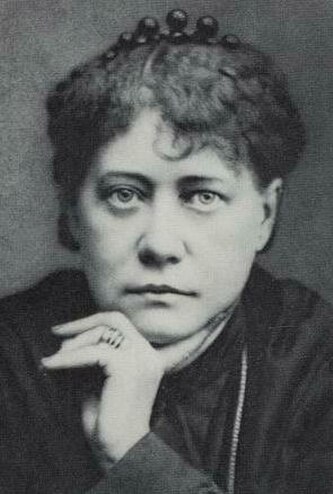





About Helena Blavatsky
Helena Petrovna Blavatsky (Russian: Елена Петровна Блаватская, Yelena Petrovna Blavatskaya, often known as Madame Blavatsky; née von Hahn; Ukrainian: Олена Петрівна Блаватська, Olena Petrivna Blavatska; 12 August O.S. 31 July 1831 – 8 May 1891), better known as "Helena Blavatsky" or "Madame Blavatsky", was an occultist, spirit medium, and author who co-founded the Theosophical Society in 1875. She gained an international following as the leading theoretician of Theosophy, the esoteric movement that the Society promoted. Blavatsky was a controversial figure during her lifetime, championed by supporters as an enlightened Sage and derided as a charlatan by critics. Her Theosophical doctrines influenced the spread of Hindu and Buddhist ideas in the West as well as the development of Western esoteric currents like Anthroposophy, and the New Age Movement.
Best Helena Blavatsky Quotes
Shortest
Earliest
Explore our curated collection of the most famous and impactful Helena Blavatsky quotes.
“There is no religion higher than truth.”

Unsourced — Primary work/page citation not yet verified in the QuotesCosmos archive. Per our Unnamed Sources & Verification Policy, quotes without confirmed primary editions are explicitly marked Unsourced while under editorial review.
“Aum (Sk.). The sacred syllable; the triple-lettered unit; hence the trinity in One.”

Unsourced — Primary work/page citation not yet verified in the QuotesCosmos archive. Per our Unnamed Sources & Verification Policy, quotes without confirmed primary editions are explicitly marked Unsourced while under editorial review.
“Maitreya Buddha (Sk.). The same as the Kalki Avatar of Vishnu (the “White Horse” Avatar), and of Sosiosh and other Messiahs...”
Unsourced — Primary work/page citation not yet verified in the QuotesCosmos archive. Per our Unnamed Sources & Verification Policy, quotes without confirmed primary editions are explicitly marked Unsourced while under editorial review.
“Adept (Lat.). Adeptus, “He who has obtained.” In Occultism one who has reached the stage of Initiation, and become a Master in the science of Esoteric philosophy.”

Unsourced — Primary work/page citation not yet verified in the QuotesCosmos archive. Per our Unnamed Sources & Verification Policy, quotes without confirmed primary editions are explicitly marked Unsourced while under editorial review.
“This is the age which, although proclaimed as one of physical and moral freedom, is in truth the age of the most ferocious moral and mental slavery, the like of which was never known before.”
Unsourced — Primary work/page citation not yet verified in the QuotesCosmos archive. Per our Unnamed Sources & Verification Policy, quotes without confirmed primary editions are explicitly marked Unsourced while under editorial review.
“"There is often greater martyrdom to live for the love of, whether man or an ideal, than to die" is a motto of the Mahatmas.”

Unsourced — Primary work/page citation not yet verified in the QuotesCosmos archive. Per our Unnamed Sources & Verification Policy, quotes without confirmed primary editions are explicitly marked Unsourced while under editorial review.
“Those who translate Pistis by "Faith," are utterly wrong. The word "faith" as grace or something to be believed in through unreasoned or blind faith, is a word that dates only since Christianity.”

Unsourced — Primary work/page citation not yet verified in the QuotesCosmos archive. Per our Unnamed Sources & Verification Policy, quotes without confirmed primary editions are explicitly marked Unsourced while under editorial review.
“We have to contend against... the hatred of the Spiritualists... the constant opposition of the clergy of all denominations... especially the relentless hatred and persecution of the missionaries in India.”
Unsourced — Primary work/page citation not yet verified in the QuotesCosmos archive. Per our Unnamed Sources & Verification Policy, quotes without confirmed primary editions are explicitly marked Unsourced while under editorial review.
“Psychology. The Science of Soul, in days of old: a Science which served as the unavoidable basis for physiology. Whereas in our modern day, it is psychology that is being based (by our great scientists) upon physiology.”

Unsourced — Primary work/page citation not yet verified in the QuotesCosmos archive. Per our Unnamed Sources & Verification Policy, quotes without confirmed primary editions are explicitly marked Unsourced while under editorial review.
“Maitreya is the secret name of the Fifth Buddha, and the Kalki Avatar of the Brahmins - the last Messiah who will come at the culmination of the Great Cycle.”

Unsourced — Primary work/page citation not yet verified in the QuotesCosmos archive. Per our Unnamed Sources & Verification Policy, quotes without confirmed primary editions are explicitly marked Unsourced while under editorial review.
“Valuing freedom of thought above all things as the only way of reaching at some future time that Wisdom, of which every Theosophist ought to be enamored, we recognize the right to the same freedom in our foes as in our friends.”

Unsourced — Primary work/page citation not yet verified in the QuotesCosmos archive. Per our Unnamed Sources & Verification Policy, quotes without confirmed primary editions are explicitly marked Unsourced while under editorial review.
“Wisdom and Truth are synonymous terms, and that which is false or well-known representative of the Church of England, that the Sermon of the Mount would, in its practical application, mean utter ruin for his country less than three weeks;”
Unsourced — Primary work/page citation not yet verified in the QuotesCosmos archive. Per our Unnamed Sources & Verification Policy, quotes without confirmed primary editions are explicitly marked Unsourced while under editorial review.
“We hold that a good book which gives people food for thought, which strengthens and clears their minds, and enables them to grasp truths which they have dimly felt but could not formulate—we hold that such a book does a real, substantial good.”
Unsourced — Primary work/page citation not yet verified in the QuotesCosmos archive. Per our Unnamed Sources & Verification Policy, quotes without confirmed primary editions are explicitly marked Unsourced while under editorial review.
“The purpose of this book is exactly expressed in its title, “The Key to Theosophy,” and needs but few words of explanation. It is not a complete or exhaustive text-book of Theosophy, but only a key to unlock the door that leads to the deeper study.”

Unsourced — Primary work/page citation not yet verified in the QuotesCosmos archive. Per our Unnamed Sources & Verification Policy, quotes without confirmed primary editions are explicitly marked Unsourced while under editorial review.
“That the teachings of neither our modern teachers nor preachers are "wisdom from above" is fully demonstrated. It is proved not by any personal incorrectness in their statements or mistakes in life, for "to err is but human," but by incontrovertible facts.”
Unsourced — Primary work/page citation not yet verified in the QuotesCosmos archive. Per our Unnamed Sources & Verification Policy, quotes without confirmed primary editions are explicitly marked Unsourced while under editorial review.
“To doubt the exalted wisdom of the religion of... the Church of England, or again of our great modern scientists, is to sin against the Holy Ghost and Culture. Woe unto him who refuses to recognize the World's "Elect."...their "wisdom" is at best -- "terrestrial, psychic, devilish."”

Unsourced — Primary work/page citation not yet verified in the QuotesCosmos archive. Per our Unnamed Sources & Verification Policy, quotes without confirmed primary editions are explicitly marked Unsourced while under editorial review.
“Slavery to State and men has disappeared only to make room for slavery to things and Self, to one's own vices and idiotic social customs and ways. Rapid civilization, adapted to the needs of the higher and middle classes, has doomed by contrast to only greater wretchedness the starving masses.”

Unsourced — Primary work/page citation not yet verified in the QuotesCosmos archive. Per our Unnamed Sources & Verification Policy, quotes without confirmed primary editions are explicitly marked Unsourced while under editorial review.
“Children should above all be taught self-reliance, love for all men, altruism, mutual charity, and more than anything else, to think and reason for themselves... Aim at creating free men and women, free intellectually, free morally, unprejudiced in all respects, and above all things, unselfish.”
Unsourced — Primary work/page citation not yet verified in the QuotesCosmos archive. Per our Unnamed Sources & Verification Policy, quotes without confirmed primary editions are explicitly marked Unsourced while under editorial review.
“Aura (Gr. and Lat.). A subtle invisible essence or fluid that emanates from human and animal bodies and even things. It is a psychic effluvium, partaking of both the mind and the body, as it is the electro-vital, and at the same time an electro-mental aura; called in Theosophy the âkâsic or magnetic aura.”
Unsourced — Primary work/page citation not yet verified in the QuotesCosmos archive. Per our Unnamed Sources & Verification Policy, quotes without confirmed primary editions are explicitly marked Unsourced while under editorial review.
“Because it has Societies for the prevention of physical cruelty to animals, and none with the object of preventing the moral cruelty practiced on human beings. Because it encourages, legally and tacitly, vice under every form, from the sale of whiskey down to forced prostitution and theft brought on by starvation wages...”

Unsourced — Primary work/page citation not yet verified in the QuotesCosmos archive. Per our Unnamed Sources & Verification Policy, quotes without confirmed primary editions are explicitly marked Unsourced while under editorial review.
“Thus, what with several generations of most active Church Fathers ever working at the destruction of old documents and the preparation of new passages to be interpolated in those which happened to survive, there remains of the Gnostics -- the legitimate offspring of the Archaic Wisdom-religion -- but a few unrecognizable shreds.”
Unsourced — Primary work/page citation not yet verified in the QuotesCosmos archive. Per our Unnamed Sources & Verification Policy, quotes without confirmed primary editions are explicitly marked Unsourced while under editorial review.
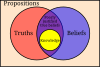
“I speak "with absolute certainty" only so far as my own personal belief is concerned. Those who have not the same warrant for their belief as I have, would be very credulous and foolish to accept it on blind faith. Nor does the writer believe any more than her correspondent and his friends in any "authority" let alone "divine revelation"!”
Unsourced — Primary work/page citation not yet verified in the QuotesCosmos archive. Per our Unnamed Sources & Verification Policy, quotes without confirmed primary editions are explicitly marked Unsourced while under editorial review.
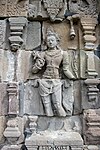
“Bodhisattva (Sk). Lit., “he, whose essence (sattva) has become intelligence (bodhi)”; those who need but one more incarnation to become perfect Buddhas, i.e., to be entitled to Nirvâna. This, as applied to Manushi (terrestrial) Buddhas. In the metaphysical sense, Bodhisattva is a title given to the sons of the celestial Dhyâni Buddhas.”
Unsourced — Primary work/page citation not yet verified in the QuotesCosmos archive. Per our Unnamed Sources & Verification Policy, quotes without confirmed primary editions are explicitly marked Unsourced while under editorial review.
“Mahâtma. Lit., “great soul”. An adept of the highest order. Exalted beings who, having attained to the mastery over their lower principles are thus living unimpeded by the “man of flesh”, and are in possession of knowledge and power commensurate with the stage they have reached in their spiritual evolution. Called in Pali Rahats and Arhats.”

Unsourced — Primary work/page citation not yet verified in the QuotesCosmos archive. Per our Unnamed Sources & Verification Policy, quotes without confirmed primary editions are explicitly marked Unsourced while under editorial review.
“[We do not]... blame, but rather pity, in our innermost heart, the "wise men" of our age for trying to carry out the only policy that will keep them on the pinnacle of their "authority"; as they could not, if even they would, act otherwise and preserve their prestige with the masses, or escape from being speedily outcast by their colleagues.”
Unsourced — Primary work/page citation not yet verified in the QuotesCosmos archive. Per our Unnamed Sources & Verification Policy, quotes without confirmed primary editions are explicitly marked Unsourced while under editorial review.
“Through its teaching, through the philosophy which it has rendered accessible and intelligible to the modern mind, the West will learn to understand and appreciate the East at its true value. Further, the development of the psychic powers and faculties, the premonitory symptoms of which are already visible in America, will proceed healthily and normally.”
Unsourced — Primary work/page citation not yet verified in the QuotesCosmos archive. Per our Unnamed Sources & Verification Policy, quotes without confirmed primary editions are explicitly marked Unsourced while under editorial review.
“Nothing of that which is conducive to help man, collectively or individually, to live — not "happily" — but less unhappily in this world, ought to be indifferent to the Theosophist-Occultist. It is no concern of his whether his help benefits a man in his worldly or spiritual progress; his first duty is to be ever ready to help if he can, without stopping to philosophize.”

Unsourced — Primary work/page citation not yet verified in the QuotesCosmos archive. Per our Unnamed Sources & Verification Policy, quotes without confirmed primary editions are explicitly marked Unsourced while under editorial review.
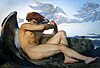
“Lucifer (Lat.). The planet Venus, as the bright “Morning Star”. Before Milton, Lucifer had never been a name of the Devil. Quite the reverse, since the Christian Saviour is made to say of himself in Revelations (xvi. 22.) “I am . . . the bright morning star” or Lucifer. One of the early Popes of Rome bore that name; and there was even a Christian sect in the fourth century which was called the Luciferians.”
Unsourced — Primary work/page citation not yet verified in the QuotesCosmos archive. Per our Unnamed Sources & Verification Policy, quotes without confirmed primary editions are explicitly marked Unsourced while under editorial review.
“We call them “Masters” because they are our teachers; and because from them we have derived all the Theosophical truths, however inadequately some of us may have expressed, and others understood, them. They are men of great learning, whom we term Initiates, and still greater holiness of life. They are not ascetics in the ordinary sense, though they certainly remain apart from the turmoil and strife of your western world.”
Unsourced — Primary work/page citation not yet verified in the QuotesCosmos archive. Per our Unnamed Sources & Verification Policy, quotes without confirmed primary editions are explicitly marked Unsourced while under editorial review.
“Magi (Lat.). The name of the ancient hereditary priests and learned adepts in Persia and Media, a word derived from Mâha great, which became later mog or mag, a priest in Pehlevi. Porphyry describes them (Abst. iv. 16) as “The learned men who are engaged among the Persians in the service of the Deity are called Magi”, and Suidas informs us that “among the Persians the lovers of wisdom (philalethai) are called Magi”...”

Unsourced — Primary work/page citation not yet verified in the QuotesCosmos archive. Per our Unnamed Sources & Verification Policy, quotes without confirmed primary editions are explicitly marked Unsourced while under editorial review.
“To this day no one seems even to feel quite certain whether the Theosophists are a kind of Serpent-and-Devil worshipers, or simply “Esoteric Buddhists”—whatever that may mean. It was useless for us to go on denying, day after day and year after year, every kind of inconceivable cock-and-bull stories about us; for, no sooner was one disposed of, than another, a still more absurd and malicious one, was born out of the ashes of the first.”
Unsourced — Primary work/page citation not yet verified in the QuotesCosmos archive. Per our Unnamed Sources & Verification Policy, quotes without confirmed primary editions are explicitly marked Unsourced while under editorial review.
“Mankind will be saved from the terrible dangers, both mental and bodily, which are inevitable when that unfolding takes place, as it threatens to do, in a hot-bed of selfishness and all evil passions. Man’s mental and psychic growth will proceed in harmony with his moral improvement, while his material surroundings will reflect the peace and fraternal goodwill which will reign in his mind, instead of the discord and strife which is everywhere apparent around us today.”

Unsourced — Primary work/page citation not yet verified in the QuotesCosmos archive. Per our Unnamed Sources & Verification Policy, quotes without confirmed primary editions are explicitly marked Unsourced while under editorial review.
“So long as the T.S. has a few devoted members willing to work for it without reward and thanks, so long as a few good Theosophists support it with occasional donations, so long will it exist, and nothing can crush it.
Enquirer: I have heard many Theosophists speak of a “power behind the Society” and of certain “Mahatmas,” mentioned also in Mr. Sinnett’s works, that are said to have founded the Society, to watch over and protect it.
HPB: You may laugh, but it is so.”
Enquirer: I have heard many Theosophists speak of a “power behind the Society” and of certain “Mahatmas,” mentioned also in Mr. Sinnett’s works, that are said to have founded the Society, to watch over and protect it.
HPB: You may laugh, but it is so.”

Unsourced — Primary work/page citation not yet verified in the QuotesCosmos archive. Per our Unnamed Sources & Verification Policy, quotes without confirmed primary editions are explicitly marked Unsourced while under editorial review.
“The Society will live on into and through the twentieth century. It will gradually leaven and permeate the great mass of thinking and intelligent people with its large-minded and noble ideas of Religion, Duty, and Philanthropy. Slowly but surely it will burst asunder the iron fetters of creeds and dogmas, of social and caste prejudices; it will break down racial and national antipathies and barriers, and will open the way to the practical realization of the Brotherhood of all men.”
Unsourced — Primary work/page citation not yet verified in the QuotesCosmos archive. Per our Unnamed Sources & Verification Policy, quotes without confirmed primary editions are explicitly marked Unsourced while under editorial review.
“The origin of all religions -- Judaeo-Christianity included -- is to be found in a few primeval truths, not one of which can be explained apart from all the others, as each is a complement of the rest in some one detail. And they are all, more or less, broken rays of the same Sun of truth, and their beginnings have to be sought in the archaic records of the Wisdom-religion. Without the light of the latter, the greatest scholars can see but the skeletons thereof covered with masks of fancy”
Unsourced — Primary work/page citation not yet verified in the QuotesCosmos archive. Per our Unnamed Sources & Verification Policy, quotes without confirmed primary editions are explicitly marked Unsourced while under editorial review.
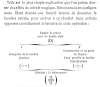
“Clairvoyance. The faculty of seeing with the inner eye or spiritual sight. As now used it is a loose and flippant term, embracing under its meaning a happy guess due to natural shrewdness or intuition, and also that faculty which was so remarkably exercised by Jacob Boehme and Swedenborg. Real clairvoyance means the faculty of seeing through the densest matter (the latter disappearing at the will and before the spiritual eye of the Seer), and irrespective of time (past, present and future) or distance.”
Unsourced — Primary work/page citation not yet verified in the QuotesCosmos archive. Per our Unnamed Sources & Verification Policy, quotes without confirmed primary editions are explicitly marked Unsourced while under editorial review.
“You must bear in mind how many powerful adversaries we have aroused ever since the formation of our Society... Intrinsically, Theosophy is the most serious movement of this age; and one, moreover, which threatens the very life of most of the time-honoured humbugs, prejudices, and social evils of the day — those evils which fatten and make happy the upper ten and their imitators and sycophants, the wealthy dozens of the middle classes, while they positively crush and starve out of existence the millions of the poor.”
Unsourced — Primary work/page citation not yet verified in the QuotesCosmos archive. Per our Unnamed Sources & Verification Policy, quotes without confirmed primary editions are explicitly marked Unsourced while under editorial review.
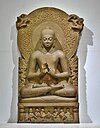
“Buddha (Sk.). Lit., “The Enlightened”. The highest degree of knowledge. To become a Buddha one has to break through the bondage of sense and personality; to acquire a complete perception of the REAL SELF and learn not to separate it from all otherselves; to learn by experience the utter unreality of all phenomena of the visible Kosmos foremost of all; to reach a complete detachment from all that is evanescent and finite, and live while yet on Earth in the immortal and the everlasting alone, in a supreme state of holiness.”
Unsourced — Primary work/page citation not yet verified in the QuotesCosmos archive. Per our Unnamed Sources & Verification Policy, quotes without confirmed primary editions are explicitly marked Unsourced while under editorial review.
“Our age, we say, is inferior in Wisdom to any other, because it professes, more visibly every day, contempt for truth and justice, without which there can be no Wisdom. Because our civilization, built up of shams and appearances, is at best like a beautiful green morass, a bog, spread over a deadly quagmire. Because this century of culture and worship of matter, while offering prizes and premiums for every "best thing" under the Sun, from the biggest baby and the largest orchid down to the strongest pugilist and the fattest pig, has no encouragement to offer to morality; no prize to give for any moral virtue.”
Unsourced — Primary work/page citation not yet verified in the QuotesCosmos archive. Per our Unnamed Sources & Verification Policy, quotes without confirmed primary editions are explicitly marked Unsourced while under editorial review.
“How, then, can it be thought possible for a man to enter the “straight gate” of occultism when his daily and hourly thoughts are bound up with worldly things, desires of possession and power, with lust, ambition, and duties which, however honorable, are still of the earth...? Even the love for wife and family — the purest as the most unselfish of human affections is a barrier to real occultism... What lover... would not break the happiness of every other man and woman around him to satisfy the desire of one whom he loves? This is but natural... in the light of the code of human affections; less so, in that of divine universal love. p. 60”

Unsourced — Primary work/page citation not yet verified in the QuotesCosmos archive. Per our Unnamed Sources & Verification Policy, quotes without confirmed primary editions are explicitly marked Unsourced while under editorial review.
“Om or Aum (Sk.). A mystic syllable, the most solemn of all words in India. It is “an invocation, a benediction, an affirmation and a promise and it is so sacred, as to be indeed the word at low breath of occult, primitive masonry. No one must be near when the syllable is pronounced for a purpose. This word is usually placed at the beginning of sacred Scriptures, and is prefixed to prayers. It is a compound of three letters a,u,m, which, in the popular belief, are typical of the three Vedas, also of three gods—A (Agni) V (Varuna) and M (Maruts) or Fire, Water and Air. In esoteric philosophy these are the three sacred fires, or the “triple fire”in the Universe and Man, besides many other things...”
Unsourced — Primary work/page citation not yet verified in the QuotesCosmos archive. Per our Unnamed Sources & Verification Policy, quotes without confirmed primary editions are explicitly marked Unsourced while under editorial review.
“The possible truths, hazily perceived in the world of abstraction, like those inferred from observation and experiment in the world of matter, are forced upon the profane multitudes, too busy to think for themselves, under the form of Divine revelation and scientific authority. But the same question stands open from the days of Socrates and Pilate down to our own age of wholesale negation: is there such a thing as absolute truth in the hands of any one party or man? Reason answers, "there cannot be." There is no room for absolute truth upon any subject whatsoever, in a world as finite and conditioned as man is himself. But there are relative truths, and we have to make the best we can of them.”

Unsourced — Primary work/page citation not yet verified in the QuotesCosmos archive. Per our Unnamed Sources & Verification Policy, quotes without confirmed primary editions are explicitly marked Unsourced while under editorial review.
“HPB:...Theosophy is Divine Knowledge or Science... "Divine Wisdom," (Theosophia) or Wisdom of the gods, as (theogonia), genealogy of the gods. The word theos means a god in Greek, one of the divine beings, certainly not "God" in the sense attached in our day to the term. Therefore, it is not "Wisdom of God," as translated by some, but Divine Wisdom such as that possessed by the gods. The term is many thousand years old... It comes to us from the Alexandrian philosophers, called lovers of truth, Philaletheians, from phil "loving," and aletheia "truth." The name Theosophy dates from the third century of our era, and began with Ammonius Saccas and his disciples, who started the Eclectic Theosophical system.”
Unsourced — Primary work/page citation not yet verified in the QuotesCosmos archive. Per our Unnamed Sources & Verification Policy, quotes without confirmed primary editions are explicitly marked Unsourced while under editorial review.
“It is curious to see how prophetic in almost all things was the writer of Vishnu Purâna when foretelling to Maitreya some of the dark influences and sins of this Kali Yug. For after saying that the “barbarians” will be masters of the banks… There will be contemporary monarchs, reigning over the earth— kings of churlish spirit, violent temper, and ever addicted to falsehood and wickedness... Wealth and piety will decrease until the world will be wholly depraved. Property alone will confer rank; wealth will be the only source of devotion; passion will be the sole bond of union between the sexes; falsehood will be the only means of success in litigation; and women will be objects merely of sensual gratification.”

Unsourced — Primary work/page citation not yet verified in the QuotesCosmos archive. Per our Unnamed Sources & Verification Policy, quotes without confirmed primary editions are explicitly marked Unsourced while under editorial review.
“Pre-existence. The term used to denote that we have lived before. The same as reincarnation in the past. The idea is derided by some, rejected by others, called absurd and inconsistent by the third yet it is the oldest and the most universally accepted belief from an immemorial antiquity. And if this belief was universally accepted by the most subtle philosophical minds of the pre-Christian world, surely it is not amiss that some of our modern intellectual men should also believe in it, or at least give the doctrine the benefit of the doubt. Even the Bible hints at it more than once, St. John the Baptist being regarded as the reincarnation of Elijah, and the Disciples asking whether the blind man was born blind because of his sins, which is equal to saying that he had lived and sinned before being born blind...”

Unsourced — Primary work/page citation not yet verified in the QuotesCosmos archive. Per our Unnamed Sources & Verification Policy, quotes without confirmed primary editions are explicitly marked Unsourced while under editorial review.
“For, while the heart is full of thoughts for a little group of selves, near and dear to us, how shall the rest of mankind fare in our souls? What percentage of love and care will there remain to bestow on the “great orphan”? And how shall the “still small voice” make itself heard in a soul entirely occupied with its own privileged tenants? What room is there left for the needs of Humanity en bloc...? He who would profit by the wisdom of the universal mind, has to reach it through the whole of Humanity without distinction of race, complexion, religion, or social status. It is altruism, not ego-ism even in its most legal and noble conception, that can lead the unit to merge its little Self in the Universal Selves. It is... to this work that the true disciple of true Occultism has to devote himself if he would obtain... divine Wisdom and Knowledge. p. 62”

Unsourced — Primary work/page citation not yet verified in the QuotesCosmos archive. Per our Unnamed Sources & Verification Policy, quotes without confirmed primary editions are explicitly marked Unsourced while under editorial review.
“Magic. The great “Science”. According to Deveria and other Orientalists, “magic was considered as a sacred science inseparable from religion” by the oldest and most civilized and learned nations. The Egyptians, for instance, were one of the most sincerely religious nations, as were and still are the Hindus. “Magic consists of, and is acquired by the worship of the gods”, said Plato. Could then a nation, which, owing to the irrefragable evidence of inscriptions and papyri, is proved to have firmly believed in magic for thousands of years, have been deceived for so long a time. And is it likely that generations upon generations of a learned and pious hierarchy, many among whom led lives of self-martyrdom, holiness and asceticism, would have gone on deceiving themselves and the people (or even only the latter) for the pleasure of perpetuating belief in “ miracles”? ...”

Unsourced — Primary work/page citation not yet verified in the QuotesCosmos archive. Per our Unnamed Sources & Verification Policy, quotes without confirmed primary editions are explicitly marked Unsourced while under editorial review.
“Paracelsus. The symbolical name adopted by the greatest Occultist of the middle ages—Philip Bombastes Aureolus Theophrastus von Hohenheim—born in the canton of Zurich in 1493. He was the cleverest physician of his age, and the most renowned for curing almost any illness by the power of talismans prepared by himself. He never had a friend, but was surrounded by enemies, the most bitter of whom were the Churchmen and their party. That he was accused of being in league with the devil stands to reason, nor is it to be wondered at that finally he was murdered by some unknown foe, at the early age of forty-eight. He died at Salzburg, leaving a number of works behind him, which are to this day greatly valued by the Kabbalists and Occultists. Many of his utterances have proved prophetic. He was a clairvoyant of great powers, one of the most learned and erudite philosophers and mystics, and a distinguished Alchemist. Physics is indebted to him for the discovery of nitrogen gas, or Azote.”
Unsourced — Primary work/page citation not yet verified in the QuotesCosmos archive. Per our Unnamed Sources & Verification Policy, quotes without confirmed primary editions are explicitly marked Unsourced while under editorial review.
“Reincarnation. The doctrine of rebirth, believed in by Jesus and the Apostles, as by all men in those days, but denied now by the Christians. All the Egyptian converts to Christianity, Church Fathers and others, believed in this doctrine, as shown by the writings of several. In the still existing symbols, the human-headed bird flying towards a mummy, a body, or “the soul uniting itself with its sahou (glorified body of the Ego, and also the kâmalokic shell) proves this belief. “The song of the Resurrection” chanted by Isis to recall her dead husband to life, might be translated “Song of Rebirth”, as Osiris is collective Humanity. “Oh! Osiris [here follows the name of the Osirified mummy, or the departed], rise again in holy earth (matter), august mummy in the coffin, under thy corporeal substances”, was the funeral prayer of the priest over the deceased. “Resurrection” with the Egyptians never meant the resurrection of the mutilated mummy, but of the Soul that informed it, the Ego in a new body. The putting on of flesh periodically by the Soul or the Ego, was a universal belief; nor can anything be more consonant with justice and Karmic law.”

Unsourced — Primary work/page citation not yet verified in the QuotesCosmos archive. Per our Unnamed Sources & Verification Policy, quotes without confirmed primary editions are explicitly marked Unsourced while under editorial review.
“We are in the Kali Yuga [Sanskrit term meaning Dark Age] and its fatal influence is a thousand-fold more powerful in the West than it is in the East; hence the easy preys made by the Powers of the Age of Darkness in this cyclic struggle, and the many delusions under which the world is now laboring. One of these is the relative facility with which men fancy they can get at the "Gate" and cross the threshold of Occultism without any great sacrifice. It is the dream of most Theosophists, one inspired by desire for Power and personal selfishness, and it is not such feelings that can ever lead them to the coveted goal. For, as well said by one believed to have sacrificed himself for Humanity--"Strait is the gate and narrow is the way which leadeth unto life" eternal, and therefore "few there be that find it." (Matthew 7:14) So strait indeed, that at the bare mention of some of the preliminary difficulties the affrighted Western candidates turn back and retreat with a shudder... Let them stop here and attempt no more in their great weakness. For if, while turning their backs on the narrow gate, they are dragged by their desire for the Occult one step in the direction of the broad and more inviting gates of that golden mystery which glitters in the light of illusion, woe to them!”
Unsourced — Primary work/page citation not yet verified in the QuotesCosmos archive. Per our Unnamed Sources & Verification Policy, quotes without confirmed primary editions are explicitly marked Unsourced while under editorial review.
“I ask you also to remember that, on this important occasion, my voice is but the feeble echo of other more sacred voices, and the transmitter of the approval of Those whose presence is alive in more than one true Theosophical heart, and lives, as I know, preeminently in yours. May the assembled Society feel the warm greeting as earnestly as it is given, and may every Fellow present, who realizes that he has deserved it, profit by the Blessings sent...
It must be remembered... that it (Theosophical Society) was intended to stem the current of materialism... For by “materialism” is meant not only an anti-philosophical negation of pure spirit, and, even more, materialism in conduct and action — brutality, hypocrisy, and, above all, selfishness — but also the fruits of a disbelief in all but material things, a disbelief which has increased enormously during the last century...
The function of Theosophists is to open men’s hearts and understandings to charity, justice, and generosity, attributes which belong specifically to the human kingdom and are natural to man when he has developed the qualities of a human being. Theosophy teaches the animal-man to be a human-man; and when people have learnt to think and feel as truly human beings should feel and think, they will act humanely, and works of charity, justice, and generosity will be done spontaneously by all.”
Unsourced — Primary work/page citation not yet verified in the QuotesCosmos archive. Per our Unnamed Sources & Verification Policy, quotes without confirmed primary editions are explicitly marked Unsourced while under editorial review.
“Karma (Sk.). Physically, action: metaphysically, the LAW OF RETRIBUTION, the Law of cause and effect or Ethical Causation. Nemesis, only in one sense, that of bad Karma. It is the eleventh Nidana in the concatenation of causes and effects in orthodox Buddhism ; yet it is the power that controls all things, the resultant of moral action, the meta physical Samskâra, or the moral effect of an act committed for the attainment of something which gratifies a personal desire. There is the Karma of merit and the Karma of demerit. Karma neither punishes nor rewards, it is simply the one Universal LAW which guides unerringly, and, so to say, blindly, all other laws productive of certain effects along the grooves of their respective causations. When Buddhism teaches that “Karma is that moral kernel (of any being) which alone survives death and continues in transmigration ‘or reincarnation, it simply means that there remains naught after each Personality but the causes produced by it; causes which are undying, i.e., which cannot be eliminated from the Universe until replaced by their legitimate effects, and wiped out by them, so to speak, and such causes—unless compensated during the life of the person who produced them with adequate effects, will follow the reincarnated Ego, and reach it in its subsequent reincarnation until a harmony between effects and causes is fully reestablished.”

Unsourced — Primary work/page citation not yet verified in the QuotesCosmos archive. Per our Unnamed Sources & Verification Policy, quotes without confirmed primary editions are explicitly marked Unsourced while under editorial review.
“Buddha Siddhârta (Sk.) The name given to Gautama, the Prince of Kapilavastu, at his birth... Gautama, the Buddha, would not have been a mortal man, had he not passed through hundreds and thousands of births previous to his last.... (p. 66) During the years of his mission it is blameless and pure as that of a god—or as the latter should be. He is a perfect example of a divine, godly man. He reached Buddhaship—i.e., complete enlightenment—entirely by his own merit and owing to his own individual exertions, no god being supposed to have any personal merit in the exercise of goodness and holiness. Esoteric teachings claim that he renounced Nirvâna and gave up the Dharmakâya vesture to remain a “Buddha of compassion” within the reach of the miseries of this world.
...The religious philosophy he left... has produced for over 2,000 years generations of good and unselfish men. His is the only absolutely bloodless religion among all the existing religions tolerant and liberal, teaching universal compassion and charity, love and self-sacrifice, poverty and contentment with one’s lot, whatever it may he. No persecutions, and enforcement of faith by fire and sword, have ever disgraced it. No thunder-and-lightning-vomiting god has interfered with its chaste commandments; and if the simple, humane and philosophical code of daily life left to us by the greatest Man-Reformer ever known, should ever come to he adopted by mankind at large, then indeed an era of bliss and peace would dawn on Humanity. (p. 68)”
...The religious philosophy he left... has produced for over 2,000 years generations of good and unselfish men. His is the only absolutely bloodless religion among all the existing religions tolerant and liberal, teaching universal compassion and charity, love and self-sacrifice, poverty and contentment with one’s lot, whatever it may he. No persecutions, and enforcement of faith by fire and sword, have ever disgraced it. No thunder-and-lightning-vomiting god has interfered with its chaste commandments; and if the simple, humane and philosophical code of daily life left to us by the greatest Man-Reformer ever known, should ever come to he adopted by mankind at large, then indeed an era of bliss and peace would dawn on Humanity. (p. 68)”
Unsourced — Primary work/page citation not yet verified in the QuotesCosmos archive. Per our Unnamed Sources & Verification Policy, quotes without confirmed primary editions are explicitly marked Unsourced while under editorial review.
Helena Blavatsky Quotes by Topic
Find exactly what you are looking for by browsing this categorized list of Helena Blavatsky quotes by topic.
Helena Blavatsky on Egypt–India relations 4 quotes
“Thus, according to every probability, Egypt owes her civilization, her civil institutions, and her arts, to India. But against the latter assumption we have a whole army of "authorities" arrayed, and what matters if the latter do deny the fact at present?”

Unsourced — Primary work/page citation not yet verified in the QuotesCosmos archive. Per our Unnamed Sources & Verification Policy, quotes without confirmed primary editions are explicitly marked Unsourced while under editorial review.
Helena Blavatsky on Devil 3 quotes
“The true doctrine of Buddha says that the demons, when nature produced the sun, moon, and stars, were human beings, but, on account of their sins, they fell from the state of felicity. If they commit greater sins, they suffer greater punishments, and condemned men are reckoned by them among the devils; while, on the contrary, demons who die (elemental spirits) and are born or incarnated as men, and commit no more sin, can arrive at the state of celestial felicity. p. 402”
Unsourced — Primary work/page citation not yet verified in the QuotesCosmos archive. Per our Unnamed Sources & Verification Policy, quotes without confirmed primary editions are explicitly marked Unsourced while under editorial review.
Helena Blavatsky on Consciousness 3 quotes
“Apart from Cosmic Substance, Cosmic Ideation could not manifest as individual consciousness, since it is only through a vehicle of matter that consciousness wells up as “I am I,” a physical basis being necessary to focus a ray of the Universal Mind at a certain stage of complexity. Again, apart from Cosmic Ideation, Cosmic Substance would remain an empty abstraction, and no emergence of consciousness could ensue. The “Manifested Universe,” therefore, is pervaded by duality, which is, as it were, the very essence of its existence as “manifestation.” p.15”

Unsourced — Primary work/page citation not yet verified in the QuotesCosmos archive. Per our Unnamed Sources & Verification Policy, quotes without confirmed primary editions are explicitly marked Unsourced while under editorial review.
Helena Blavatsky on Reincarnation 2 quotes
“If reason has been so far developed as to become active and discriminative, there is no reincarnation on this earth, for the three parts of the triune man have been united together, and he is capable of running the race. But when the new being has not passed beyond the condition of monad, or when, as in the idiot, the trinity has not been completed, the immortal spark which illuminates it, has to reenter on the earthly plane as it was frustrated in its first attempt. Otherwise, the mortal or astral, and the immortal or divine, souls, could not progress in unison and pass onward to the sphere above. p. 352”
Unsourced — Primary work/page citation not yet verified in the QuotesCosmos archive. Per our Unnamed Sources & Verification Policy, quotes without confirmed primary editions are explicitly marked Unsourced while under editorial review.
Helena Blavatsky on Lost literary work 2 quotes
“What do the scholars say of Buddhist literature? Have they got it in its completeness? Assuredly not. ... Moreover, "according to a tradition preserved by the Buddhist schools, both of the South and of the North, the sacred Buddhist Canon comprised originally 80,000 or 84,000 tracts, but most of them were lost, so that there remained but 6,000," the professor tells his audiences. "Lost" as usual for Europeans. But who can be quite sure that they are likewise lost for Buddhists and Brahmins? Considering the sacredness for the Buddhists of every line written upon Buddha or his "Good Law," the loss of nearly 76,000 tracts does seem miraculous.”
Unsourced — Primary work/page citation not yet verified in the QuotesCosmos archive. Per our Unnamed Sources & Verification Policy, quotes without confirmed primary editions are explicitly marked Unsourced while under editorial review.
What Helena Blavatsky Said About Others
Discover personal opinions Helena Blavatsky shared regarding contemporaries.
Helena Blavatsky on Masters of Wisdom (Theosophy)
“The work now submitted to public judgment is the fruit of a somewhat intimate acquaintance with Eastern adepts and study of Their science. It is offered to such as are willing to accept truth wherever it may be found, and to defend it, even looking popular prejudice straight in the face.”
Unsourced — Primary work/page citation not yet verified in the QuotesCosmos archive. Per our Unnamed Sources & Verification Policy, quotes without confirmed primary editions are explicitly marked Unsourced while under editorial review.
Helena Blavatsky on Francis Bacon
“Bacon was one of the first to strike the key-note of materialism, not only by his inductive method (renovated from ill-digested Aristotle), but by the general tenor of his writings. He inverts the order of mental Evolution when saying that "the first Creation of God was the light of the sense; the last was the light of the reason; and his Sabbath work ever since is the illumination of the Spirit." It is just the reverse.”

Unsourced — Primary work/page citation not yet verified in the QuotesCosmos archive. Per our Unnamed Sources & Verification Policy, quotes without confirmed primary editions are explicitly marked Unsourced while under editorial review.
Helena Blavatsky on Edward Pococke
“Pococke, in his most ingenious work, strongly advocates the same idea, and endeavors to establish still more firmly the identity of the Egyptian, Greek, and Indian mythology. He shows the head of the Rajpoot Solar race -- in fact the great Cuclo-pos (Cyclop or builder) -- called "The great sun," in the earliest Hindu tradition. This Gok-la Prince, the patriarch of the vast bands of Inachienses, he says, "this Great Sun was deified at his death, and according to the Indian doctrine of the metempsychosis, his Soul was supposed to have transmigrated into the bull 'Apis,' the Sera-pis of the Greeks, and the SOORAPAS, or 'Sun-Chief' of the Egyptians. . . .”

Unsourced — Primary work/page citation not yet verified in the QuotesCosmos archive. Per our Unnamed Sources & Verification Policy, quotes without confirmed primary editions are explicitly marked Unsourced while under editorial review.
Helena Blavatsky on Pythagoras
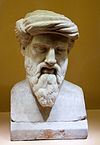
“The world is always ungrateful to its great men. Florence has built a statue to Galileo, but hardly even mentions Pythagoras. The former had a ready guide in the treatises of Copernicus, who had been obliged to contend against the universally established Ptolemaic system. But neither Galileo nor modern astronomy discovered the emplacement of the planetary bodies. Thousands of ages before, it was taught by the sages of Middle Asia, and brought thence by Pythagoras, not as a speculation, but as a demonstrated science. "The numerals of Pythagoras," says Porphyry, "were hieroglyphical symbols, by means whereof he explained all ideas concerning the nature of all things." Verily, then, to antiquity alone have we to look for the origin of all things. p. 31”
Unsourced — Primary work/page citation not yet verified in the QuotesCosmos archive. Per our Unnamed Sources & Verification Policy, quotes without confirmed primary editions are explicitly marked Unsourced while under editorial review.
Quotes About Helena Blavatsky
Gain deeper perspective through quotes about Helena Blavatsky from others.
Annie Besant on Helena Blavatsky 2 quotes
“And we, who lived around her, who in closest intimacy watched her day after day, we bear witness to the unselfish beauty of her life, the nobility of her character, and we lay at her feet our most reverent gratitude for knowledge gained, lives purified, strength developed.”

Unsourced — Primary work/page citation not yet verified in the QuotesCosmos archive. Per our Unnamed Sources & Verification Policy, quotes without confirmed primary editions are explicitly marked Unsourced while under editorial review.
Albert Einstein on Helena Blavatsky
“Mme Blavatsky is a bit wild and somewhat irrational and speaks as if she were the Oracle of Delphi. But I will admit that I find some interesting observations in her book which was published as you know, back in 1888, at a time when physics and science were in their swaddling clothes... I'm astonished how much in keeping it is with modern Physics... There are many other significant statements of hers which I find interesting, but for which i have no time to discuss now.”

Unsourced — Primary work/page citation not yet verified in the QuotesCosmos archive. Per our Unnamed Sources & Verification Policy, quotes without confirmed primary editions are explicitly marked Unsourced while under editorial review.
The Master Koot Hoomi on Helena Blavatsky
“Some, most unjustly, try to make H.S.O. and H.P.B., solely responsible for the state of things, those two are, say, far from perfect — in some respects, quite the opposite. But they have that in them (pardon the eternal repetition but it is being as constantly overlooked) which we have but too rarely found elsewhere —Unselfishness, and an eager readiness for self-sacrifice for the good of others; what a multitude of sins does not this cover! It is but a truism, yet I say it, that in adversity alone can we discover the real man. It is a true manhood when one boldly accepts one's share of the collective Karma of the group one works with, and does not permit oneself to be embittered, and to see others in blacker colours than reality, or to throw all blame upon some one "black sheep," a victim, specially selected. Such a true man as that we will ever protect and despite his shortcomings, assist to develop the good he has in him. Such an one is sublimely unselfish; he sinks his personality in his cause, and takes no heed of discomforts or personal obloquy unjustly fastened upon him. (370)”
Unsourced — Primary work/page citation not yet verified in the QuotesCosmos archive. Per our Unnamed Sources & Verification Policy, quotes without confirmed primary editions are explicitly marked Unsourced while under editorial review.
Gustav Niebuhr on Helena Blavatsky
“Madame Blavatsky, as she was known, was an aristocratic, Russian-born medium who founded the Theosophical Society in New York in 1875 and who taught, among much else, that people could contact the spiritual realm with help from higher entities called Masters of Wisdom.”
Unsourced — Primary work/page citation not yet verified in the QuotesCosmos archive. Per our Unnamed Sources & Verification Policy, quotes without confirmed primary editions are explicitly marked Unsourced while under editorial review.
Henry Steel Olcott on Helena Blavatsky 3 quotes
“From boyhood no problem had interested me so much as the mystery of man... [On meeting H.P.B.,] our acquaintance at once ripened into a friendship. We found ourselves to be congenial in opinion, and she brought to our intercourse the great resources of a mind stored with a mass of erudition with regard to the arcane or esoteric philosophies of the ancient times. I found her the most intellectual woman I had ever met in my life, a very eccentric personage, but a person who compelled you to either like her very much or to be very antagonistic to her. Besides these extraordinary literary and mental accomplishments of hers, she also possessed in a very striking degree psychical powers such as we read about in the accounts of the lives of ancient sages, and the proof of the reality of which powers was vouchsafed to many witnesses in America for years before we sailed from New York for India; so that naturally those of us who knew her in those times and subsequently, have been unaffected by all the imputations upon her character that have been so rife during the later years of her life... I now look back to that meeting as the most fortunate event of my life; for it made light shine in all the dark places, and sent me out on a mission to help to revive... occult science, which grows more absorbingly interesting every day.”

Unsourced — Primary work/page citation not yet verified in the QuotesCosmos archive. Per our Unnamed Sources & Verification Policy, quotes without confirmed primary editions are explicitly marked Unsourced while under editorial review.

About Helena Blavatsky
Helena Petrovna Blavatsky (Russian: Елена Петровна Блаватская, Yelena Petrovna Blavatskaya, often known as Madame Blavatsky; née von Hahn; Ukrainian: Олена Петрівна Блаватська, Olena Petrivna Blavatska; 12 August O.S. 31 July 1831 – 8 May 1891), better known as "Helena Blavatsky" or "Madame Blavatsky", was an occultist, spirit medium, and author who co-founded the Theosophical Society in 1875. She gained an international following as the leading theoretician of Theosophy, the esoteric movement that the Society promoted. Blavatsky was a controversial figure during her lifetime, championed by supporters as an enlightened Sage and derided as a charlatan by critics. Her Theosophical doctrines influenced the spread of Hindu and Buddhist ideas in the West as well as the development of Western esoteric currents like Anthroposophy, and the New Age Movement.