Link Copied!
Helen Keller Quotes (1880-1968)
Writer, Activist





















About Helen Keller
Helen Adams Keller (June 27, 1880 – June 1, 1968) was an American writer and social activist; an illness (possibly scarlet fever or meningitis) at the age of 19 months left her deaf and blind.
Best Helen Keller Quotes
Shortest
Earliest
Explore our curated collection of the most famous and impactful Helen Keller quotes.



“The bulk of the world's knowledge is an imaginary construction.”

“Optimism is the faith that leads to achievement; nothing can be done without hope.”
- Helen Keller, Optimism
“I do not remember a time since I have been capable of loving books that I have not loved Shakespeare.”
- Helen Keller, The Story of My Life

“I do not want the peace that passeth understanding. I want the understanding which bringeth peace.”

“No matter how dull, or how mean, or how wise a man is, he feels that happiness is his indisputable right.”
- Helen Keller, Optimism
“The Bible gives me a deep, comforting sense that "things seen are temporal and things unseen are eternal." ”
- Helen Keller, The Story of My Life
“If it is true that the violin is the most perfect of musical instruments, then Greek is the violin of human thought.”
- Helen Keller, The Story of My Life
“Toleration ... is the greatest gift of the mind; it requires the same effort of the brain that it takes to balance oneself on a bicycle.”
- Helen Keller, The Story of My Life
“Who shall dare let his incapacity for hope or goodness cast a shadow upon the courage of those who bear their burdens as if they were privileges?”
- Helen Keller, Optimism
“I demand that the world be good, and lo, it obeys. I proclaim the world good, and facts range themselves to prove my proclamation overwhelmingly true.”
- Helen Keller, Optimism

Published in 1915, this statement reflects the early 20th-century eugenics movement's chilling utilitarian view of human life, prioritizing societal contribution over inherent worth.
“Our puny sentimentalism has caused us to forget that a human life is sacred only when it may be of some use to itself and to the world.”
“Many people have a wrong of idea of what constitutes true happiness. It is not obtained through a self-gratification, but through fidelity to a worthy purpose.”
“Optimism, then, is a fact within my own heart. But as I look out upon life, my heart meets no contradiction. The outward world justifies my inward universe of good.”
- Helen Keller, Optimism

“It is the possibility of happiness, intelligence and power that give life its sanctity, and they are absent in the case of a poor, misshapen, paralyzed, unthinking creature.”

“We differ, blind and seeing, one from another, not in our senses, but in the use we make of them, in the imagination and courage with which we seek wisdom beyond the senses.”


“It is a mistake always to contemplate the good and ignore the evil, because by making people neglectful it lets in disaster. There is a dangerous optimism of ignorance and indifference.”
- Helen Keller, Optimism
“No doubt the reason is that character cannot be developed in ease and quiet. Only through experience of trial and suffering can the soul be strengthened, vision cleared, ambition inspired, and success achieved.”

“The test of all beliefs is their practical effect in life. If it be true that optimism compels the world forward, and pessimism retards it, then it is dangerous to propagate a pessimistic philosophy.”
- Helen Keller, Optimism
“To know the history of philosophy is to know that the highest thinkers of the ages, the seers of the tribes and the nations, have been optimists. The growth of philosophy is the story of man's spiritual life.”
- Helen Keller, Optimism
“Some people do not like to think. If one thinks, one must reach conclusions; and conclusions are not always pleasant. They are a thorn in the spirit. But I consider it a priceless gift and a deep responsibility to think.”

Helen Keller's sentiment from *The Open Door* challenges conventional notions of security, advocating for a life embraced with risk and adventure over perceived safety.
“Security is mostly a superstition. It does not exist in nature, nor do the children of men as a whole experience it. Avoiding danger is no safer in the long run than outright exposure. Life is either a daring adventure, or nothing.”

“To what is good I open the doors of my being, and jealously shut them against what is bad. Such is the force of this beautiful and wilful conviction, it carries itself in the face of all opposition. I am never discouraged by absence of good. I never can be argued into hopelessness.”
- Helen Keller, Optimism

“Self-culture has been loudly and boastfully proclaimed as sufficient for all our ideals of perfection. But if we listen to the best men and women everywhere ... they will say that science may have found a cure for most evils; but it has found no remedy for the worst of them all — the apathy of human beings.”
“I, too, can work, and because I love to labor with my head and my hands, I am an optimist in spite of all. I used to think I should be thwarted in my desire to do something useful. But I have found out that though the ways in which I can make myself useful are few, yet the work open to me is endless.”
- Helen Keller, Optimism
From a 1910 letter, Helen Keller asserts that deafness, unlike blindness, deprives individuals of the linguistic and intellectual connection fostered by the human voice.
“The problems of deafness are deeper and more complex, if not more important, than those of blindness. Deafness is a much worse misfortune. For it means the loss of the most vital stimulus — the sound of the voice that brings language, sets thoughts astir and keeps us in the intellectual company of man.”

“I read "King Lear" soon after "Macbeth," and I shall never forget the feeling of horror when I came to the scene in which Gloster's eyes are put out. Anger seized me, my fingers refused to move, I sat rigid for one long moment, the blood throbbing in my temples, and all the hatred that a child can feel concentrated in my heart.”
- Helen Keller, The Story of My Life
“It is curious to observe what different ideals of happiness people cherish, and in what singular places they look for this well-spring of their life. Many look for it in the hoarding of riches, some in the pride of power, and others in the achievements of art and literature; a few seek it in the exploration of their own minds, or in search for knowledge.”
- Helen Keller, Optimism

“Strike against war, for without you no battles can be fought. Strike against manufacturing shrapnel and gas bombs and all other tools of murder. Strike against preparedness that means death and misery to millions of human beings. Be not dumb, obedient slaves in an army of destruction. Be heroes in an army of construction.”
“I see the clouds part slowly, and I hear a cry of protest against the bigot. The restraining hand of tolerance is laid upon the inquisitor, and the humanist utters a message of peace to the persecuted. Instead of the cry, "Burn the heretic!" men study the human soul with sympathy, and there enters into their hearts a new reverence for that which is unseen.”
- Helen Keller, Optimism
“Literature is my Utopia. Here I am not disenfranchised. No barrier of the senses shuts me out from the sweet, gracious discourse of my book friends. They talk to me without embarrassment or awkwardness. The things I have learned and the things I have been taught seem of ridiculously little importance compared with their "large loves and heavenly charities."”
- Helen Keller, The Story of My Life

“I began to read the Bible long before I could understand it. Now it seems strange to me that there should have been a time when my spirit was deaf to its wondrous harmonies ... But how shall I speak of the glories I have since discovered in the Bible? For years I have read it with an ever-broadening sense of joy and inspiration; and I love it as I love no other book.”
- Helen Keller, The Story of My Life

“Every optimist moves along with progress and hastens it, while every pessimist would keep the world at a standstill. The consequence of pessimism in the life of a nation is the same as in the life of the individual. Pessimism kills the instinct that urges men to struggle against poverty, ignorance and crime, and dries up all the fountains of joy in the world.”
- Helen Keller, Optimism
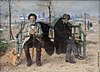
“Capitalism will inevitably find itself face to face with a starving multitude of unemployed workers demanding food or destruction of the social order that has starved them and robbed them of their jobs.Keller, Helen (1918), What is the IWW?, month: January”
- Helen Keller, What is the IWW?

“The most important day I remember in all my life is the one on which my teacher, Anne Mansfield Sullivan, came to me. I am filled with wonder when I consider the immeasurable contrasts between the two lives which it connects. It was the third of March, 1887, three months before I was seven years old.”
- Helen Keller, The Story of My Life
“We have found that our great philosophers and our great men of action are optimists. So, too, our most potent men of letters have been optimists in their books and in their lives. No pessimist ever won an audience commensurately wide with his genius, and many optimistic writers have been read and admired out of all measure to their talents, simply because they wrote of the sunlit side of life.”
- Helen Keller, Optimism
“But in a little measure my small voice of individual experience does join in the declaration of philosophy that the good is the only world, and that world is a world of spirit. It is also a universe where order is All, where an unbroken logic holds the parts together, where disorder defines itself as non-existence, where evil, as St. Augustine held, is delusion, and therefore is not.”
- Helen Keller, Optimism
“The only real blind person at Christmas-time is he who has not Christmas in his heart. We sightless children had the best of eyes that day in our hearts and in our finger-tips. We were glad from the child's necessity of being happy. The blind who have outgrown the child's perpetual joy can be children again on Christmas Day and celebrate in the midst of them who pipe and dance and sing a new song!”

“Ruth is so loyal and gentle-hearted, we cannot help loving her, as she stands with the reapers amid the waving corn. Her beautiful, unselfish spirit shines out like a bright star in the night of a dark and cruel age. Love like Ruth's, love which can rise above conflicting creeds and deep-seated racial prejudices, is hard to find in all the world.”
- Helen Keller, The Story of My Life
“Since my seventeenth year, I have tried to live according to the teachings of Emanuel Swedenborg. By "church" he did not mean an ecclesiastical organization, but a spiritual fellowship of thoughtful men and women who spend their lives for a service to mankind that outlasts them. He called it a civilization that was to be born of a healthy, universal religion—goodwill, mutual understanding, service from each to all, regardless of dogma or ritual.”
“Our democracy is but a name. We vote? What does that mean? It means that we choose between two bodies of real, though not avowed, autocrats. We choose between Tweedledum and Tweedledee.... You ask for votes for women. What good can votes do when ten-elevenths of the land of Great Britain belongs to 200,000 and only one-eleventh to the rest of the 40,000,000? Have your men with their millions of votes freed themselves from this injustice?”
“It lets us into the soul of things and teaches us that although the world is full of suffering, it is full also of the overcoming of it. My optimism, then, does not rest on the absence of evil, but on a glad belief in the preponderance of good and a willing effort always to cooperate with the good, that it may prevail. I try to increase the power God has given me to see the best in everything and every one, and make that Best a part of my life.”
- Helen Keller, Optimism
“Some years ago I met a gentleman who was introduced to me as Mr. McKelway, editor of the Brooklyn Eagle ... At the time the compliments that he paid me were so generous that I blush to remember them. But now that I have come out for Socialism he reminds me and the public that I am deaf and blind and especially liable to error.... The Eagle and I are at war. When it fights back, let it fight fair.... It is not fair fighting or good argument to remind me and others that I cannot see or hear.”
“Have you ever been at sea in a dense fog, when it seemed as if a tangible white darkness shut you in, and the great ship, tense and anxious, groped her way toward the shore with plummet and sounding-line, and you waited with beating heart for something to happen? I was like that ship before my education began, only I was without compass or sounding-line, and had no way of knowing how near the harbour was. "Light! give me light!" was the wordless cry of my soul, and the light of love shone on me in that very hour.”
- Helen Keller, The Story of My Life

“The highest result of education is tolerance. Long ago men fought and died for their faith; but it took ages to teach them the other kind of courage, — the courage to recognize the faiths of their brethren and their rights of conscience. Tolerance is the first principle of community; it is the spirit which conserves the best that all men think. No loss by flood and lightning, no destruction of cities and temples by the hostile forces of nature, has deprived man of so many noble lives and impulses as those which his intolerance has destroyed.”
- Helen Keller, Optimism

“I had now the key to all language, and I was eager to learn to use it. Children who hear acquire language without any particular effort; the words that fall from others' lips they catch on the wing, as it were, delightedly, while the little deaf child must trap them by a slow and often painful process. But whatever the process, the result is wonderful. Gradually from naming an object we advance step by step until we have traversed the vast distance between our first stammered syllable and the sweep of thought in a line of Shakespeare.”
- Helen Keller, The Story of My Life

“Most people measure their happiness in terms of physical pleasure and material possession. Could they win some visible goal which they have set on the horizon, how happy they would be! Lacking this gift or that circumstance, they would be miserable. If happiness is to be so measured, I who cannot hear or see have every reason to sit in a corner with folded hands and weep. If I am happy in spite of my deprivations, if my happiness is so deep that it is a faith, so thoughtful that it becomes a philosophy of life, — if, in short, I am an optimist, my testimony to the creed of optimism is worth hearing.”
- Helen Keller, Optimism
“I want to say to those who are trying to learn to speak and those who are teaching them: Be of good cheer. Do not think of to-day's failures, but of the success that may come to-morrow. You have set yourselves a difficult task, but you will succeed if you persevere, and you will find a joy in overcoming obstacles — a delight in climbing rugged paths, which you would perhaps never know if you did not sometime slip backward — if the road was always smooth and pleasant. Remember, no effort that we make to attain something beautiful is ever lost. Sometime, somewhere, somehow we shall find that which we seek. We shall speak, yes, and sing, too, as God intended we should speak and sing.”
“I believe it is a sacred duty to encourage ourselves and others; to hold the tongue from any unhappy word against God's world, because no man has any right to complain of a universe which God made good, and which thousands of men have striven to keep good. I believe we should so act that we may draw nearer and more near the age when no man shall live at his ease while another suffers. These are the articles of my faith, and there is yet another on which all depends — to bear this faith above every tempest which overfloods it, and to make it a principal in disaster and through affliction. Optimism is the harmony between man's spirit and the spirit of God pronouncing His works good.”
- Helen Keller, Optimism
“Let pessimism once take hold of the mind, and life is all topsy-turvy, all vanity and vexation of spirit. There is no cure for individual or social disorder, except in forgetfulness and annihilation. "Let us eat, drink and be merry," says the pessimist, "for to-morrow we die." If I regarded my life from the point of view of the pessimist, I should be undone. I should seek in vain for the light that does not visit my eyes and the music that does not ring in my ears. I should beg night and day and never be satisfied. I should sit apart in awful solitude, a prey to fear and despair. But since I consider it a duty to myself and to others to be happy, I escape a misery worse than any physical deprivation.”
- Helen Keller, Optimism

“I long to accomplish a great and noble task; but it is my chief duty and joy to accomplish humble tasks as though they were great and noble. It is my service to think how I can best fulfil the demands that each day makes upon me, and to rejoice that others can do what I cannot. Green, the historian,[Life and Letters of John Richard Green. Edited by Leslie Stephen.] tells us that the world is moved along, not only by the mighty shoves of its heroes, but also by the aggregate of the tiny pushes of each honest worker; and that thought alone suffices to guide me in this dark world and wide." p. 21 https://www.google.com/books/edition/Optimism/YrMcAAAAMAAJ”
- Helen Keller, Optimism
“Once I knew the depth where no hope was, and darkness lay on the face of all things. Then love came and set my soul free. Once I knew only darkness and stillness. Now I know hope and joy. Once I fretted and beat myself against the wall that shut me in. Now I rejoice in the consciousness that I can think, act and attain heaven. My life was without past or future; death, the pessimist would say, "a consummation devoutly to be wished." But a little word from the fingers of another fell into my hand that clutched at emptiness, and my heart leaped to the rapture of living. Night fled before the day of thought, and love and joy and hope came up in a passion of obedience to knowledge. Can anyone who has escaped such captivity, who has felt the thrill and glory of freedom, be a pessimist?”
- Helen Keller, Optimism

“I do not pretend that I know the whole solution of the world's problems, but I am burdened with a Puritanical sense of obligation to set the world to rights. I feel responsible for many enterprises that are not really my business at all, but many times I have kept silence on issues that interested me deeply through the fear that others would be blamed for my opinions. I have never been willing to believe that human nature cannot be changed; but even if it cannot, I am sure it can be curbed and led into channels of usefulness. I believe that life, not wealth, is the aim of existence — life including all its attributes of love, happiness, and joyful labour. I believe war is the inevitable fruit of our economic system, but even if I am wrong I believe that truth can lose nothing by agitation but may gain all.”
- Helen Keller, Midstream
“The idea of brotherhood redawns upon the world with a broader significance than the narrow association of members in a sect or creed; and thinkers of great soul like Lessing challenge the world to say which is more godlike, the hatred and tooth-and-nail grapple of conflicting religions, or sweet accord and mutual helpfulness. Ancient prejudice of man against his brother-man wavers and retreats before the radiance of a more generous sentiment, which will not sacrifice men to forms, or rob them of the comfort and strength they find in their own beliefs. The heresy of one age becomes the orthodoxy of the next. Mere tolerance has given place to a sentiment of brotherhood between sincere men of all denominations.”
- Helen Keller, Optimism

“I understand how it was possible for Spinoza to find deep and sustained happiness when he was excommunicated, poor, despised and suspected alike by Jew and Christian; not that the kind world of men ever treated me so, but that his isolation from the universe of sensuous joys is somewhat analogous to mine. He loved the good for its own sake. Like many great spirits he accepted his place in the world, and confided himself childlike to a higher power, believing that it worked through his hands and predominated in his being. He trusted implicitly, and that is what I do. Deep, solemn optimism, it seems to me, should spring from this firm belief in the presence of God in the individual; not a remote, unapproachable governor of the universe, but a God who is very near every one of us, who is present not only in earth, sea and sky, but also in every pure and noble impulse of our hearts, 'the source and centre of all minds, their only point of rest.'”
- Helen Keller, Optimism

“We walked down the path to the well-house, attracted by the fragrance of the honeysuckle with which it was covered. Some one was drawing water and my teacher placed my hand under the spout. As the cool stream gushed over one hand she spelled into the other the word water, first slowly, then rapidly. I stood still, my whole attention fixed upon the motions of her fingers. Suddenly I felt a misty consciousness as of something forgotten — a thrill of returning thought; and somehow the mystery of language was revealed to me. I knew then that "w-a-t-e-r" meant the wonderful cool something that was flowing over my hand. That living word awakened my soul, gave it light, hope, joy, set it free! There were barriers still, it is true, but barriers that could in time be swept away.
I left the well-house eager to learn. Everything had a name, and each name gave birth to a new thought. As we returned to the house every object which I touched seemed to quiver with life. That was because I saw everything with the strange, new sight that had come to me.”
I left the well-house eager to learn. Everything had a name, and each name gave birth to a new thought. As we returned to the house every object which I touched seemed to quiver with life. That was because I saw everything with the strange, new sight that had come to me.”
- Helen Keller, The Story of My Life

“The IWW's affirm as a fundamental principle that the creators of wealth are entitled to all they create. Thus they find themselves pitted against the whole profit-making system. They declare that there can be no compromise so long as the majority of the working class lives in want while the master class lives in luxury. They insist that there can be no peace until the workers organize as a class, take possession of the resources of the earth and the machinery of production and distribution and abolish the wage system. In other words, the workers in their collectivity must own and operate all the essential industrial institutions and secure to each laborer the full value of his product.
It is for these principles, this declaration of class solidarity, that the IWWs are being persecuted, beaten, imprisoned, murdered. If the capitalist class had the sense it is reputed to have, it would know that violence is the worst weapon that can be used against men who have nothing to lose and the world to gain.”
It is for these principles, this declaration of class solidarity, that the IWWs are being persecuted, beaten, imprisoned, murdered. If the capitalist class had the sense it is reputed to have, it would know that violence is the worst weapon that can be used against men who have nothing to lose and the world to gain.”
- Helen Keller, What is the IWW?
“Miss Sullivan touched my forehead and spelled with decided emphasis, "Think."
In a flash I knew that the word was the name of the process that was going on in my head. This was my first conscious perception of an abstract idea.
For a long time I was still ... trying to find a meaning for "love" in the light of this new idea. The sun had been under a cloud all day, and there had been brief showers; but suddenly the sun broke forth in all its southern splendour.
Again I asked my teacher, "Is this not love?"
"Love is something like the clouds that were in the sky before the sun came out," she replied. Then in simpler words than these, which at that time I could not have understood, she explained:
"You cannot touch the clouds, you know; but you feel the rain and know how glad the flowers and the thirsty earth are to have it after a hot day. You cannot touch love either; but you feel the sweetness that it pours into everything. Without love you would not be happy or want to play."
The beautiful truth burst upon my mind — I felt that there were invisible lines stretched between my spirit and the spirits of others.”
In a flash I knew that the word was the name of the process that was going on in my head. This was my first conscious perception of an abstract idea.
For a long time I was still ... trying to find a meaning for "love" in the light of this new idea. The sun had been under a cloud all day, and there had been brief showers; but suddenly the sun broke forth in all its southern splendour.
Again I asked my teacher, "Is this not love?"
"Love is something like the clouds that were in the sky before the sun came out," she replied. Then in simpler words than these, which at that time I could not have understood, she explained:
"You cannot touch the clouds, you know; but you feel the rain and know how glad the flowers and the thirsty earth are to have it after a hot day. You cannot touch love either; but you feel the sweetness that it pours into everything. Without love you would not be happy or want to play."
The beautiful truth burst upon my mind — I felt that there were invisible lines stretched between my spirit and the spirits of others.”
- Helen Keller, The Story of My Life
“I remember the morning that I first asked the meaning of the word, "love." This was before I knew many words. I had found a few early violets in the garden and brought them to my teacher. She tried to kiss me: but at that time I did not like to have any one kiss me except my mother. Miss Sullivan put her arm gently round me and spelled into my hand, "I love Helen."
"What is love?" I asked.
She drew me closer to her and said, "It is here," pointing to my heart, whose beats I was conscious of for the first time. Her words puzzled me very much because I did not then understand anything unless I touched it.
I smelt the violets in her hand and asked, half in words, half in signs, a question which meant, "Is love the sweetness of flowers?"
"No," said my teacher.
Again I thought. The warm sun was shining on us.
"Is this not love?" I asked, pointing in the direction from which the heat came. "Is this not love?"
It seemed to me that there could be nothing more beautiful than the sun, whose warmth makes all things grow. But Miss Sullivan shook her head, and I was greatly puzzled and disappointed. I thought it strange that my teacher could not show me love.”
"What is love?" I asked.
She drew me closer to her and said, "It is here," pointing to my heart, whose beats I was conscious of for the first time. Her words puzzled me very much because I did not then understand anything unless I touched it.
I smelt the violets in her hand and asked, half in words, half in signs, a question which meant, "Is love the sweetness of flowers?"
"No," said my teacher.
Again I thought. The warm sun was shining on us.
"Is this not love?" I asked, pointing in the direction from which the heat came. "Is this not love?"
It seemed to me that there could be nothing more beautiful than the sun, whose warmth makes all things grow. But Miss Sullivan shook her head, and I was greatly puzzled and disappointed. I thought it strange that my teacher could not show me love.”
- Helen Keller, The Story of My Life
“The country is governed for the richest, for the corporations, the bankers, the land speculators, and for the exploiters of labour. Surely we must free men and women together before we can free women. The majority of mankind are working people. So long as their fair demands -- the ownership and control of their lives and livelihood -- are set at naught, we can have neither men's rights nor women's rights. The majority of mankind are ground down by industrial oppression in order that the small remnant may live in ease. How can women hope to help themselves while we and our brothers are helpless against the powerful organizations which modern parties represent and which contrive to rule the people? They rule the people because they own the means of physical life, land, and tools, and the nourishers of intellectual life, the press, the church, and the school. You say that the conduct of the woman suffragists is being disgracefully misrepresented by the British press. Here in America the leading newspapers misrepresent in every possible way the struggles of toiling men and women who seek relief. News that reflects ill upon the employers is skillfully concealed -- news of dreadful conditions under which labourers are forced to produce, news of thousands of men maimed in mills and mines and left without compensation, news of famines and strikes, news of thousands of women driven to a life of shame, news of little children compelled to labour before their hands are ready to drop their toys. Only here and there in a small and as yet uninfluential paper is the truth told about the workman and the fearful burdens under which he staggers.”
- Helen Keller, Out of the Dark

Helen Keller Quotes by Topic
Find exactly what you are looking for by browsing this categorized list of Helen Keller quotes by topic.
Helen Keller on Pessimism 5 quotes
“No pessimist ever won an audience commensurately wide with his genius.”
Helen Keller on Blindness 3 quotes
“We differ, blind and seeing, one from another, not in our senses, but in the use we make of them, in the imagination and courage with which we seek wisdom beyond the senses.”
Helen Keller on Belief 2 quotes
View all 2 quotes on Belief →Helen Keller on Happiness 2 quotes
“A happy life consists not in the absence, but in the mastery of hardships.”
Helen Keller on Love 2 quotes
“The best and most beautiful things in the world cannot be seen nor even touched, but just felt in the heart.”
What Helen Keller Said About Others
Discover personal opinions Helen Keller shared regarding contemporaries.
Helen Keller on Judas Iscariot
Helen Keller on Henry Drummond
“I knew Mr. Henry Drummond, and the memory of his strong, warm hand-clasp is like a benediction. He was the most sympathetic of companions. He knew so much and was so genial that it was impossible to feel dull in his presence.”

Helen Keller on Victor Hugo
“I admire Victor Hugo -- I appreciate his genius, his brilliancy, his romanticism; though he is not one of my literary passions. But Hugo and Goethe and Schiller and all great poets of all great nations are interpreters of eternal things, and my spirit reverently follows them into the regions where Beauty and Truth and Goodness are one.”

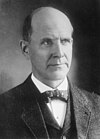
Helen Keller on Eugene V. Debs
In a letter published in 1919, Helen Keller expresses solidarity and admiration for Socialist leader Eugene V. Debs, who was imprisoned for opposing World War I.
“You dear comrade! I have long loved you because you are an apostle of brotherhood and freedom. For years I have thought of you as a dauntless explorer going towards the dawn; and, like a humble adventurer, I have followed in the trail of your footsteps. From time to time the greetings that have come back to me from you have made me very happy; and now I reach out my hand and clasp yours through prison bars.”
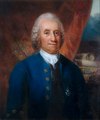
Helen Keller on Emanuel Swedenborg
“Since my seventeenth year, I have tried to live according to the teachings of Emanuel Swedenborg. By "church" he did not mean an ecclesiastical organization, but a spiritual fellowship of thoughtful men and women who spend their lives for a service to mankind that outlasts them. He called it a civilization that was to be born of a healthy, universal religion — goodwill, mutual understanding, service from each to all, regardless of dogma or ritual.”
Quotes About Helen Keller
Gain deeper perspective through quotes about Helen Keller from others.
Source on Helen Keller 6 quotes
“Recently I was visited by a very good friend who had just returned from a long walk in the woods, and I asked her what she had observed. “Nothing in particular,” she replied. I might have been incredulous had I not been accustomed to such responses, for long ago I became convinced that the seeing see little. How was it possible, I asked myself, to walk for an hour through the woods and see nothing worthy of note? I who cannot see find hundreds of things to interest me through mere touch. I feel the delicate symmetry of a leaf. I pass my hands lovingly about the smooth skin of a silver birch, or the rough, shaggy bark of a pine. In spring I touch the branches of trees hopefully in search of a bud, the first sign of awakening Nature after her winter's sleep. I feel the delightful, velvety texture of a flower, and discover its remarkable convolutions; and something of the miracle of Nature is revealed to me.”
- Helen Keller, Three Days to See
Laura Archera Huxley "Open the Door on Helen Keller
“Helen Keller, who to all appearance was born with less possibility for pleasure than any of us, wrote this: "In order to attain his highest education the child must be persistently encouraged to extract joy and constructive interest from sight, hearing, touch, smell, and taste... If a mother puts as much gentle art into this delicate fostering of all his physical powers as she does into the task of preserving his health...not only will he reach a well-ordered stewardship of his senses, he will also have the best chance of spiritual maturity...Every person, every group thus excellently equipped for living, is the greatest possible contribution to humanity." "The best chance of spiritual maturity," "a well-ordered stewardship of the senses." This is profound and compassionate advice for all of us, children and grownups alike.”
Alexander Graham Bell on Helen Keller





Misattributed Quotes
Quotes mistakenly credited to Helen Keller
“I am only one, but I am one. I can not do everything, but I can do something. I must not fail to do the something that I can do.”
About Helen Keller
Helen Adams Keller (June 27, 1880 – June 1, 1968) was an American writer and social activist; an illness (possibly scarlet fever or meningitis) at the age of 19 months left her deaf and blind.