Link Copied!
Heinrich Hertz Quotes (1857-1894)
Physicist, Actor

About Heinrich Hertz
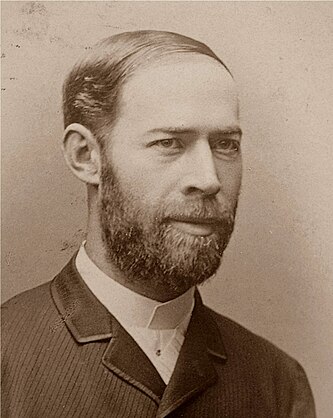
Heinrich Rudolf Hertz (February 22, 1857 – January 1, 1894) was a German physicist who clarified and expanded the electromagnetic theory of light that had been put forth by Maxwell. He was the first to satisfactorily demonstrate the existence of electromagnetic waves by building an apparatus to produce and detect VHF or UHF radio waves.
Best Heinrich Hertz Quotes
Shortest
Earliest
Explore our curated collection of the most famous and impactful Heinrich Hertz quotes.
“The rigour of science requires that we distinguish well the undraped figure of Nature itself from the gay-coloured vesture with which we clothe her at our pleasure.”
“It's of no use whatsoever. This is just an experiment that proves Maestro Maxwell was right—we just have these mysterious electromagnetic waves that we cannot see with the naked eye. But they are there.”

“One cannot escape the feeling that these mathematical formulas have an independent existence and intelligence of their own, that they are wiser than we are, wiser even than their discoverers, that we get more out of them than was originally put into them.”

“It is not particularly satisfactory to see equations set forth as direct results of observation and experiment, where we used to get long mathematical deductions as apparent proofs of them. Nevertheless, I believe that we cannot, without deceiving ourselves, extract much more from known facts than is asserted in the papers referred to. If we wish to lend more color to the theory, there is nothing to prevent us from supplementing all this and aiding our powers of imagination by concrete representations of the various conceptions as to the nature of electric polarisation, the electric current, etc.”
“When a constant electric current flows along a cylindrical wire, its strength is the same at every part of the section of the wire. But if the current is variable, self-induction produces a deviation from this... induction opposes variations of the current in the centre of the wire more strongly than at the circumference, and consequently the current by preference flows along the outer portion of the wire. When the current changes its direction... this deviation increases rapidly with the rate of alternation; and when the current alternates many million times per second, almost the whole of the interior of the wire must, according to theory, appear free from current, and the flow must confine itself to the very skin of the wire. Now in such extreme cases... preference must be given to another conception of the matter which was first presented by Messrs. 0. Heaviside and J. H. Poynting, as the correct interpretation of Maxwell's equations as applied to this case. According to this view, the electric force which determines the current is not propagated in the wire itself, but under all circumstances penetrates from without into the wire, and spreads into the metal with comparative slowness and laws similar to those which govern changes of temperature in a conducting body.
...Inasmuch as I made use of electric waves in wires of exceedingly short period in my experiments on the propagation of electric force, it was natural to test by means of these the correctness of the conclusions deduced. As a matter of fact the theory was found to be confirmed by the experiments...”
...Inasmuch as I made use of electric waves in wires of exceedingly short period in my experiments on the propagation of electric force, it was natural to test by means of these the correctness of the conclusions deduced. As a matter of fact the theory was found to be confirmed by the experiments...”
Heinrich Hertz Quotes by Topic
Find exactly what you are looking for by browsing this categorized list of Heinrich Hertz quotes by topic.
Heinrich Hertz on Electromagnetism
“It's of no use whatsoever. This is just an experiment that proves Maestro Maxwell was right—we just have these mysterious electromagnetic waves that we cannot see with the naked eye. But they are there.”

Heinrich Hertz on Mathematical Platonism
“One cannot escape the feeling that these mathematical formulas have an independent existence and intelligence of their own, that they are wiser than we are, wiser even than their discoverers, that we get more out of them than was originally put into them.”

Heinrich Hertz on Electrical engineering
“In my work I now have the comfortable feeling that I am so to speak on my own ground and territory and almost certainly not competing in an anxious race and that I shall not suddenly read in the literature that someone else had done it all long ago. It is really at this point that the pleasure of research begins. when one is. so to speak, alone with nature and no longer worries about human opinions, views and demands. To put it in a way that is more learned than clear: the philological aspect drops out and only the philosophical remains.”
Quotes About Heinrich Hertz
Gain deeper perspective through quotes about Heinrich Hertz from others.
Carl Barus on Heinrich Hertz 2 quotes
“The difficult surface conditions met with when light passes from one medium to another, including such subjects as ellipticity, total reflection, etc., have been critically discussed among others by Neumann (1835) and Rayleigh (1888) but the discrimination between the Fresnel and the Neumann vector was not accomplished without misgiving before the advent of the work of Hertz. It appears... that the elastic theories of light, if Kelvin's gyrostatic adynamic ether be admitted, have not been wholly routed. Nevertheless the great electromagnetic theory of light propounded by Maxwell (1864, 'Treatise,' 1873) has been singularly apt not only in explaining all the phenomena reached by the older theories and in predicting entirely novel results, but in harmoniously uniting as parts of a unique doctrine, both the electric or photographic light vector of Fresnel and Cauchy and the magnetic vector of Neumann and MacCullagh. Its predictions have, moreover, been astonishingly verified by the work of Hertz (1890), and it is to-day acquiring added power in the convection theories of Lorentz (1895) and others.”
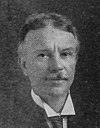
A. Frederick Collins on Heinrich Hertz
“In 1888... Heinrich Hertz succeeded in producing electromagnetic waves (to which he subsequently gave the shorter name of electric waves) standing in free space and gliding over wires; he showed that they could be reflected, refracted, polarized, diffused, and generally followed optical laws just as though they were light waves. This achievement was the first real advance toward the art of wireless telegraphy. As a detector of electric waves at a distance from whence they were emitted, Hertz employed a circlet of wire having an air gap in it of microscopic size; this he termed a "resonator." The distance to which waves could be detected with it was very limited, but it served Hertz's purpose admirably. ... Any theory advanced must conform with Maxwell's conceptions and the experiments of Hertz, but as the fundamental equations by which Maxwell evolved his theory are as broad as they are beautiful, its interpretations by various technicians are widely divergent, and the final solution is rendered all the more difficult when Hertz's work is consulted; for he not only observed electric waves in free space, but waves which traverse the surface of wires as well.”
A. D'Abro on Heinrich Hertz
“Although experimenters had attempted by various means to submit Maxwell's views to a test, the technical difficulties were so great that no success had been achieved. It appeared clearly from Maxwell's equations that no appreciable effects could be anticipated unless d'''''E/dt'' was very great; and this meant that the electric intensity E would have to vary with extreme rapidity. The simplest means of obtaining a result of this kind would be to produce an oscillating field of electric intensity in which the oscillations were extremely rapid, say, several millions per second. But no mechanical contrivance could yield such rapid vibrations, and... no other methods suggested themselves. ... In 1885 Helmholtz directed the attention of his pupil, Hertz, to the problem. Hertz was one of the most remarkable experimenters of the nineteenth century; he succeeded in at last vanquishing the technical difficulties and in generating by purely electrical means an oscillating electric field of extremely high frequency. Electromagnetic waves of sufficient intensity were thus produced; and after having been sidetracked for a time by a secondary phenomenon whose nature was elucidated by Poincaré, Hertz verified the fact that the waves advanced with the speed of light and indeed possessed all the essential properties of light waves other than those of visibility to the human eye. Thus, as a result of Hertz's experiments, the foundations were laid for the commercial use of wireless and radio; but, more important still, Maxwell's electromagnetic theory of light establishing the intimate connection between electricity and optics had been at last vindicated.'''”
Albert Einstein on Heinrich Hertz
“If the idea of physical reality had ceased to be purely atomic, it still remained for the time being purely mechanistic; people still tried to explain all events as the motion of inert masses; indeed no other way of looking at things seemed conceivable. Then came the great change, which will be associated for all time with the names of Faraday, Clerk Maxwell, and Hertz.”

Hermann von Helmholtz on Heinrich Hertz 2 quotes
“Heinrich Hertz seemed to be predestined to open up to mankind many of the secrets which nature has hitherto concealed from us; but all these hopes were frustrated by the malignant disease which, creeping slowly but surely on, robbed us of this precious life and of the achievements which it promised.”

About Heinrich Hertz
Heinrich Rudolf Hertz (February 22, 1857 – January 1, 1894) was a German physicist who clarified and expanded the electromagnetic theory of light that had been put forth by Maxwell. He was the first to satisfactorily demonstrate the existence of electromagnetic waves by building an apparatus to produce and detect VHF or UHF radio waves.