Link Copied!
Harold Wilson Quotes (1916-1995)
Leader, King


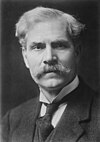

About Harold Wilson
James Harold Wilson, Baron Wilson of Rievaulx, KG, OBE, FRS, PC (11 March 1916 – 24 May 1995) was Prime Minister of the United Kingdom from 1964 to 1970, and again from 1974 to 1976. He had an impressive educational background, becoming an Oxford don at 21 and working as a war time civil servant; he was made a government minister immediately after he was elected to Parliament. As Leader of the Labour Party he moved the party towards a technocratic approach and appeared more in tune with the 'swinging sixties'; however his government was beset by economic difficulties and he was unexpectedly defeated in 1970. His return to office with a tiny majority in the mid-1970s saw a referendum which endorsed British membership of the European Communities. He resigned suddenly in 1976, and in his retirement suffered from Alzheimers' disease.
Best Harold Wilson Quotes
Shortest
Earliest
Explore our curated collection of the most famous and impactful Harold Wilson quotes.

“Hughie, get your tanks off my lawn.”
“I'm like Baldwin. I'm here to give people a quiet life.”
“I have always said about Tony [Benn] that he immatures with age.”
“I've been wading in shit for three months to allow others to indulge their conscience [on the EEC].”
“He who rejects change is the architect of decay. The only human institution which rejects progress is the cemetery.”


“Overseas anti-democratic forces have conspired for years to undermine the political position of individuals and parties who have opposed apartheid.”
“We have not been pushed around either abroad or at home and we are not going to be. This is government of the people; it is government for all the people, and the accent is on government.”

“May I say, for the benefit of those who have been carried away by the gossip of the last few days, that I know what's going on. [pause] I'm going on, and the Labour government's going on.”
“I intend to play it low-key throughout. The decision is purely a marginal one. I have always said so. I have never been a fanatic for Europe. I believe the judgment is a finely balanced one.”
“There are three groups on the Left. There is what is now called the "soft" Left, to which you and I and Michael always belonged. There is a middle group and then there are the really vicious group.”
“We have taken steps which have not been taken by any other democratic government in the world. We are taking steps with regard to prices and wages which no other government, even in wartime, has taken.”

“From now on, the pound abroad is worth 14 per cent or so less in terms of other currencies. That doesn't mean, of course, that the Pound here in Britain, in your pocket or purse or in your bank, has been devalued.”

“The government have only a small majority in the House of Commons. I want to make it quite clear that this will not affect our ability to govern. Having been charged with the duties of Government we intend to carry out those duties.”
“The Smethwick Conservatives can have the satisfaction of having topped the poll, and of having sent here as their Member one who, until a further General Election restores him to oblivion, will serve his term here as a Parliamentary leper”
“The greatest enemy that lies in our path in creating the kind of Britain we want to create is conservatism in all its forms. We cannot afford Tory conservatism, with its smug preoccupation, complacently looking on while the rest of the world passes us by.”

“The period of 15 years from the last time we were in Scarborough, in 1960, to the middle of the 1970s, will embrace a period of technical change, particularly in industrial methods, greater than the whole of the industrial revolution of the last 250 years.”
Harold Wilson Quotes by Topic
Find exactly what you are looking for by browsing this categorized list of Harold Wilson quotes by topic.
Harold Wilson on Change
“He who rejects change is the architect of decay. The only human institution which rejects progress is the cemetery.”

Harold Wilson on Cemetery
“He who rejects change is the architect of decay. The only human institution which rejects progress is the cemetery.”

What Harold Wilson Said About Others
Discover personal opinions Harold Wilson shared regarding contemporaries.
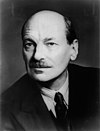
Harold Wilson on Clement Attlee 4 quotes
“I move previous face!”
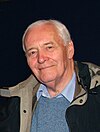
Harold Wilson on Tony Benn 2 quotes
“[Tony Benn is] an Old Testament prophet preaching the sort of New Jerusalem he wants to see.”
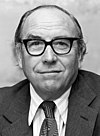
Harold Wilson on Roy Jenkins
“A socialite rather than a Socialist.”
Harold Wilson on Yitzhak Shamir
“Begin, Shamir and Sharon were the evil three.”

Harold Wilson on Shimon Peres
“He is sinister and slippery, always the man in a hurry.”

Harold Wilson on Peter Shore
“I'll tell you who I think has developed remarkably: Peter Shore. He's really become very impressive.”
Harold Wilson on Ariel Sharon
Harold Wilson on Aneurin Bevan
“His friends, and his opponents equally, will remember him not only for his eloquence and passion, his humour, the deep affection he inspired, but perhaps most of all for a sense of vision unrivalled in his generation.”

Quotes About Harold Wilson
Gain deeper perspective through quotes about Harold Wilson from others.
Noel Annan on Harold Wilson
“Was he prepared to modernize industry even if it meant more unemployment? He would never say. Ostensibly backing his chancellor, he would undermine his attempt to reduce public expenditure by backing policies that must increase it. Preserving the unity of the party meant for him the clever balancing of portfolios in cabinet, giving the left the hard-slogging administrative ministries and keeping the Treasury, foreign policy and defence in the hands of the centre and right. He prided himself on the subtlety of his ministerial reshuffles... Wilson saw politics as a giant slalom race, getting through the gates: the fact that he and country were going downhill was irrelevant.”
Michael Bentley on Harold Wilson
“A. J. P. Taylor told me in 1970, in one of those impromptu addresses to individuals that made the Beaverbrook Library so entertaining a place, that Wilson was transparently Lloyd George redivivus and Roy Jenkins an aspirant Asquith.”
Aneurin Bevan on Harold Wilson
“He's much more dangerous than Gaitskell because he isn't honest and he isn't a man of principle but a sheer, absolute careerist, out for himself alone.”
Tony Blair on Harold Wilson
“Harold Wilson, in a sense, was to politics what the Beatles were to popular culture. He simply dominated the nation's political landscape, and he personified the new era, not stuffy or hidebound but classless, forward-looking, modern. Even his enemies and detractors, and there were a few, could not deny his brilliance, his brain and the intelligence born of natural wit, not social background... He had, in the end, a very simple belief in the virtues of social justice and equality and, by and large, throughout his time in politics, he applied them. He once said: "The Labour party is a moral crusade, or it is nothing." That should be his real epitaph and long may it remain so.”

James Callaghan on Harold Wilson
“His purpose in politics was to remove the disfiguring evils of poverty and to create a caring society, with equal opportunity, open to advancement and in tune with the changing needs of his time. He was proud to have been responsible for the birth of the Open University. He was by nature a conciliator, and the least assertive of men, but he fought with the doggedness and determination of a true Northerner when he had to. Those qualities, and his high intelligence, kindliness and approachability, helped to spread his influence over a much wider area than his own party. It was a natural expression of that to be a passionate opponent of apartheid and of racial discrimination. He was the most successful leader that Labour has ever had, winning four elections out of five although on each occasion he came to office at a time of great economic difficulty. Above all, he was a devoted servant of his cause and his country.”

Barbara Castle on Harold Wilson 2 quotes
“Now, to fit into his reshuffle jigsaw puzzle, he has put Reg P. in the Cabinet but as Minister of Overseas Development under the FO. It is this kind of behaviour that makes one despair of him. He subordinates all considerations, not only of principle but of administrative effectiveness, to his balance of power manoeuverings.”
Edmund Dell on Harold Wilson
“If the criterion of leadership is sparkling intelligence, resilience, victory in elections and flexibility, together with a willingness to fight one's own Party when one has little choice, then Wilson certainly has a claim to have been the best leader Labour ever had. But in Wilson the flexibility was too heavily prized and the willingness to fight too seldom in evidence. He totally failed in the role to which he himself made his principal claim, as a regenerator of the British economy. It was fortunate for the Labour party and the country that Wilson retired when he did. His time as Prime Minister had been a time of economic crisis. On the face of it he had been as well equipped as anyone could be to handle the frightening economic problems with which he had been confronted. Yet he had never given any evidence that he had thought deeply about the country's predicament. He had exhausted his credit with foreign governments and with central banks which might, in the near future, be requested to help suck the UK out of the bog into which it had fallen. He now lacked the strength, and the reputation, to handle yet one more economic crisis. Whatever he had achieved, he would not see a socialist Britain in his lifetime. But he would have been surprised if he had, not necessarily pleasantly. At least, in retirement, he had no reason to fear conspiracies by his Cabinet colleagues.”
Bernard Donoughue on Harold Wilson
“Wilson was always mildly anti-European, in the sense that he seemed not to like continental Europeans, their style of life or their politics. He was basically a north of England, non-conformist puritan, with all the virtues and the inhibitions of that background. The continental Europeans, especially from France and southern Europe, were alien to him... Despite this background, Harold Wilson decided from October 1974 that a 'yes' position was the most practical choice. As a statesman – which was part, but only part of his complex personality and always was – he knew that Britain must be centrally placed in Europe's future. As a party leader, he saw it as the best way to hold Labour together – because the antis would not leave the Party over Europe, but the pros would. As a shrewd politician, he saw the pro position as the most likely winning one... Mr Heath had taken the British Establishment into Europe. Harold Wilson took in the British people.”
Roy Hattersley on Harold Wilson
“When, 50 years ago, on 14 February 1963, Harold Wilson was elected leader of the Labour party, even many of his supporters – wrongly I now believe – thought him a politician without principle... He was what used to be called "a good Labour man" – instinctively the enemy of privilege and certain that improvement in the lives of the disadvantaged and the dispossessed depended on the success of the Labour party. That is why he worked so hard, and sometimes deviously, to keep it united. I should have understood that 50 years ago.”
Denis Healey on Harold Wilson
“No prime minister ever interfered so much in the work of his colleagues as Wilson did in his first six years... Unfortunately, since he had neither political principle nor much government experience to guide him, he did not give Cabinet the degree of leadership which even a less ambitious prime minister should provide. He had no sense of direction, and rarely looked more than a few months ahead. His short-term opportunism, allied with a capacity for self-delusion which made Walter Mitty appear unimaginative, often plunged the government into chaos. Worse still, when things went wrong he imagined everyone was conspiring against him. He believed in demons, and saw most of his colleagues in this role at one time or another.”
Edward Heath on Harold Wilson 2 quotes
“[W]hat really endeared the people of this country to him was that they knew from his background, his upbringing and his own life, in which there was hardship, that he was a compassionate man who understood their needs and who was doing his best, often in difficult circumstances...to meet those needs and to ensure that people had a better life. That was his philosophy and his purpose in coming into the House, in being in opposition and in being a Minister... This country owes a great deal to him.”

Roy Jenkins on Harold Wilson 3 quotes
“We have Mr. Wright's allegation that a surveillance operation was mounted against Lord Wilson of Rievaulx when he was Prime Minister in the mid-1970s... Many criticisms can be made of Lord Wilson's stewardship—I have made some in the past and I have no doubt that I may make some more in future—but the view that he, with his too persistent record of maintaining Britain's imperial commitments across the world, with his over-loyal lieutenancy to Lyndon Johnson, with his fervent royalism, and with his light ideological luggage, was a likely candidate to be a Russian or Communist agent is one that can be entertained only by someone with a mind diseased by partisanship or unhinged by living for too long in an Alice-Through-the-Looking-glass world in which falsehood becomes truth, fact becomes fiction and fantasy becomes reality. The result of the allegation has been substantially to fortify the view that I expressed in a letter to The Times 18 months ago, which is that MI5 should now be pulled totally out of its political surveillance role.”
About Harold Wilson
James Harold Wilson, Baron Wilson of Rievaulx, KG, OBE, FRS, PC (11 March 1916 – 24 May 1995) was Prime Minister of the United Kingdom from 1964 to 1970, and again from 1974 to 1976. He had an impressive educational background, becoming an Oxford don at 21 and working as a war time civil servant; he was made a government minister immediately after he was elected to Parliament. As Leader of the Labour Party he moved the party towards a technocratic approach and appeared more in tune with the 'swinging sixties'; however his government was beset by economic difficulties and he was unexpectedly defeated in 1970. His return to office with a tiny majority in the mid-1970s saw a referendum which endorsed British membership of the European Communities. He resigned suddenly in 1976, and in his retirement suffered from Alzheimers' disease.