Link Copied!
Gregory Benford Quotes (1941-)
Physicist, Author, Politician
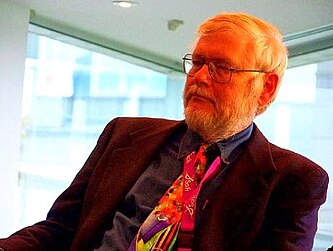







About Gregory Benford
Gregory Benford (born January 30, 1941, in Mobile, Alabama) is an American science fiction author and astrophysicist who is on the faculty of the Department of Physics and Astronomy at the University of California, Irvine.
Best Gregory Benford Quotes
Shortest
Earliest
Explore our curated collection of the most famous and impactful Gregory Benford quotes.


“Nothing is eternal—including prisons.”
“Propaganda of sufficient age became art.”

“Not sure. When don’t know, do experiment.”

“History held counterexamples to any facile rule.”

“The role of boredom in human history is underrated.”

“Manufacturing creates wealth, services distribute it.”

“Uncompromising zeal doesn’t look in the mirror much.”


“Science is about continuity of ideas, a web of connections.”

“When you have a Ph. D., you call them hypotheses, not guesses.”
“Just because something’s crazy, doesn’t mean it’s wrong.”
“When in enough doubt, let your subconscious work on the problem.”

“Science was a systematic way to avoid fooling yourself, after all.”

“Disintegration of structure equals information loss.”
“Somehow to them, the press was always the judge of things scientific.”
“In any case, caution outweighed theory, as mice knew about elephants.”

“Engineers never liked the unexplained, whereas physicists lived for it.”
“Better be a bit more diplomatic. Translation: cover your scientific ass.”


“To believe anything so far-fetched, I’d have to see a solid calculation.”
““There’s plenty—”
“Plenty is exactly what there’s none of.””
“Plenty is exactly what there’s none of.””
“Whole world is sitting on ass, watching glorious Twenty-first century on TV.”
“To us, most human morality is carefully thought-through self-congratulation.”
“Boundaries got redrawn at the point of a sword, and the legal frame followed.”

“Only senators and simpletons thought science took place in neatly drawn boxes.”


“Ours is not to reason why, ours is to measure and report—the experimenter’s credo.”
“—Y’know, fact that nobody understands you doesn’t mean you’re some kinda genius.”

“Any technology that does not appear magical is insufficiently advanced.”

“Thing about crazies is, they’re crazy. You can’t even understand them in retrospect.”
“She could not understand why people feared new ideas. She was frightened by the old ones.”
“Schools praised diversity but were culturally the same. Different skin color, same opinions.”

“Government doesn’t often move quickly, but when they do, it’s like an elephant stampede.”

“(Crank theories) always violated the first rule of a scientific model: they were uncheckable.”
“Evolution was still at work, pruning the failures from the gene pool with unblinking patience.”
“At least being prosperous set one apart in England; here it guaranteed nothing, not even taste.”

““Law of the universe,” she said. “The longer the menu description, the worse the food.””

“Given a choice between existential despair and rapt religious fervor, her crowd chose marijuana.”
“Quantum uncertainty, chaos—these forever screen precise knowledge of the future from our eyes.”

“An animal that liked abstractions? Maybe that wasn’t all that bad a definition of being human.”

“The personal was, compared with the tides of great nations, a bothersome detail.”

““The peers just fill the air with their speeches.”
“And from what I've seen, vice versa.””
“And from what I've seen, vice versa.””
“Indeed, high-blown rhetoric plus uncheckable consequences were the two sure signatures of the crank.”
““I think,” Jordin said mildly, “a professional biologist would label that aggressive behavior.””

“I agree with the Emperor. Any technology distinguishable from magic is insufficiently advanced.”

“Media bloomed with florid discussions between completely uninformed people about every detail imaginable.”
“While a gigantic amount has been written or spoken, culture in the end is the fraction that gets remembered.”
“There were the usual anxieties, starkly revealing the uneasiness that ordinary intellectuals had with science.”
“Weeds sprouted in spaces where once-important people had proclaimed that their presumptions were imperishable.”
“She needed some fresh illumination, all right, but not the kind that comes through the west window of a church.”
“She sighed. “We’re just guessing.”
“When you have a Ph. D., you call them hypotheses, not guesses.””
“When you have a Ph. D., you call them hypotheses, not guesses.””
“After weeks of indoor work it actually felt good to be doing something—clean, direct, muscles and mind.”
“The ship of theory could set sail on tides of mathematical grandeur and hope alone, but only data could fill its sails.”


“Prolonged exposure to journalists made her distrust any news report; they got matters wrong so casually, even the simple ones.”
“But then, growing up was not supposed to be easy. One Mom remarked offhandedly, “It’s the toughest work you’ll ever do.””
“The intellectual breeds of humans think in terms of abstractions. But most people have emotions and think they are having ideas.”

“Major Sánchez grunted. “Nice word, ‘trivial.’ Means you got it—cojones—you got no worry. If you don’t—””
“She always dressed well, but he recognized the signs of insecurity; certitude was inversely proportional to the amount of makeup.”
“Nobody out here was going to find an alternative here to Earth’s tiresome clash of selfish individualisms and stifling collectivisms.”
“Individual recollections of the past are easily shaped by others. After a while they need have little bearing on the once-lived events.”
“A particle detector that ran beautifully was either obsolete or hadn’t been designed close enough to the cutting edge of the technology.”
“There was more known, but always more to be known.
Yes, she thought, and the unknown can masquerade as the unknowable.”
Yes, she thought, and the unknown can masquerade as the unknowable.”
“She stood up. “Professional? Ha! My father used to say, you have to be able to tell a tracheotomist from a cutthroat. Well, I can.””
“Her eyes flipped down through the usual scandal, gossip, and politics, noting that there didn’t seem to be much difference between them anymore.”

“Definitions, her grandmother once said, had to be like a fat man’s belt—big enough to cover the subject but elastic enough to allow for change.”
“Hubris. They disliked questions unless there were clear answers. They believed so much in their method that they conjured up certainty out of undeniable risk.”

“From birth it had integrated each experience with its innate sense of balance and appropriate scale—indeed, this was the sole purpose of its conscious being.”
“Nothing could be sure it was itself the original. So the only intelligent course lay in enjoying whatever life a being felt—living like a mortal, in the moment.”
“It was an example of what he thought of as the Law of Controversy: Passion was inversely proportional to the amount of real information available.”
““You’ll never get it to follow orders.”
“Slaves follow orders, Colonel. You want something done a slave can’t, you don’t ask for a slave to do it.””
“Slaves follow orders, Colonel. You want something done a slave can’t, you don’t ask for a slave to do it.””
“She had always admired the way bureaucracies spontaneously produced leaden prose, blandly sliding from the mouths of people who absolutely believed everything they said.”
“Everybody feels he has a right to a life of luxury — or at least comfort — so there’s a lot of frustration and resentment when the dream craps out.”

“Seeker laughed. “You are so—well, human. You always think you are the ultimate.”
“And…we’re not.”
Seeker inspected the ceiling. “It seems unlikely.””
“And…we’re not.”
Seeker inspected the ceiling. “It seems unlikely.””
“In popularizing a scientific development it was always crucial to sail the narrow strait between the Scylla of professional contempt and the Charybdis of public befuddlement.”
““The price of such seeing will be death,” Seeker said quietly.
She blinked. “We’ve done fine so far.”
“A numerical series can have many terms yet be finite.””
She blinked. “We’ve done fine so far.”
“A numerical series can have many terms yet be finite.””
““He was guilty of the heresy of humanism.”
“How can that be heresy?”
“The narcissistic devotion to things human? ‘Man is the measure of all things?’ Easily.””
“How can that be heresy?”
“The narcissistic devotion to things human? ‘Man is the measure of all things?’ Easily.””
““One of the laws of nature,” Gordon said, “is that half the people have got to be below average.”
”For a Gaussian distribution, yeah,” Cooper said. “Sad, though.””
”For a Gaussian distribution, yeah,” Cooper said. “Sad, though.””
“In his view, the true deep human fantasy was the conviction of safety. Men believed their women were devoted; wives felt that their men were dependable. Both ignored contrary evidence.”
“All the astronauts were easy on the eyes. No coincidence. NASA didn’t train people the public wouldn’t want to watch.”
“Inside, the place had enough bare concrete and ribbed ducts and stark lighting to be a surrealist theme bar. Very hip but still just another joint where luncheon was lunch for six bucks extra.”
“As a political commentator of the time put it, most real-world people she knew thought of Washington, D.C., as a whorehouse where every four years ordinary folk got to elect a new piano player.”
“Anyway, the Shanna woman was abrasive, self-obsessed, smug—and those were her good points. Julia suspected that in a pinch the woman might also be careless, the one sin reality never forgave.”
“This was what never failed to stir her—the unfathomable gulf between today’s thinking and the way the ancients thought. They were truly alien, not merely innocent agrarians with a foolish faith.”
““Costly,” Zeb fretted. “How will I ever pay—”
“The dead do not worry about debts,” she said.
“You have such an engaging way of putting matters.”
“Subtlety is wasted here.””
“The dead do not worry about debts,” she said.
“You have such an engaging way of putting matters.”
“Subtlety is wasted here.””
“To peer through the quick stubble of mathematics and see the wonders lurking behind was to momentarily live in the infinite, beyond the press of the ordinary world where everyone else dwelled in ignorance.”
“Still, Claire hated Charlotte Brontë’s comment that she would have given all her talent to be beautiful. That condemned you always to play somebody else’s game—and, when your looks failed—finally to lose.”

““Why paired?” Viktor asked. “Have two sexes?”
“Hard to imagine how electromagnetic creatures could,” Mary Kay said.
Viktor grinned. “Lack of imagination is not an argument. Especially lately.””
“Hard to imagine how electromagnetic creatures could,” Mary Kay said.
Viktor grinned. “Lack of imagination is not an argument. Especially lately.””

“Science is like literature, a continuing dialog among diverse and conflicting voices, no one ever wholly right or wholly wrong, but a steady conversation forever provisional and personal and living.”

“Minds embodies in strange shapes would still find themselves sharpened against evolution’s ceaseless whetstone.
What challenges would they face? In the end the universe as a whole was life’s ultimate opponent.”
What challenges would they face? In the end the universe as a whole was life’s ultimate opponent.”
“Once introduced into this world, life would never leave—there was no end to the explosive, consuming, voracious lust of long chain molecules to link and match and make of themselves yet more and more and again more.”
“She felt a tingling, curiously pleasurable: her “curiosity reflex,” she had called it in high school, when she had first glimpsed the serene certainties of physics, starkly contrasting with the world’s raw hubbub.”
“Every age is known by its pleasures, Fielding reads from the library readout. The twentieth introduced two: high speed and hallucinogenic drugs. Both proved dangerous in the long run, which made them even more interesting.”
“Archeology is mostly a process of making associations between objects, and every discovery opens up possible resonances with things we already have. Sometimes, simply wandering through a museum or a site can open your eyes.”
“She was grateful for something more than smooth, meaningless phrases. Better, the man had not reverted to the hedged-in, minimize-possible-damage style. And the first of all the commandments shall be: Cover Thy Ass.”
““We will be just like the USA. Only we will be more honest.”
”We’ve got two parties.”
“No you do not. You have only the party of the banks, of the money men, and they divide it into two pieces for your voting.””
”We’ve got two parties.”
“No you do not. You have only the party of the banks, of the money men, and they divide it into two pieces for your voting.””
“Information wants to be free—remember that old saw? Some truth to it, only it’s backwards. This isn’t an information economy—we’re drowning in that—it’s an attention economy. That’s what everybody’s vying for.”
““Quite patently artificial,” she said.
“Looks like it to me, and I’m just a physicist.”
“I thought you were an engineer-pilot.”
“Hey, physicists can do anything.”
“Um. So they think. But not biology…””
“Looks like it to me, and I’m just a physicist.”
“I thought you were an engineer-pilot.”
“Hey, physicists can do anything.”
“Um. So they think. But not biology…””
““So many people, close-packed.”
“Your kind apparently enjoys the crowding.”
“I…I can sort of see why it might be exciting. Like a never-ending party.”
Speaker grimaced. “Just the sort of horror I imagined, yes.””
“Your kind apparently enjoys the crowding.”
“I…I can sort of see why it might be exciting. Like a never-ending party.”
Speaker grimaced. “Just the sort of horror I imagined, yes.””
“But no, the friend’s indictment was off target; he simply liked them tall, as long as they didn’t slump down in a forlorn effort to appear shorter. It seemed obvious to him that no woman looked good trying to be something she wasn’t.”
“Physicists had abandoned God long ago and hoped that firing repeated questions at nature would get to the truth. What scientists really believed in was that the think-check-think-again style of scientific method would yield some species of Truth.”

“Women lurching around on heels they couldn’t manage (“sexy evening columns” as Frederick’s termed them)—further proof yet again that money can’t buy a clue.”
“While politicians wrangled on the front pages of our newspapers, quiet revolutions looked within. Only occasionally did the news I thought most notable make the front page. All of it hinged on the steady building of connections which marks modern science.”

“That mood had persisted when she finally got home and, unable to sleep, watched some TV. It was as usual, a cacophony, which combined with the other audio media gave a disposable pop culture that made every moment but the present seem quaint, bloodless, dead.”
“Yes, perhaps that was it. For decades now the picture of the world painted by the scientists had become strange, distant, unbelievable. Far easier, then, to ignore it than try to understand. Things were too complicated. Why bother? Turn on the telly, luv. Right.”

“All the way up through the academic world she had spent a lot of energy fending off the blandly patronizing efforts to enter her in what she termed the Oppression Sweepstakes. Now that she had done something worth noting, blackness attached itself to her like a lamprey.”

“Bureaucracy increases as a doubling function in time, given resources. At the personal level, the cause is the persistent desire of every manager to hire at least one assistant. This provides the time constant for growth.
Eventually this collides with the carrying capacity of society.”
Eventually this collides with the carrying capacity of society.”


“Einstein said that the only incomprehensible thing about the universe was that it was comprehensible. But resorting to God forgets what biology says—that our minds came out of the physical world, y’know, through evolution of early brain stems and neural systems to higher levels of complexity.”
““Boy, do I hate these holier-than-thou types.”
“Clerics.”
“Anybody who tries to hem science in, tell it what it can and cannot do. Boundaries are best defined by pushing against them. Expanding our horizons, our sense of wonder.”
She smiled. “There’s nothing holier than wow!?””
“Clerics.”
“Anybody who tries to hem science in, tell it what it can and cannot do. Boundaries are best defined by pushing against them. Expanding our horizons, our sense of wonder.”
She smiled. “There’s nothing holier than wow!?””
“For her it was a slippery descent into a labyrinth where twin urges fought, revenge versus survival. These two instincts, already ancient before the first hominid walked, rarely married with any security. Yet if she did not feel the pinch of their competition, she would not be, by her own judgment, a true human.”

“As Kurt Vonnegut pointed out in his first novel, Player Piano, some people love problem-solving and tinkering—and that is the final, irreducible driver of human history. Wars and faiths and leaders come and go, but the problem-solvers’ slow, steady work is the fulcrum upon which history turns.”
“That thing doesn’t care about you. It won’t reward you when you take risks. It is simply indifferent. That’s the fact about it that most never learn. They hate it and fear it and finally ignore it. Because of that. It would be easier if it hated us. Maybe even if it hunted us. But it doesn’t care. Remember.”
“Manuel stared at the place where Piet had been. The man he had known so little would now lie in this place far beyond the moon of Islam and the cross of Rome and the hammer of Marx, in a territory open and without plan, beyond man and his encasing theories, his filters, beyond the closed rooms of the civilized mind.”

““Sure,” Max said offhand, “there are plenty of archbishops wringing their hands, mumbling philosophers and New Age gab pouring out in the media, but so what?”
She laughed. He said New Age as one word, “newage,” rhyming with “sewage.””
She laughed. He said New Age as one word, “newage,” rhyming with “sewage.””
“That was what drew him to mathematics. Not because it was rarefied, but because it probed to the subtle, deeper reality. People said that mathematicians were unworldly, and yammered on about how Einstein couldn’t make correct change. Nonsense. Einstein just didn’t give a damn. It was the subtle, the beautiful that concerned him.”

“You had to form for yourself a lucid language for the world, to overcome the battering of experience, to replace everyday life’s pain and harshness and wretched dreariness with — no not with certainty but with an ignorance you could live with. Deep ignorance, but still a kind that knew its limits. The limits were crucial.”
“One of the better aspects of aging was that she no longer practiced dragging on cigarettes before the mirror, striving to get the right dissipated look, or tried on sunglasses until she found the kind the latest hip singer wore. Had she really worn those mirrorshades? Perfect holdovers from the Me Decade, because they let the viewer watch himself.”
“Organic forms are in the universe of things and also reside in the universe of essences. There we cannot go. … You are a spontaneous product of the universe of things. We are not. This seems to give you … windows. It was difficult for me to monitor your domestic transmissions, they fill up with branches, spontaneous paths, nuances…”
“They had a legend about a Chemical pinned to a piece of dead matter and allowed to die that way—Diminished to extinction! Apparently a commonplace among Chemicals. Yet after this fearsome loss, the identity emerged from its full subtraction—to claim life again. Such a desperate story! Elementary knowledge tells us that such things do not happen, of course.”
“You got to learn to wait people out. Hear what they got to say. Not enough to have a majority rule, y’know. Otherwise, the minority won’t be convinced and they won’t support the plan. No point havin’ people at your elbow who’re against what you’re doin’. So we just got to talk it out Quaker-style till ever’body agrees. More efficient in the long run.”
“He watched her putting away bacon and toast.
“I remember breakfasts like that.”
“First Law of Thermodynamics still applies. If you eat it, and you don’t burn it off, you sit on it.”
“You burn it, looks like. Exercise?
“Worry. Saves time and you don’t have to shower.””
“I remember breakfasts like that.”
“First Law of Thermodynamics still applies. If you eat it, and you don’t burn it off, you sit on it.”
“You burn it, looks like. Exercise?
“Worry. Saves time and you don’t have to shower.””

“But in the divisions among students lay a deeper strategy. The administration practiced tactics of divide-and-conquer, turning each student faction into a client, supplicants to the ever-expanding executive corps who thought of themselves as “management,” of faculty as workers and students as captive customers. In this they merely mirrored the national political style, a legacy of the Twen Cen.”
“It was one thing to be instantly attracted to a woman, and another to like her independence, the way she took no notice of what he thought of her, one way or the other. She was indeed a modern woman—not aggressive, yet not submissive. A self-possessed apartness, a lack of cling...
Yes, that was what held his attention: her reserve. The promise of depths you could not guess merely by seeing her in a swimsuit.”
Yes, that was what held his attention: her reserve. The promise of depths you could not guess merely by seeing her in a swimsuit.”

“Would an alien outsider judge America’s performance by My Lai and Wounded Knee or by Lincoln and Jefferson?”
“But these were mere passing irritants. Deeper were the systemic troubles. She stressed the many unknowns; the media wanted sharp answers to huge questions, preferably in a compact one-liner. She tried to emphasize the progressive questioning of her method and how all answers were provisional, awaiting confirmation; reporters liked zippy adventure and exciting guesses with, of course, striking visuals in primary colors.”
“Shanna put on the last movement of Beethoven’s Fifth and turned up the gain.
Ludwig von Cornball, they had called him back at Moonbase One. Hipitude: post-postmodern irony. All because she played ol’ Ludwig so much—but who was more appropriate? What spirit better expressed the grandeur of an expedition to the edge of the solar system?”
Ludwig von Cornball, they had called him back at Moonbase One. Hipitude: post-postmodern irony. All because she played ol’ Ludwig so much—but who was more appropriate? What spirit better expressed the grandeur of an expedition to the edge of the solar system?”
“In its studies and learned colloquy, Faz saw and felt the tales of Men. They seemed curiously convoluted, revolving about Self. What mattered most to those who loved tales was how they concluded. Yet all Men knew how each ended. Their little dreams were rounded with a sleep.
So the point of a tale was not how it ended, but what it meant. The great inspiring epic rage of Man was to find that lesson, buried in a grave.”
So the point of a tale was not how it ended, but what it meant. The great inspiring epic rage of Man was to find that lesson, buried in a grave.”
“I would have to look, try to find a bridge that would make plausible what I knew but could scarcely prove. The standards of science are austere, unforgiving—and who would have it differently? I would have to hedge, to take one step back for each two forward, to compare and suggest and contrast, always sticking close to the data. And despite what I thought I knew now, the data would have to lead, they would have to show the way.”
“Outside the Sea Lounge were ranks of motorcycles, mostly Harleys. Through the open windows she could see a jammed crowd raising beer glasses to the monotonous thump of the live band. Being Harley guys, they were of course rebels, rugged lone wolves, individual spirits, as was obvious because they were all wearing the same jackets and jeans, bandannas and sunglasses, big brass belt buckles and tattoos, probably even the same underwear.”
“Naturals felt best in groups of a hundred or so, and better if only a few dozen were involved. Hunting parties had been about that size, for the long-extinct big game. Many important institutions were of the same rough scale: the ancient village, governing councils of nations, commanding elites of vast armies, teams playing games, orchestras, family fests. All human enterprises that worked were of that size, and nearly everything that failed was not.”
“A science fiction writer is—or should be—constrained by what is, or logically might be. That can mean simple fidelity to facts (which, in science, are always more important than theories—though Lord knows the two help shape each other, undermining the convenient, complacent separation of observer and observed). To me it also means heeding the authentic, the actual and concrete. Bad fiction uses the glossy generality; good writing needs the smattering of detail, the unrelenting busy mystery of the real.”
“Professors everywhere deplored examinations as an archaic technique, a fossil that recalled little red schoolhouses and memorizing the capitals of all the states. Regular progress and daily diligence mattered more, they felt, not an hour spent compressing months of learning onto a few sheets of paper. Far better to stress homework, classroom participation and the professor’s judgment. Regrettably, the large size of classes, and the requirements of society itself for pseudo-objective standards kept the exam structure firmly in place.”
“Orange County, with its signature long lines of tall palm trees, was working toward being “max-frilled,” as the slang had it, but at least it didn’t have the touches of L.A. The post office didn’t offer valet parking yet. On rainy days parking tickets weren’t slipped inside protective envelopes, as in Beverly Hills. There were no water bars, with fifty chilled varieties at two bucks a glass, with no ice because it would erase the regional subtleties. And when you called the police department and got put on hold, no classical music played.”
“The barely awake public, trained to the attention span of a commercial, thought that science had two children: either consumer yummies, served up by the handmaiden of technology, or else awesome wonders like the beauties of astronomy. The unsettling side they largely ignored, unless for the momentary shock value of, say, swollen insects doing disgusting things. But the root promise of science was of a world unshaped by humans. The expanses of time and space that stretched out from the human community were terrifying, and most avoided even thinking of them.”
“Indeed, she had tried to follow books and films about science, but they featured rugged, style-conscious folk who transacted their work in ornate bars, atmospheric dens thickly mired in a high-contrast noir underworld future where bizarre ornamentation passed for any sense of newness. She had never known anybody who could design an experiment or do a calculation on table napkins, sipping hip drinks while guitar riffs wailed in the smoky background, but in movies and TV this was standard, apparently to make matters more interesting to a weary public with the attention span of a commercial. Scientists were either aggressively hip, often clad in tight leather, or else pitiful, hopeless nerds, obsessional neurotics nobody would trust for a moment with the discoveries they had, quite implausibly, ushered into the world while anxiously trying to get laid.”
“Life was growing and spreading here the way a disease propagates and eats and in the eating must kill. There should be something more, he thought. A kind of being might come into the universe that did not want to finally eat everything or to command all or to fill every niche and site with its own precious self. It would be a strange thing, with enough of the brute biology in it to have the quick, darting sense of survival. But it would also have to carry something of the machine in it, the passive and accepting quality of duty, of waiting, and of thought that went beyond the endless eating or the fear of dying. To such a thing the universe would not be a battleground but a theater, where eternal dramas were acted out and it was best to be in the audience. Perhaps evolution, which had been at the beginning a blind force that pushed against everything, could find a path to that shambling, curiously lasting state.”
“The evolutionary routes are many, she knew, wending through the howling wilderness of the maladaptive, on to their severely narrowed destinations. Biology abounded with convergent examples, destinations arrived at along very different paths. Fruiting bodies of slime molds and myxobacteria alike evolved multicelled advances. Warmbloodedness came forth several times, as did live birth and even penile tumescence. The eyes did indeed have it—as seen in the camera-like eyes of vertebrates and octopi, and the similar tiny preceptors of worms and jellyfish. Nature invented over and over again the mechanisms used by diverse organisms to hear, smell, echolocate, sense the prickle of electric and magnetic fields.”

“She had changed her name from the African Aleix to Alicia when she went away to college, fresh beginnings and all. Her parents had been into black roots and the rest of it when she was born, then had rapidly backed away. Her father’s political evolution had followed a trajectory away from what he termed in one of his op-ed pieces “the narcissism of minor differences.” He had approved her abandoning the Africa-nodding of Aleix, remarking only that his thinking in those days had been mere mulling over food and folktales.
She had been surprised when he wrote a series of columns on his emergence, his recovery from her mother’s death in an auto accident, and one entirely about her. This was on his long march abandoning, in his phrase, “obligatory blackitude,” so he had folded it into a thesis about the hollowness of hauling out costumes and traditional foods from lands you had never even visited. He had taken a stand against a black group insisting on carrying their “cultural weapons” to political rallies, on grounds that they stood for a precious cultural inheritance which should be beyond criticism. Tom Butterworth (“Uncle Tom” to his enemies, of course) then argued that a ban on spears was scarcely an attack on their culture, since none of them knew much more about real spears than which was the business end.”
She had been surprised when he wrote a series of columns on his emergence, his recovery from her mother’s death in an auto accident, and one entirely about her. This was on his long march abandoning, in his phrase, “obligatory blackitude,” so he had folded it into a thesis about the hollowness of hauling out costumes and traditional foods from lands you had never even visited. He had taken a stand against a black group insisting on carrying their “cultural weapons” to political rallies, on grounds that they stood for a precious cultural inheritance which should be beyond criticism. Tom Butterworth (“Uncle Tom” to his enemies, of course) then argued that a ban on spears was scarcely an attack on their culture, since none of them knew much more about real spears than which was the business end.”
Gregory Benford Quotes by Topic
Find exactly what you are looking for by browsing this categorized list of Gregory Benford quotes by topic.
Gregory Benford on Science 2 quotes
“Science is about continuity of ideas, a web of connections.”
Gregory Benford on History
“History held counterexamples to any facile rule.”
Gregory Benford on Fools
Gregory Benford on Nature
Gregory Benford on Music
“Today’s music has all the variety of a jackhammer.”

What Gregory Benford Said About Others
Discover personal opinions Gregory Benford shared regarding contemporaries.
Gregory Benford on Arthur C. Clarke
“Any technology that does not appear magical is insufficiently advanced.”

Gregory Benford on Olaf Stapledon
“His Marxism, which remained his only irrational faith throughout his life, told him that surely the United States could never be a positive influence.”
About Gregory Benford
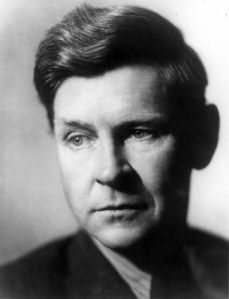
Gregory Benford (born January 30, 1941, in Mobile, Alabama) is an American science fiction author and astrophysicist who is on the faculty of the Department of Physics and Astronomy at the University of California, Irvine.