Link Copied!
Gregor Mendel Quotes (1822-1884)
King, Mathematician
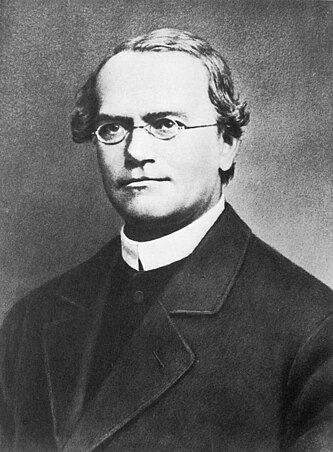
About Gregor Mendel
Gregor Johann Mendel (20 July 1822 – 6 January 1884) was a meteorologist, mathematician, biologist, Augustinian friar and abbot of St. Thomas' Abbey in Brno, Margraviate of Moravia. Mendel was born in a German-speaking family in the Silesian part of the Austrian Empire (today's Czech Republic) and gained posthumous recognition as the founder of the modern science of genetics. Though farmers had known for millennia that crossbreeding of animals and plants could favor certain desirable traits, Mendel's pea plant experiments conducted between 1856 and 1863 established many of the rules of heredity, now referred to as the laws of Mendelian inheritance.
Best Gregor Mendel Quotes
Shortest
Earliest
Explore our curated collection of the most famous and impactful Gregor Mendel quotes.
“Of the experiments of previous years, those dealing with Matthiola annua and glabra, Zea, and Mirabilis were concluded last year. Their hybrids behave exactly like those of Pisum. Darwin's statements concerning hybrids of the genera mentioned in The variation of animals and plants under domestication, based on reports of others, need to be corrected in many respects.”
Unsourced — Primary work/page citation not yet verified in the QuotesCosmos archive. Per our Unnamed Sources & Verification Policy, quotes without confirmed primary editions are explicitly marked Unsourced while under editorial review.
“Experience of artificial fertilization, such as is effected with ornamental plants in order to obtain new variations in colour, has led to the experiments which will here be discussed. The striking-regularity with which the same hybrid forms always reappeared whenever fertilisation took place between the same species induced further experiments to be undertaken, the object of which was to follow up the developments of the hybrids in their progeny.”
Unsourced — Primary work/page citation not yet verified in the QuotesCosmos archive. Per our Unnamed Sources & Verification Policy, quotes without confirmed primary editions are explicitly marked Unsourced while under editorial review.
“It concerns the opinion of Naudin and Darwin that a single pollen grain does not suffice for fertilization of the ovule. I used Mirabilis Jalappa for an experimental plant, as Naudin had done; the result of my experiment is, however, completely different. From fertilizations with single pollen grains, I obtained eighteen well-developed seeds, and from these an equal number of plants, of which ten are already in bloom”
Unsourced — Primary work/page citation not yet verified in the QuotesCosmos archive. Per our Unnamed Sources & Verification Policy, quotes without confirmed primary editions are explicitly marked Unsourced while under editorial review.
“I am inclined to regard the separation of parental traits in the progeny of hybrids in Pisum as complete and thus permanent. The progeny of hybrids carries one or the other of the parental traits, or the hybrid form of the two; I have never observed gradual transitions between the parental traits or a progressive approach towards one of them. The course of development consists simply in this; that in each generation the two parental traits appear, separated and unchanged, and there is nothing to indicate that one of them has either inherited or taken over anything from the other”
Unsourced — Primary work/page citation not yet verified in the QuotesCosmos archive. Per our Unnamed Sources & Verification Policy, quotes without confirmed primary editions are explicitly marked Unsourced while under editorial review.
“It is willingly granted that by cultivation the origination of new varieties is favored, and that by man's labor many varieties are acquired which, under natural conditions, would be lost; but nothing justifies the assumption that the tendency to formation of varieties is so extraordinarily increased that the species speedily lose all stability, and their offspring diverge into an endless series of extremely variable forms. Were the change in the conditions the sole cause of variability we might expect that those cultivated plants which are grown for centuries under almost identical conditions would again attain constancy.”
Unsourced — Primary work/page citation not yet verified in the QuotesCosmos archive. Per our Unnamed Sources & Verification Policy, quotes without confirmed primary editions are explicitly marked Unsourced while under editorial review.
“Gärtner by the results of these transformation experiments, was led to oppose the opinion of those naturalists who dispute the stability of plant species and believe in a continuous evolution of vegetation. He perceives in the complete transformation of one species into another an indubitable proof that species are fixed within limits beyond which they cannot change.
Although this opinion cannot be unconditionally accepted, we find on the other hand in Gartner's experiments a noteworthy confirmation of that supposition regarding variability of cultivated plants which has already been expressed.”
Although this opinion cannot be unconditionally accepted, we find on the other hand in Gartner's experiments a noteworthy confirmation of that supposition regarding variability of cultivated plants which has already been expressed.”
Unsourced — Primary work/page citation not yet verified in the QuotesCosmos archive. Per our Unnamed Sources & Verification Policy, quotes without confirmed primary editions are explicitly marked Unsourced while under editorial review.
“Jesus appeared to the disciples after the resurrection in various forms. He appeared to Mary Magdalene so that they might take him for a gardener. Very ingeniously these manifestation of Jesus is to our minds difficult to penetrate. (He appears) as a gardener. The gardener plants seedlings in prepared soil. The soil must exert a physical and chemical influence so that the seed of the plant can grow. Yet this is not sufficient. The warmth and light of the sun must be added, together with rain, in order that growth may result. The seed of supernatural life, of sanctifying grace, cleanses from sin, so preparing the soul of man, and man must seek to preserve this life by his good works. He still needs the supernatural food, the body of the Lord, which received continually, develops and brings to completion of the life. So natural and supernatural must unite to the realization of the holiness to the people. Man must contribute his minimum work of toil, and God gives the growth. Truly, the seed, the talent, the grace of God is there, and man has simply to work, take the seeds to bring them to the bankers. So that we "may have life, and abundantly".”

Unsourced — Primary work/page citation not yet verified in the QuotesCosmos archive. Per our Unnamed Sources & Verification Policy, quotes without confirmed primary editions are explicitly marked Unsourced while under editorial review.
Quotes About Gregor Mendel
Gain deeper perspective through quotes about Gregor Mendel from others.
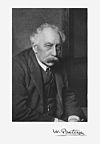
William Bateson on Gregor Mendel
“Investigations that before had only been imagined as desirable now became easy to pursue, and questions as to the genetic inter-relations and compositions of varieties can now be definitely answered. Without prejudice to what the future may disclose whether by way of limitation or extension of the Mendelian method, it can be declared with confidence and certainty that we have now the means of beginning an analysis of living organisms, and distinguishing many of the units or factors which essentially determine and cause the development of their several attributes. Briefly put, the essence of the Mendelian lies in the discovery of the existence of unit characters or factors.”
Unsourced — Primary work/page citation not yet verified in the QuotesCosmos archive. Per our Unnamed Sources & Verification Policy, quotes without confirmed primary editions are explicitly marked Unsourced while under editorial review.
David P. Clark on Gregor Mendel
“The birth of modern genetics was due to the discoveries of Gregor Mendel (1823–1884), an Augustinian monk who taught natural science to high school students in the town of Brno in Moravia (now part of the Czech Republic). Mendel’s greatest insight was to focus on discrete, clear-cut characters rather than measuring continuously variable properties, such as height or weight. Mendel used pea plants and studied characteristics such as whether the seeds were smooth or wrinkled, whether the flowers were red or white, and whether the pods were yellow or green, etc. When asked if any particular individual inherited these characteristics from its parents, Mendel could respond with a simple “yes” or “no,” rather than “maybe” or “partly.” Such clear-cut, discrete characteristics are known as Mendelian characters(Fig. 1.01).”
Unsourced — Primary work/page citation not yet verified in the QuotesCosmos archive. Per our Unnamed Sources & Verification Policy, quotes without confirmed primary editions are explicitly marked Unsourced while under editorial review.
About Gregor Mendel
Gregor Johann Mendel (20 July 1822 – 6 January 1884) was a meteorologist, mathematician, biologist, Augustinian friar and abbot of St. Thomas' Abbey in Brno, Margraviate of Moravia. Mendel was born in a German-speaking family in the Silesian part of the Austrian Empire (today's Czech Republic) and gained posthumous recognition as the founder of the modern science of genetics. Though farmers had known for millennia that crossbreeding of animals and plants could favor certain desirable traits, Mendel's pea plant experiments conducted between 1856 and 1863 established many of the rules of heredity, now referred to as the laws of Mendelian inheritance.