Link Copied!
Graham Greene Quotes (1904-1991)
Writer, Playwright, Novelist
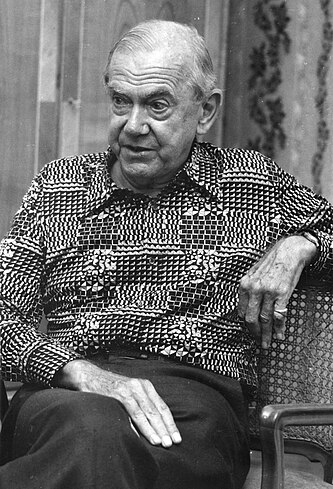












About Graham Greene
Henry Graham Greene, OM, CH (2 October 1904 – 3 April 1991) was an English novelist, playwright, short story writer, travel writer and critic whose works explore the ambivalent moral and political issues of the modern world.
Best Graham Greene Quotes
Shortest
Earliest
Explore our curated collection of the most famous and impactful Graham Greene quotes.




“Life was a series of complicated tactical exercises ...”

“A major character has to come somehow out of the unconscious.”
“[Re Hale] He only felt his loneliness after his third gin.”

“There is a point of no return, unremarked at the time, in most lives.”


“That instinct for human character that is perhaps inherent in an imaginative writer.”

“He knew everything in theory, nothing in practice... He knew the moves, he'd never played the game.”
“Cynicism is cheap—you can buy it at any Monoprix store—it’s built into all poor-quality goods.”

“You can’t conceive, my child, nor can I or anyone the … appalling … strangeness of the mercy of God.”

“To me comfort is like the wrong memory at the wrong place or time: if one is lonely one prefers discomfort.”

“[Priest at Hale's cremation] "...our brother is at this moment reabsorbed in the universal spirit."”

“It is impossible to go through life without trust: that is to be imprisoned in the worst cell of all, oneself.”
“God...created a number of possibilities in case some of his prototypes failed — that is the meaning of evolution.”

“I suppose the love of life which periodically deserts most men was returning: like sexual desire, it moves in cycles.”
“A story has no beginning or end: arbitrarily one chooses that moment from which to look back or from which to look ahead.”
“Death will come in any case, and there is a long afterwards if the priests are right and nothing to fear if they are wrong.”
“It was not the kind of surroundings in which any one with free will — if such a man existed — would have chosen to await death.”
“When you visualized a man or woman carefully, you could always begin to feel pity— that was a quality God's image carried with it.”

“We never get accustomed to being less important to other people than they are to us — Martins felt the little jab of dispensability.”
“I had very good dentures once. Some magnificent gold work. It’s the only form of jewelry a man can wear that women fully appreciate.”
“Simplicity belonged by right to those who were native-born, those who could take the conditions of life, however bizarre, for granted.”

“Have you seen a room from which faith has gone?...Like a marriage from which love has gone...And patience, patience everywhere like a fog.”
“It is the story-teller's task to elicit sympathy and a measure of understanding for those who lie outside the boundaries of State approval.”

“Our worst enemies here are not the ignorant and the simple, however cruel; our worst enemies are the intelligent and corrupt.”


“Can you hate something you don't believe in? And yet he called himself a free-thinker. What an impossible paradox, to be free and to be so obsessed.”
“Childhood was the germ of all mistrust. You were cruelly joked upon and then you cruelly joked. You lost the remembrance of pain through inflicting it.”
“The hands of the guilty don't necessarily tremble; only in stories does a dropped glass betray agitation. Tension is more often shown in the studied action.”
“My two fingers on a typewriter have never connected with my brain. My hand on a pen does. A fountain pen, of course. Ball-point pens are only good for filling out forms on a plane.”
“A petty reason perhaps why novelists more and more try to keep a distance from journalists is that novelists are trying to write the truth and journalists are trying to write fiction.”
““Oh, I’m not a Berkeleian. I believe my back’s against this wall. I believe there’s a sten gun over there.””
“Innocence always calls mutely for protection when we would be so much wiser to guard ourselves against it: innocence is like a dumb leper who has lost his bell, wandering the world, meaning no harm.”

“Writing is a form of therapy; sometimes I wonder how all those who do not write, compose or paint can manage to escape the madness, the melancholia, the panic fear which is inherent in the human condition.”
“[About Pinkie's inability to empathise] The imagination hadn't awoken. That was his strength. He couldn't see through other people's eyes, or feel with their nerves. Only the music made him uneasy.”

“But the great moment was over — here in Orizaba it was like Galilee between the Crucifixion and the Resurrection — all the enthusiasm had been spent.”

“I have often noticed that a bribe...has that effect — it changes a relation. The man who offers a bribe gives away a little of his own importance; the bribe once accepted, he becomes the inferior, like a man who has paid for a woman.”

“We mustn’t complain too much of being comedians—it’s an honourable profession. If only we could be good ones the world might gain at least a sense of style. We have failed—that’s all. We are bad comedians, we aren’t bad men.”
“The economy of a novelist is a little like that of a careful housewife who is unwilling to throw away anything that might perhaps serve its turn. Perhaps the comparison is closer to the Chinese cook who leaves hardly any part of a duck unserved.”
“It was an evening which, by some mysterious combination of failing light and the smell of an unrecognised plant, brings back to some men the sense of childhood and of future hope and to others the sense of something which has been lost and almost forgotten.”
“At the end of what is called the "sexual life" the only love which has lasted is the love which has everything, every disappointment, every failure and every betrayal, which has accepted even the sad fact that in the end there is no desire so deep as the simple desire for companionship.”
“[After Hale's cremation] She came out of the crematorium, and there from the twin towers above her head fumed the very last of Fred, a thin stream of grey smoke from the ovens. Fred dropped indistinguishable grey ash on the pink blossoms: he became part of the smoke nuisance over London, and Ida wept.”
“The sense of unhappiness is so much easier to convey than that of happiness. In misery we seem aware of our own existence, even though it may be in the form of a monstrous egotism: this pain of mine is individual, this nerve that winces belong to me and to no other. But happiness annihilates us: we lose our identity.”

“Champagne, if you are seeking the truth, is better than a lie detector. It encourages a man to be expansive, even reckless, while lie detectors are only a challenge to tell lies successfully.”
“What right had I to value her less than the bodies in the square? Suffering is not increased by numbers; one body can contain all the suffering the world can feel. I had judged like a journalist, in terms of quantity, and I had betrayed my own principles; I had become as engage as Pyle, and it seemed to me that no decision would ever be simple again.”

“[Cubitt hurling insults at Pinky after he refuses to lend him money] The picture Cubitt drew had got nothing to do with him: it was like the pictures men drew of Christ, the image of their own sentimentality. ...He was like a professor describing to a stranger some place he had only read in books:...when all the time it was a country the stranger knew...”
“[Rose, taken out for the evening by Pinkie] She had an immense store of trivial memories and when she wasn't living in the future she was living in the past. As for the present – she got through that as quickly as she could, running away from things, running towards things, so that her voice was always a little breathless, her heart pounding at an escape or an expectation.”

“The hurt is in the act of possession; we are too small in mind and body to possess another person without pride or to be possessed without humiliation. In a way I was glad my wife had struck out at me again – I had forgotten her pain for too long, and this was the only kind of recompense I could give her. Unfortunately the innocent are always involved in any conflict. Always, everywhere, there is some voice crying from a tower.”
“However great a man’s fear of life, suicide remains the courageous act, the clear-headed act of a mathematician. The suicide has judged by the laws of chance—so many odds against one that to live will be more miserable than to die. His sense of mathematics is greater than his sense of survival. But think how a sense of survival must clamour to be heard at the last moment, what excuses it must present of a totally unscientific nature.”

“I sat on my bed and I said to God: You've taken her, but you haven't got me yet. I know Your cunning. It's You who take us up to a high place and offer us the whole universe. You're a devil, God, tempting us to leap. But I don't want Your peace and I don't want Your love. I wanted something very simple and very easy: I wanted Sarah for a lifetime and You took her away. With Your great schemes You ruin our happiness like a harvester ruins a mouse's nest: I hate You, God, I hate You as though You existed.”

“Those who marry God can become domesticated too—it’s just as hum-drum a marriage as all the others. The word “Love” means a formal touch of the lips as in the ceremony of the Mass, and “Ave Maria” like “dearest” is a phrase to open a letter. This marriage like the world’s marriages was held together by habits and tastes shared in common between God and themselves—it was God’s taste to be worshipped and their taste to worship, but only at stated hours like a suburban embrace on a Saturday night.”

“Communism, my friend, is more than Marxism, just as Catholicism … is more than the Roman Curia. There is a mystique as well as a politique....Catholics and communists have commited great crimes, but at least they have not stood aside, like an established society, and been indifferent. I would rather have blood on my hands than water like Pilate...if you have abandoned one faith, do not abandon all faith. There is always an alternative to the faith we lose. Or is it the same faith under another mask?”

“And all that time I couldn’t work. So much of a novelist’s writing, as I have said, takes place in the unconscious: in those depths the last word is written before the first word appears on the paper. We remember details of our story, we do not invent them. War didn’t trouble those deep sea-caves, but not there was something of infinitely greater importance to me than war, than my novel – the end of love. That was being worked out not, like a story: the pointed word that sent her crying, that seemed to have come so spontaneously to the lips, had been sharpened in those underwater caverns. My novel lagged, but my love hurried like inspiration to the end.”

“I was trying to write a book that simply would not come. I did my daily five hundred words, but the characters never began to live. So much in writing depends on the superficiality of one’s days. One may be preoccupied with shopping and income tax returns and change conversations, but the stream of the unconscious continues to flow undisturbed, solving problems, planning ahead: one sits down sterile and dispirited at the desk, and suddenly the words come as though from the air: the situations that seemed blocked in a hopeless impasse move forward: the work has been done while one slept or shopped or talked with friends. But this hate and suspicion, this passion to destroy went deeper than the book – the unconscious worked on it instead…”
“In childhood we live under the brightness of immortality — heaven is as near and actual as the seaside. Behind the complicated details of the world stand the simplicities: God is good, the grown-up man or woman knows the answer to every question, there is such a thing as truth, and justice is as measured and faultless as a clock. Our heroes are simple: they are brave, they tell the truth, they are good swordsmen and they are never in the long run really defeated. That is why no later books satisfy us like those which were read to us in childhood—for those promised a world of great simplicity of which we knew the rules, but the later books are complicated and contradictory with experience; they are formed out of our own disappointing memories.”

Graham Greene Quotes by Topic
Find exactly what you are looking for by browsing this categorized list of Graham Greene quotes by topic.
Graham Greene on Mexico 3 quotes
View all 3 quotes on Mexico →Graham Greene on Unbelief
Graham Greene on Mystery fiction
“Detective stories—the modern fairy tales.”

Graham Greene on Quotations
“People who like quotations love meaningless generalizations.”

Graham Greene on Generalization
“People who like quotations love meaningless generalizations.”

What Graham Greene Said About Others
Discover personal opinions Graham Greene shared regarding contemporaries.
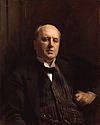
Graham Greene on Henry James
“He is as solitary in the history of the novel as Shakespeare in the history of poetry.”
Graham Greene on Marcel Proust
“Proust was the greatest novelist of the twentieth century, just as Tolstoy was in the nineteenth.”

Graham Greene on J. B. Priestley
“Priestley became in the months after Dunkirk a leader second only in importance to Mr. Churchill. And he gave us what our other leaders have always failed to give us – an ideology.”
Graham Greene on Mervyn Peake
“You are the first person who has been able to illustrate the book adequately since Tenniel, though I still argue as I think I argued with you years ago that your Alice is a little bit too much of a gamin.”

Graham Greene on James Cagney
“He can do nothing which is not worth watching. On his light hoofer's feet, with his quick nervous hands and his magnificent unconsciousness of the camera, he can pluck distinction from the least promising part.”

Quotes About Graham Greene
Gain deeper perspective through quotes about Graham Greene from others.
Malcolm Muggeridge on Graham Greene
Norman Sherry on Graham Greene
“Barbara wrote that his brain frightened her. It was sharp and clear and cruel. She admired him for being always unsentimental, but noted 'always remember to rely on yourself … if you are in a sticky place he will be so interested in noting your reactions that he will probably forget to rescue you.'”
Colin Wilson on Graham Greene
“In fact, the real problem with the thesis of A Genealogy of Morals is that the noble and the aristocrat are just as likely to be stupid as the plebeian. I had noted in my teens that major writers are usually those who have had to struggle against the odds — to "pull their cart out of the mud," as I put it — while writers who have had an easy start in life are usually second rate — or at least, not quite first-rate. Dickens, Balzac, Dostoevsky, Shaw, H. G. Wells, are examples of the first kind; in the twentieth century, John Galsworthy, Graham Greene, Evelyn Waugh, and Samuel Beckett are examples of the second kind. They are far from being mediocre writers; yet they tend to be tinged with a certain pessimism that arises from never having achieved a certain resistance against problems.”

About Graham Greene
Henry Graham Greene, OM, CH (2 October 1904 – 3 April 1991) was an English novelist, playwright, short story writer, travel writer and critic whose works explore the ambivalent moral and political issues of the modern world.