Link Copied!
Giovanni Boccaccio Quotes (1313-1375)
Writer, Poet
About Giovanni Boccaccio
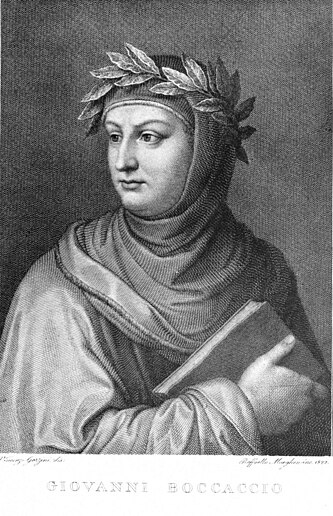
Giovanni Boccaccio (16 June 1313 – 21 December 1375) was a Florentine poet and story-writer who helped to initiate the humanist movement. His most famous work is The Decameron, a collection of 100 novelle or tales.
Best Giovanni Boccaccio Quotes
Shortest
Earliest
Explore our curated collection of the most famous and impactful Giovanni Boccaccio quotes.
“Come del morire.”
Unsourced — Primary work/page citation not yet verified in the QuotesCosmos archive. Per our Unnamed Sources & Verification Policy, quotes without confirmed primary editions are explicitly marked Unsourced while under editorial review.
“Chi mal ti vuol, mal ti sogna.”
Unsourced — Primary work/page citation not yet verified in the QuotesCosmos archive. Per our Unnamed Sources & Verification Policy, quotes without confirmed primary editions are explicitly marked Unsourced while under editorial review.
“Peccato celato e mezzo perdonato.”
Unsourced — Primary work/page citation not yet verified in the QuotesCosmos archive. Per our Unnamed Sources & Verification Policy, quotes without confirmed primary editions are explicitly marked Unsourced while under editorial review.
“Per lo primo colpo non cade la quercia.”
Unsourced — Primary work/page citation not yet verified in the QuotesCosmos archive. Per our Unnamed Sources & Verification Policy, quotes without confirmed primary editions are explicitly marked Unsourced while under editorial review.
“Quale asino dà in parete cotale riceve.”
Unsourced — Primary work/page citation not yet verified in the QuotesCosmos archive. Per our Unnamed Sources & Verification Policy, quotes without confirmed primary editions are explicitly marked Unsourced while under editorial review.
“Lo ingannatore rimane a pié dello ingannato.”
Unsourced — Primary work/page citation not yet verified in the QuotesCosmos archive. Per our Unnamed Sources & Verification Policy, quotes without confirmed primary editions are explicitly marked Unsourced while under editorial review.
“Non come uomini, ma quasi come bestie, morieno.”
Unsourced — Primary work/page citation not yet verified in the QuotesCosmos archive. Per our Unnamed Sources & Verification Policy, quotes without confirmed primary editions are explicitly marked Unsourced while under editorial review.
“Sola la miseria è senza invidia nelle cose presenti.”
Unsourced — Primary work/page citation not yet verified in the QuotesCosmos archive. Per our Unnamed Sources & Verification Policy, quotes without confirmed primary editions are explicitly marked Unsourced while under editorial review.
“Ci cacciano in cucina a dir delle favole colla gatta.”
Unsourced — Primary work/page citation not yet verified in the QuotesCosmos archive. Per our Unnamed Sources & Verification Policy, quotes without confirmed primary editions are explicitly marked Unsourced while under editorial review.
“La gente è più acconcia a credere il male che il bene.”
Unsourced — Primary work/page citation not yet verified in the QuotesCosmos archive. Per our Unnamed Sources & Verification Policy, quotes without confirmed primary editions are explicitly marked Unsourced while under editorial review.
“Fate quello che noi diciamo e non quello che noi facciamo.”
Unsourced — Primary work/page citation not yet verified in the QuotesCosmos archive. Per our Unnamed Sources & Verification Policy, quotes without confirmed primary editions are explicitly marked Unsourced while under editorial review.
“Una boccuccia piccolina, le cui labbra parevan due rubinetti.”
Unsourced — Primary work/page citation not yet verified in the QuotesCosmos archive. Per our Unnamed Sources & Verification Policy, quotes without confirmed primary editions are explicitly marked Unsourced while under editorial review.
“Bocca baciata non perde ventura, anzi rinnuova come fa la luna.”
Unsourced — Primary work/page citation not yet verified in the QuotesCosmos archive. Per our Unnamed Sources & Verification Policy, quotes without confirmed primary editions are explicitly marked Unsourced while under editorial review.
“Se egli fu lieto assai, la letizia della giovane non fu minore.”
Unsourced — Primary work/page citation not yet verified in the QuotesCosmos archive. Per our Unnamed Sources & Verification Policy, quotes without confirmed primary editions are explicitly marked Unsourced while under editorial review.
“Sempre non può l' uomo un cibo, ma talvolta desidera di variare.”
Unsourced — Primary work/page citation not yet verified in the QuotesCosmos archive. Per our Unnamed Sources & Verification Policy, quotes without confirmed primary editions are explicitly marked Unsourced while under editorial review.
“Ogni giusto re primo servatore dee essere delle leggi fatte da lui.”
Unsourced — Primary work/page citation not yet verified in the QuotesCosmos archive. Per our Unnamed Sources & Verification Policy, quotes without confirmed primary editions are explicitly marked Unsourced while under editorial review.
“Chi è reo e buono è tenuto
Può fare il male e non è creduto.”
Può fare il male e non è creduto.”
Unsourced — Primary work/page citation not yet verified in the QuotesCosmos archive. Per our Unnamed Sources & Verification Policy, quotes without confirmed primary editions are explicitly marked Unsourced while under editorial review.
“Le cose mal fatte e di gran tempo passate son più agevoli a riprendere che ad emendare.”
Unsourced — Primary work/page citation not yet verified in the QuotesCosmos archive. Per our Unnamed Sources & Verification Policy, quotes without confirmed primary editions are explicitly marked Unsourced while under editorial review.
“Uno amore...a lieto fin pervenuto, in una novelletta assai piccola intendo di raccontarvi.”
Unsourced — Primary work/page citation not yet verified in the QuotesCosmos archive. Per our Unnamed Sources & Verification Policy, quotes without confirmed primary editions are explicitly marked Unsourced while under editorial review.
“James Macmullen Rigg, The Decameron of Giovanni Boccaccio, 2 vols. (London: A. H. Bullen, 1903)”
Unsourced — Primary work/page citation not yet verified in the QuotesCosmos archive. Per our Unnamed Sources & Verification Policy, quotes without confirmed primary editions are explicitly marked Unsourced while under editorial review.
“Se medesimi esaltando con parole da fare per istomacaggine le pietre saltar del muro e fuggirsi.”
Unsourced — Primary work/page citation not yet verified in the QuotesCosmos archive. Per our Unnamed Sources & Verification Policy, quotes without confirmed primary editions are explicitly marked Unsourced while under editorial review.
“George Henry McWilliam, Giovanni Boccaccio: The Decameron (London: Penguin Classics, 1972; 1995)”
Unsourced — Primary work/page citation not yet verified in the QuotesCosmos archive. Per our Unnamed Sources & Verification Policy, quotes without confirmed primary editions are explicitly marked Unsourced while under editorial review.
“Come la copia delle cose genera fastidio, cosl l'esser le desiderate negate moltiplica l'appetito.”
Unsourced — Primary work/page citation not yet verified in the QuotesCosmos archive. Per our Unnamed Sources & Verification Policy, quotes without confirmed primary editions are explicitly marked Unsourced while under editorial review.
“E poco appresso levatasi la luna, e 'l tempo essendo chiarissimo, [egli] vegghiava.”
Unsourced — Primary work/page citation not yet verified in the QuotesCosmos archive. Per our Unnamed Sources & Verification Policy, quotes without confirmed primary editions are explicitly marked Unsourced while under editorial review.
“Natural ragione è di ciascuno che ci nasce, la sua vita, quanto può, aiutare e conservare e difendere.”
Unsourced — Primary work/page citation not yet verified in the QuotesCosmos archive. Per our Unnamed Sources & Verification Policy, quotes without confirmed primary editions are explicitly marked Unsourced while under editorial review.
“Guido A. Guarino, Boccaccio, Concerning Famous Women (New Brunswick, NJ: Rutgers University Press, 1963)”
Unsourced — Primary work/page citation not yet verified in the QuotesCosmos archive. Per our Unnamed Sources & Verification Policy, quotes without confirmed primary editions are explicitly marked Unsourced while under editorial review.
“Le forze della penna sono troppo maggiori che coloro non estimano che quelle con conoscimento provato non hanno.”
Unsourced — Primary work/page citation not yet verified in the QuotesCosmos archive. Per our Unnamed Sources & Verification Policy, quotes without confirmed primary editions are explicitly marked Unsourced while under editorial review.
“La gentilezza non si può lasciar in eredità, se non come le virtù, le scienze, la santità, e così fatte cose.”
Unsourced — Primary work/page citation not yet verified in the QuotesCosmos archive. Per our Unnamed Sources & Verification Policy, quotes without confirmed primary editions are explicitly marked Unsourced while under editorial review.
“Amor, s’io posso uscir de’ tuoi artigli,
appena creder posso
che alcuno altro uncin mai piú mi pigli.”
appena creder posso
che alcuno altro uncin mai piú mi pigli.”
Unsourced — Primary work/page citation not yet verified in the QuotesCosmos archive. Per our Unnamed Sources & Verification Policy, quotes without confirmed primary editions are explicitly marked Unsourced while under editorial review.
“Leggiadre donne, infra molte bianche colombe aggiugne più di bellezza uno nero corvo, che non farebbe un candido cigno.”
Unsourced — Primary work/page citation not yet verified in the QuotesCosmos archive. Per our Unnamed Sources & Verification Policy, quotes without confirmed primary editions are explicitly marked Unsourced while under editorial review.
“Io ho inteso che un gallo basta assai bene a diece galline, ma che diece uomini posson male o con fatica una femina sodisfare.”
Unsourced — Primary work/page citation not yet verified in the QuotesCosmos archive. Per our Unnamed Sources & Verification Policy, quotes without confirmed primary editions are explicitly marked Unsourced while under editorial review.
“Nathaniel Griffin and Arthur Myrick, The Filostrato of Giovanni Boccaccio (Philadelphia: University of Pennsylvania Press, 1929)”

Unsourced — Primary work/page citation not yet verified in the QuotesCosmos archive. Per our Unnamed Sources & Verification Policy, quotes without confirmed primary editions are explicitly marked Unsourced while under editorial review.
“Normand R. Cartier, Boccaccio's Revenge: A Literary Transposition of the Corbaccio (The Old crow) (The Hague: Martinus Nijhoff, 1977)”
Unsourced — Primary work/page citation not yet verified in the QuotesCosmos archive. Per our Unnamed Sources & Verification Policy, quotes without confirmed primary editions are explicitly marked Unsourced while under editorial review.
“Thomas B. Harbottle and Philip H. Dalbiac, Dictionary of Quotations (French and Italian), 2nd ed. (London: Swan Sonnenschein & Co., Ltd., 1904)”

Unsourced — Primary work/page citation not yet verified in the QuotesCosmos archive. Per our Unnamed Sources & Verification Policy, quotes without confirmed primary editions are explicitly marked Unsourced while under editorial review.
“Essere la natura de' motti cotale, che essi come la pecora morde deono cosi mordere l'uditore, e non come 'l cane: percio che, se come cane mordesse il motto, non sarebbe motto, ma villania.”
Unsourced — Primary work/page citation not yet verified in the QuotesCosmos archive. Per our Unnamed Sources & Verification Policy, quotes without confirmed primary editions are explicitly marked Unsourced while under editorial review.
“It is annoying and impossible to suffer proud women, because in general Nature has given men proud and high spirits, while it has made women humble in character and submissive, more apt for delicate things than for ruling.”

Unsourced — Primary work/page citation not yet verified in the QuotesCosmos archive. Per our Unnamed Sources & Verification Policy, quotes without confirmed primary editions are explicitly marked Unsourced while under editorial review.
“Giovine donna è mobile, e vogliosa
È negli amanti molti, e sua bellezza
Estima più ch'allo specchio, e pomposa
Ha vanagloria di sua giovinezza;
La qual quanto piacevole e vezzosa
È più, cotanto più seco l'apprezza:
Virtù non sente, né conoscimento,
Volubil sempre come foglia al vento.”
È negli amanti molti, e sua bellezza
Estima più ch'allo specchio, e pomposa
Ha vanagloria di sua giovinezza;
La qual quanto piacevole e vezzosa
È più, cotanto più seco l'apprezza:
Virtù non sente, né conoscimento,
Volubil sempre come foglia al vento.”
Unsourced — Primary work/page citation not yet verified in the QuotesCosmos archive. Per our Unnamed Sources & Verification Policy, quotes without confirmed primary editions are explicitly marked Unsourced while under editorial review.
Giovanni Boccaccio Quotes by Topic
Find exactly what you are looking for by browsing this categorized list of Giovanni Boccaccio quotes by topic.
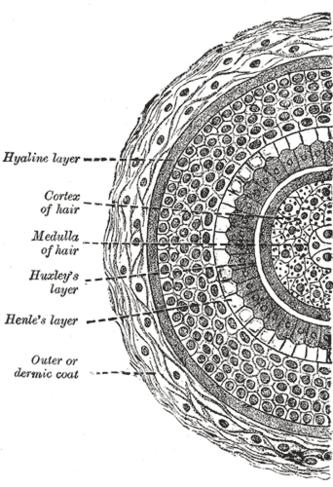
Giovanni Boccaccio on Hair
“His hair stood upright like porcupine quills.”
Unsourced — Primary work/page citation not yet verified in the QuotesCosmos archive. Per our Unnamed Sources & Verification Policy, quotes without confirmed primary editions are explicitly marked Unsourced while under editorial review.
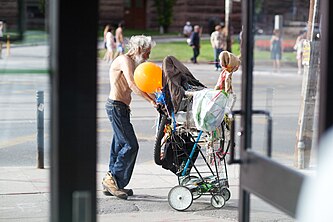
Giovanni Boccaccio on Poverty
“In the affairs of this world, poverty alone is without envy.”

Unsourced — Primary work/page citation not yet verified in the QuotesCosmos archive. Per our Unnamed Sources & Verification Policy, quotes without confirmed primary editions are explicitly marked Unsourced while under editorial review.
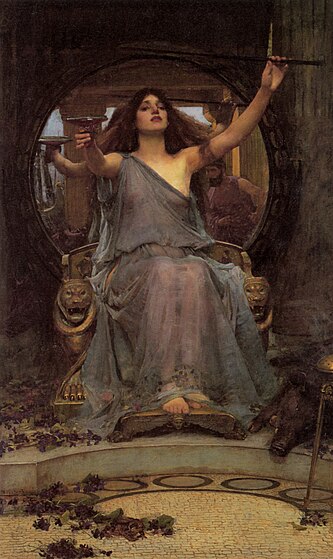
Giovanni Boccaccio on Circe
“If we consider human behavior, we can well understand from this example that there are many Circes everywhere and many other men are changed into beasts by their lustfulness and their vices. And Ulysses, instructed by Mercury’s advice, obviously signifies the wise man who cannot be bound by the trickery of deceitful people and who by his example often loosens the bonds of those who are held.”

Unsourced — Primary work/page citation not yet verified in the QuotesCosmos archive. Per our Unnamed Sources & Verification Policy, quotes without confirmed primary editions are explicitly marked Unsourced while under editorial review.
Quotes About Giovanni Boccaccio
Gain deeper perspective through quotes about Giovanni Boccaccio from others.
John Colin Dunlop on Giovanni Boccaccio
“There are few works which have had an equal influence on literature with the Decameron of Boccaccio. Even in England its effects were powerful. From it Chaucer adopted the notion of the frame in which he has enclosed his tales, and the general manner of his stories, while in some instances, as we have seen, he has merely versified the novels of the Italian. In 1566, William Paynter printed many of Boccaccio's stories in English, in his work called the Palace of Pleasure. The first translation contained sixty novels, and it was soon followed by another volume, comprehending thirty-four additional tales. These are the pages of which Shakespeare made so much use. From Burton's Anatomy of Melancholy, we learn that one of the great amusements of our ancestors was reading Boccaccio aloud, an entertainment of which the effects were speedily visible in the literature of the country. The first English translation, however, of the whole Decameron, did not appear till 1620. In France, Boccaccio found early and illustrious imitators. In his own country he brought his native tongue to perfection, and gave stability to a mode of composition, which before his time had only existed in a rude state in Italy; be collected the current tales of the age, which he decorated with new circumstances, and delivered in a style which has no parallel for elegance, naivete, and grace. Hence his popularity was unbounded, and his imitators more numerous than those of any author recorded in the annals of literature.”
Unsourced — Primary work/page citation not yet verified in the QuotesCosmos archive. Per our Unnamed Sources & Verification Policy, quotes without confirmed primary editions are explicitly marked Unsourced while under editorial review.
About Giovanni Boccaccio
Giovanni Boccaccio (16 June 1313 – 21 December 1375) was a Florentine poet and story-writer who helped to initiate the humanist movement. His most famous work is The Decameron, a collection of 100 novelle or tales.