Link Copied!
Gilbert Burnet Quotes (1643-1715)
Philosopher, Writer, King
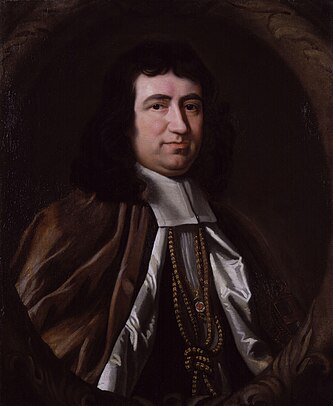
About Gilbert Burnet
Gilbert Burnet (18 September 1643 – 17 March 1715) was a Scottish philosopher and historian, and Bishop of Salisbury. He was fluent in Dutch, French, Latin, Greek, and Hebrew. Burnet was highly respected as a cleric, a preacher, an academic, a writer and a historian. He was always closely associated with the Whig party, and was one of the few close friends in whom King William III confided.
Best Gilbert Burnet Quotes
Shortest
Earliest
Explore our curated collection of the most famous and impactful Gilbert Burnet quotes.
“[T]he chief Design of our whole Law, and of all the several Rules of our Constitution, is to secure and maintain our Liberty.”
“The chief glory of Princes, and the chief of their Titles...is, That they are God's Deputies and Vicegerents here on earth; that they represent him, and by consequence, that they ought to resemble him. The outward respect paid them, carries a proportion to that Character of Divinity which is on them, and that supposes an imitation of the Divine Perfections in them.”
“[I]n the management of this Civil Society, great distinction is to be made, between the Power of making Laws for the regulating the Conduct of it, and the Power of executing those Laws: The Supream Authority must still be supposed to be lodged with those who have the Legislative Power reserved to them, but not with those who have only the Executive; which is plainly a Trust, when it is separated from the Legislative Power.”

“[T]he queen spoke to myself [in 1711]... I asked leave to speak my mind plainly; which she granted: I said, any treaty by which Spain and the West Indies were left to king Philip, must in a little while deliver up all Europe into the hands of France; and, if any such peace should be made, she was betrayed, and we were all ruined; in less than three years' time she would be murdered, and the fires would be again raised in Smithfield: I pursued this long, till I saw she grew uneasy; so I withdrew.”
“It is certain, That the Law of Nature has put no difference nor subordination among Men, except it be that of Children to Parents, or of Wives to their Husbands; so that with Relation to the Law of Nature, all Men are born free; and this Liberty must still be supposed entire, unless so far as it is limited by Contracts, Provisions, or Laws. For a Man can either bind himself to be a Servant, or sell himself to be a Slave, by which he becomes in the power of another, only so far as it was provided by the Contract: since all that Liberty which was not expresly given away, remains still entire: so that the Plea for Liberty always proves it self, unless it appears that: it is given up or limited by any special Agreement.”

“The measures of Power, and by consequence of Obedience, must be taken from the express Laws of any State or Body of Men, from the Oaths that they swear, or from immemorial Prescription, and a long Possession, which both give a Title, and in a long Tract of Time make a bad one be came good, face Prescription, when it passes the Memory of Man, and is not disputed by any other Pretender, gives by the common Sense of all Men a just and good Title: so upon the whole matter, the degrees of all Civil Authority are to be taken either from express Laws, immemorial Customs, or from particular Oaths, which the Subjects swear to their Princes: this being still to be laid down for a Principle, that in all the Disputes between Power and Liberty, Power must always be proved, but Liberty proves it self; the one being founded only upon a Positive Law, and the other upon the Law of Nature.”
Gilbert Burnet Quotes by Topic
Find exactly what you are looking for by browsing this categorized list of Gilbert Burnet quotes by topic.
Gilbert Burnet on Monarchy
“The chief glory of Princes, and the chief of their Titles...is, That they are God's Deputies and Vicegerents here on earth; that they represent him, and by consequence, that they ought to resemble him. The outward respect paid them, carries a proportion to that Character of Divinity which is on them, and that supposes an imitation of the Divine Perfections in them.”

What Gilbert Burnet Said About Others
Discover personal opinions Gilbert Burnet shared regarding contemporaries.
Gilbert Burnet on Oliver Cromwell 4 quotes
“Cromwell...said, he hoped he should make the name of Englishman, as great as ever that of a Roman had been.”
Gilbert Burnet on Edward Hyde, 1st Earl of Clarendon 3 quotes
“[H]e was a man that knew England well, and was lawyer good enough to be an able chancellor, and was certainly a very incorrupt man.”
Gilbert Burnet on James II of England
“A great king, with strong armies and mighty fleets, a vast treasure and powerful allies, fell all at once: and his whole strength, like a spider's web, was so irrecoverably broken with a touch, that he was never able to retrieve, what for want both of judgment and heart he threw up in a day.”

Gilbert Burnet on Richard Hooker
“I began my study with relation to our home matters with Hooker's Ecclesiasticall Policy [sic], which did so fixe me that I never departed from the principles laid down by him, nor was I a litle delighted with the modesty and charity that I observed in him which edified me as much as his book instructed me.”

Gilbert Burnet on Algernon Sidney
“A man of the most extraordinary courage, a steady man, even to obstinacy, sincere, but of a rough and boisterous temper, that could not bear contradiction, but would give foul language upon it. He seemed to be a Christian, but in a particular form of his own. He thought it was to be like a divine philosophy in the mind, but he was against all public worship, and every thing that looked like church. He was stiff to all republican principles, and such an enemy to every thing that looked like monarchy, that he set himself in a high opposition against Cromwell when he was made protector. He had indeed studied the history of government in all its branches beyond any man I ever knew.”
Quotes About Gilbert Burnet
Gain deeper perspective through quotes about Gilbert Burnet from others.
Francis Atterbury on Burnet on Gilbert Burnet
John Cockburn on Gilbert Burnet
“Nor could any be more qualified for writing the History of his own Times, for he was Curious and Inquisitive, and had a large Acquaintance, and the Opportunity of conversing with all sorts of Persons, of all Ranks, from the Throne downwards. He never heard of any Person of Note, whether at home or abroad, whom he did not take some Opportunity of visiting; and if they were not of themselves ready to declare what they knew, he endeavoured to draw them into it by his curious Questions, as I have been informed by those who knew his ways; so that without Question, there were few who could know more, or so much of the Transactions of these Times he writes of.”
Lord Dartmouth on Gilbert Burnet
“Bishop Burnet was a man of the most extensive knowledge I ever met with; had read and seen a great deal, with a prodigious memory, and a very indifferent judgment: he was extremely partial, and readily took every thing for granted that he heard to the prejudice of those that he did not like: which made him pass for a man of less truth than he really was. I do not think he designedly published any thing he believed to be false. He had a boisterous vehement manner of expressing himself, which often made him ridiculous, especially in the house of lords, when what he said would not have been thought so, delivered in a lower voice, and a calmer behaviour. His vast knowledge occasioned his frequent rambling from the point he was speaking to, which ran him into discourses of so universal a nature, that there was no end to be expected but from a failure of his strength and spirits, of both which he had a larger share than most men; which were accompanied with a most invincible assurance.”
Horace Walpole on Gilbert Burnet
“Burnet I like much. It is observable, that none of his facts has been controverted, except his relation of the birth of the pretender, in which he was certainly mistaken—but his very credulity is a proof of his honesty. Burnet's style and manner are very interesting. It seems as if he had just come from the king's closet, or from the apartments of the men whom he describes, and was telling his reader, in plain honest terms, what he had seen and heard.”

About Gilbert Burnet
Gilbert Burnet (18 September 1643 – 17 March 1715) was a Scottish philosopher and historian, and Bishop of Salisbury. He was fluent in Dutch, French, Latin, Greek, and Hebrew. Burnet was highly respected as a cleric, a preacher, an academic, a writer and a historian. He was always closely associated with the Whig party, and was one of the few close friends in whom King William III confided.