Gerda Lerner on Lydia Maria Child
← Back to Gerda Lerner Profile
“Biographies of eminent women designed to appeal to literate women readers became a popular genre in the 19th century in England and in other European countries.In the United States this genre is represented by a two-volume History of Women by Lydia Maria Child. ... The only female sources she uses are travel writers and Phillis Wheatley. Her omissions are more interesting than her inclusions; for example, under "Vindications of Women" she lists Marguerite de Navarre but neither Christine de Pzan nor Mary Wollstonecraft. Frances Wright, who shortly before the publication of Child's book had given widely publicized and highly controversial public lectures in the Eastern seaboard cities advocating women's rights and sexual freedom, was dismissed by Child in a passing reference as a modern disciple of "the infidels of the French revolution Child's attempt at a cultural and societal discussion of the condition" of women is innovative, but her list is quite traditional.”
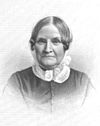
“Feminist writers, not trained historians, were the first to undertake a systematic attempt to approach the problem of women's role in American life and history. This took the form of feminist tracts, theoretical approaches, and compilations of woman's "contributions." The early compilers attacked the subject with a missionary zeal designed, above all, to right wrong. Their tendency was to praise anything women had done as a "contribution" and to include any women who had gained the slightest public attention in their numerous lists. Still, much positive work was done in simply recounting the history of the woman's rights movement and some of its forerunners and in discussing some of the women whose pioneering struggles opened opportunities to others. Feminist writers were hampered by a two-fold bias. First, they shared the middle-class, nativist, moralistic approach of the Progressives and tended to censure out of existence anyone who did not fit into this pattern. Thus we find that women like Frances Wright and Ernestine Rose received little attention because they were considered too radical. "Premature feminists" such as the Grimké sisters, Maria Weston Chapman, and Lydia Maria Child are barely mentioned.”