Galileo Galilei on Aristotle
← Back to Galileo Galilei Profile
“I do believe for certain, that he [Aristotle] first procured, by the help of the senses, such experiments and observations as he could, to assure him as much as was possible of the conclusion, and that he afterwards sought out the means how to demonstrate it; for this is the usual course in demonstrative sciences. And the reason thereof is, because when the conclusion is true, by the help of the resolutive method, one may hit upon some proposition before demonstrated, or come to some principle known per se; but if the conclusion be false, a man may proceed in infinitum, and never meet with any truth already known.”
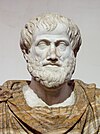
“We have in our age new accidents and observations, and such, that I question not in the least, but if Aristotle were now alive, they would make him change his opinion; which may be easily collected from the very manner of his discoursing: For when he writeth that he esteemeth the Heavens inalterable, &c. because no new thing was seen to be begot therein, or any old to be dissolved, he seems implicitely to hint unto us, that when he should see any such accident, he would hold the contrary; and confront, as indeed it is meet, sensible experiments to natural reason: for had he not made any reckoning of the senses, he would not then from the not seeing of any sensible mutation, have argued immutability.”