Link Copied!
G. I. Gurdjieff Quotes (1867-1949)

About G. I. Gurdjieff
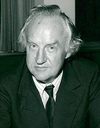
George Ivanovich Gurdjieff (Russian: Георгий Иванович Гюрджиев, Georgij Ivanovich Gjurdzhiev; 13 January c. 1867 – 29 October 1949) was a Greco-Armenian mystic and spiritual teacher of what came to be called "the Work" or "The Fourth Way", in which he taught people how to increase and focus their attention and energy through various awareness exercises. According to his teachings, such inner development is the beginning of a possible further process of change, and spiritual evolution.
Best G. I. Gurdjieff Quotes
Shortest
Earliest
Explore our curated collection of the most famous and impactful G. I. Gurdjieff quotes.



“Remember your self always and everywhere.”

“Here we can only direct and create conditions, but not help.”
“You must understand that ordinary efforts do not count; only superefforts count.”


“Conscious faith is freedom. Emotional faith is slavery. Mechanical faith is foolishness.”

“Hope of consciousness is strength
Hope of feelings is slavery
Hope of body is disease.”
Hope of feelings is slavery
Hope of body is disease.”

“Faith of consciousness is freedom
Faith of feeling is weakness
Faith of body is stupidity.”
Faith of feeling is weakness
Faith of body is stupidity.”
“The worse the conditions of life the more productive the work, always provided you remember the work.”
“ Man has no permanent and unchangeable I. Every thought, every mood, every desire, every sensation, says "I".”
“Man has the possibility of existence after death. But possibility is one thing and the realization of the possibility is quite a different thing.”

“Here there are neither Russians nor English, Jews nor Christians, but only those who pursue one aim — to be able to be.”

“Love of consciousness evokes the same in response
Love of feeling evokes the opposite
Love of body depends only on type and polarity.”
Love of feeling evokes the opposite
Love of body depends only on type and polarity.”

“Remember you come here having already understood the necessity of struggling with yourself — only with yourself. Therefore thank everyone who gives you the opportunity.”

“Without self knowledge, without understanding the working and functions of his machine, man cannot be free, he cannot govern himself and he will always remain a slave. ”

G. I. Gurdjieff Quotes by Topic
Find exactly what you are looking for by browsing this categorized list of G. I. Gurdjieff quotes by topic.
G. I. Gurdjieff on Death 3 quotes
“Man has the possibility of existence after death. But possibility is one thing and the realization of the possibility is quite a different thing.”

G. I. Gurdjieff on Faith 2 quotes
“Faith of consciousness is freedom Faith of feeling is weakness Faith of body is stupidity.”
G. I. Gurdjieff on Hope
“Hope of consciousness is strength Hope of feelings is slavery Hope of body is disease.”
G. I. Gurdjieff on Love
“Love of consciousness evokes the same in response Love of feeling evokes the opposite Love of body depends only on type and polarity.”
G. I. Gurdjieff on Poetry about love
“Love of consciousness evokes the same in response Love of feeling evokes the opposite Love of body depends only on type and polarity.”
G. I. Gurdjieff on Slavery
“Without self knowledge, without understanding the working and functions of his machine, man cannot be free, he cannot govern himself and he will always remain a slave.”

Quotes About G. I. Gurdjieff
Gain deeper perspective through quotes about G. I. Gurdjieff from others.
Kate Bush on G. I. Gurdjieff
“They open doorways that I thought were shut for good. They read me Gurdjieff and Jesu. They build up my body, break me emotionally. It's nearly killing me, but what a lovely feeling!”


Henry Miller on G. I. Gurdjieff
“Political leaders are never leaders. For leaders we have to look to the Awakeners! Lao Tse, Buddha, Socrates, Jesus, Milarepa, Gurdjiev, Krishnamurti.”

Anthony Storr on G. I. Gurdjieff 2 quotes
“Gurdjieff then suddenly announced that he was going to Tuapse, on the Black Sea. The dutiful de Hartmanns followed. Their account of an exhausting nocturnal walk forced on them by Gurdjieff in spite of the fact that they were unsuitably clad and also dead tired is a striking example of the autocratic and unreasonable demands which Gurdjieff made on his followers which they nevertheless slavishly obeyed. Olga de Hartmann's feet were so swollen and bleeding that she could not put on her shoes and had to walk barefoot. Thomas de Hartmann had missed a night's sleep because he had been ordered to stay on guard. Their limbs ached and they were both exhausted; but they went on nevertheless.”
P. L. Travers on G. I. Gurdjieff
“It is clear from Gurdjieff's writings that hypnotism, mesmerism and various arcane methods of expanding consciousness must have played a large part in the studies of the Seekers of Truth. None of these processes, however, is to be thought of as having any bearing on what is called Black Magic, which, according to Gurdjieff, "has always one definite characteristic. It is the tendency to use people for some, even the best of aims, without their knowledge and understanding, either by producing in them faith and infatuation or by acting upon them through fear. There is, in fact, neither red, green nor yellow magic. There is "doing." Only "doing" is magic." Properly to realise the scale of what Gurdjieff meant by magic, one has to remember his continually repeated aphorism, "Only he who can be can do," and its corollary that, lacking this fundamental verb, nothing is "done," things simply "happen."”

Colin Wilson on G. I. Gurdjieff
“During his lifetime Gurdjieff did not publish any books on the techniques of his teaching, and his pupils were bound to secrecy on the subject. Since his death in Paris in 1949, however, many of his works have been published, and there has been a flood of memoirs by disciples and admirers. Gurdjieff was in almost every respect the antithesis of Aleister Crowley. Whereas Crowley craved publicity, Gurdjieff shunned it. Crowley was forgotten for two decades after his death; Gurdjieff on the contrary, has become steadily better known, and his influence continues to grow. One of the main reasons for this is that there was so little of the charlatan about him. He is no cult figure with hordes of gullible disciples. What he has to teach makes an appeal to the intelligence, and can be fully understood only by those who are prepared to make a serious effort.”

Misattributed Quotes
Quotes mistakenly credited to G. I. Gurdjieff
“There is nothing compulsory. One is not asked to violate cherished beliefs or accept any of the ideas presented. Rather, a healthy skepticism is encouraged.”
About G. I. Gurdjieff
George Ivanovich Gurdjieff (Russian: Георгий Иванович Гюрджиев, Georgij Ivanovich Gjurdzhiev; 13 January c. 1867 – 29 October 1949) was a Greco-Armenian mystic and spiritual teacher of what came to be called "the Work" or "The Fourth Way", in which he taught people how to increase and focus their attention and energy through various awareness exercises. According to his teachings, such inner development is the beginning of a possible further process of change, and spiritual evolution.