Link Copied!
Fritjof Capra Quotes (1939-)
Physicist, Author, Director








About Fritjof Capra
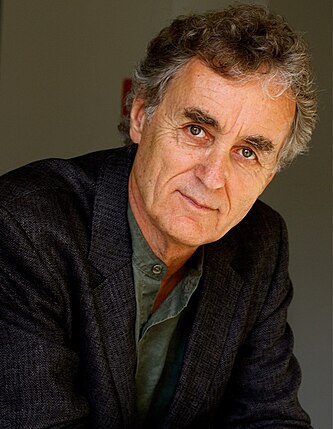
Fritjof Capra (born February 1, 1939) is an Austrian-born American physicist, author and founding director of the Center for Ecoliteracy in Berkeley, California.
Best Fritjof Capra Quotes
Shortest
Earliest
Explore our curated collection of the most famous and impactful Fritjof Capra quotes.
“Economics emphasizes competition, expansion, and domination; ecology emphasizes cooperation, conservation, and partnership.”

“Partnership—the tendency to associate, establish links, live inside one another, and cooperate—is one of the hallmarks of life.”
“Organizations need to undergo fundamental changes, both in order to adapt to the new business environment and to become ecologically sustainable.”
“There is no self-awareness in ecosystems, no language, no consciousness, and no culture; and therefore no justice and democracy; but also no greed or dishonesty.”


“Both the physicist and the mystic want to communicate their knowledge, and when they do so with words their statements are paradoxical and full of logical contradictions.”
“Tektology was the first attempt in the history of science to arrive at a systematic formulation of the principles of organization operating in living and nonliving systems.”
“A page from a journal of modern experimental physics will be as mysterious to the uninitiated as a Tibetan mandala. Both are records of enquiries into the nature of the universe.”
“We shall see how the two foundations of twentieth-century physics - quantum theory and relativity - both force us to see the world very much in the way a Hindu, Buddhist or Taoist sees it ..”
“The influence of modern physics goes beyond technology. It extends to the realm of thought and culture where it has led to a deep revision in man's conception of the universe and his relation to it.”

“The term "paradigm," from the Greek paradeigma ("pattern"), was used by Kuhn to denote a conceptual framework shared by a community of scientists and providing them with model problems and solutions”


“Whenever the essential nature of things is analysed by the intellect, it must seem absurd or paradoxical. This has always been recognized by the mystics, but has become a problem in science only very recently.”
“[Capra for instance, uses the term "Paradigm" to mean] the totality of thoughts, perceptions, and values that form a particular vision of reality, a vision that is the basis of the way a society organizes itself”

“The more we study the major problems of our time, the more we come to realise that they cannot be understood in isolation. They are systemic problems, which means that they are interconnected and interdependent.”


“With the subsequent strong support from cybernetics, the concepts of systems thinking and systems theory became integral parts of the established scientific language, and led to numerous new methodologies and applications - systems engineering, systems analysis, systems dynamics, and so on.”

“The principle of flexibility... suggests a corresponding strategy of conflict resolution. ...the community will need stability and change, order and freedom, tradition and innovation. ...these unavoidable conflicts are much better resolved by establishing a dynamic balance.”
“If physics leads us today to a world view which is essentially mystical, it returns, in a way, to its beginning, 2,500 years ago. [...] This time, however, it is not only based on intuition, but also on experiments of great precision and sophistication, and on a rigorous and consistent mathematical formalism.”
“Understanding ecological interdependence means understanding relationships. It requires the shifts of perception that are characteristic of systems thinking—from the parts to the whole, from objects to relationships, from contents to patterns. ...Nourishing the community means nourishing those relationships.”

Fritjof Capra Quotes by Topic
Find exactly what you are looking for by browsing this categorized list of Fritjof Capra quotes by topic.
Fritjof Capra on Systems thinking 3 quotes
“Before the 1940s the terms "system" and "systems thinking" had been used by several scientists, but it was Bertalanffy's concepts of an open system and a general systems theory that established systems thinking as a major scientific movement”

Fritjof Capra on World view 3 quotes
“If physics leads us today to a world view which is essentially mystical, it returns, in a way, to its beginning, 2,500 years ago. [...] This time, however, it is not only based on intuition, but also on experiments of great precision and sophistication, and on a rigorous and consistent mathematical formalism.”

Fritjof Capra on Teleology 2 quotes
“The image of Gaia as a sentient being was the main implicit argument for the rejection of the Gaia hypothesis after its publication. Scientists expressed it by claiming that the hypothesis was unscientific because it was teleological...”

Fritjof Capra on Sustainability 2 quotes
“These, then, are some of the basic principles of ecology — interdependence, recycling, partnership, flexibility, diversity, and, as a consequence of all those, sustainability. ...the survival of humanity will depend on our ecological literacy, on our ability to understand these principles of ecology and live accordingly.”

Fritjof Capra on Indian classical dance
Fritjof Capra on Principles of organization
“Tektology was the first attempt in the history of science to arrive at a systematic formulation of the principles of organization operating in living and nonliving systems.”
Fritjof Capra on Conceptual model
“The term "paradigm," from the Greek paradeigma ("pattern"), was used by Kuhn to denote a conceptual framework shared by a community of scientists and providing them with model problems and solutions”

Fritjof Capra on Mysticism
Fritjof Capra on Atman
Fritjof Capra on Indian philosophy
“The two foundations of twentieth-century physics—quantum theory and relativity theory—both force us to see the world very much in the way a Hindu, Buddhist … sees it. [...] The scale of this ancient myth is indeed staggering; it has taken the human mind more than two thousand years to come up again with a similar concept.”

Fritjof Capra on Buddhism
“The Buddhist doctrine of impermanence includes the notion that there is no self... It holds that the idea of a separate, individual self is an illusion, just another form of maya, an intellectual concept that has no reality. To cling to this idea of a separate self leads to the same pain and suffering (duhkha) as the adherence to any other fixed category of thought.”
Fritjof Capra on Brahman
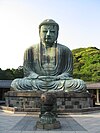
“The word ‘Brahman’ is derived from the Sanskrit root brih—to grow—and thus suggests a reality which is dynamic and alive. In its phenomenal aspect, the cosmic One is thus intrinsically dynamic, and the apprehension of its dynamic nature is basic to all schools of Eastern mysticism. They all emphasize that the universe has to be grasped dynamically, as it moves, vibrates and dances.”

What Fritjof Capra Said About Others
Discover personal opinions Fritjof Capra shared regarding contemporaries.
Fritjof Capra on Leonardo da Vinci 2 quotes
View all 2 quotes on Leonardo da Vinci →Fritjof Capra on Lynn Margulis 2 quotes
“The confidence of Lynn Margulis in the idea of a planetary autopoietic web stems from three decades of pioneering work in microbiology. ...Margulis has not only contributed a great deal to that understanding within the scientific community but has also been able, in collaboration with Dorion Sagan, to explain her radical discoveries in clear and engaging language to the lay reader.”

Fritjof Capra on Johann Wolfgang von Goethe
“He admired nature's moving order and conceived of form as a pattern of relationships within an organized whole—a conception that is at the forefront of contemporary systems thinking. "Each creature," wrote Goethe, "is but a patterned gradation of one great harmonious whole.”

Fritjof Capra on Immanuel Kant
“An idealist, Kant separated the phenomenal world from a world of "things in themselves." He believed that science could offer only mechanical explanations, but he affirmed that in areas where such explanations were inadequate, scientific knowledge needed to be supplemented by considering nature as being purposeful.”

Fritjof Capra on James Lovelock
“The scientific backgrounds and areas of expertise of James Lovelock and Lynn Margulis turned out to be a perfect match. Margulis had no problem answering Lovelock's many questions about the biological origins of atmospheric gases, while Lovelock contributed concepts from chemistry, thermodynamics, and cybernetics to the emerging Gaia theory. Thus the two scientists were able gradually to identify a complex network of feedback loops that—so they hypothesized—bring about the self-regulation of the planetary system [for Earth].”
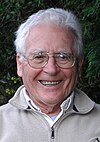
Fritjof Capra on Werner Heisenberg
“In 1929, Heisenberg spent some time in India as the guest of the celebrated Indian poet Rabindranath Tagore, with whom he had long conversations about science and Indian philosophy. This introduction to Indian thought brought Heisenberg great comfort, he told me. He began to see that the recognition of relativity, interconnectedness, and impermanence as fundamental aspects of physical reality, which had been so difficult for himself and his fellow physicists, was the very basis of the Indian spiritual traditions. “After these conversations with Tagore,” he said, “some of the ideas that had seemed so crazy suddenly made much more sense. That was a great help for me.””

Quotes About Fritjof Capra
Gain deeper perspective through quotes about Fritjof Capra from others.
Cyndy Jones on Fritjof Capra
“Peter Senge (1990), Fritjof Capra (1996), Peter Checkland (1999), and other researchers have transferred systems thinking principles and theories into practice by applying them to real-world organizational-wide issues, thus encouraging the creation and development of learning organizations.”
About Fritjof Capra
Fritjof Capra (born February 1, 1939) is an Austrian-born American physicist, author and founding director of the Center for Ecoliteracy in Berkeley, California.