Link Copied!
Friedrich Schelling Quotes (1775-1854)
Philosopher



About Friedrich Schelling
Friedrich Wilhelm Joseph Schelling (January 27, 1775 – August 20, 1854), later von Schelling, was a German philosopher. Standard histories of philosophy make him the midpoint in the development of German idealism, situating him between Fichte, his mentor prior to 1800, and Hegel, his former university roommate and erstwhile friend.
Best Friedrich Schelling Quotes
Shortest
Earliest
Explore our curated collection of the most famous and impactful Friedrich Schelling quotes.
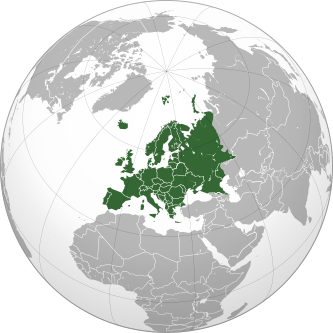
“What is Europe really but a sterile trunk which owes everything to oriental grafts?”
“Alle Regeln, die man dem Studieren vorschreiben könnte, fassen sich in der einen zusammen: Lerne nur, um selbst zu schaffen.”
“It is easy to see that this problem can be solved neither in theoretical nor in practical philosophy, but only in a higher discipline, which is the link that combines them, and neither theoretical nor practical, but both at once.”
“The books which are called Biblical were an obstacle to the perfection of Christianity and, in terms of truly religious content, they could not even remotely be compared with the sacred books of India, as well as many others from earlier and later times.”
“They think of the philosopher as holding the ideal or subjective in one hand and the real or objective in the other and then have him strike the palms of his hands together so that one abrades the other. The product of this abrasion is the Absolute. P. 12”
“If there is to be any philosophy at all, this contradiction must be resolved – and the solution of this problem, or answer to the question: how can we think both of Presentations as conforming to objects, and objects as conforming to presentations? is, not the first, but the highest task of transcendental philosophy.”

“Die Scheu vor der Spekulation, das angebliche Forteilen vom bloß Theoretischen zum Praktischen, bewirkt im Handeln notwendig die gleiche Flachheit wie im Wissen. Das Studium einer streng theoretischen Philosophie macht uns am unmittelbarsten mit Ideen vertraut, und nur Ideen geben dem Handeln Nachdruck und sittliche Bedeutung.”
“Yes! We believe in a higher principle than your virtue and the kind of morality you speak of so paltrily and without much conviction. We believe that there is no imperative or reward for virtue for the soul because it simply acts according to the necessity of its inherent nature. The moral imperative expresses itself in an ought and presupposes the concept of an evil next to that of good. P. 43”
“On its pass through finitude, the being-for-itself of the counter-image expresses itself most potently as “”I-ness”, as self-identical individuality. Just as a planet in its orbit no sooner reaches its farthest distance from the center than it returns to its closest proximity, so the point of the farthest distance from God, the I-ness, is also the moment of its return to the Absolute, of the re-absorption into the ideal. P. 30”

“Wie zugleich die objektive Welt nach Vorstellungen in uns, und Vorstellungen in uns nach der objektiven Welt sich bequemen, ist nicht zu begreifen, wenn nicht zwischen den beiden Welten, der ideellen und der reellen, eine vorherbestimmte Harmonie existiert. Diese vorherbestimmte Harmonie aber ist selbst nicht denkbar, wenn nicht die Tätigkeit, durch welche die objektive Welt produziert ist, ursprünglich identisch ist mit der, welche im Wollen sich äußert, und umgekehrt.”
“The end of the philosophical dialogue lies in itself; it can never serve a purpose outside of itself. Just as a sculptor does not cease to be a work of art even if it lies at the bottom of the sea, so indeed every work of philosophy endures, even if uncomprehended in its own time. One would be grateful if it were merely a matter of incomprehension. Instead, the work is usually refitted and appropriated by various entities-some playing the part of the opponent; others, that of the proponent. P.3-4”
“Countless attempts have been made to no avail to construct a continuity from the supreme principle of the intellectual world to the finite world. The oldest and most frequent of these attempts is well known: the principle of emanation, according to which the outflowings from the godhead, in gradual increments and detachment from the ordinary source, losing their divine perfection until, in the end, they pass into the opposite (matter, privation), just as light is finally confined by darkness. P. 24”

“The Christian missionaries who came to India believed they were proclaiming something unheard of to the inhabitants when they taught that the God of the Christians had become man. The latter were not astonished by this; they by no means denied the incarnation of God in Christ, and only found it strange that among the Christians it had happened just once, whereas with them it occurred often and in constant repetition. One cannot deny that they had more understanding of their religion than the Christian missionaries had of theirs.”

“There was a time when religion was kept secret from popular belief within the mystery cults like a holy fire, sharing a common sanctuary with philosophy. The legends of antiquity name the earliest philosophers as the originators of these mystery cults, from which the most enlightened among the later philosophers, notably Plato, liked to educe their divine teachings. At that time philosophers still had the courage and the right to discuss the singly great themes, the only ones worthy of philosophizing and rising above common knowledge. P. 7”
“If the State, modeled after the universe, is split into two spheres or classes of beings – wherein the free represent the ideas and the unfree the concrete and sensate things – then the ultimate and uppermost order remains unrealized by both. By using sensate things as tools or organs, the ideas obtain a direct relationship to the apparitions and enter into them as souls. God, however, as identity of the highest order, remains above all reality and eternally has merely an indirect relationship. If then in the higher moral order the State represents a second nature, then the divine can never have anything other than an indirect relationship to it, never can it bear any real relationship to it, and religion, if it seeks to preserve itself in unscathed pure ideality, can therefore never exist – even in the most perfect State – other than esoterically in the form of mystery cults. P. 51”

Friedrich Schelling Quotes by Topic
Find exactly what you are looking for by browsing this categorized list of Friedrich Schelling quotes by topic.
Friedrich Schelling on Europe
“What is Europe really but a sterile trunk which owes everything to oriental grafts?”

Friedrich Schelling on Orientalism
“What is Europe really but a sterile trunk which owes everything to oriental grafts?”
Friedrich Schelling on Architecture
“Since it [architecture] is music in space, as it were a frozen music…. If architecture in general is frozen music.”
Friedrich Schelling on Knowledge
“The fear of speculation, the ostensible rush from the theoretical to the practical, brings about the same shallowness in action that it does in knowledge. It is by studying a strictly theoretical philosophy that we become most acquainted with Ideas, and only Ideas provide action with energy and ethical significance.”

Quotes About Friedrich Schelling
Gain deeper perspective through quotes about Friedrich Schelling from others.
Andrew Bowie on Friedrich Schelling
“Schelling’s later work, like his early work, is often unsatisfactory in many different ways. There can be no doubt, however, about its historical importance for the development of modern philosophy: thinkers like Schopenhauer, Kierkegaard, Feuerbach, Nietzsche and Heidegger owe far more to Schelling than they admit.”
Georg Wilhelm Friedrich Hegel on Friedrich Schelling
“In one of his earlier writings, the System of Transcendental Idealism; which we shall consider first of all, Schelling represented transcendental philosophy and natural philosophy as the two sides of scientific knowledge. Respecting the nature of the two, he expressly declared himself in this work, where he once more adopts a Fichtian starting-point: “All knowledge rests on the harmony of an objective with a subjective” In the common sense of the words this would be allowed; absolute unity, where the Notion and the reality are undistinguished in the perfected Idea, is the Absolute alone, or God; all else contains an element of discord between the objective and subjective. “We may give the name of nature to the entire objective content of our knowledge the entire subjective content, on the other hand, is called the ego or intelligence.” They are in themselves identical and presupposed as identical. The relation of nature to intelligence is given by Schelling thus: “Now if all knowledge has two poles which mutually presuppose and demand one another, there must be two fundamental sciences, and it must be impossible to start from the one pole without being driven to the other”. Thus nature is impelled to spirit, and spirit to nature; either may be given the first place, and both must come to pass. “If the objective is made the chief” we have the natural sciences as result, and; “the necessary tendency” the end, of all natural science thus is to pass from nature to intelligence. This is the meaning of the effort to connect natural phenomena with theory. The highest perfection of natural science would be the perfect spiritualization of all natural laws into laws of intuitive perception and thought."”

About Friedrich Schelling
Friedrich Wilhelm Joseph Schelling (January 27, 1775 – August 20, 1854), later von Schelling, was a German philosopher. Standard histories of philosophy make him the midpoint in the development of German idealism, situating him between Fichte, his mentor prior to 1800, and Hegel, his former university roommate and erstwhile friend.