Freeman Dyson on Edward Teller
← Back to Freeman Dyson Profile
“Teller's mistake was his failure to foresee that a large section of the public would not consider his appearance at the Oppenheimer hearing to be decent behavior. Had Teller not appeared, the outcome of the hearing would almost certainly have been unaffected, and the moral force of Teller's position would not have been tainted.”
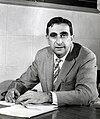
“Before Bethe married, he was so often a guest in the Teller home that he became almost one of the family. In April, 1954, that was all over. There could be no real reconciliation. Bethe had lost one of his oldest friends. But Teller had lost more. Teller, by lending his voice to the cause of Oppenheimer's enemies, had lost not only the friendship but the respect of many of his colleagues, and he was portrayed by newspaper writers and cartoonists as a Judas, a man who had betrayed his leader for the sake of personal gain.”
“When we came back through the trees to the house, we heared a strange sound coming through the open door. The children stopped their chatter and we all stood outside the door and listened. It was my old friend from long ago, Bach's Prelude No. 8 in E-flat minor. Superbly played. Played just the way my father used to play it. For a moment I was completely disoriented. I thought: What the devil is my father doing here in California? We stood in front of our Berkeley house and listened to that prelude. Whoever was playing it was putting into it his whole heart and soul. The sound floated up to us like a chorus of mourning from the depths, as if the spirits in the underworld were dancing to a slow pavane. We waited until the music came to an end and then walked in. There, sitting at the piano, was Edward Teller. We asked him to go on playing, but he excused himself.”