Link Copied!
Frederick Douglass Quotes (1818-1895)
Author











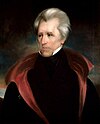
















































About Frederick Douglass
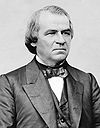
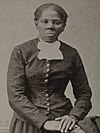
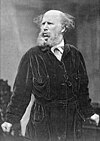
Frederick Douglass (c. February 1818 – 20 February 1895) was an American abolitionist, orator, author, editor, reformer, women's rights advocate, and statesman during the American Civil War. He was born a slave in Maryland, as Frederick Augustus Washington Bailey.
Best Frederick Douglass Quotes
Shortest
Earliest
Explore our curated collection of the most famous and impactful Frederick Douglass quotes.
“The principle must rest upon its own proper basis.”




“For colored men the Republican party is the deck, all outside is the sea.”
“Detraction paves the way for the very perfections which it doubts and denies.”
“Despite of it all, the Negro remains … cool, strong, imperturbable, and cheerful.”
“I would unite with anybody to do right; and with nobody to do wrong.”
“Where there is seeming contentment with slavery, there is certain treachery to freedom.”

“Every tone was a testimony against slavery, and a prayer to God for deliverance from chains.”
“[T]he Constitution of the United States knows no distinction between citizens on account of color.”

“The life of the nation is secure only while the nation is honest, truthful, and virtuous.”
“Jefferson was not ashamed to call the black man his brother and to address him as a gentleman.”
“Right is of no sex, Truth is of no color, God is the Father of us all, and we are all Brethren.”
“The ground which a colored man occupies in this country is, every inch of it, sternly disputed.”
“To suppress free speech is a double wrong. It violates the rights of the hearer as well as those of the speaker.”
“I recognize the Republican party as the sheet anchor of the colored man's political hopes and the ark of his safety.”
Frederick Douglass Quotes by Topic
Find exactly what you are looking for by browsing this categorized list of Frederick Douglass quotes by topic.
Frederick Douglass on United States 23 quotes
View all 23 quotes on United States →Frederick Douglass on American Civil War 18 quotes
“The way to abolish slavery in America is to vote such men into power as well use their powers for the abolition of slavery.”

Frederick Douglass on Republican Party (United States) 12 quotes
View all 12 quotes on Republican Party (United States) →Frederick Douglass on Slavery 7 quotes
“I didn't know I was a slave until I found out I couldn't do the things I wanted.”

Frederick Douglass on Democratic Party (United States) 4 quotes
“Neither West Point nor the Democratic Party have been good schools in which to learn justice and fair play to the negro.”

Frederick Douglass on Haiti 3 quotes
“There is something about Hayti which we have to deplore, and so there is about the United States. Let us go back 100 years and look at Hayti, and we find it surrounded by slavery and the whole Caribbean Sea reddened by the curse.”

Frederick Douglass on United States Armed Forces 3 quotes
“Once let the black man get upon his person the brass letters 'U.S.'; let him get an edge on his button, and a musket on his shoulder and bullets in his pocket, and there is no power on earth which can deny that he has earned the right to citizenship.”

Frederick Douglass on Nations 3 quotes
“The honor of a nation is an important thing. It is said in the Scriptures, “What doth it profit a man if he gain the whole world, and lose his own soul?” It may be said, also, What doth it profit a nation if it gain the whole world, but lose its honor?”

Frederick Douglass on Countries 3 quotes
“As nations are among the largest and the most complete divisions into which society is formed, the grandest aggregations of organized human power; as they raise to observation and distinction the world’s greatest men, and call into requisition the highest order of talent and ability for their guidance, preservation and success, they are ever among the most attractive, instructive and useful subjects of thought, to those just entering upon the duties and activities of life.”

Frederick Douglass on Independence Day (United States) 3 quotes
“The blessings in which you this day rejoice are not enjoyed in common. The rich inheritance of justice, liberty, prosperity, and independence bequeathed by your fathers is shared by you, not by me. The sunlight that brought life and healing to you has brought stripes and death to me. This Fourth of July is yours, not mine. You may rejoice, I must mourn. To drag a man in fetters into the grand illuminated temple of liberty, and call upon him to join you in joyous anthems, were inhuman mockery and sacrilegious irony.”

Frederick Douglass on United States Constitution 3 quotes
“The Constitution will afford slavery no protection when it shall cease to be administered by slaveholders. They see, moreover, that if there is once a will in the people of America to abolish slavery, this is no word, no syllable in the Constitution to forbid that result. They see that the Constitution has not saved slavery in Rhode Island, in Connecticut, in New York, or Pennsylvania; that the Free States have only added three to their original number. There were twelve Slave States at the beginning of the Government: there are fifteen now.”

Frederick Douglass on Flag of the United States 2 quotes
View all 2 quotes on Flag of the United States →What Frederick Douglass Said About Others
Discover personal opinions Frederick Douglass shared regarding contemporaries.
Frederick Douglass on Abraham Lincoln 9 quotes
“He treated me as a man... He did not let me feel for a moment that there was any difference in the color of our skins.”

Frederick Douglass on Ulysses S. Grant 6 quotes
“Many who approached him told me he was a silent man. To me, he was one of the best conversationalists I have ever met.”

Frederick Douglass on William Lloyd Garrison 3 quotes
“The good Lord had had a chance for a long time before the abolition. I believe that there is a moral government; and that God reigns. I am no pessimist; I give thanks to the good Lord, and also to the good men through whom He has worked. Prominent among them was Garrison...”

Frederick Douglass on John Brown (abolitionist) 2 quotes
“One of the most marked characters, and greatest heroes known to American fame.”

Frederick Douglass on Thomas Jefferson 2 quotes
“Jefferson was not ashamed to call the black man his brother and to address him as a gentleman.”

Frederick Douglass on Universal suffrage 2 quotes
“Ours is a peculiar government, based upon a peculiar idea, and that idea is universal suffrage.”

Frederick Douglass on Irish people 2 quotes
“Charge of inferiority is an old dodge. It has been made available for oppression on many occasions...When England wants to set the heel of her power more firmly in the quivering heart of old Ireland, the Celts are an 'inferior race'... If he knows as much when he is sober as an Irishman knows when drunk, he knows enough to vote.”

Frederick Douglass on African Americans 2 quotes
“We deem it a settled point that the destiny of the colored man is bound up with that of the white people of this country. … We are here, and here we are likely to be. To imagine that we shall ever be eradicated is absurd and ridiculous. We can be remodified, changed, assimilated, but never extinguished. We repeat, therefore, that we are here; and that this is our country; and the question for the philosophers and statesmen of the land ought to be, What principles should dictate the policy of the action toward us? We shall neither die out, nor be driven out; but shall go with this people, either as a testimony against them, or as an evidence in their favor throughout their generations.”

Frederick Douglass on Ralph Waldo Emerson
Frederick Douglass on Benjamin Butler
“That sturdy old Roman, Benjamin Butler, made the negro a contraband, Abraham Lincoln made him a freeman, and Gen. Ulysses S. Grant made him citizen.”
Frederick Douglass on Wendell Phillips
“The good Lord had had a chance for a long time before the abolition. I believe that there is a moral government; and that God reigns. I am no pessimist; I give thanks to the good Lord, and also to the good men through whom He has worked. Prominent among them was Garrison, and scarcely less so was Phillips...”

Frederick Douglass on Grover Cleveland
“Suppose it be granted that Mr. Cleveland is a just man, and desires to protect colored citizens in the exercise of their constitutional rights. What is he, and what is any man in the Presidential chair, without the support of his party? As against his party, he is only as a feather against a whirlwind. In the hands of his party, Mr. Cleveland is as clay in the hands of the potter.”

Quotes About Frederick Douglass
Gain deeper perspective through quotes about Frederick Douglass from others.
Charles H. Alston on Frederick Douglass
“Knowing the hardships of the laborer, Douglass became one of his pioneer champions. While fighting fiercely for the rights of his own people, he pointed the way to the organization and unity of all working people. Douglass, a Maryland-born slave, once worked as a ship's caulker, only a short distance from the site where a liberty ship bearing his name was launched. With the firm conviction that free men should have the right to defend their freedom, Douglass convinced Lincoln of the wisdom of enlisting negro troops in the Union armies. He himself helped organize the 54th Massachusetts Regiment, of Fort Wagner fame.”
Mark Ames on Frederick Douglass
“But the broader reason why there weren't more slave rebellions is simpler: most slaves didn't want to rebel. This depressing fact is not limited to African slaves in America, but rather is a product of human nature and our ability to adapt, to be conditioned out of fear, and to serve. Frederick Douglass explained that slaves chose not to rebel out of fear of the unknown, which, he wrote, quoting Hamlet, had made slaves "rather bear those ills we had/than fly to others, that we knew not of."”
Charlotta Bass on Frederick Douglass
“Frederick Douglass would rejoice, for he fought not only slavery but the oppression of women.”

Henry Benning on Frederick Douglass
“If things are allowed to go on as they are, it is certain that slavery is to be abolished. By the time the north shall have attained the power, the black race will be in a large majority, and then we will have black governors, black legislatures, black juries, black everything. Is it to be supposed that the white race will stand for that? It is not a supposable case. War will break out everywhere like hidden fire from the earth. We will be overpowered and our men will be compelled to wander like vagabonds all over the earth, and as for our women, the horrors of their state we cannot contemplate in imagination. We will be completely exterminated, and the land will be left in the possession of the blacks, and then it will go back to a wilderness and become another Africa or Saint Domingo. Join the north and what will become of you? They will hate you and your institutions as much as they do now, and treat you accordingly. Suppose they elevated Charles Sumner to the presidency? Suppose they elevated Fred Douglass, your escaped slave, to the presidency? What would be your position in such an event? I say give me pestilence and famine sooner than that.”
Arna Bontemps on Frederick Douglass
“To Douglass it was a war of liberation, pure and simple. In the May issue of his paper he let himself go. Amid sprawling drawings of the American flag and eagle he exulted, "Freedom for all, or chains for all." A few lines further on he added sardonically that his assurance could be traced "less to the virtue of the North than to the villainy of the South." But since it was a war of emancipation, as he felt, he had a suggestion for the new president as to how it should be waged. "Let the slaves and free colored people be called into service and formed into a liberating army, to march into the South and raise the banner of Emancipation among the slaves." To his surprise, however, Lincoln failed to jump at the suggestion. Negro enlistments in the navy were accepted without question, in view of practice long established, but the president wanted to think about this army thing. What Douglass did not know at the time, of course, the extent to which Lincoln's efforts to hold the border states in line and his behind-the-scenes struggles with other Republicans in the government accounted for his reluctance to change the Negro's status.”
Elizabeth Cady Stanton from her on Frederick Douglass
“As an orator, writer and editor, Douglass holds an honored place among the gifted men of his day. As a man of business and a public officer he has been preeminently successful; honest and upright in all his dealings, he bears an enviable reputation. As a husband, father, neighbor and friend, in all social relations, he has been faithful and steadfast to the end. He was the only man I ever knew who understood the degradation of disfranchisement for women. !!!!! Through all the long years of our struggle he has been a familiar figure on our platform, with always an inspiring word to say. In the very first convention he helped me to carry the resolution I had penned, demanding woman suffrage. Frederick Douglass is not dead! His grand character will long be an object lesson in our national history; his lofty sentiments of liberty, justice and equality, echoed on every platform over our broad land, must influence and inspire many coming generations!”
Ronald S. Coddington on Frederick Douglass 2 quotes
“The political and military events that gradually turned the Union army into an army of liberation, aided by the Emancipation Proclamation as the predictable next step. How could the war have continued much longer without turning it into a war for emancipation and not merely to preserve the Union? And how could the Union cause have triumphed without the arming of black men? But in truth, Lincoln's decision was a huge break with the past. Shortly before the proclamation was to take effect, Frederick Douglass, who had pushed hard for emancipation, celebrated with these words: "This is scarcely a day for prose. It is a day for poetry and song, a new song." Douglass rightly celebrated the day as a major step towards emancipation, and that is how we recall this crucial turning point, but he also recognized that it was a milestone in the relationship between the federal government and black men, both free and soon to be freed. When the Lincoln administration finally agreed to let black men take up arms against the Confederacy, an important door opened that would be very difficult to close. By arming black men, the Union was acknowledging something about black humanity and specifically about the manhood of these new soldiers. The administration was also implicitly acknowledging that they needed these new recruits to help win the war and restore the Union. Although celebrated as an immense moral step, the Emancipation Proclamation and the subsequent recruitment of soldiers into the regiments of the United States Colored Troops represented decisions born out of explicit military necessity, and they were presented to Northern voters on those terms.”
David Brion Davis on Frederick Douglass
“Under Roman law as well as in the United States, slaves were deprived of legally recognized spouses or families and of genuine property ownership. As with most domestic animals, their lowly status was enforced by the threat of almost unlimited physical punishment. As Frederick Douglass put it, after describing the ways that the “slave breaker” Mr. Covey had “tamed” him: “I was broken in body, soul, and spirit. My natural elasticity was crushed, my intellect languished, the disposition to read departed, the cheerful spark that lingered about my eye died; the dark night of slavery closed in upon me; and behold a man transformed into a brute!” In an earlier essay on this subject, I have theorized that, given the repeated comparisons of slaves to domestic animals throughout history (and Aristotle wrote that the ox was “a poor man’s slave”), the initial enslavement and “bestialization” of prisoners of war may well have been modeled on the successful techniques of taming and domesticating wild animals. But some animals could never be domesticated, and even those slaves who at times felt themselves transformed, like Douglass, into “brutes” did not lose their essential humanity, a fact that repeatedly underscored the preeminent contradiction of “inhuman bondage.” Indeed, one of the central and inspiring truths of African American history, a truth dramatized by fugitives like Frederick Douglass, was the way slaves succeeded in asserting their humanity and reinventing their diverse cultures, despite being torn away from their natal African families and societies, despite being continuously humiliated, bought and sold, and often subjected to torture and the threat of death. Thus the word “inhuman,” in this book’s title, refers to the unconscionable and unsuccessful goal of bestializing (in the form of pets as well as beasts of burden) a class of human beings. This is not meant to deny, as much slave testimony indicates, that some slaves suffered recurrent psychological as well as physical damage.”

Elizabeth Gurley Flynn on Frederick Douglass
“The struggle for the right of women to vote was nationwide and growing. It had started with the first Equal Rights Convention, at Seneca Falls, New York, in 1848, led by Elizabeth Cady Stanton and Susan B. Anthony, which was addressed by Frederick Douglass, the great Negro leader. The suffragists had been ridiculed, assaulted by mobs, refused halls, arrested for attempting to vote, disowned by their families.”

William Lloyd Garrison on Frederick Douglass
“As a public speaker, he excels in pathos, wit, comparison, imitation, strength of reasoning, and fluency of language. There is in him that union of head and heart, which is indispensable to an enlightenment of the heads and a winning of the hearts of others.”
Frances Harper on Frederick Douglass
“Our Douglass, too, with his massive brain,/Who plead our cause with his broken chain,/And helped to hurl from his bloody seat/The curse that writhed and died at his feet.”

Ollie Harrington on Frederick Douglass
“We helped plow the fields, build the dams, write the poems and sing the music of America. Are not all Americans proud, of Doree Miller, of Frederick Douglass, of Paul Robeson, of Joe Louis, of Marian Anderson.”

Disputed Quotes
Quotes attributed to Frederick Douglass that are questionable.
About Frederick Douglass
Frederick Douglass (c. February 1818 – 20 February 1895) was an American abolitionist, orator, author, editor, reformer, women's rights advocate, and statesman during the American Civil War. He was born a slave in Maryland, as Frederick Augustus Washington Bailey.