Link Copied!
Franz Kafka Quotes (1883-1924)
Writer, Novelist




-100px.jpg)

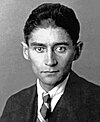
About Franz Kafka
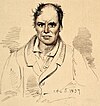
Franz Kafka (3 July 1883 – 3 June 1924) was a Bohemian-Jewish novelist, and one of the major German-language fiction writers of the 20th century.
Best Franz Kafka Quotes
Shortest
Earliest
Explore our curated collection of the most famous and impactful Franz Kafka quotes.




“Ours is a lost generation, it may be, but it is more blameless than those earlier generations.”

“"Everything you say is boring and incomprehensible," she said, "but that alone doesn't make it true."”
“There was once a community of scoundrels, that is to say, they were not scoundrels, but ordinary people.”
“The right understanding of any matter and a misunderstanding of the same matter do not wholly exclude each other.”

“To fight against this lack of understanding, against a whole world of non-understanding, was impossible.”
“It would have been so pointless to kill himself that, even if he had wanted to, the pointlessness would have made him unable.”
“Was he an animal, that music could move him so? He felt as if the way to the unknown nourishment he longed for were coming to light.”
“Als Gregor Samsa eines Morgens aus unruhigen Träumen erwachte, fand er sich in seinem Bett zu einem ungeheuren Ungeziefer verwandelt.”
“I cannot make you understand. I cannot make anyone understand what is happening inside me. I cannot even explain it to myself.”
“They're talking about things of which they don't have the slightest understanding, anyway. It's only because of their stupidity that they're able to be so sure of themselves.”
“"Don't you want to join us?" I was recently asked by an acquaintance when he ran across me alone after midnight in a coffeehouse that was already almost deserted. "No, I don't," I said.”
“'...it is not necessary to accept everything as true, one must only accept it as necessary.' 'A melancholy conclusion,' said K. 'It turns lying into a universal principle.In the Cathedral”
“The whole visible world is perhaps nothing more than the rationalization of a man who wants to find peace for a moment. An attempt to falsify the actuality of knowledge, to regard knowledge as a goal still to be reached.”
“All knowledge, the totality of all questions and all answers, is contained in the dog. If one could but realize this knowledge, if one could but bring it into the light of day, if we dogs would but own that we know infinitely more than we admit to ourselves!”
“Anyone who believes cannot experience miracles. By day one does not see any stars. Anyone who does miracles says: I cannot let go of the earth.
• Variant translation: Anyone who believes cannot experience miracles. By day one cannot see any stars.”
• Variant translation: Anyone who believes cannot experience miracles. By day one cannot see any stars.”
“When . . . some leisurely passer-by stopped . . . and spoke of cheating, that was in its way the stupidest lie ever invented by indifference and inborn malice, since it was not the hunger artist who was cheating, he was working honestly, but the world was cheating him of his reward.”
“"You asking me the way?" "Yes," I said, "since I can't find it myself." "Give it up! Give it up!" said he, and turned with a sudden jerk, like someone who wants to be alone with his laughter.
• Variant translation: The Policeman said to me, "You want to know the way? Give up! Just give up!" And he turned away like a man that wants to be alone with his laughter.”
• Variant translation: The Policeman said to me, "You want to know the way? Give up! Just give up!" And he turned away like a man that wants to be alone with his laughter.”
“Logic may indeed be unshakeable, but it cannot withstand a man who is determined to live. Where was the judge he had never seen? Where was the High Court he had never reached? He raised his hands and spread out all his fingers. But the hands of one of the men closed round his throat, just as the other drove the knife deep into his heart and turned it twice.”
“"Oh well, memories,” said I. “Yes, even remembering in itself is sad, yet how much more its object! Don’t let yourself in for things like that, it’s not for you and it’s not for me. It only weakens one’s present position without strengthening the former one — nothing is more obvious — quite apart from the fact that the former one doesn’t need strengthening."”
“The Messiah will come only when he is no longer necessary; he will come only on the day after his arrival; he will come, not on the last day, but on the very last day.
• Variant translation: The Messiah will come only when he is no longer necessary; he will come only on the day after his arrival; he will come, not on the last day, but at the very last.”
• Variant translation: The Messiah will come only when he is no longer necessary; he will come only on the day after his arrival; he will come, not on the last day, but at the very last.”
“A man once said: Why such reluctance? If you only followed the parables you yourselves would become parables and with that rid of all your daily cares.
Another said: I bet that is also a parable.
The first said: You have won.
The second said: But unfortunately only in parable.
The first said: No, in reality: in parable you have lost.”
Another said: I bet that is also a parable.
The first said: You have won.
The second said: But unfortunately only in parable.
The first said: No, in reality: in parable you have lost.”
“I can prove at any time that my education tried to make another person out of me than the one I became. It is for the harm, therefore, that my educators could have done me in accordance with their intentions that I reproach them; I demand from their hands the person I now am, and since they cannot give him to me, I make of my reproach and laughter a drumbeat sounding in the world beyond.”
“What a fate: to be condemned to work for a firm where the slightest negligence at once gave rise to the gravest suspicion! Were all the employees nothing but a bunch of scoundrels, was there not among them one single loyal devoted man who, had he wasted only an hour or so of the firm's time in the morning, was so tormented by conscience as to be driven out of his mind and actually incapable of leaving his bed?”
“Someone must have been telling lies about Joseph K., for without having done anything wrong he was arrested one fine morning. His landlady's cook, who always brought him his breakfast at eight o'clock, failed to appear on this occasion. That had never happened before.
• Variant translation: Somebody must have slandered Joseph K., for without having done anything wrong he was arrested one fine morning.”
• Variant translation: Somebody must have slandered Joseph K., for without having done anything wrong he was arrested one fine morning.”
“He thought back on his family with deep emotion and love. His conviction that he would have to disappear was, if possible, even firmer than his sister's. He remained in this state of empty and peaceful reflection until the tower clock struck three in the morning. He still saw that outside the window everything was beginning to grow light. Then, without his consent, his head sank down to the floor, and from his nostrils streamed his last weak breath.”
“Eternal childhood. Life calls again.
It is entirely conceivable that life’s splendour forever lies in wait about each one of us in all its fullness, but veiled from view, deep down, invisible, far off. It is there, though, not hostile, not reluctant, not deaf. If you summon it by the right word, by its right name, it will come. This is the essence of magic, which does not create but summons.”
It is entirely conceivable that life’s splendour forever lies in wait about each one of us in all its fullness, but veiled from view, deep down, invisible, far off. It is there, though, not hostile, not reluctant, not deaf. If you summon it by the right word, by its right name, it will come. This is the essence of magic, which does not create but summons.”
“Anyone who cannot come to terms with his life while he is alive needs one hand to ward off a little his despair over his fate — he has little success in this — but with his other hand he can note down what he sees among the ruins, for he sees different (and more) things than do the others; after all, dead as he is in his own lifetime, he is the real survivor. This assumes that he does not need both hands, or more hands than he has, in his struggle against despair.”
“Verlassen sind wir doch wie verirrte Kinder im Walde. Wenn Du vor mir stehst und mich ansiehst, was weißt Du von den Schmerzen, die in mir sind und was weiß ich von den Deinen. Und wenn ich mich vor Dir niederwerfen würde und weinen und erzählen, was wüßtest Du von mir mehr als von der Hölle, wenn Dir jemand erzählt, sie ist heiß und fürchterlich. Schon darum sollten wir Menschen vor einander so ehrfürchtig, so nachdenklich, so liebend stehn wie vor dem Eingang zur Hölle.”
“"The bliss of murder! The relief, the soaring ecstasy from the shedding of another’s blood! Wese, old nightbird, friend, alehouse crony, you are oozing away into the dark earth below the street. Why aren’t you simply a bladder of blood so that I could stamp on you and make you vanish into nothingness? Not all we want comes true, not all the dreams that blossomed have borne fruit, your solid remains lie here, already indifferent to every kick. What’s the good of the dumb question you are asking?"”

“What an obstacle had suddenly arisen to block K.'s career! And this was the moment when he was supposed to work for the bank? He looked down at his desk. This the time to interview clients and negotiate with them? While his case was unfolding itself, while up in the attics the Court officials were poring over the charge papers, was he to devote his attention to the affairs of the bank? It looked like a kind of torture sanctioned by the Court, arising from his case and concomitant with it.”
“Hat matt nicht die Augen, um sich sie auszureißen und das Herz zum gleichen Zweck? Dabei ist es ja nicht so schlimm, das ist Übertreibung und Lüge, alles ist Übertreibung, nur die Sehnsucht ist wahr, die kann man nicht übertreiben. Aber selbst die Wahrheit der Sehnsucht ist nicht so sehr ihre Wahrheit, als vielmehr der Ausdruck der Lüge alles übrigen sonst. Es klingt verdreht, aber es ist so.
Auch ist es vielleicht nicht eigentlich Liebe wenn ich sage, daß Du mir das Liebste bist; Liebe ist, daß Du mir das Messer bist, mit dem ich in mir wühle.”
Auch ist es vielleicht nicht eigentlich Liebe wenn ich sage, daß Du mir das Liebste bist; Liebe ist, daß Du mir das Messer bist, mit dem ich in mir wühle.”
“How much my life has changed, and yet how unchanged it has remained at bottom! When I think back and recall the time when I was still a member of the canine community, sharing in all its preoccupations, a dog among dogs, I find on closer examination that from the very beginning I sensed some discrepancy, some little maladjustment, causing a slight feeling of discomfort which not even the most decorous public functions could eliminate; more, that sometimes, no, not sometimes, but very often, the mere look of some fellow dog of my own circle that I was fond of, the mere look of him, as if I had just caught it for the first time, would fill me with helpless embarrassment and fear, even with despair.”
“Ich glaube, man sollte überhaupt nur solche Bücher lesen, die einen beißen und stechen. Wenn das Buch, das wir lesen, uns nicht mit einem Faustschlag auf den Schädel weckt, wozu lesen wir dann das Buch? Damit es uns glücklich macht, wie Du schreibst? Mein Gott, glücklich wären wir eben auch, wenn wir keine Bücher hätten, und solche Bücher, die uns glücklich machen, könnten wir zur Not selber schreiben. Wir brauchen aber die Bücher, die auf uns wirken wie ein Unglück, das uns sehr schmerzt, wie der Tod eines, den wir lieber hatten als uns, wie wenn wir in Wälder verstoßen würden, von allen Menschen weg, wie ein Selbstmord, ein Buch muß die Axt sein für das gefrorene Meer in uns. Das glaube ich.”
“This question of yours, Sir, about my being a house painter — or rather, not a question, you simply made a statement — is typical of the whole character of this trial that is being foisted on me. You may object that it is not a trial at all; you are quite right, for it is only a trial if I recognize it as such. But for the moment I do recognize it, on grounds of compassion, as it were. One can't regard it except with compassion, if one is to regard it at all. I do not say that your procedure is contemptible, but I should like to present that epithet to you for your private consumption.
• Variant translation: Your question, Mr. Examining Magistrate, as to whether I am a house-painter — although you did not ask a question at all, you made a statement — typifies exactly the kind of proceedings that are being instituted against me.”
• Variant translation: Your question, Mr. Examining Magistrate, as to whether I am a house-painter — although you did not ask a question at all, you made a statement — typifies exactly the kind of proceedings that are being instituted against me.”

“"I always wanted you to admire my fasting," said the hunger artist. "We do admire it," said the overseer, affably. "But you shouldn't admire it," said the hunger artist. "Well then we don't admire it," said the overseer, "but why shouldn't we admire it?" "Because I have to fast, I can't help it," said the hunger artist. "What a fellow you are," said the overseer, "and why can't you help it?" "Because," said the hunger artist, lifting his head a little and speaking, with his lips pursed, as if for a kiss, right into the overseer's ear, so that no syllable might be lost, "because I couldn't find the food I liked. If I had found it, believe me, I should have made no fuss and stuffed myself like you or anyone else." These were his last words, but in his dimming eyes remained the firm though no longer proud persuasion that he was still continuing to fast.”

“Das Böse weiß vom Guten, aber das Gute vom Bösen nicht. Selbsterkenntnis hat nur das Böse. - Die Acht Oktavhefte; published by BookRix, 9-8-2014.
• Translation: Evil knows of the Good, but Good does not know of Evil. Knowledge of oneself is something only Evil has. - The First Octavo Notebook”
• Translation: Evil knows of the Good, but Good does not know of Evil. Knowledge of oneself is something only Evil has. - The First Octavo Notebook”

“We met a large group of workmen who were marching with flags and banners to a meeting.
Kafka said, "These people are so self-possessed, so self-confident and good humoured. They rule the streets, and therefore think they rule the world. In fact, they are mistaken. Behind them already are the secretaries, officials, professional politicians, all the modern satraps for whom they are preparing the way to power."
"You do not believe in the power of the masses?"
"It is before my eyes, this power of the masses, formless and apparently chaotic, which then seeks to be given a form and a discipline. At the end of every truly revolutionary development there appears a Napoleon Bonaparte."
"You don"t believe in a wider expansion of the Russian Revolution?"
Kafka was silent for a moment, then he said:
"As a flood spreads wider and wider, the water becomes shallower and dirtier. The Revolution evaporates, and leaves behind only the slime of a new bureaucracy. The chains of tormented mankind are made out of red tape."”
Kafka said, "These people are so self-possessed, so self-confident and good humoured. They rule the streets, and therefore think they rule the world. In fact, they are mistaken. Behind them already are the secretaries, officials, professional politicians, all the modern satraps for whom they are preparing the way to power."
"You do not believe in the power of the masses?"
"It is before my eyes, this power of the masses, formless and apparently chaotic, which then seeks to be given a form and a discipline. At the end of every truly revolutionary development there appears a Napoleon Bonaparte."
"You don"t believe in a wider expansion of the Russian Revolution?"
Kafka was silent for a moment, then he said:
"As a flood spreads wider and wider, the water becomes shallower and dirtier. The Revolution evaporates, and leaves behind only the slime of a new bureaucracy. The chains of tormented mankind are made out of red tape."”
Franz Kafka Quotes by Topic
Find exactly what you are looking for by browsing this categorized list of Franz Kafka quotes by topic.
Franz Kafka on Cheating
Franz Kafka on Shame
Franz Kafka on Salvation
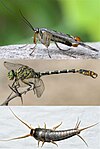
Franz Kafka on Insect
“As Gregor Samsa awoke one morning from uneasy dreams he found himself transformed in his bed into an enormous insect.”
What Franz Kafka Said About Others
Discover personal opinions Franz Kafka shared regarding contemporaries.
Franz Kafka on Frank Zappa
Franz Kafka on Charles Dickens
“There is a heartlessness behind his sentimentally overflowing style.”

Franz Kafka on Walt Whitman
“I know the formal element in Walt Whitman's poetry found and enormous echo throughout the world. Yet Walt Whitman's significance lies elsewhere. He combined the contemplation of nature and of civilization which are apparently either contradictory, into a single intoxicating vision of life, because he always had sight of the transitoriness of all phenomena. He said: "Living is the little that is left over from dying." so he gave his whole heart to every leaf of grass. I admire in him the reconciliation of art and nature. When the war between the Northern and Southern States in America, which first really set in motion the power of our present machine world, first broke out, Walt Whitman became a medical orderly. He did what all of us ought to do, particularly today. He helped the weak, the sick and the defeated. He was a Christian and–with a close affinity to us Jews–he was therefore an important measure of the status and worth of humanity.”

Quotes About Franz Kafka
Gain deeper perspective through quotes about Franz Kafka from others.
Isabel Allende on Franz Kafka
“It’s strange that my work has been classified as magic realism because I see my novels as just being realistic literature. They say that if Kafka had been born in Mexico he would have been a realistic writer. So much depends on where you were born.”

Aharon Appelfeld on Franz Kafka
“Kafka was a Jew in his heart and soul. He learned Hebrew and Yiddish. He attended a beit midrash in Frankfurt and he wanted to settle in Palestine. He had lots of women, but most of them were Jewish. I don't mean that he proclaimed his Jewishness every morning, but that he was connected with Jewishness in every sense of the word. For example, the pounding at the castle — the desire to enter and understand this mystery — is a very Jewish longing. For good reason, authors such as his colleague Max Brod tried to find kabbalistic meaning in his works. Consider, for example, his two greatest works, The Trial and The Castle. He felt that he was a defendant who had done no wrong. A man is sitting at home or in a pension, looking forward to breakfast, and suddenly someone comes in and says, “You're under arrest! You are accused!” for no reason and no purpose. That's the classic Jewish situation, manifested most acutely during the Holocaust. It was a situation of total guilt with no sin. People were accused, taken from their homes, shut up in ghettos, led to railroad stations and from there to extermination camps — not because they had done anything wrong but because Jewish blood flowed in their veins. Kafka illustrated the absurdity of Jewish life in Europe even before the Holocaust. In this sense Kafka grasped the lowly position Jews held in European civilization...Kafka performed a psychic analysis of the defendant. Although he refrained from mentioning the Jew explicitly in order to give this absurd situation a much broader meaning, this, in essence, is Jewish psychology. A Jewish fate, if you will. Interestingly, this analysis led him indirectly to Zionism, and he even wanted to settle in Palestine.”
Alan Bennett on Franz Kafka
“He is interested in the feelings of the squash ball, and of the champagne bottle that launches the ship. In a football match his sympathy is not with either of the teams but with the ball, or, in a match ending nil-nil, with the hunger of the goalmouth.”
Bertolt Brecht on Franz Kafka
“Kafka described with wonderful imaginative power the future concentration camps, the future instability of the law, the future absolutism of the state Apparat.”






Misattributed Quotes
Quotes mistakenly credited to Franz Kafka
“By believing passionately in something which still does not exist, we create it. The nonexistent is whatever we have not sufficiently desired.”
“Don't bend; don't water it down; don't try to make it logical; don't edit your own soul according to the fashion. Rather, follow your most intense obsessions mercilessly.”
About Franz Kafka
Franz Kafka (3 July 1883 – 3 June 1924) was a Bohemian-Jewish novelist, and one of the major German-language fiction writers of the 20th century.