Link Copied!
Frantz Fanon Quotes (1925-1961)
Philosopher, Author





About Frantz Fanon
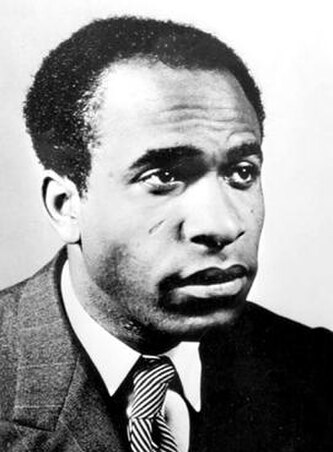
Frantz Omar Fanon (20 July 1925 – 6 December 1961) was a psychiatrist, philosopher, revolutionist and author from Martinique. He was influential in the field of post-colonial studies and was perhaps the pre-eminent thinker of the 20th century on the issue of decolonization and the psychopathology of colonization. His works have inspired anti-colonial liberation movements for more than four decades.
Best Frantz Fanon Quotes
Shortest
Earliest
Explore our curated collection of the most famous and impactful Frantz Fanon quotes.


“The living expression of the nation is the collective consciousness in motion of the entire people.”

“The Negro is a toy in the white man's hands; so, in order to shatter the hellish cycle, he explodes.”
“Yes, European civilization and its best representatives are responsible for colonial racism.”

“I said just above that South Africa has a racist structure. Now I shall go farther and say that Europe has a racist structure.”


“We are nothing on earth if we are not in the first place the slaves of a cause, the cause of the peoples, the cause of justice and liberty.”
“In every society, in every collectivity, exists - a channel, an outlet through which the forces accumulated in the form of aggression.”
“The Negro enslaved by his inferiority, the white man enslaved by his superiority alike behave in accordance with a neurotic orientation.”

“The famous dictum which states that all men are equal will find its illustration in the colonies only when the colonized subject states he is equal to the colonist.”

“By refusing to multiply our element, we take the risk of not setting a limit to our field ; for it is essential to convey to the black man that an attitude of rupture has never saved anyone.”

“All forms of exploitation resemble one another. They all seek the source of their necessity in some edict of a Biblical nature. All forms of exploitation are identical because all of them are applied against the same "object": man.”

“Why write this book? No one has asked me for it.
Especially those to whom it is directed.
Well? Well, I reply quite calmly that there are too many idiots in this world. And having said it, I have the burden of proving it.”
Especially those to whom it is directed.
Well? Well, I reply quite calmly that there are too many idiots in this world. And having said it, I have the burden of proving it.”
“The landing of the white man on Madagascar inflicted injury without measure. The consequences of that irruption of Europeans onto Madagascar were not psychological alone, since, as every authority has observed, there are inner relationships between consciousness and the social context.”
“Every veil that fell, every body that became liberated from traditional embrace of the haik, every face that offered itself to the bold and impatient glance of the occupier, was a negative expression of the fact that Algeria was beginning to deny herself and was accepting the rape of the colonizer.”
“As soon as they are born it is obvious to them that their cramped world, riddled with taboos, can only be challenged by out and out violence.
• Alternate translation: From birth it is clear to him that this narrow world, strewn with prohibitions, can only be called in question by absolute violence.”
• Alternate translation: From birth it is clear to him that this narrow world, strewn with prohibitions, can only be called in question by absolute violence.”

“In the magazines the Wolf, the Devil, the Evil Spirit, the Bad Man, the Savage are always symbolized by Negroes or Indians; sinc there is always identification with the citor, the little negro, quite as easily as the little white boy, becomes an explorer, an adventurer, a missionary " who faces the danger of being eaten by the wicked Negroes."”
“To destroy the colonial world means nothing less than demolishing the colonist's sector, burying it deep within the earth or banishing it from the territory.
• Alternate translation: The destruction of the colonial world is no more and no less that the abolition of one zone, its burial in the depths of the earth or its expulsion from the country.”
• Alternate translation: The destruction of the colonial world is no more and no less that the abolition of one zone, its burial in the depths of the earth or its expulsion from the country.”
“The basic confrontation which seemed to be colonialism versus anticolonialism, indeed capitalism versus socialism, is already losing its importance. What matters today, the issue which blocks the horizon, is the need for a redistribution of wealth. Humanity will have to address this question, no matter how devastating the consequences may be.”
Frantz Fanon Quotes by Topic
Find exactly what you are looking for by browsing this categorized list of Frantz Fanon quotes by topic.
Frantz Fanon on Colonialism 6 quotes
“The colonial regime owes its legitimacy to force and at no time does it ever endeavor to cover up this nature of things.”
Frantz Fanon on Decolonization 3 quotes
“The colonized can see right away if decolonization is taking place or not: The minimum demand is that the last become the first.”

Frantz Fanon on Violence 2 quotes
View all 2 quotes on Violence →Frantz Fanon on Pacifism 2 quotes
“Colonialism is not a thinking machine, nor a body endowed with reasoning faculties. It is violence in its natural state, and it will only yield when confronted with greater violence.”

Frantz Fanon on Question
“O my body, make of me always a man who questions!”

Frantz Fanon on Black Power
“For the colonized, life can only materialize from the rotting cadaver of the colonist.”

Frantz Fanon on Bourgeoisie
“"Brother," "sister," "comrade" are words outlawed by the colonialist bourgeoisie because in their thinking my brother is my wallet and my comrade, my scheming.”

Frantz Fanon on Colony
“The famous dictum which states that all men are equal will find its illustration in the colonies only when the colonized subject states he is equal to the colonist.”

Frantz Fanon on Fascism
“Fascist militia, they said. Yes. But at the level of the individual and human rights what is fascism but colonialism at the very heart of traditionally colonialist countries?”

Frantz Fanon on God
Frantz Fanon on Madagascar (country)
“The landing of the white man on Madagascar inflicted injury without measure. The consequences of that irruption of Europeans onto Madagascar were not psychological alone, since, as every authority has observed, there are inner relationships between consciousness and the social context.”

Frantz Fanon on Algeria
“Every veil that fell, every body that became liberated from traditional embrace of the haik, every face that offered itself to the bold and impatient glance of the occupier, was a negative expression of the fact that Algeria was beginning to deny herself and was accepting the rape of the colonizer.”

Quotes About Frantz Fanon
Gain deeper perspective through quotes about Frantz Fanon from others.
Hannah Arendt on Frantz Fanon
“This has recently been stressed by Barbara Deming in her plea for nonviolent action-"On Revolution and Equilibrium," in Revolution: Violent and Nonviolent, reprinted from Liberation, February, 1968. She says about Fanon, on p. 3: "It is my conviction that he can be quoted as well to plead for nonviolence.... Every time you find the word 'violence' in his pages, substitute for it the phrase 'radical and uncompromising action.' I contend that with the exception of a very few passages this substitution can be made, and that the action he calls for could just as well be nonviolent action."”

Shirley Chisholm on Frantz Fanon
“Frantz Fanon pointed out in Black Skin, White Masks, that the anti-Semitic was eventually the anti-negro. I want to say that eventually both are antifeminist and even further, I want to indicate that all discrimination is essentially the same thing – anti-humanism. That is my charge to those of you in the audience this morning, whether you are male or female.”

Roxanne Dunbar-Ortiz Outlaw Woman on Frantz Fanon
“Fanon argued that culture was dynamic and could be transformed by struggles in which people individually and collectively assumed full responsibility for their destiny.”
Naomi Klein on Frantz Fanon
“"The basic confrontation which seemed to be colonialism versus anticolonialism, indeed capitalism versus socialism, is already losing its importance," Frantz Fanon wrote in his 1961 masterwork, The Wretched of the Earth. "What matters today, the issue which blocks the horizon, is the need for a redistribution of wealth. Humanity will have to address this question, no matter how devastating the consequences may be." Climate change is our chance to right those festering wrongs at last-the unfinished business of liberation.”

Mark Kurlansky on Frantz Fanon
“A Martinique-born psychiatrist named Frantz Fanon became an international figure after he wrote a book in 1961 called Les damnés de la terre. Translated into twenty-five languages, the book was read by U.S. college students under the title The Wretched of the Earth. Fanon had finished his French medical studies in Algeria in 1953, where he joined the Algerian National Front and became a leader in the fight for Algerian independence. This alone was credentials enough in the French youth movement that began in the late fifties by opposing French policy in Algeria. Independent Algeria, like Cuba, came to be regarded as a symbol of resistance to the established order of the world. Not a predictable anticolonialist tirade, Wretched of the Earth examines the psychology not only of colonialism, but of overthrowing colonialism and the kind of new man that is required to build a postcolonial society. By explaining the complexity of the inner struggle to break with colonialism, Wretched of the Earth wielded an important influence in the United States on the American civil rights movement, where it helped make the connection between oppressed American blacks trying to rise up from white rule and oppressed African Muslims trying to free themselves from Europeans. This was the theme of the Black Muslim movement, especially under Malcolm X, who like Fanon was born in 1925, but in 1965 had been murdered, it appeared, by fellow Black Muslims, though this was never proven. Black Muslim boxer Muhammad Ali, as he defied the white establishment, was often seen as a standard-bearer for emerging poor nations. Eldridge Cleaver called Ali “the black Fidel Castro of boxing.””

Jonathan Rosa on Frantz Fanon 3 quotes
“on the one hand, the contemporary societal positioning of US Latinxs demonstrates the familiar always already overdetermined nature of race-perhaps most strikingly articulated by Fanon (1967) as "the fact of Blackness," the disorienting ontological experience of existing as a racialized Other in advance of one's being. On the other hand, Latinxs are positioned in relation to a distinctive social tense of always not yet, or perhaps, never quite yet. If you would just learn English; no, unaccented English; no, the right of English. If you would just enter the country the right way; no, get in verse a pathway to citizenship; no, act like a good citizen. This is a racialized social sense of the always already and never quite yet.”
Misattributed Quotes
Quotes mistakenly credited to Frantz Fanon
“Sometimes people hold a core belief that is very strong. When they are presented with evidence that works against that belief, the new evidence cannot be accepted. It would create a feeling that is extremely uncomfortable, called cognitive dissonance. And because it is so important to protect the core belief, they will rationalize, ignore and even deny anything that doesn't fit in with the core belief.”
About Frantz Fanon
Frantz Omar Fanon (20 July 1925 – 6 December 1961) was a psychiatrist, philosopher, revolutionist and author from Martinique. He was influential in the field of post-colonial studies and was perhaps the pre-eminent thinker of the 20th century on the issue of decolonization and the psychopathology of colonization. His works have inspired anti-colonial liberation movements for more than four decades.