François Bernier on Economy of the Mughal Empire
← Back to François Bernier Profile
“There was no middle state. A man must be of the highest rank or live miserably.”
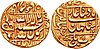
“Gold and silver are not in greater plenty here than elsewhere; on the contrary, the inhabitants have less the appearance of a moneyed people than those of many other parts of the globe.”
“[The Mughals maintained] “a large army for the purpose of keeping people in subjection… No adequate idea can be conveyed of the sufferings of the people. The cudgel and the whip compel them to incessant labour… their revolt or their flight is only prevented by the presence of a military force.””
“Most towns in Hindustan are made up of earth, mud, and other wretched material; that there is no city or town (that) does not bear evident marks of approaching decay. (...) In eastern countries, the weak and the injured are without any refuge whatever; and the only law that decides all controversies is the cane and the caprice of a governor.”
“…grandees pay for a work of art considerably under its value, and according to their own caprice. … When an Omrah or Mansabdar requires the services of an artisan, he sends to the bazar for him, employing force, if necessary, to make the poor man work; and after the task is finished, the unfeeling lord pays, not according to the value- of the labour, but agreeably to his own standard of fair remuneration; the artisan having reason to congratulate himself if the Korrah has not been given in part payment.”
“Labourers perish due to bad treatment from Governors. Children of poor are carried away as slaves. Peasantry abandon the country driven by despair. As the land throughout the whole empire is considered the property of the sovereign, there can be no earldoms, marquisates, or duchies. The royal grants consist only of pensions, either in land or money, which the king gives, augments, retrenches or takes away at pleasure. The artisans who manufactured the luxury goods for the Mughal aristocracy were almost always on starvation wages.”
“As the ground is seldom tilled otherwise than by compulsion… the whole country is badly cultivated, and a great part rendered unproductive… The peasant cannot avoid asking himself this question: Why should I toil for a tyrant who may come tomorrow and lay his rapacious hands upon all I possess and value… without leaving me the means (even) to drag my own miserable existence? - The Timariots (Timurids), Governors and Revenue contractors, on their part reason in this manner: Why should the neglected state of this land create uneasiness in our minds, and why should we expend our own money and time to render it fruitful? We may be deprived of it in a single moment… Let us draw from the soil all the money we can, though the peasant should starve or abscond…”
“No artisan can be expected to give his mind to his calling in the midst of a people who are either wretchedly poor, or who, if rich, assume an appearance of poverty, and who regard not the beauty and excellence but the cheapness of an article; a people whose grandeess pay for a work of art considerably under its value and according to their own caprice… For it should not be inferred that the workman is held in esteem, or arrives at a stage of independence. Nothing but sheer necessity or blows from a cudgel keeps him employed; he never can become rich, and he feels it no trifling matter if he have the means of satisfying the cravings of hunger and of covering his body with the coarsest garment. If money be gained it does not in any measure go into his pocket, but only serves to increase the wealth of the merchant.”
“Of the vast tracts of country constituting the empire of Hindoustan, many are little more than sand, or barren mountains, badly cultivated and thinly peopled; and even a considerable portion of the good land remains untilled from want of labourers; many of whom perish in consequence of the bad treatment they experience from the Governors. These poor people, when incapable of discharging the demands of their rapacious lords, are not only often deprived of the means of subsistence, but are bereft of their children, who are carried away as slaves. Thus it happens that many of the peasantry, driven to despair by so execrable a tyranny, abandon the country, and seek a more tolerable mode of existence, either in the towns, or camps; as bearers of burdens, carriers of water, or servants to horsemen. Sometimes they fly to the territories of a Raja, because there they find less oppression, and are allowed a greater degree of comfort.”