Link Copied!
Flannery O'Connor Quotes (1925-1964)
Writer, Novelist


About Flannery O'Connor
Mary Flannery O'Connor (March 25, 1925 – August 3, 1964) was a novelist, short story writer and essayist who lived in Georgia, USA. She wrote two novels and 31 short stories, as well as a number of reviews and commentaries.
Best Flannery O'Connor Quotes
Shortest
Earliest
Explore our curated collection of the most famous and impactful Flannery O'Connor quotes.
“Conviction without experience makes for harshness. (1955)”

“The way to despair is to refuse to have any kind of experience.”


“The truth does not change according to our ability to stomach it emotionally. (1955)”

“All human nature vigorously resists grace because grace changes us and the change is painful. (1958)”
“I believe that the basic experience of everyone is the experience of human limitation. ("The Teaching of Literature")”
“The main concern of the fiction writer is with mystery as it is incarnated in real life. ("Catholic Novelists and their Readers")”

“The writer operates at a peculiar crossroads where time and place and eternity somehow meet. His problem is to find that location. ("The Regional Writer")”
“I come from a family where the only emotion respectable to show is irritation. In some this tendency produces hives, in others literature, in me both. (1956)”

“It is hard to make your adversaries real people unless you recognize yourself in them - in which case, if you don't watch out, they cease to be adversaries. (1956)”
“Fiction is about everything human and we are made out of dust, and if you scorn getting yourself dusty, then you shouldn't write fiction. It isn't grand enough for you.”
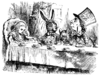
“Besides the neutral expression that she wore when she was alone, Mrs. Freeman had two others, forward and reverse, that she used for all her human dealings. (beginning of "Good Country People")”
“One result of the stimulation of your intellectual life that takes place in college is usually a shrinking of the imaginative life. This sounds like a paradox, but I have often found it to be true.”

“I feel that discussing story-writing in terms of plot, character, and theme is like trying to describe the expression on a face by saying where the eyes, nose, and mouth are. ("Writing Short Stories")”

“The novel is an art form and when you use it for anything other than art, you pervert it....If you manage to use it successfully for social, religious, or other purposes, it is because you make it art first. (1956)”

“Mrs. May's bedroom window was low and faced on the east and the bull, silvered in the moonlight, stood under it, his head raised as if he listened-like some patient god come down to woo her-for a stir inside the room.”

“There is something in us, as storytellers and as listeners to stories, that demands the redemptive act, that demands that what falls at least be offered the chance to be restored. ("Some Aspects of the Grotesque in Southern Fiction")”
“stories are considered not quite as satisfying as statements and statements not quite as satisfying as statistics; but in the long run, a people is known, not by its statements or its statistics, but by the stories it tells. ("The Catholic Novelist in the Protestant South")”
“...to know oneself is, above all, to know what one lacks. It is to measure oneself against Truth, and not the other way around. The first product of self-knowledge is humility, and this is not a virtue conspicuous in any national character. ("The Fiction Writer & His Country")”
What Flannery O'Connor Said About Others
Discover personal opinions Flannery O'Connor shared regarding contemporaries.

Flannery O'Connor on Richard Nixon

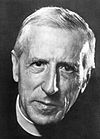
Flannery O'Connor on Pierre Teilhard de Chardin
“You can't fit the Almighty into your intellectual categories. I might suggest that you look into some of the works of Pierre Teilhard de Chardin (The Phenomenom of Man et al.). He was a paleontologist-helped to discover Peking man-and also a man of God. I don't suggest you go to him for answers but for different questions, for that stretching of the imagination that you need to make you a sceptic in the face of much that you are learning, much of which is new and shocking but which when boiled down becomes less so and takes its place in the general scheme of things.”
Quotes About Flannery O'Connor
Gain deeper perspective through quotes about Flannery O'Connor from others.
Gish Jen interview quoted on Flannery O'Connor
“Every young writer should read Flannery O’Connor’s A Good Man Is Hard to Find at least three or four times. If you’ve ever thought creativity was opposed to clarity, or that funny stories aren’t serious, or that stories about abnormal people are about abnormal people, or that the road to the realistic was through realism—O’Connor is here to disabuse you, with pleasure. And do take note of her characterization and story structure, too! Textbook.”
Thomas Merton on Flannery O'Connor
“I can think of no American writer who has made a more devastating use of existential intuition. She does so, of course, without declamation, without program, without distributing manifestoes, and without leading a parade.”

Joyce Carol Oates "The Visionary Art of Flannery O'Connor on Flannery O'Connor
“The greatest of Flannery O'Connor's books is her last, post-humously-published collection of stories, Everything That Rises Must Converge. Though it is customary to interpret O'Connor's allusion to the philosophy of Teilhard de Chardin as ironic, it seems to me that there is no irony involved. There are many small ironies in these nine stories, certainly, and they are comic-grotesque and flamboyant and heartbreaking- but no ultimate irony is intended and the book is not a tragic one. It is a collection of revelations; like all revelations, it points to a dimension of experiential truth that lies outside the sphere of the questing, speculative mind, but which is nevertheless available to all.”
Judith Ortiz Cofer Puerto Rican Voices on Flannery O'Connor
“There are lots of women writers in the South, like Flannery O'Connor and Eudora Welty, who wrap you up in a story. They come from a tradition of storytellers which is amazingly similar to the Puerto Rican cuento. "Te voy a echar un cuento," eso era eso era lo que Mamá decía. (CDH: The tradition of oral transmission is common among minorities, especially among immigrants.) JOC: Of course. When you read Flannery O'Connor, you almost hear her. It wasn't until I was an adult that I discovered Latino writers who do the same thing, but by that time I had been influenced by the storytellers of the South and by my grandmother.”
Alice Walker on Flannery O'Connor
“She was for me the first great modern writer from the South, and was, in any case, the only one I had read who wrote such sly, demythifying sentences about white women as: "The woman would be more or less pretty-yellow hair, fat ankles, muddy-colored eyes.”

A Yi interview quoted on Flannery O'Connor
“O’Connor’s works are full of evil mockery, occasionally reminiscent of Baudelaire or Kundera. Don’t expect to find things like love, tenderness, or sentiment in her stories. This makes me tremendously happy.”
About Flannery O'Connor
Mary Flannery O'Connor (March 25, 1925 – August 3, 1964) was a novelist, short story writer and essayist who lived in Georgia, USA. She wrote two novels and 31 short stories, as well as a number of reviews and commentaries.