Alan Ebenstein, Hayek's Journey: The Mind of Friedrich Hayek (2003), Ch. 2 : German and Viennese Intellectual Thought
“
To a contemporary reader, nonetheless, Mach’s Analysis of Sensations (1886) disappoints. There is a loud echo of Hume in the work, for Mach, like Hume, emphasized the tangibility of all knowledge—ultimately, all knowledge is based in the senses.
— Alan Ebenstein
What It Means
This is a placeholder explanation generated by the low-overhead model. It interprets "To a contemporary reader, nonetheless, Mach’s Analysis of Sensations (1886) disappoints. There is a loud echo of Hume in the work, for Mach, like Hume, emphasized the tangibility of all knowledge—ultimately, all knowledge is based in the senses." in the context of "Alan Ebenstein, Hayek's Journey: The Mind of Friedrich Hayek (2003), Ch. 2 : German and Viennese Intellectual Thought" to mean that wisdom is timeless.
Source: Wikiquote: "Ernst Mach" (Quotes about Ernst Mach)
The 'What it means' explanation text was generated by Google Gemini Flash (accessed January 18, 2026). https://gemini.google.com/app
Tags
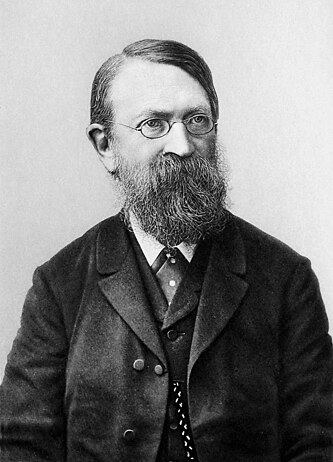
About Ernst Mach
Ernst Mach (18 February 1838 – 19 February 1916) was an Austrian physicist and philosopher, noted for his contributions to physics such as the Mach number and the study of shock waves. As a philosopher of science, he was a major influence on logical positivism and through his criticism of Newton, a forerunner of Einstein's theory of relativity.
View all quotes →