Link Copied!
Ernst Mach Quotes (1838-1916)
Physicist, Philosopher
About Ernst Mach
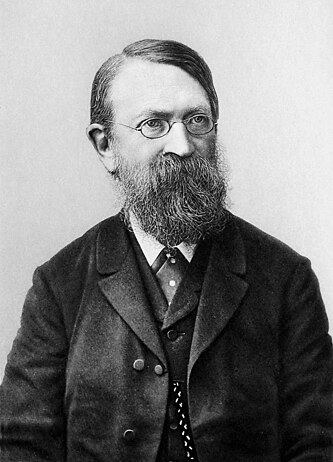
Ernst Mach (18 February 1838 – 19 February 1916) was an Austrian physicist and philosopher, noted for his contributions to physics such as the Mach number and the study of shock waves. As a philosopher of science, he was a major influence on logical positivism and through his criticism of Newton, a forerunner of Einstein's theory of relativity.
Best Ernst Mach Quotes
Shortest
Earliest
Explore our curated collection of the most famous and impactful Ernst Mach quotes.
“Personally, people know themselves very poorly.”
“Mathematical and physiological researches have shown that the space of experience is simply an actual case of many conceivable cases, about whose peculiar properties experience alone can instruct us.”

“In reality, the law always contains less than the fact itself, because it does not reproduce the fact as a whole but only in that aspect of it which is important for us, the rest being intentionally or from necessity omitted.”

“There is no problem in all mathematics that cannot be solved by direct counting. But with the present implements of mathematics many operations can be performed in a few minutes which without mathematical methods would take a lifetime.”
“Not bodies produce sensations, but element-complexes (sensation-complexes) constitute the bodies. When the physicist considers the bodies as the permanent reality, the `elements' as the transient appearance, he does not realise that all `bodies' are only mental symbols for element-complexes (sensation-complexes)”
“The mental operation by which one achieves new concepts and which one denotes generally by the inadequate name of induction is not a simple but rather a very complicated process. Above all, it is not a logical process although such processes can be inserted as intermediary and auxiliary links. The principle effort that leads to the discovery of new knowledge is due to abstraction and imagination.”
“I know of nothing more terrible than the poor creatures who have learned too much. Instead of the sound powerful judgement which would probably have grown up if they had learned nothing, their thoughts creep timidly and hypnotically after words, principles and formulae, constantly by the same paths. What they have acquired is a spider's web of thoughts too weak to furnish sure supports, but complicated enough to provide confusion.”
“The student of mathematics often finds it hard to throw off the uncomfortable feeling that his science, in the person of his pencil, surpasses him in intelligence,—an impression which the great Euler confessed he often could not get rid of. This feeling finds a sort of justification when we reflect that the majority of the ideas we deal with were conceived by others, often centuries ago. In a great measure it is really the intelligence of other people that confronts us in science.—Mach, Ernst.”
“Nature consists of the elements given by the senses. Primitive man first takes out of them certain complexes of these elements that present themselves with a certain stability and are most important to him. The first and oldest words are names for "things". … The sensations are no "symbols of things". On the contrary the "thing" is a mental symbol for a sensation-complex of relative stability. Not the things, the bodies, but colours, sounds, pressures, times (what we usually call sensations) are the true elements of the world.”
“I see the expression of... economy clearly in the gradual reduction of the statical laws of machines to a single one, viz. , the principle of virtual work: in the replacement of Kepler's laws by Newton's single law... and in the [subsequent] reduction, simplification and clarification of the laws of dynamics. I see clearly the biological-economical adaptation of ideas, which takes place by the principles of continuity (permanence) and of adequate definition and splits the concept 'heat' into the two concepts of 'temperature' and 'quantity of heat'; and I see how the concept 'quantity of heat' leads on to 'latent heat', and to the concepts of 'energy' and 'entropy'.”
“Thought-economy is most highly developed in mathematics, that science which has reached the highest formal development, and on which natural science so frequently calls for assistance. Strange as it may seem, the strength of mathematics lies in the avoidance of all unnecessary thoughts, in the utmost economy of thought-operations. The symbols of order, which we call numbers, form already a system of wonderful simplicity and economy. When in the multiplication of a number with several digits we employ the multiplication table and thus make use of previously accomplished results rather than to repeat them each time, when by the use of tables of logarithms we avoid new numerical calculations by replacing them by others long since performed, when we employ determinants instead of carrying through from the beginning the solution of a system of equations, when we decompose new integral expressions into others that are familiar,—we see in all this but a faint reflection of the intellectual activity of a Lagrange or Cauchy, who with the keen discernment of a military commander marshalls a whole troop of completed operations in the execution of a new one.”
Ernst Mach Quotes by Topic
Find exactly what you are looking for by browsing this categorized list of Ernst Mach quotes by topic.
Ernst Mach on History of science 5 quotes
“The acquisition of the most elementary truth does not devolve upon the individual alone: it is pre-effected in the development of the race.”

Ernst Mach on Mechanics 2 quotes
“All this, the positive and physical essence of mechanics, which makes its chief and highest interest for a student of nature, is in existing treatises completely buried and concealed beneath a mass of technical considerations.”
Ernst Mach on Atomic theory 2 quotes
“However well fitted atomic theories may be to reproduce certain groups of facts, the physical inquirer who has laid to heart Newton's rules will only admit those theories as provisional helps. and will strive to attain, in some more natural way, a satisfactory substitute.”

Ernst Mach on Science 2 quotes
“Within the short span of a human life and with man's limited powers of memory, any stock of knowledge worthy of the name is unattainable except by the greatest mental economy. Science itself, therefore, may be regarded as a minimal problem, consisting of the completest possible presentment of facts with the least possible expenditure of thought.”

Ernst Mach on Principle of least action 2 quotes
“Maupertuis really had no principle, properly speaking, but only a vague formula, which was forced to do duty as the expression of different familiar phenomena not really brought under one conception. ...Maupertuis' performance, though it had been unfavorably criticized by all mathematicians, is, nevertheless, sort of invested with a sort of historical halo. It would seem almost as if something of the pious faith of the church had crept into mechanics. However, the mere endeavor to gain a more extensive view... was not altogether without results. Euler, at least, if not also Gauss, was stimulated by the attempt of Maupertuis.”
Ernst Mach on Truth
“The acquisition of the most elementary truth does not devolve upon the individual alone: it is pre-effected in the development of the race.”

Ernst Mach on Philosophy
“Regard for the true endeavor of philosophy, that of guiding into one common stream the many rills of knowledge, will not be found wanting in my work, although it takes a determined stand against the encroachments of metaphysical methods.”
Ernst Mach on Classical mechanics
“The history of the development of mechanics is quite indispensable to a full comprehension of the science in its present condition. It also affords a simple and instructive example of the processes by which natural science generally is developed.”
Ernst Mach on Mathematics
“I have not in every case been able to avoid the use of the abbreviated and precise terminology of mathematics. To do so would have been to sacrifice matter to form; for the language of everyday life has not yet grown to be sufficiently accurate for the purposes of so exact a science as mechanics.”
Ernst Mach on Unification in science and mathematics
“Nature does not begin with elements, as we are obliged to begin with them. It is certainly fortunate... that we can... turn aside our eyes from the over powering unity of the All, and allow them to rest on individual details. But we should not omit, ultimately, to complete and correct our views by a thorough consideration of the things which for the time being we left out of account.”
Ernst Mach on Imagination
“The mental operation by which one achieves new concepts and which one denotes generally by the inadequate name of induction is not a simple but rather a very complicated process. Above all, it is not a logical process although such processes can be inserted as intermediary and auxiliary links. The principle effort that leads to the discovery of new knowledge is due to abstraction and imagination.”

Ernst Mach on Inductive reasoning
“The mental operation by which one achieves new concepts and which one denotes generally by the inadequate name of induction is not a simple but rather a very complicated process. Above all, it is not a logical process although such processes can be inserted as intermediary and auxiliary links. The principle effort that leads to the discovery of new knowledge is due to abstraction and imagination.”
Ernst Mach on Geocentric model
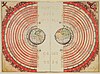
“Let us... examine the point on which Newton, apparently with sound reasons, rests his distinction of absolute and relative motion. If the earth is affected with an absolute rotation about its axis, centrifugal forces are set up in the earth: it assumes an oblate form, the acceleration of gravity is diminished at the equator, the plane of Foucault's pendulum rotates, and so on. All these phenomena disappear if the earth is at rest and the other heavenly bodies are affected with absolute motion round it, such that the same relative rotation is produced. This is, indeed, the case, if we start ab initio from the idea of absolute space. But if we take our stand on the basis of facts, we shall find we have knowledge only of relative spaces and motions. Relatively, not considering the unknown and neglected medium of space, the motions of the universe are the same whether we adopt the Ptolemaic or the Copernican mode of view. Both views are, indeed, equally correct; only the latter is more simple and more practical. The universe is not twice given, with an earth at rest and an earth in motion; but only once, with its relative motions, alone determinable. It is, accordingly, not permitted us to say how things would be if the earth did not rotate. We may interpret the one case that is given us, in different ways. If, however, we so interpret it that we come into conflict with experience, our interpretation is simply wrong. The principles of mechanics can, indeed, be so conceived, that even for relative rotations centrifugal forces arise.”
Ernst Mach on Mach's principle
“Most terrestrial motions are of such brief duration and extent, that it is wholly unnecessary to take into account the earth's rotation and the changes of its progressive velocity with respect to the celestial bodies. This consideration is found necessary only in the case of projectiles cast great distances, or in the case of the vibrations of Foucault's pendulum, and in similar instances. When now Newton sought to apply the mechanical principles discovered since Galileo's time to the planetary system, he found that, so far as it is possible to form any estimate at all thereof, the planets, irrespectively of dynamic effects, appear to preserve their direction and velocity with respect to bodies of the universe that are very remote and as regards each other apparently fixed, the same bodies moving on the earth do with respect to the fixed bodies of the earth. The comportment of terrestrial bodies with respect to the earth is reducible to the comportment of the earth with respect to the remote heavenly bodies. If we were to assert that we knew more of moving objects than this their last-mentioned, experimentally-given comportment with respect to the celestial bodies, we should render ourselves culpable of a falsity. When, accordingly, we say, a body preserves unchanged its direction and velocity in space, our assertion is nothing more or less than an abbreviated reference to the entire universe. The use of such an abbreviated expression is permitted the original author of the principle, because he knows, that as things are no difficulties stand in the way of carrying out its implied directions. But no remedy lies in his power, if difficulties of the kind mentioned present themselves; if, for example, the requisite, relatively fixed bodies are wanting.”
What Ernst Mach Said About Others
Discover personal opinions Ernst Mach shared regarding contemporaries.
Ernst Mach on Joseph Louis Lagrange 2 quotes
“The questions here dealt with have occupied me since my earliest youth, when my interest for them was powerfully stimulated by the beautiful introductions of Lagrange to the chapters of his Analytic Mechanics...”

Ernst Mach on Isaac Newton
“Newton has... acted contrary to his expressed intention only to investigate actual facts. No one is competent to predicate things about absolute space and absolute motion; they are pure things of thought, pure mental constructs, that cannot be produced in experience. All our principles of mechanics are... experimental knowledge concerning the relative positions and motions of bodies. ...No one is warranted in extending these principles beyond the boundaries of experience. In fact, such an extension is meaningless, as no one possesses the requisite knowledge to make use of it.”

Ernst Mach on Pierre Louis Maupertuis
“Maupertuis really had no principle, properly speaking, but only a vague formula, which was forced to do duty as the expression of different familiar phenomena not really brought under one conception. ...Maupertuis' performance, though it had been unfavorably criticized by all mathematicians, is, nevertheless, sort of invested with a sort of historical halo. It would seem almost as if something of the pious faith of the church had crept into mechanics. However, the mere endeavor to gain a more extensive view... was not altogether without results. Euler, at least, if not also Gauss, was stimulated by the attempt of Maupertuis.”

Quotes About Ernst Mach
Gain deeper perspective through quotes about Ernst Mach from others.
W. W. Bartley III on Ernst Mach
“Some Machians were sufficiently impressed by Einstein's interpretations of Brownian movement to accept atomism. Mach himself brushed such objections aside, and also emphatically rejected Einstein's relativity theory.”
Alan Ebenstein on Ernst Mach 2 quotes
“To a contemporary reader, nonetheless, Mach’s Analysis of Sensations (1886) disappoints. There is a loud echo of Hume in the work, for Mach, like Hume, emphasized the tangibility of all knowledge—ultimately, all knowledge is based in the senses.”
Arthur Eddington on Ernst Mach
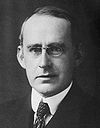
“In the philosophy of Mach a world without matter is unthinkable. Matter in Mach's philosophy is not merely required as a test body to display properties of something already there ...it is an essential feature in causing those properties which it able to display, Inertia, for example, would not appear by the insertion of one test body in the world; in some way the presence of other matter is a necessary condition. It will be seen how welcome to such a philosophy is the theory that space and the inertial frame come into being with matter, and grow as it grows.”
Friedrich Hayek on Ernst Mach 2 quotes
“:...Vienna is the origin of so many schools of its own which were dominant in the 1920s. And one of the most fundamental and influential, in which we all were partially caught, was logical positivism. In fact, Mises’ brother, Richard von Mises, became one of the leading figures. Now he and I all grew up in this Ernst Mach philosophy that ultimately everything must be rationally justified…”

Source on Ernst Mach
“Scientists believe there is a hierarchy of facts and that among them may be made a judicious choice. They are right, since otherwise there would be no science... One need only open the eyes to see that the conquests of industry which have enriched so many practical men would never have seen the light, if these practical men alone had existed and if they had not been preceded by unselfish devotees who died poor, who never thought of utility, and yet had a guide far other than caprice. As Mach says, these devotees have spared their successors the trouble of thinking.”
Friedrich Stadler "What is the Vienna Circle?" in on Ernst Mach
“The new historiography on Logical Empiricism sets in with the rediscovery of Ernst Mach (1838-1916) as a precursor of Gestalt theory, evolutionary epistemology, (possibly radical) constructivism and the modern historically oriented philosophy of science. But already in Mach’s reception of the Vienna Circle one can see not only a certain pluralism of views but also a polarization of the various positions (Mach’s influence on Carnap’s Aufbau / Logical Construction, the critical distancing to “psychologism” in the manifesto, the alternative to the principle of economy in Karl Menger, etc.) Nevertheless, this research program, which was interpreted differently by the Vienna Circle, actually represented a sort of prototype for Logical Empiricism in the interwar years – irrespective of whether one backs the bold claim as to the existence of a “typical Austrian philosophy” (as opposed to German idealism).”
Ludwig Wittgenstein on Ernst Mach
“What Mach calls a thought experiment is of course not an experiment at all. At bottom it is a grammatical investigation.”

About Ernst Mach
Ernst Mach (18 February 1838 – 19 February 1916) was an Austrian physicist and philosopher, noted for his contributions to physics such as the Mach number and the study of shock waves. As a philosopher of science, he was a major influence on logical positivism and through his criticism of Newton, a forerunner of Einstein's theory of relativity.