Link Copied!
Ernest Hemingway Quotes (1899-1961)
Writer, Novelist


























About Ernest Hemingway
Ernest Miller Hemingway (21 July 1899 – 2 July 1961) was an American novelist, short story writer, and journalist. His economical and understated style had a strong influence on 20th-century fiction, while his life of adventure and his public image influenced later generations. Hemingway produced most of his work between the mid-1920s and the mid-1950s, and won the Nobel Prize in Literature in 1954. He published seven novels, six short story collections, and two non-fiction works. Additional works, including three novels, four short story collections, and three non-fiction works, were published posthumously. Many of his works are considered classics of American literature.
Best Ernest Hemingway Quotes
Shortest
Earliest
Explore our curated collection of the most famous and impactful Ernest Hemingway quotes.
“Fuck literature.”



“You never understand anybody that loves you.”


“The way to learn whether a person is trustworthy is to trust him.”
“'Please love me David the way I am. Please understand and love me.'”

“''''Happiness in intelligent people is the rarest thing I know.''''”


“Hesitation increases in relation to risk in equal proportion to age.”


“Prose is architecture, not interior decoration, and the Baroque is over.”

“A man's got to take a lot of punishment to write a really funny book.”

“We are all apprentices in a craft where no one ever becomes a master.”
“There is no remedy for anything in life. Death is a sovereign remedy for all misfortunes.”


“Dying is only bad when it takes a long time and hurts so much that it humiliates you.
Ch. 43”
Ch. 43”
“Fortunately I have never learned to take the good advice I give myself nor the counsel of my fears.”
“Like all truly brave people Antonio is light-hearted and likes to joke and make fun of serious things.”
“That terrible mood of depression of whether it's any good or not is what is known as The Artist's Reward.”


“Fear of death increases in exact proportion to increase in wealth: Hemingstein's Law on the Dynamics of Dying.”


“Dostoevsky was made by being sent to Siberia. Writers are forged in injustice as a sword is forged.”

“To be a successful father ... there's one absolute rule: when you have a kid, don't look at it for the first two years.”
“[W]hen he came out of the anaesthetic the first thing he said was, 'What a man Ernesto would be if he could only write.'”

“'You know it makes one feel rather good deciding not to be a bitch.'
'Yes.'
'It's sort of what we have instead of God.'”
'Yes.'
'It's sort of what we have instead of God.'”
“If we win here we will win everywhere. The world is a fine place and worth the fighting for and I hate very much to leave it.”

“‘It’s his sense of self-preservation.’ ‘The great Italian sense.’ ‘The greatest Italian sense.’”
“This wine is too good for toast-drinking, my dear. You don't want to mix emotions up with a wine like that. You lose the taste.”

“When writing a novel a writer should create living people; people not characters. A character is a caricature.”
“Eschew the monumental. Shun the Epic. All the guys who can paint great big pictures can paint great small ones.”
“Cowardice, as distinguished from panic, is almost always simply a lack of ability to suspend the functioning of the imagination.”
“Scott took LITERATURE so solemnly. He never understood that it was just writing as well as you can and finishing what you start.”
“When a man is still in rebellion against death he has pleasure in taking to himself one of the Godlike attributes; that of giving it.”


“I still need more healthy rest in order to work at my best. My health is the main capital I have and I want to administer it intelligently.”
“I know monks masturbate at night
That pet cats screw
That some girls bite
And yet
What can I do
To set things right?”
That pet cats screw
That some girls bite
And yet
What can I do
To set things right?”
“But don't try to find an untroublesome woman. She will dull out on you. What makes a woman good in bed makes it impossible for her to live alone.”
“Wars are Spinach. Life in general is the tough part. In war all you have to do is not worry and know how to read a map and co-ordinates.”
“Personal columnists ... are jackals and no jackal has been known to live on grass once he had learned about meat — no matter who killed the meat for him.”

“I do not think I had ever seen a nastier-looking man.... Under the black hat, when I had first seen them, the eyes had been those of an unsuccessful rapist.”
“Bullfighting is the only art in which the artist is in danger of death and in which the degree of brilliance in the performance is left to the fighter's honor.”
“Certainly there is no hunting like the hunting of man and those who have hunted armed men long enough and liked it, never really care for anything else thereafter.”

“The most essential gift for a good writer is a built-in, shock-proof, shit detector. This is the writer's radar and all great writers have had it.”
“In the morning there was a big wind blowing and the waves were running high up on the beach and he was awake a long time before he remembered that his heart was broken.”

“If every one said orders were impossible to carry out when they were received where would you be? Where would we all be if you just said, "Impossible," when orders came?”
“Switzerland is a small, steep country, much more up and down than sideways, and is all stuck over with large brown hotels built on the cuckoo clock style of architecture.”
“It wasn't by accident that the Gettysburg address was so short. The laws of prose writing are as immutable as those of flight, of mathematics, of physics.”
“And how much better to die in all the happy period of undisillusioned youth, to go out in a blaze of light, than to have your body worn out and old and illusions shattered.”
“I might say that what amateurs call a style is usually only the unavoidable awkwardnesses in first trying to make something that has not heretofore been made.”
“'Remember everything is right until it's wrong. You'll know when it's wrong.'
'You think so?'
'I'm quite sure. If you don't it doesn't matter. Nothing will matter then.'”
'You think so?'
'I'm quite sure. If you don't it doesn't matter. Nothing will matter then.'”

“'Ay,' he said aloud. There is no translation for this word and perhaps it is just a noise such as a man might make, involuntarily, feeling the nail go through his hands and into the wood.”

“The great thing is to last and get your work done and see and hear and learn and understand; and write when there is something that you know; and not before; and not too damned much after.”

“Honor to a Spaniard, no matter how dishonest, is as real a thing as water, wine, or olive oil. There is honor among pickpockets and honor among whores. It is simply that the standards differ.”

“Here is the piece. If you can't say fornicate can you say copulate or if not that can you say co-habit? If not that would have to say consummate I suppose. Use your own good taste and judgment.”
“There are events which are so great that if a writer has participated in them his obligation is to write truly rather than assume the presumption of altering them with invention.”
“Miss Mary, having been a journalist, had splendid powers of invention. I had never heard her tell a story in the same way twice and always had the feeling she was remolding it for the later editions.”

“Anyone who goes on the sea the year around in a small power boat does not seek danger. You may be absolutely sure that in a year you will have it without seeking, so you try always to avoid it all you can.”


“Decadence is a difficult word to use since it has become little more than a term of abuse applied by critics to anything they do not yet understand or which seems to differ from their moral concepts.”

“'Why, you sad son-of-a-bitch, how can you be so cocky and stand there and block cars when you're nothing but a miserable bear and a black bear at that - not even a polar or a grizzly or anything worth while.'”
“Happiness is often presented as being very dull but, he thought, lying awake, that is because dull people are sometimes very happy and intelligent people can and do go around making themselves and everyone else miserable.”
“Forget your personal tragedy. We are all bitched from the start and you especially have to be hurt like hell before you can write seriously. But when you get the damned hurt use it — don't cheat with it.”

“The first panacea for a mismanaged nation is inflation of the currency; the second is war. Both bring a temporary prosperity; both bring a permanent ruin. But both are the refuge of political and economic opportunists.”
“We have come out of the time when obedience, the acceptance of discipline, intelligent courage and resolution were most important, into that more difficult time when it is a man's duty to understand his world rather than simply fight for it.”
“'Darling, would you like to grow a beard?'
'Would you like me to?'
'It might be fun. I'd like to see you with a beard.'
''''All right. I'll grow one. I'll start now this minute. It's a good idea. It will give me something to do.' '''”
'Would you like me to?'
'It might be fun. I'd like to see you with a beard.'
''''All right. I'll grow one. I'll start now this minute. It's a good idea. It will give me something to do.' '''”
“But that story has in it the only constructive thing I ever learned about women - that no matter what happened to them and how they turned, you should try to disregard all that and remember them only as they were on the best day they ever had.”
“No writer who knows the great writers who did not receive the Prize can accept it other than with humility. There is no need to list these writers. Everyone here may make his own list according to his knowledge and his conscience.”

“If you are lucky enough to have lived in Paris as a young man, then wherever you go for the rest of your life, it stays with you, for Paris is a moveable feast.”

“Everybody was drunk. The whole battery was drunk going along the road in the dark. We were going to the Champagne. The lieutenant kept riding his horse out into the fields and saying to him, “I’m drunk, I tell you, mon vieux. Oh, I am so soused.””
“The worst death for anyone is to lose the center of his being, the thing he really is. Retirement is the filthiest word in the language. Whether by choice or by fate, to retire from what you do - and makes you what you are - is to back up into the grave.”


“'Oh, Jake,' Brett said, 'we could have had such a damned good time together.'
Ahead was a mounted policeman in khaki directing traffic. He raised his baton. The car slowed suddenly pressing Brett against me.
'Yes,' I said. 'Isn't it pretty to think so?'”
Ahead was a mounted policeman in khaki directing traffic. He raised his baton. The car slowed suddenly pressing Brett against me.
'Yes,' I said. 'Isn't it pretty to think so?'”

“You're an expatriate. You've lost touch with the soil. You get precious. Fake European standards have ruined you. You drink yourself to death. You become obsessed by sex. You spend all your time talking, not working. You are an expatriate, see? You hang around cafés.”
“Luis Miguel had the pride of the devil and a feeling of absolute superiority that was justified in many things. He had said so long that he was the best that he really believed it. He had to believe it to go on. It was not just something he believed. It was his belief.”

“I have noticed that doctors who fail in the practice of medicine have a tendency to seek one another's company and aid in consultation. A doctor who cannot take out your appendix properly will recommend you to a doctor who will be unable to remove your tonsils with success.”
“The dead do not need to rise. They are a part of the earth now and the earth can never be conquered. For the earth endureth forever...Those who have entered it honorably, and no man ever entered earth more honorably than those who died in Spain, already have achieved immortality.”

“The parody is the last refuge of the frustrated writer. Parodies are what you write when you are associate editor of the Harvard Lampoon. The greater the work of literature, the easier the parody. The step up from writing parodies is writing on the wall above the urinal.”
“God knows, people who are paid to have attitudes toward things, professional critics, make me sick; camp-following eunuchs of literature. They won't even whore. They're all virtuous and sterile. And how well meaning and high minded. But they're all camp-followers.”
“How simple the writing of literature would be if it were only necessary to write in another way what has been well written. It is because we have had such great writers in the past that a writer is driven far out past where he can go, out to where no one can help him.”

“It would be easy for us, if we do not learn to understand the world and appreciate the rights, privileges and duties of al other countries and peoples, to represent in our power the same danger to the world that Fascism did.”

“I am no romantic glorifier of the Spanish woman, nor did I ever think of a casual piece as anything much other than a casual piece in any country. But when I am with Maria I love her so that I feel, literally, as though I would die and I never believed in that or thought that it could happen.”
“All you can be sure about in a political-minded writer is that if his work should last you will have to skip the politics when you read it. Many of the so-called politically enlisted writers change their politics frequently... Perhaps it can be respected as a form of the pursuit of happiness.”

“Then there is the other secret. There isn't any symbolysm [sic]. The sea is the sea. The old man is an old man. The boy is a boy and the fish is a fish. The shark are all sharks no better and no worse. All the symbolism that people say is shit. What goes beyond is what you see beyond when you know.”

“The king was working in the garden. He seemed very glad to see me. We walked through the garden. This is the queen, he said. She was clipping a rose bush. Oh how do you do, she said. We sat down at a table under a big tree and the king ordered whiskey and soda. We have good whiskey anyway, he said.”
“'Tell me some true things about fighting.'
'Tell me you love me.'
'I love you,' the girl said. 'You can publish it in the Gazzettino if you like. I love your hard, flat body and your strange eyes that frighten me when they become wicked. I love your hand and all your other wounded places.'”
'Tell me you love me.'
'I love you,' the girl said. 'You can publish it in the Gazzettino if you like. I love your hard, flat body and your strange eyes that frighten me when they become wicked. I love your hand and all your other wounded places.'”
“The world breaks everyone and afterward many are strong at the broken places. But those that will not break it kills. It kills the very good and the very gentle and the very brave impartially. If you are none of these you can be sure it will kill you too but there will be no special hurry.”
“They say that if you can stay away from bullfighting for a year you can stay away from it forever. That is not true but it has some truth in it and, except for fights in Mexico, I had been away for fourteen years. A lot of that time though was like being in jail except that I was locked out; not locked in.”
“Our nada who art in nada, nada be thy name thy kingdom nada thy will be nada in nada as it is in nada. Give us this nada our daily nada and nada us our nada as we nada our nadas and nada us not into nada but deliver us from nada; pues nada. Hail nothing full of nothing, nothing is with thee.”
“As a Nobel Prize winner I cannot but regret that the award was never given to Mark Twain, nor to Henry James, speaking only of my own countrymen. Greater writers than these also did not receive the prize. I would have been happy — happier — today if the prize had been given to that beautiful writer Isak Dinesen.”
“The hardest thing to do is to write straight honest prose on human beings. First you have to know the subject; then you have to know how to write. Both take a lifetime to learn, and anybody is cheating who takes politics as a way out. All the outs are too easy, and the thing itself is too hard to do.”
“You know lots of criticism is written by characters who are very academic and think it is a sign you are worthless if you make jokes or kid or even clown. I wouldn't kid Our Lord if he was on the cross. But I would attempt a joke with him if I ran into him chasing the money changers out of the temple.”

“There are some things which cannot be learned quickly, and time, which is all we have, must be paid heavily for their acquiring. They are the very simplest things and because it takes a man's life to know them the little new that each man gets from life is very costly and the only heritage he has to leave.”
“I cannot be a communist now because I believe in only one thing: liberty. First, I would look after myself and do my work. Then I would care for my family. Then I would help my neighbor. But the state, I care nothing for. All the state has ever meant to me is unjust taxation... I believe in the absolute minimum of government.”

“If the book is good, is about something that you know, and is truly written, and reading it over you see that this is so, you can let the boys yip and the noise will have that pleasant sound coyotes make on a very cold night when they are out in the snow and you are in your own cabin that you have built or paid for with your work.”
“An aggressive war is the great crime against everything good in the world. A defensive war, which must necessarily turn to aggressive at the earliest moment, is the necessary great counter-crime. But never think that war, no matter how necessary, nor how justified, is not a crime. Ask the infantry and ask the dead.”
“I wonder what your idea of heaven would be — A beautiful vacuum filled with wealthy monogamists. All powerful and members of the best families all drinking themselves to death. And hell would probably be an ugly vacuum full of poor polygamists unable to obtain booze or with chronic stomach disorders that they called secret sorrows.”

“In Africa a thing is true at first light and a lie by noon and you have no more respect for it than for the lovely, perfect wood-fringed lake you see across the sun-baked salt plain. You have walked across that plain in the morning and you know that no such lake is there. But now it is there absolutely true, beautiful and believable.”
“War is no longer made by simply analysed economic forces if it ever was. War is made or planned now by individual men, demagogues and dictators who play on the patriotism of their people to mislead them into a belief in the great fallacy of war when all their vaunted reforms have failed to satisfy the people they misrule.”
“A writer is like a Gypsy. He owes no allegiance to any government. If he is a good writer, he will never like the government he lives under. His hand should be against it and its hand will always be against him. The minute anyone knows any bureaucracy well enough, he will hate it. Because the minute it passes a certain size it must be unjust.”

“It is by riding a bicycle that you learn the contours of a country best, since you have to sweat up the hills and can coast down them. ... Thus you remember them as they actually are, while in a motorcar only a high hill impresses you, and you have no such accurate remembrance of country you have driven through as you gain by riding a bicycle.”

“As I ate the oysters with their strong taste of the sea and their faint metallic taste that the cold white wine washed away, leaving only the sea taste and the succulent texture, and as I drank their cold liquid from each shell and washed it down with the crisp taste of the wine, I lost the empty feeling and began to be happy and to make plans.”

“Everyone tries to frighten you now by saying or writing that if one does not become a communist or have a Marxian viewpoint one will have no friends and be alone. They seem to think that to be alone is something dreadful; or that to not have friends is to be hated. I would rather have one honest friend than most of the friends that I have known.”
“Kilimanjaro is a snow-covered mountain 19,710 feet high, and is said to be the highest mountain in Africa. Its western summit is called by the Masai "Ngàje Ngài," the House of God. Close to the western summit there is the dried and frozen carcass of a leopard. No one has explained what the leopard was seeking at that altitude.”

“Actually if a writer needs a dictionary he should not write. He should have read the dictionary at least three times from beginning to end and then have loaned it to someone who needs it. There are only certain words which are valid and similies (bring me my dictionary) are like defective ammunition (the lowest thing I can think of at this time).”
“The rich were dull and they drank too much or they played too much backgammon. They were dull and they were repetitious. He remembered poor Julian and his romantic awe of them and how he had started a story once that began, "The very rich are different from you and me." And how someone had said to Julian, "Yes, they have more money." ”
“My attitude toward punctuation is that it ought to be as conventional as possible. The game of golf would lose a good deal if croquet mallets and billiard cues were allowed on the putting green. You ought to be able to show that you can do it a good deal better than anyone else with the regular tools before you have a license to bring in your own improvements.”
“One hot evening in Milan they carried him up onto the roof and he could look out over the top of the town. There were chimney swifts in the sky. After a while it got dark and the searchlights came out. The others went down and took the bottles with them. He and Ag could hear them below on the balcony. Ag sat on the bed. She was cool and fresh in the hot night.”

“It's enough for you to do it once for a few men to remember you. But if you do it year after year, then many people remember you and they tell it to their children, and their children and grandchildren remember and, if it concerns books, they can read them. And if it's good enough, it will last as long as there are human beings.”

“We have fought this war and won it. Now let us not be sanctimonious; nor hypocritical; nor vengeful; nor stupid. Let us make our enemies incapable of ever making war again, let us re-educate them, let us learn to live in peace and justice with all countries and all peoples in this world. To do this we must educate and re-educate. But first we must educate ourselves.”
“Anglers have a way of romanticizing their battles with fish and of forgetting that the fish has a hook in his mouth, his gullet, or his belly and that his gameness is really an extreme of panic in which he runs, leaps, and pulls to get away until he dies. It would seem to be enough advantage to the angler that the fish has the hook in his mouth rather than the angler.”
“We in America should see that no man is ever given, no matter how gradually or how noble and excellent the man, the power to put this country into a war which is now being prepared and brought closer each day with all the pre-meditation of a long planned murder. For when you give power to an executive you do not know who will be filling that position when the time of crisis comes.”

“All modern American literature comes from one book by Mark Twain called Huckleberry Finn. If you read it you must stop where the Nigger Jim is stolen from the boys. That is the real end. The rest is just cheating. But it's the best book we've had. All American writing comes from that. There was nothing before. There has been nothing as good since.”
“All the critics who could not make their reputations by discovering you are hoping to make them by predicting hopefully your approaching impotence, failure and general drying up of natural juices. Not a one will wish you luck or hope that you will keep on writing unless you have political affiliations in which case these will rally around and speak of you and Homer, Balzac, Zola and Link Steffens.”
“All good books are alike in that they are truer than if they had really happened and after you are finished reading one you will feel that all that happened to you and afterwards it all belongs to you; the good and the bad, the ecstasy, the remorse, and sorrow, the people and the places and how the weather was. If you can get so that you can give that to people, then you are a writer.”
“A man must comport himself as a man. He must fight always preferably and soundly with the odds in his favor but on necessity against any sort of odds and with no thought of the outcome. He should follow his tribal laws and customs insofar as he can and accept the tribal discipline when he cannot. But it is never a reproach that he has kept a child's heart, a child's honesty and a child's freshness and nobility.”
“The boys at first were very polite about my medals and asked me what I had done to get them. I showed them the papers, which were written in very beautiful language and full of fratellanza and abnegazione, but which really said, with the adjectives removed, that I had been given the medals because I was an American. After that their manner changed a little toward me, although I was their friend against outsiders.”
“Well, I know what I have to do, so it is simple. Duty is a wonderful thing. I do not know what I should have done without duty since young Tom died. You could have painted, he told himself. Or you could have done something useful. Maybe, he thought. Duty is simpler.
This is useful, he thought. Do not think against it. It helps to get it over with. That's all we are working for. Christ knows what there is beyond that.”
This is useful, he thought. Do not think against it. It helps to get it over with. That's all we are working for. Christ knows what there is beyond that.”

“The individual, the great artist when he comes, uses everything that has been discovered or known about his art up to that point, being able to accept or reject in a time so short it seems that the knowledge was born with him, rather than that he takes instantly what it takes the ordinary man a lifetime to know, and then the great artist goes beyond what has been done or known and makes something of his own.”

“He was an old man who fished alone in a skiff in the Gulf Stream and he had gone eighty-four days now without taking a fish. In the first forty days a boy had been with him. But after forty days without a fish the boy's parents had told him that the old man was now definitely and finally salao, which is the worst form of unlucky, and the boy had gone at their orders in another boat which caught three good fish the first week.”
“Now Tom was - the hell with that, he said to himself. It is something that happens to everybody. I should know about that by now. It is the only thing that is really final, though.
How do you know that? he asked himself. Going away can be final. Walking out the door can be final. Any form of real betrayal can be final. Dishonesty can be final. Selling out is final. But you are just talking now. Death is what is really final.”
How do you know that? he asked himself. Going away can be final. Walking out the door can be final. Any form of real betrayal can be final. Dishonesty can be final. Selling out is final. But you are just talking now. Death is what is really final.”
“There is only one form of government that cannot produce good writers, and that system is Fascism. For Fascism is a lie told by bullies. A writer who will not lie cannot live or work under Fascism.
Because Fascism is a lie, it is condemned to literary sterility. And when it is past, it will have no history, except the bloody history of murder.”
Because Fascism is a lie, it is condemned to literary sterility. And when it is past, it will have no history, except the bloody history of murder.”

“Then they were walking along the stream together and he said, “Maria, I love thee and thou art so lovely and so wonderful and so beautiful and it does such things to me to be with thee that I feel as though I wanted to die when I am loving thee.” “Oh,” she said. “I die each time. Do you not die?” “No. Almost. But did thee feel the earth move?” “Yes. As I died. Put thy arm around me, please.””
“His talent was as natural as the pattern that was made by the dust on a butterfly's wings. At one time he understood it no more than the butterfly did and he did not know when it was brushed or marred. Later he became conscious of his damaged wings and of their construction and he learned to think and could not fly any more because the love of flight was gone and he could only remember when it had been effortless.”
“I heard the drums coming down the street and then the fifes and the pipes and then they came around the corner, all dancing. The street full of them. Maera saw him and then I saw him. When they stopped the music for the crouch he hunched down in the street with them all and when they started it again he jumped up and went dancing down the street with them. He was drunk all right. 'You go down after him', said Maera, 'he hates me'.”
“I've seen a lot of patriots and they all died just like anybody else if it hurt bad enough and once they were dead their patriotism was only good for legends; it was bad for their prose and made them write bad poetry. If you are going to be a great patriot, i.e., loyal to any existing order of government (not one who wishes to destroy the existing for something better), you want to be killed early if your life and works won't stink.”

“You know that fiction, prose rather, is possibly the roughest trade of all in writing. You do not have the reference, the old important reference. You have the sheet of blank paper, the pencil, and the obligation to invent truer than things can be true. You have to take what is not palpable and make it completely palpable and also have it seem normal and so that it can become a part of experience of the person who reads it.”
“If a writer of prose knows enough about what he is writing about he may omit things that he knows, and the reader, if the writer is writing truly enough, will have a feeling of those things as strongly as though the writer had stated them. The dignity of movement of an iceberg is due to only one-eighth of it being above water. A writer who omits things only because he does not know them only makes hollow places in his writing.”
“In going where you have to go, and doing what you have to do, and seeing what you have to see, you dull and blunt the instrument you write with. But I would rather have it bent and dulled and know I had to put it on the grindstone again and hammer it into shape and put a whetstone to it, and know that I had something to write about, than to have it bright and shining and nothing to say, or smooth and well oiled in the closet, but unused.”
“Do you remember how old Ford was always writing how Conrad suffered so when he wrote? How it was un metier de chien etc. Do you suffer when you write? I don't at all. Suffer like a bastard when don't write, or just before, and feel empty and fucked out afterwards. But never feel as good as while writing.”
“What a business. You go along your whole life and they seem as though they mean something and they always end up not meaning anything. There was never any of what this is. You think that is one thing you will never have. And then, on a lousy show like this, co-ordinating two chicken-crut guerilla bands to help you blow a bridge under impossible conditions, to abort a counter-offensive that will probably already be started, you run into a girl like this Maria.”
“From things that have happened and from things as they exist and from all things that you know and all those you cannot know, you make something through your invention that is not a representation but a whole new thing truer than anything true and alive, and you make it alive, and if you make it well enough, you give it immortality. That is why you write and for no other reason that you know of. But what about all the reasons that no one knows?”
“Antonio always prayed in the room before the fight at the last when the well-wishers and the followers were gone. If there was time at the ring nearly everyone slipped into the chapel to pray once before the paseo. Antonio knew I prayed for him and never for myself. I was not fighting and I had quit praying for myself during the Spanish Civil War when I saw the terrible things that happened to other people and I felt that to pray for oneself was selfish and egotistical.”
“I was as afraid as the next man in my time and maybe more so. But with the years, fear had come to be regarded as a form of stupidity to be classed with overdrafts, acquiring a venereal disease or eating candies. Fear is a child's vice and while I loved to feel it approach, as one does with any vice, it was not for grown men and the only thing to be afraid of was the presence of true and imminent danger in a form that you should be aware of and not be a fool if you were responsible for others.”

“I am opposed to writing about the private lives of living authors and psychoanalyzing them while they are alive. Criticism is getting all mixed up with a combination of the Junior F.B.I.-men, discards from Freud and Jung and a sort of Columnist peep-hole and missing laundry list school.... Every young English professor sees gold in them dirty sheets now. Imagine what they can do with the soiled sheets of four legal beds by the same writer and you can see why their tongues are slavering.”
“Madame, it is an old word and each one takes it new and wears it out himself. It is a word that fills with meaning as a bladder with air and the meaning goes out of it as quickly. It may be punctured as a bladder is punctured and patched and blown up again and if you have not had it it does not exist for you. All people talk of it, but those who have had it are marked by it, and I would not wish to speak of it further since of all things it is the most ridiculous to talk of and only fools go through it many times.”
“Now a writer can make himself a nice career while he is alive by espousing a political cause, working for it, making a profession of believing in it, and if it wins he will be very well placed. All politics is a matter of working hard without reward, or with a living wage for a time, in the hope of booty later. A man can be a Fascist or a Communist and if his outfit gets in he can get to be an ambassador or have a million copies of his books printed by the Government or any of the other rewards the boys dream about.”
“I was always embarrassed by the words sacred, glorious and sacrifice and the expression in vain. We had heard them, sometimes standing in the rain almost out of earshot, so that only the shouted words came through, and had read them, on proclamations that were slapped up by billposters over other proclamations, now for a long time, and I had seen nothing sacred, and the things that were glorious had no glory and the sacrifices were like the stockyards at Chicago if nothing was done with the meat except to bury it.”
“Well, Fitz, I looked all through that bible, it was in very fine print and stumbling on that great book Ecclesiastics, read it aloud to all who would listen. Soon I was alone and began cursing the bloody bible because there were no titles in it — although I found the source of practically every good title you ever heard of. But the boys, principally Kipling, had been there before me and swiped all the good ones so I called the book Men Without Women hoping it would have a large sale among the fairies and old Vassar Girls.”
“Survival, with honor, that outmoded and all-important word, is as difficult as ever and as all-important to a writer. Those who do not last are always more beloved since no one has to see them in their long, dull, unrelenting, no-quarter-given-and-no-quarter-received, fights that they make to do something as they believe it should be done before they die. Those who die or quit early and easy and with every good reason are preferred because they are understandable and human. Failure and well-disguised cowardice are more human and more beloved.”
“For him it was a dark passage which led to nowhere, then to nowhere, then again to nowhere, once again to nowhere, always and forever to nowhere, heavy on the elbows in the earth to nowhere, dark, never any end to nowhere, hung on all time always to unknowing nowhere, this time and again for always to nowhere, now not to be borne once again always and to nowhere, now beyond all bearing up, up, up and into nowhere, suddenly, scaldingly, holdingly all nowhere gone and time absolutely still and they were both there, time having stopped and he felt the earth move out and away from under them.”
“They [the best of the Masai] had that attitude that makes brothers, that unexpressed but instant and complete acceptance that you must be Masai wherever it is you come from. That attitude you only get from the best of the English, the best of the Hungarians and the very best Spaniards; the thing that used to be the most clear distinction of nobility when there was nobility. It is an ignorant attitude and the people who have it do not survive, but very few pleasanter things ever happen to you than the encountering of it.”
“Then I started to think in Lipp's about when I had first been able to write a story about losing everything. It was up in Cortina d'Ampezzo when I had come back to join Hadley there after the spring skiing which I had to interrupt to go on assignment to Rhineland and the Ruhr. It was a very simple story called "Out of Season" and I had omitted the real end of it which was that the old man hanged himself. This was omitted on my new theory that you could omit anything if you knew that you omitted and the omitted part would strengthen the story and make people feel something more than they understood.”

“It was strange going back to Spain again: I had never expected to be allowed to return to the country that I loved more than any other except my own and I would not return so long as any of my friends there were in jail. But in the spring of 1953 in Cuba I talked with good friends who had fought on opposing sides in the Spanish Civil War about stopping in Spain on our way to Africa and they agreed that I might honorably return to Spain if I did not recant anything that I had written and kept my mouth shut on politics. There was no question of applying for a visa. They were no longer required for American tourists.”

“Four times he swung with the bull, lifting the cape so it billowed full, and each time bringing the bull around to charge again. Then, at the end of the fifth swing, he held the cape against his hip and pivoted, so the cape swung out like a ballet dancer’s skirt and wound the bull around himself like a belt, to step clear, leaving the bull facing Zurito on the white horse, come up and planted firm, the horse facing the bull, its ears forward, its lips nervous, Zurito, his hat over his eyes, leaning forward, the long pole sticking out before and behind in a sharp angle under his right arm, held half-way down, the triangular iron point facing the bull.”
“It is very hard to write this way, beginning things backward, and the author hopes the reader will realize this and not grudge this little word of explanation. I know I would be very glad to read anything the reader ever wrote, and I hope the reader will make the same sort of allowances. If any of the readers would care to send me anything they ever wrote, for criticism or advice, I am always at the Café du Dôme any afternoon, talking about Art with Harold Stearns and Sinclair Lewis, and the reader can bring his stuff along with him, or he can send it to me care of my bank, if I have a bank.”
“Don't you drink? I notice you speak slightingly of the bottle. I have drunk since I was fifteen and few things have given me more pleasure. When you work hard all day with your head and know you must work again the next day what else can change your ideas and make them run on a different plane like whisky? When you are cold and wet what else can warm you? Before an attack who can say anything that gives you the momentary well-being that rum does?... The only time it isn't good for you is when you write or when you fight. You have to do that cold. But it always helps my shooting. Modern life, too, is often a mechanical oppression and liquor is the only mechanical relief.”
“They started two hours before daylight, and at first, it was not necessary to break the ice across the canal as other boats had gone on ahead. In each boat, in the darkness, so you could not see, but only hear him, the poler stood in the stern, with his long oar. The shooter sat on a shooting stool fastened to the top of a box that contained his lunch and shells, and the shooter's two, or more, guns were propped against the load of wooden decoys. Somewhere, in each boat, there was a sack with one or two live mallard hens, or a hen and a drake, and in each boat there was a dog who shifted and shivered uneasily at the sound of the wings of the ducks that passed overhead in the darkness.”
“While the bombardment was knocking the trench to pieces at Fossalta, he lay very flat and sweated and prayed oh jesus christ get me out of here. Dear jesus please get me out. Christ please please please christ. If you’ll only keep me from getting killed I’ll do anything you say. I believe in you and I’ll tell everyone in the world that you are the only thing that matters. Please please dear jesus. The shelling moved further up the line. We went to work on the trench and in the morning the sun came up and the day was hot and muggy and cheerful and quiet. The next night back at Mestre he did not tell the girl he went upstairs with at the Villa Rossa about Jesus. And he never told anybody.”

“He always thought of the sea as la mar, which is what people call her in Spanish when they love her. Sometimes those who love her say bad things of her, but they are always said as though she were a woman. Some of the younger fisherman, those who used buoys as floats for their lines or had motorboats bought when the shark lovers had much money, spoke of her as el mar, which is masculine, they spoke of her as a contestant or a place or even an enemy. But the old man always thought of her as feminine, as something that gave or withheld great favors. If she did wild or wicked things, it is because she could not help them. The moon affects her as it does a woman, he thought.”
“To me a heaven would be a big bull ring with me holding two barrera seats and a trout stream outside that no one else was allowed to fish in and two lovely houses in the town; one where I would have my wife and children and be monogamous and love them truly and well and the other where I would have my nine beautiful mistresses on 9 different floors and one house would be fitted up with special copies of the Dial printed on soft tissue and kept in the toilets on every floor and in the other house we would use the American Mercury and the New Republic.”

“You got very hungry when you did not eat enough in Paris because all the bakery shops had such good things in windows and people ate outside at tables on the sidewalk so that you saw and smelled the food. When you were skipping meals at a time when you had given up journalism and were writing nothing that anyone in America would buy, explaining at home that you were lunching out with someone, the best place to do it was the Luxembourg gardens... There you could always go into the Luxembourg museum and all the paintings were heightened and clearer and more beautiful if you were belly-empty, hollow-hungry. I learned to understand Cézanne much better and to see truly how he made landscapes when I was hungry.”

“I started out very quiet and I beat Mr. Turgenev. Then I trained hard and I beat Mr. de Maupassant. I've fought two draws with Mr. Stendhal, and I think I had an edge in the last one. But nobody's going to get me in any ring with Mr. Tolstoy unless I'm crazy or I keep getting better.
• Source: quoted in Lillian Ross's profile of Hemingway, which first appeared in the The New Yorker (13 May 1950). The profile was later published as a short book titled Portrait of Hemingway (1961). Variant:
I started out very quiet and I beat Turgenev. Then I trained hard and I beat de Maupassant. I've fought two draws with Stendhal, and I think I had an edge in the last one. But nobody's going to get me in any ring with Tolstoy unless I'm crazy or I keep getting better.”
• Source: quoted in Lillian Ross's profile of Hemingway, which first appeared in the The New Yorker (13 May 1950). The profile was later published as a short book titled Portrait of Hemingway (1961). Variant:
I started out very quiet and I beat Turgenev. Then I trained hard and I beat de Maupassant. I've fought two draws with Stendhal, and I think I had an edge in the last one. But nobody's going to get me in any ring with Tolstoy unless I'm crazy or I keep getting better.”
“Any man can face death but to be committed to bring it as close as possible while performing certain classic movements and do this again and again and again and then deal it out yourself with a sword to an animal weighing half a ton which you love is more complicated than just facing death. It is facing your performance as a creative artist each day and your necessity to function as a skillful killer. Antonio had to kill quickly and mercifully and still give the bull one full chance at him when he crossed over the horn at least twice a day.
Everyone in bullfighting helps everyone else in bullfighting in the ring. In spite of all rivalries and hatreds it is the closest brotherhood there is. Only bullfighters know the risks they run and what the bull can do with his horns to their bodies and their minds.”
Everyone in bullfighting helps everyone else in bullfighting in the ring. In spite of all rivalries and hatreds it is the closest brotherhood there is. Only bullfighters know the risks they run and what the bull can do with his horns to their bodies and their minds.”
“A bullfighter can never see the work of art that he is making. He has no chance to correct it as a painter or writer has. He cannot hear it as a musician can. He can only feel it and hear the crowd's reaction to it. When he feels it and knows that it is great it takes hold of him so that nothing else in the world matters. All the time that he is making his work of art he knows that he must keep within the limits of his skill and his knowledge of the animal. Those matadors are called cold who visibly show that they are thinking of this. Antonio was not cold and the public belonged to him now. He looked up at them and let them know, modestly but not humbly, that he knew it and as he circled the ring with the ear in his hand he looked at the different segments of Bilbao, a city that he loved, as they stood up as he passed and was happy that he owned them.”
“Things may not be immediately discernible in what a man writes, and in this sometimes he is fortunate; but eventually they are quite clear and by these and the degree of alchemy that he possesses he will endure or be forgotten. Writing, at its best, is a lonely life. Organizations for writers palliate the writer's loneliness but I doubt if they improve his writing. He grows in public stature as he sheds his loneliness and often his work deteriorates. For he does his work alone and if he is a good enough writer he must face eternity, or the lack of it, each day. For a true writer each book should be a new beginning where he tries again for something that is beyond attainment. He should always try for something that has never been done or that others have tried and failed. Then sometimes, with great luck, he will succeed.”

“They hanged Sam Cardinella at six o’clock in the morning in the corridor of the county jail. The corridor was high and narrow with tiers of cells on either side. All the cells were occupied. The men had been brought in for the hanging. Five men sentenced to be hanged were in the five top cells. Three of the men to be hanged were negroes. They were very frightened. One of the white men sat on his cot with his head in his hands. The other lay flat on his cot with a blanket wrapped around his head. They came out onto the gallows through a door in the wall. There were six or seven of them including two priests. They were carrying Sam Cardinella. He had been like that since about four o’clock in the morning. While they were strapping his legs together two guards held him up and the two priests were whispering to him. “Be a man, my son,” said one priest.”
“At pier four there is a 34-foot yawl-rigged yacht with two of the three hundred and twenty-four Esthonians who are sailing around in different parts of the world, in boats between 28 and 36 feet long and sending back articles to the Esthonian newspapers. These articles are very popular in Esthonia and bring their authors between a dollar and a dollar and thirty cents a column. They take the place occupied by the baseball or football news in American newspapers and are run under the heading of Sagas of Our Intrepid Voyagers. No well-run yacht basin in Southern waters is complete without at least two sun-burned, salt bleached-headed Esthonians who are waiting for a check from their last article. When it comes they will set sail to another yacht basin and write another saga. They are very happy too. Almost as happy as the people on the Alzira III. It's great to be an Intrepid Voyager.”
“We’ll wait and see. Come on back in the shade, he said. You mustn’t feel that way.
I don’t feel any way, the girl said. I just know things.
I don’t want you to do anything that you don’t want to do——
Nor that isn’t good for me, she said. I know. Could we have another beer?
All right. But you’ve got to realize——
I realize, the girl said. Can’t we maybe stop talking?
They sat down at the table and the girl looked across at the hills on the dry side of the valley and the man looked at her and at the table.
You’ve got to realize, he said, that I don’t want you to do it if you don’t want to.
I’m perfectly willing to go through with it if it means anything to you.
Doesn’t it mean anything to you? We could get along.
Of course it does. But I don’t want anybody but you. I don’t want any one else. And I know it’s perfectly simple.
Yes, you know it’s perfectly simple.
It’s all right for you to say that, but I do know it.
Would you do something for me now?
I’d do anything for you.
Would you please please please please please please please stop talking?”
I don’t feel any way, the girl said. I just know things.
I don’t want you to do anything that you don’t want to do——
Nor that isn’t good for me, she said. I know. Could we have another beer?
All right. But you’ve got to realize——
I realize, the girl said. Can’t we maybe stop talking?
They sat down at the table and the girl looked across at the hills on the dry side of the valley and the man looked at her and at the table.
You’ve got to realize, he said, that I don’t want you to do it if you don’t want to.
I’m perfectly willing to go through with it if it means anything to you.
Doesn’t it mean anything to you? We could get along.
Of course it does. But I don’t want anybody but you. I don’t want any one else. And I know it’s perfectly simple.
Yes, you know it’s perfectly simple.
It’s all right for you to say that, but I do know it.
Would you do something for me now?
I’d do anything for you.
Would you please please please please please please please stop talking?”
“Hit in the head you will die quickly and cleanly even sweetly and fittingly except for the white blinding flash that never stops, unless perhaps it is only the frontal bone or your optic nerve that is smashed, or your jaw carried away, or your nose and cheek bones gone so you can still think but you have no face to talk with. But if you are not hit in the head you will be hit in the chest, and choke in it, or in the lower belly, and feel it all slip and slide loosely as you open, to spill out when you try to get up, it's not supposed to be so painful but they always scream with it, it's the idea I suppose, or have the flash, the slamming clang of high explosive on a hard road and find your legs are gone above the knee, or maybe just a foot gone and watch the white bone sticking through your puttee, or watch them take a boot off with your foot a mush inside it, or feel an arm flop and learn how a bone feels grating, or you will burn, choke and vomit, or be blown to hell a dozen ways, without sweetness or fittingness: but none of this means anything. No catalogue of horrors ever kept men from war. Before the war you always think that it's not you that dies. But you will die, brother, if you go to it long enough.”

“The house was built on the highest part of the narrow tongue of land between the harbor and the open sea. It had lasted through three hurricanes and it was built solid as a ship. It was shaded by tall coconut palms that were bent by the trade wind and on the ocean side you could walk out of the door and down the bluff across the white sand and into the Gulf Stream. The water of the Stream was usually a dark blue when you looked out at it when there was no wind. But when you walked out into it there was just the green light of the water over that floury white sand and you could see the shadow of any big fish a long time before he could ever come in close to the beach.
It was a safe and fine place to bathe in the day but it was no place to swim at night. At night the sharks came in close to the beach, hunting at the edge of the Stream, and from the upper porch of the house on quiet nights you could hear the splashing of the fish they hunted and if you went down to the beach you could see the phosphorescent wakes they made in the water. At night the sharks had no fear and everything else feared them. But in the day they stayed out away from the clear white sand and if they did come in you could see their shadows a long way away.”
It was a safe and fine place to bathe in the day but it was no place to swim at night. At night the sharks came in close to the beach, hunting at the edge of the Stream, and from the upper porch of the house on quiet nights you could hear the splashing of the fish they hunted and if you went down to the beach you could see the phosphorescent wakes they made in the water. At night the sharks had no fear and everything else feared them. But in the day they stayed out away from the clear white sand and if they did come in you could see their shadows a long way away.”

“I was so sentimental about you I'd break any one's heart for you. My, I was a damned fool. I broke my own heart, too. It's broken and gone. Everything I believe in and everything I cared about I left for you because you were so wonderful and you loved me so much that love was all that mattered. Love was the greatest thing, wasn't it? Love was what we had that no one else had or could ever have? And you were a genius and I was your whole life. I was your partner and your little black flower. Slop. Love is just another dirty lie. Love is ergoapiol pills to make me come around because you were afraid to have a baby. Love is that quinine and quinine and quinine until I'm deaf with it. Love is that dirty aborting horror that you took me to. Love is my insides all messed up. Its half atheters and half whirling douches. I know about love. Love always hangs up behind the bathroom door. It smells like Lysol. To hell with love. Love is you making me happy and then going off to sleep with your mouth open while I lie awake all night afraid to say my prayers even because I know I have no right to any more. Love is all the dirty little tricks you taught me that you probably got out of some book. All right. I'm through with you and I'm through with love. Your kind of picknose love.”
Ernest Hemingway Quotes by Topic
Find exactly what you are looking for by browsing this categorized list of Ernest Hemingway quotes by topic.
Ernest Hemingway on Drink 3 quotes
“I drink to make other people more interesting.”

Ernest Hemingway on Paris 3 quotes
“If you are lucky enough to have lived in Paris as a young man, then wherever you go for the rest of your life, it stays with you, for Paris is a moveable feast.”
Ernest Hemingway on Winning 2 quotes
“But man is not made for defeat. A man can be destroyed but not defeated.”

Ernest Hemingway on Panic 2 quotes
“Cowardice, as distinguished from panic, is almost always simply a lack of ability to suspend the functioning of the imagination.”

Ernest Hemingway on Solemnity 2 quotes
“Scott took LITERATURE so solemnly. He never understood that it was just writing as well as you can and finishing what you start.”

What Ernest Hemingway Said About Others
Discover personal opinions Ernest Hemingway shared regarding contemporaries.
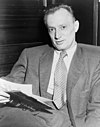
Ernest Hemingway on Nelson Algren 2 quotes
“OK, kid, you beat Dostoevsky.”
Ernest Hemingway on Benito Mussolini 2 quotes
“Mussolini is the biggest bluff in Europe. If Mussolini would have me taken out and shot tomorrow morning I would still regard him as a bluff. The shooting would be a bluff.”

Ernest Hemingway on Francisco Franco
Quotes About Ernest Hemingway
Gain deeper perspective through quotes about Ernest Hemingway from others.
Anonymous on Ernest Hemingway
Maya Angelou on Ernest Hemingway
“When people talk about American literature, they really mean Hemingway, Faulkner and Poe and when they do include women it's Emily Dickinson and Edna St. Vincent Millay. To decide to take that on and say, 'I will speak and will be heard'-that takes a lot of guts.”

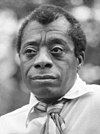
James Baldwin on Ernest Hemingway
“I consider that I have many responsibilities, but none greater than this: to last, as Hemingway says, and get my work done. I want to be an honest man and a good writer.”
Dave Barry on Ernest Hemingway
“Being a professional author is a great job. You get to work at home, be your own boss, and wear whatever you want. Fact: Ernest Hemingway wrote The Sun Also Rises wearing a penguin costume.”
Alvah Bessie on Ernest Hemingway 3 quotes
“Below us there were hundreds of men from the British, the Canadian Battalions; a food truck had come up, and they were being fed. A new Matford roadster drove around the hill and stopped near us, and two men got out we recognized. One was tall, thin, dressed in brown corduroy, wearing horn-shelled glasses. He had a long, ascetic face, firm lips, a gloomy look about him. The other was taller, heavy, red-faced, one of the largest men you will ever see; he worse steel-rimmed glasses and a bushy mustache. These were Herbert Matthews of The New York Times and Ernest Hemingway, and they were just as relieved to see us as we were to see them.”







Disputed Quotes
Quotes attributed to Ernest Hemingway that are questionable.
“The most painful thing is losing yourself in the process of loving someone too much, and forgetting that you are special too.”
Misattributed Quotes
Quotes mistakenly credited to Ernest Hemingway
“There are only three sports: bullfighting, motor racing, and mountaineering; all the rest are merely games.”
About Ernest Hemingway
Ernest Miller Hemingway (21 July 1899 – 2 July 1961) was an American novelist, short story writer, and journalist. His economical and understated style had a strong influence on 20th-century fiction, while his life of adventure and his public image influenced later generations. Hemingway produced most of his work between the mid-1920s and the mid-1950s, and won the Nobel Prize in Literature in 1954. He published seven novels, six short story collections, and two non-fiction works. Additional works, including three novels, four short story collections, and three non-fiction works, were published posthumously. Many of his works are considered classics of American literature.