“
These reasonings are unconnected: "I am richer than you, therefore I am better"; "I am more eloquent than you, therefore I am better." The connection is rather this: "I am richer than you, therefore my property is greater than yours;" "I am more eloquent than you, therefore my style is better than yours." But you, after all, are neither property nor style. (44).
— Epictetus
What It Means
This is a placeholder explanation generated by the low-overhead model. It interprets "These reasonings are unconnected: "I am richer than you, therefore I am better"; "I am more eloquent than you, therefore I am better." The connection is rather this: "I am richer than you, therefore my property is greater than yours;" "I am more eloquent than you, therefore my style is better than yours." But you, after all, are neither property nor style. (44)." in the context of "" to mean that wisdom is timeless.
Source:
The 'What it means' explanation text was generated by Google Gemini Flash (accessed January 18, 2026). https://gemini.google.com/app
Tags
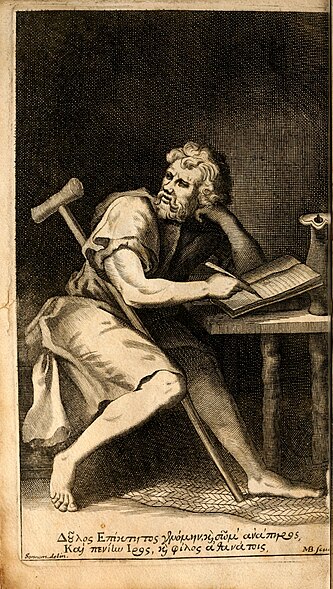
About Epictetus
Epictetus (c. 55 – c. 135 AD), born a slave, was a Greek Stoic philosopher. His words were recorded by his student Arrian in the Discourses and Enchiridion written in the early 2nd-century.
About Epictetus
Epictetus (c. 55 – c. 135 AD), born a slave, was a Greek Stoic philosopher. His words were recorded by his student Arrian in the Discourses and Enchiridion written in the early 2nd-century.
View all quotes →