Our painter's very name [El Greco] is uncertain. To his contemporaries he was known as the Greco, the difficult Theotocopuli, barbarous to the Spaniards, being disregarded; and up to the end of the eighteenth century no one writes of him except as Dominico Greco. Pacheco, Palomino, Giuseppe Martinez and other native writers, who mention his work, use this name. It is also the name found in the Inventories of the palace, the registers of Toledo, and the indices of public writings.
What It Means
This is a placeholder explanation generated by the low-overhead model. It interprets "Our painter's very name [El Greco] is uncertain. To his contemporaries he was known as the Greco, the difficult Theotocopuli, barbarous to the Spaniards, being disregarded; and up to the end of the eighteenth century no one writes of him except as Dominico Greco. Pacheco, Palomino, Giuseppe Martinez and other native writers, who mention his work, use this name. It is also the name found in the Inventories of the palace, the registers of Toledo, and the indices of public writings." in the context of "Albert F. Calvert, and Catherine Gasquoine-Hartley, in THE SPANISH SERIES - El Greco; an account of his life and works; publisher, London: J. Lane; New York: J. Lane Co, 1909, p. 17" to mean that wisdom is timeless.
Tags
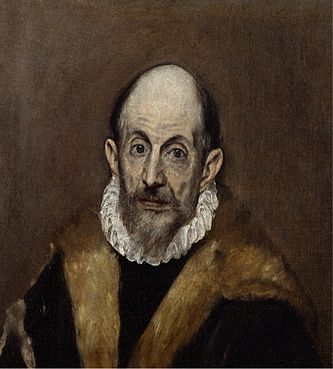
About El Greco