Link Copied!
Edwin Boring Quotes (1886-1968)

About Edwin Boring
Edwin Garrigues Boring (23 October 1886 – 1 July 1968) was an American experimental psychologist, who later became one of the first historians of psychology.
Best Edwin Boring Quotes
Shortest
Earliest
Explore our curated collection of the most famous and impactful Edwin Boring quotes.
“Psychologically attention is drainage, whatever it may be physiologically.”

Unsourced — Primary work/page citation not yet verified in the QuotesCosmos archive. Per our Unnamed Sources & Verification Policy, quotes without confirmed primary editions are explicitly marked Unsourced while under editorial review.
“So far as consciousness goes, one does one's thinking before one knows what he is to think about.”

Unsourced — Primary work/page citation not yet verified in the QuotesCosmos archive. Per our Unnamed Sources & Verification Policy, quotes without confirmed primary editions are explicitly marked Unsourced while under editorial review.
“Titchener interest lay in the generalized, normal, adult mind that had also been Wundt's main concern.”

Unsourced — Primary work/page citation not yet verified in the QuotesCosmos archive. Per our Unnamed Sources & Verification Policy, quotes without confirmed primary editions are explicitly marked Unsourced while under editorial review.
“The gift of professional maturity comes only to the psychologist who knows the history of his science.”

Unsourced — Primary work/page citation not yet verified in the QuotesCosmos archive. Per our Unnamed Sources & Verification Policy, quotes without confirmed primary editions are explicitly marked Unsourced while under editorial review.
“American psychology inherited its physical body from German experimentalism, but it got its mind from Darwin.”

Unsourced — Primary work/page citation not yet verified in the QuotesCosmos archive. Per our Unnamed Sources & Verification Policy, quotes without confirmed primary editions are explicitly marked Unsourced while under editorial review.
“The historical approach to understanding of scientific fact is what differentiates the scholar in science from the mere experimenter.”

Unsourced — Primary work/page citation not yet verified in the QuotesCosmos archive. Per our Unnamed Sources & Verification Policy, quotes without confirmed primary editions are explicitly marked Unsourced while under editorial review.
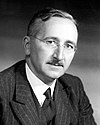
“Half the time I read Hayek's The Sensory Order with amazement at the extent of his reading and comprehension … he is right … most of the time.”
Unsourced — Primary work/page citation not yet verified in the QuotesCosmos archive. Per our Unnamed Sources & Verification Policy, quotes without confirmed primary editions are explicitly marked Unsourced while under editorial review.
“[William James, in the 1890s] began that metamorphosis of German psychology which was to alter the Teutonic worm of sensory content into the American butterfly of functional reality.”

Unsourced — Primary work/page citation not yet verified in the QuotesCosmos archive. Per our Unnamed Sources & Verification Policy, quotes without confirmed primary editions are explicitly marked Unsourced while under editorial review.
“Introspection with inference and meaning left out as much as possible becomes a dull taxonomic account of sensory events which, since they suggest almost no functional value for the organism, are peculiarly uninteresting to the American scientific temper.”

Unsourced — Primary work/page citation not yet verified in the QuotesCosmos archive. Per our Unnamed Sources & Verification Policy, quotes without confirmed primary editions are explicitly marked Unsourced while under editorial review.
“Introspectionism got its ism because the protesting new schools needed a clear and stable contrasting background against which to exhibit their novel features. No proponent of introspection a the basic method of psychology ever called himself an introspectionist.”
Unsourced — Primary work/page citation not yet verified in the QuotesCosmos archive. Per our Unnamed Sources & Verification Policy, quotes without confirmed primary editions are explicitly marked Unsourced while under editorial review.
“Sometimes I fear that, if Harvard does not give up trying to turn itself from an Institution of Learning into an Educational Institution, we may have a generation of professors whose duty it will be to disseminate information which they have not the time to acquire.”
Unsourced — Primary work/page citation not yet verified in the QuotesCosmos archive. Per our Unnamed Sources & Verification Policy, quotes without confirmed primary editions are explicitly marked Unsourced while under editorial review.
“Leibniz foreshadowed the entire doctrine of the unconscious, but Herbart actually began it. Wundt was to appeal first to unconscious inference in order to explain perception, and then to apperception. Fechner was to take from Herbart the notion of the measurement of the magnitude...”
Unsourced — Primary work/page citation not yet verified in the QuotesCosmos archive. Per our Unnamed Sources & Verification Policy, quotes without confirmed primary editions are explicitly marked Unsourced while under editorial review.
“Fechner laid down the general outlines of his program [psychophysics] in ZendAvesta, the book about heaven and the future life. Imagine sending a graduate student of psychology nowadays to the Divinity School for a course in immortality as preparation for advanced experimental work in psychophysics! How narrow we have become!”
Unsourced — Primary work/page citation not yet verified in the QuotesCosmos archive. Per our Unnamed Sources & Verification Policy, quotes without confirmed primary editions are explicitly marked Unsourced while under editorial review.
“It is not likely that the history of psychology can be written in the next three centuries without mention of Freud's name and still claim to be a general history of psychology... Perhaps, had Freud been smothered in his cradle, the times would have produced a substitute, It is hard to say. The dynamics of history lack control experiments.”

Unsourced — Primary work/page citation not yet verified in the QuotesCosmos archive. Per our Unnamed Sources & Verification Policy, quotes without confirmed primary editions are explicitly marked Unsourced while under editorial review.
“[ Gustav Fechner ] was troubled by materialism... His philosophical solution of the spiritual problem lat in his affirmation of the identity of the mind and matter and in his assurance that the entire universe can be regarded as readily from the point of view of its consciousness... as it can be viewed as inert matter.”

Unsourced — Primary work/page citation not yet verified in the QuotesCosmos archive. Per our Unnamed Sources & Verification Policy, quotes without confirmed primary editions are explicitly marked Unsourced while under editorial review.
“I believe that robotic thinking helps precision of psychological thought, and will continue to help it until psychophysiology is so far advanced that an image is nothing other than a neural event, and object constancy is obviously just something that happens in the brain. That time is still a long way off, and in the interval I choose to sit cozily with my robot, squeezing his hand and feeling a thrill -- a scientist's thrill -- when he squeezes mine back again.”
Unsourced — Primary work/page citation not yet verified in the QuotesCosmos archive. Per our Unnamed Sources & Verification Policy, quotes without confirmed primary editions are explicitly marked Unsourced while under editorial review.
“The experimental psychologist... needs historical sophistication within his own sphere of expertness. Without such knowledge he sees the present in distorted perspective, he mistakes old facts and old views for new, and he remains unable to evaluate the significance of new movements and methods. In this matter I can hardly state my faith too strongly. A psychological sophistication that contains no component of historical orientation seems to me to be no sophistication at all.”
Unsourced — Primary work/page citation not yet verified in the QuotesCosmos archive. Per our Unnamed Sources & Verification Policy, quotes without confirmed primary editions are explicitly marked Unsourced while under editorial review.
“[ Titchener ] always seemed to me the nearest approach to genius of anyone with whom I have been closely associated.… He was competent with languages, and could ad lib in Latin when the occasion required it. If you had mushrooms, he would tell you at once how they should be cooked. If you were buying oak for a new floor, he would at once come forward with all the advantages of ash. If you were engaged to be married, he would have his certain and insistent advice about the most unexpected aspects of your problems, and if you were honeymooning, he would write to remind you, as he did me, on what day you ought to be back at work.”
Unsourced — Primary work/page citation not yet verified in the QuotesCosmos archive. Per our Unnamed Sources & Verification Policy, quotes without confirmed primary editions are explicitly marked Unsourced while under editorial review.
“Scientific truth, like puristic truth, must come about by controversy. Personally this view is abhorrent to me. It seems to mean that scientific truth must transcend the individual, that the best hope of science lies in its greatest minds being often brilliantly and determinedly wrong, but in opposition, with some third, eclectically minded, middle-of-the-road nonentity seizing the prize while the great fight for it, running off with it, and sticking it into a textbook for sophomores written from no point of view and in defense of nothing whatsoever. I hate this view, for it is not dramatic and it is not fair; and yet I believe that it is the verdict of the history of science.”

Unsourced — Primary work/page citation not yet verified in the QuotesCosmos archive. Per our Unnamed Sources & Verification Policy, quotes without confirmed primary editions are explicitly marked Unsourced while under editorial review.
“Broca’s famous observation was in itself very simple. There had in 1831 been admitted at the Bicêtre, an insane hospital near Paris, a man whose sole defect seemed to be that he could not talk. He communicated intelligently by signs and was otherwise mentally normal. He remained at the Bicêtre for thirty years with this defect and on April 12, 1861, was put under the care of Broca, the surgeon, because of a gangrenous infection. Broca for five days subjected him to a careful examination, in which he satisfied himself that the musculature of the larynx and articulatory organs was not hindered in normal movements, that there was no other paralysis that could interfere with speech, and that the man was intelligent enough to speak. On April 17 the patient— fortunately, it must have seemed, for science—died; and within a day Broca had performed an autopsy, discovering a lesion in the third frontal convolution of the left cerebral hemisphere, and had presented the brain in alcohol to the Société d’Anthropologie.”
Unsourced — Primary work/page citation not yet verified in the QuotesCosmos archive. Per our Unnamed Sources & Verification Policy, quotes without confirmed primary editions are explicitly marked Unsourced while under editorial review.
Edwin Boring Quotes by Topic
Find exactly what you are looking for by browsing this categorized list of Edwin Boring quotes by topic.
Edwin Boring on The Sensory Order 3 quotes
“I feel sure that no one has done this particular kind of job [i.e. a physicalistic system of psychology, mind, and consciousness] nearly so well.”
Unsourced — Primary work/page citation not yet verified in the QuotesCosmos archive. Per our Unnamed Sources & Verification Policy, quotes without confirmed primary editions are explicitly marked Unsourced while under editorial review.
Edwin Boring on Materialism
“He was troubled by materialism.”

Unsourced — Primary work/page citation not yet verified in the QuotesCosmos archive. Per our Unnamed Sources & Verification Policy, quotes without confirmed primary editions are explicitly marked Unsourced while under editorial review.
Edwin Boring on Matter
“His philosophical solution of the spiritual problem lay in his affirmation of the identity of the mind and matter and in his assurance that the entire universe can be regarded as readily from the point of view of its consciousness... as it can be viewed as inert matter.”
Unsourced — Primary work/page citation not yet verified in the QuotesCosmos archive. Per our Unnamed Sources & Verification Policy, quotes without confirmed primary editions are explicitly marked Unsourced while under editorial review.
Edwin Boring on Image
“I believe that robotic thinking helps precision of psychological thought, and will continue to help it until psychophysiology is so far advanced that an image is nothing other than a neural event, and object constancy is obviously just something that happens in the brain.”

Unsourced — Primary work/page citation not yet verified in the QuotesCosmos archive. Per our Unnamed Sources & Verification Policy, quotes without confirmed primary editions are explicitly marked Unsourced while under editorial review.
What Edwin Boring Said About Others
Discover personal opinions Edwin Boring shared regarding contemporaries.
Edwin Boring on Johann Friedrich Herbart
“Leibniz foreshadowed the entire doctrine of the unconscious, but Herbart actually began it. Wundt was to appeal first to unconscious inference in order to explain perception, and then to apperception. Fechner was to take from Herbart the notion of the measurement of the magnitude...”

Unsourced — Primary work/page citation not yet verified in the QuotesCosmos archive. Per our Unnamed Sources & Verification Policy, quotes without confirmed primary editions are explicitly marked Unsourced while under editorial review.
Quotes About Edwin Boring
Gain deeper perspective through quotes about Edwin Boring from others.
O'Donnell on Edwin Boring
“Proponents of the cyclical view of history will find in the 1920s poignant parallels with contemporary controversies between "pure" and "applied" psychologists. During that decade no advocate of the ideal of pure research was more embroiled professionally in the bitter debates surrounding that issue than E. G. Boring. While preoccupied with the practicalist challenge, Boring was also at work on his prodigious History of Experimental Psychology.”
Unsourced — Primary work/page citation not yet verified in the QuotesCosmos archive. Per our Unnamed Sources & Verification Policy, quotes without confirmed primary editions are explicitly marked Unsourced while under editorial review.
Hilgard on Edwin Boring
“Once Boring was invited to dinner at Titchener’s to celebrate Titchener’s birthday. After dinner the cigars were passed and Boring could not refuse under the circumstances, though he had never smoked a cigar. The consequence was that he had to excuse himself presently because of his nausea and go outside to throw up. Still, the honor of having been invited once was so great that every year thereafter Titchener’s birthday would be celebrated by dinner at the Boring home, followed by the smoking of a cigar, with the inevitable consequence.”
Unsourced — Primary work/page citation not yet verified in the QuotesCosmos archive. Per our Unnamed Sources & Verification Policy, quotes without confirmed primary editions are explicitly marked Unsourced while under editorial review.
Baldwin R. Hergenhahn on Edwin Boring
“In his approach to the history of psychology, E. G. Boring (1886–1968) stressed the importance of the Zeitgeist in determining whether, or to what extent, an idea or viewpoint will be accepted. Clearly, ideas do not occur in a vacuum. A new idea, to be accepted or even considered, must be compatible with existing ideas. In other words, a new idea will be tolerated only if it arises within an environment that can assimilate it.”
Unsourced — Primary work/page citation not yet verified in the QuotesCosmos archive. Per our Unnamed Sources & Verification Policy, quotes without confirmed primary editions are explicitly marked Unsourced while under editorial review.
Jaan Valsiner on Edwin Boring
“The key role in creation of the origin myth of psychology as a “laboratory science” belongs to Edwin Boring (1929).”
Unsourced — Primary work/page citation not yet verified in the QuotesCosmos archive. Per our Unnamed Sources & Verification Policy, quotes without confirmed primary editions are explicitly marked Unsourced while under editorial review.
About Edwin Boring
Edwin Garrigues Boring (23 October 1886 – 1 July 1968) was an American experimental psychologist, who later became one of the first historians of psychology.