Link Copied!
Edward Grey, 1st Viscount Grey of Fallodon Quotes (1862-1933)
King
About Edward Grey, 1st Viscount Grey of Fallodon
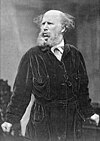
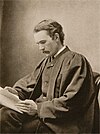
Sir Edward Grey, 3rd Bt., 1st Viscount Grey of Fallodon (25 April 1862 – 7 September 1933) was British Foreign Secretary from 1905 to 1916.
Best Edward Grey, 1st Viscount Grey of Fallodon Quotes
Shortest
Earliest
Explore our curated collection of the most famous and impactful Edward Grey, 1st Viscount Grey of Fallodon quotes.
“I hate war, I hate war.”

Unsourced — Primary work/page citation not yet verified in the QuotesCosmos archive. Per our Unnamed Sources & Verification Policy, quotes without confirmed primary editions are explicitly marked Unsourced while under editorial review.
“[T]he real root of Liberalism is fairness.”

Unsourced — Primary work/page citation not yet verified in the QuotesCosmos archive. Per our Unnamed Sources & Verification Policy, quotes without confirmed primary editions are explicitly marked Unsourced while under editorial review.
“If her independence goes, the independence of Holland will follow.”

Unsourced — Primary work/page citation not yet verified in the QuotesCosmos archive. Per our Unnamed Sources & Verification Policy, quotes without confirmed primary editions are explicitly marked Unsourced while under editorial review.
“I did not...regard anything except my own letters and official papers as deciding policy.”
Unsourced — Primary work/page citation not yet verified in the QuotesCosmos archive. Per our Unnamed Sources & Verification Policy, quotes without confirmed primary editions are explicitly marked Unsourced while under editorial review.
“[The United States is like] a gigantic boiler. Once the fire is lighted under it there is no limit to the power it can generate.”
Unsourced — Primary work/page citation not yet verified in the QuotesCosmos archive. Per our Unnamed Sources & Verification Policy, quotes without confirmed primary editions are explicitly marked Unsourced while under editorial review.
“The most awful responsibility is resting upon the Government in deciding what to advise the House of Commons to do.”
Unsourced — Primary work/page citation not yet verified in the QuotesCosmos archive. Per our Unnamed Sources & Verification Policy, quotes without confirmed primary editions are explicitly marked Unsourced while under editorial review.
“If there is one thing more than another that I have striven to secure during the last seven years it is that we should not incur any increase of Imperial liabilities.”
Unsourced — Primary work/page citation not yet verified in the QuotesCosmos archive. Per our Unnamed Sources & Verification Policy, quotes without confirmed primary editions are explicitly marked Unsourced while under editorial review.
“[W]hat really determines the Foreign Policy of this country is the question of sea power. It is the Naval question which underlies the whole of our European Foreign Policy.”

Unsourced — Primary work/page citation not yet verified in the QuotesCosmos archive. Per our Unnamed Sources & Verification Policy, quotes without confirmed primary editions are explicitly marked Unsourced while under editorial review.
“When we are bored, when we are out of tune, when we have little worries, it clears our feelings and changes our mood if we can get in touch with the beauty of the natural world.”

Unsourced — Primary work/page citation not yet verified in the QuotesCosmos archive. Per our Unnamed Sources & Verification Policy, quotes without confirmed primary editions are explicitly marked Unsourced while under editorial review.
“Poetry is the greatest literature, and pleasure in poetry is the greatest of literary pleasures. It is also the least easy to attain and there are some people who never do attain it.”
Unsourced — Primary work/page citation not yet verified in the QuotesCosmos archive. Per our Unnamed Sources & Verification Policy, quotes without confirmed primary editions are explicitly marked Unsourced while under editorial review.
Unsourced — Primary work/page citation not yet verified in the QuotesCosmos archive. Per our Unnamed Sources & Verification Policy, quotes without confirmed primary editions are explicitly marked Unsourced while under editorial review.
“First of all, let me say, very shortly, that we have consistently worked with a single mind, with all the earnestness in our power, to preserve peace. The House may be satisfied on that point. We have always done it.”
Unsourced — Primary work/page citation not yet verified in the QuotesCosmos archive. Per our Unnamed Sources & Verification Policy, quotes without confirmed primary editions are explicitly marked Unsourced while under editorial review.
“Had it not been for the Anglo-Russian agreement the Russians would either have interfered to keep the Shah on the throne or their troops would have been in Tehran long before this.”
Unsourced — Primary work/page citation not yet verified in the QuotesCosmos archive. Per our Unnamed Sources & Verification Policy, quotes without confirmed primary editions are explicitly marked Unsourced while under editorial review.
“I am inwardly boiling with indignation at this stupid prejudiced attempt to dictate policy to us and break us, for that is what it is really; and if it goes on I shall be for taking the hottest election, upon who is to govern the country, that has ever been in our time.”
Unsourced — Primary work/page citation not yet verified in the QuotesCosmos archive. Per our Unnamed Sources & Verification Policy, quotes without confirmed primary editions are explicitly marked Unsourced while under editorial review.
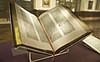
“Books are the greatest and the most satisfactory of recreations. I mean the use of books for pleasure. Without books, without having acquired the power of reading for pleasure, none of us can be independent, but if we can read we have a sure defence against boredom in solitude.”
Unsourced — Primary work/page citation not yet verified in the QuotesCosmos archive. Per our Unnamed Sources & Verification Policy, quotes without confirmed primary editions are explicitly marked Unsourced while under editorial review.
“The example would spread, and I am not without hope that one or more great European Powers would eventually make a similar agreement with us and the United States. The effect of such agreements on disarmament and the morale of international politics would be considerable.”
Unsourced — Primary work/page citation not yet verified in the QuotesCosmos archive. Per our Unnamed Sources & Verification Policy, quotes without confirmed primary editions are explicitly marked Unsourced while under editorial review.
“If, when the time comes, the United States proposes the reduction or limitation of Armaments as a subject for consideration, I am sure that our delegates will be instructed cordially to support the proposal. And the initiative of the United States in this matter would be very welcome to us.”

Unsourced — Primary work/page citation not yet verified in the QuotesCosmos archive. Per our Unnamed Sources & Verification Policy, quotes without confirmed primary editions are explicitly marked Unsourced while under editorial review.
“The British, French, and Russian Governments mutually engage not to conclude peace separately during the present war. The three Governments agree that when terms of peace come to be discussed no one of the Allies will demand terms of peace without the previous agreement of each of the other Allies.”

Unsourced — Primary work/page citation not yet verified in the QuotesCosmos archive. Per our Unnamed Sources & Verification Policy, quotes without confirmed primary editions are explicitly marked Unsourced while under editorial review.
“I believe it is absolutely true that for the peace of Europe good relations between France and Germany are the key to the situation. It should be the business of the British Government not to take a side with France or with Germany, but to collaborate in the cementing of good feelings between them.”

Unsourced — Primary work/page citation not yet verified in the QuotesCosmos archive. Per our Unnamed Sources & Verification Policy, quotes without confirmed primary editions are explicitly marked Unsourced while under editorial review.
“England will make no unprovoked attack upon Germany and pursue no aggressive policy towards her. Aggression upon Germany is not the subject, and forms no part, of any Treaty understanding or combination to which England is now a party, nor will she become a party to anything that has such an object.”

Unsourced — Primary work/page citation not yet verified in the QuotesCosmos archive. Per our Unnamed Sources & Verification Policy, quotes without confirmed primary editions are explicitly marked Unsourced while under editorial review.
“I should advocate a much larger scheme and propose to abolish altogether the political privilege of Peers, and substitute for the House of Lords a new Second Chamber, much smaller in size than the House of Commons, based upon the elective principle, with if desired a minority of distinguished life-members.”
Unsourced — Primary work/page citation not yet verified in the QuotesCosmos archive. Per our Unnamed Sources & Verification Policy, quotes without confirmed primary editions are explicitly marked Unsourced while under editorial review.
“Diplomatic intervention took place last week on our part. What can diplomatic intervention do now? We have great and vital interests in the independence—and integrity is the least part—of Belgium. If Belgium is compelled to submit to allow her neutrality to be violated, of course the situation is clear.”

Unsourced — Primary work/page citation not yet verified in the QuotesCosmos archive. Per our Unnamed Sources & Verification Policy, quotes without confirmed primary editions are explicitly marked Unsourced while under editorial review.
“With the United States in the League of Nations, war may be prevented and armaments discouraged... Without a League of Nations, the old order of things will revive, the old consequences will recur, there will again be some great catastrophe of war in which the United States will again find itself compelled to intervene.”

Unsourced — Primary work/page citation not yet verified in the QuotesCosmos archive. Per our Unnamed Sources & Verification Policy, quotes without confirmed primary editions are explicitly marked Unsourced while under editorial review.
“Mr. Lloyd George is a colleague with whom I have always been on the best of terms personally, and the Budget raises the money required in a way which presses much less, I believe, upon the poorer classes than any alternative that could be devised.”
Unsourced — Primary work/page citation not yet verified in the QuotesCosmos archive. Per our Unnamed Sources & Verification Policy, quotes without confirmed primary editions are explicitly marked Unsourced while under editorial review.
“I never had any qualm of conscience as to my motives and intentions before the war. I used to torture myself by questioning whether by more foresight or wisdom I could have prevented the war, but I have come to think that no human individual could have prevented it. Nothing could have prevented it except a change of the Prussian nature.”
Unsourced — Primary work/page citation not yet verified in the QuotesCosmos archive. Per our Unnamed Sources & Verification Policy, quotes without confirmed primary editions are explicitly marked Unsourced while under editorial review.
“My own personal feeling is that we are justified in any measures which will result in taking the Congo out of the hands of the King. He has forfeited every claim to it he ever had; and to take the Congo away from him without compensation would be less than justice, for it would leave him still with all the gains he has made by his monstrous system.”
Unsourced — Primary work/page citation not yet verified in the QuotesCosmos archive. Per our Unnamed Sources & Verification Policy, quotes without confirmed primary editions are explicitly marked Unsourced while under editorial review.
“Reform of the House of Lords is necessary to give us a Second Chamber in sympathy with the movements of public opinion, and emancipated from class feeling. Some machinery is necessary to make the deliberate and considered opinion of a substantial majority of the elected House of Commons prevail over the House of Lords in the event of a deadlock between them.”
Unsourced — Primary work/page citation not yet verified in the QuotesCosmos archive. Per our Unnamed Sources & Verification Policy, quotes without confirmed primary editions are explicitly marked Unsourced while under editorial review.
“[T]here is no comparison between the importance of the German Navy to Germany, and the importance of our Navy to us. Our Navy to us is what their Army is to them. To have a strong Navy would increase their prestige, their diplomatic influence, their power of protecting their commerce; but as regards us—it is not a matter of life and death to them that it is to us.”
Unsourced — Primary work/page citation not yet verified in the QuotesCosmos archive. Per our Unnamed Sources & Verification Policy, quotes without confirmed primary editions are explicitly marked Unsourced while under editorial review.
“We worked for peace up to the last moment, and beyond the last moment. How hard, how persistently, and how earnestly we strove for peace last week the House will see from the papers that will be before it. But that is over, as far as the peace of Europe is concerned. We are now face to face with a situation and all the consequences which it may yet have to unfold.”
Unsourced — Primary work/page citation not yet verified in the QuotesCosmos archive. Per our Unnamed Sources & Verification Policy, quotes without confirmed primary editions are explicitly marked Unsourced while under editorial review.
“Last week I stated that we were working for peace not only for this country, but to preserve the peace of Europe. Today events move so rapidly that it is exceedingly difficult to state with technical accuracy the actual state of affairs, but it is clear that the peace of Europe cannot be preserved. Russia and Germany, at any rate, have declared war upon each other.”
Unsourced — Primary work/page citation not yet verified in the QuotesCosmos archive. Per our Unnamed Sources & Verification Policy, quotes without confirmed primary editions are explicitly marked Unsourced while under editorial review.
“If, on the other hand, by some misfortune or blunder our Entente with France were to be broken up, France will have to make her own terms with Germany. And Germany will again be in a position to keep us on bad terms with Germany and Russia, and to make herself predominant upon the Continent. Then, sooner or later, there will be war between us and Germany, in which much else may be involved.”
Unsourced — Primary work/page citation not yet verified in the QuotesCosmos archive. Per our Unnamed Sources & Verification Policy, quotes without confirmed primary editions are explicitly marked Unsourced while under editorial review.
“It is a grave matter that a treaty should be broken or arbitrarily set aside; it is still graver when the idea of the sanctity of treaties being the foundation of peace is considered so chimerical that no one who upholds it can be honest, and that resentment at the breach of a treaty must necessarily be pretence and hypocrisy. That all this is of bad augury for the future of Europe is certain.”

Unsourced — Primary work/page citation not yet verified in the QuotesCosmos archive. Per our Unnamed Sources & Verification Policy, quotes without confirmed primary editions are explicitly marked Unsourced while under editorial review.
“In all the talk of who was responsible for the war, don't forget that Germany, who ostensibly went to war with Russia only because she was Austria's ally, was as a matter of fact at war with Russia on August 1, when Austria was still discussing with Russia in a friendly way. It was not till 5 days later that Russia and Austria were at war, and had they been left alone there would have been no war.”
Unsourced — Primary work/page citation not yet verified in the QuotesCosmos archive. Per our Unnamed Sources & Verification Policy, quotes without confirmed primary editions are explicitly marked Unsourced while under editorial review.
“There is no question of England aiming at the hegemony of the world. Her Army is far too small for any such ambition. All we desire is to be able to live on equal terms. But when we see Germany, having created already the largest Army in the world, proceeding apparently towards the creation of the largest Fleet also, we are naturally anxious as to whether it is equal terms or hegemony that Germany wants.”

Unsourced — Primary work/page citation not yet verified in the QuotesCosmos archive. Per our Unnamed Sources & Verification Policy, quotes without confirmed primary editions are explicitly marked Unsourced while under editorial review.
“They all knew what Anti-Semitic feeling was, and what it gave rise to. But there was another view of the Jewish race, that of millions of persecuted people who had been, through generation after generation, scattered without homes and without hope; and he said frankly that if it was the intention to attempt to provide a refuge and a home for people of that description in the British dominions it would have his entire sympathy.”

Unsourced — Primary work/page citation not yet verified in the QuotesCosmos archive. Per our Unnamed Sources & Verification Policy, quotes without confirmed primary editions are explicitly marked Unsourced while under editorial review.
“So far from regarding this as a test case on which the future of the League of Nations depends, I say that whatever happens in the Far East, I shall feel that the League of Nations is as important as ever to the peace of the world. The real test of the success of the League is not to be found in what happens in the Far East. It is going to be found in the way nations, especially of Europe, succeeded in reducing their expenditure on armaments.”
Unsourced — Primary work/page citation not yet verified in the QuotesCosmos archive. Per our Unnamed Sources & Verification Policy, quotes without confirmed primary editions are explicitly marked Unsourced while under editorial review.
“The war would have been avoided if a Conference had been agreed to. Germany on the flimsiest pretext shut the door against it. I would wreck nothing on a point of form, and expressed myself ready to acquiesce in any method of mediation that Germany could suggest if mine was not acceptable. Mediation, I said, was ready to come into operation by any method that Germany thought possible, if only Germany would press the button in the interests of peace.”
Unsourced — Primary work/page citation not yet verified in the QuotesCosmos archive. Per our Unnamed Sources & Verification Policy, quotes without confirmed primary editions are explicitly marked Unsourced while under editorial review.
“The strength of the House of Commons is dissipated, its time consumed, and its dignity and reputation are threatened by the attempt to manage in one Assembly the purely local interests of different parts of the United Kingdom. Without some large measure of Devolution in the United Kingdom the House of Commons cannot attend to Imperial affairs and matters which concern the country as a whole.”

Unsourced — Primary work/page citation not yet verified in the QuotesCosmos archive. Per our Unnamed Sources & Verification Policy, quotes without confirmed primary editions are explicitly marked Unsourced while under editorial review.
“Some one, I think it was Isaac Disraeli, said that he who did not make himself acquainted with the best thoughts of the greatest writers would one day be mortified to observe that his best thoughts are their indifferent ones, and it is from the great books that have stood the test of time that we shall get, not only the most lasting pleasure, but a standard by which to measure our own thoughts, the thoughts of others, and the excellence of the literature of our own day.”
Unsourced — Primary work/page citation not yet verified in the QuotesCosmos archive. Per our Unnamed Sources & Verification Policy, quotes without confirmed primary editions are explicitly marked Unsourced while under editorial review.
“There is much poetry for which most of us do not care, but with a little trouble when we are young we may find one or two poets whose poetry, if we get to know it well, will mean very much to us and become part of ourselves... The love for such poetry which comes to us when we are young will not disappear as we get older; it will remain in us, becoming an intimate part of our own being, and will be an assured source of strength, consolation, and delight.”
Unsourced — Primary work/page citation not yet verified in the QuotesCosmos archive. Per our Unnamed Sources & Verification Policy, quotes without confirmed primary editions are explicitly marked Unsourced while under editorial review.
“We are going to suffer, I am afraid, terribly in this war, whether we are in it or whether we stand aside. Foreign trade is going to stop, not because trade routes are closed, but because there is no trade at the other end. Continental nations engaged in war all their populations, all their energies, all their wealth, engaged in a desperate struggle they cannot carry on the trade with us that they are carrying on in times of peace, whether we are parties to the war or whether we are not.”

Unsourced — Primary work/page citation not yet verified in the QuotesCosmos archive. Per our Unnamed Sources & Verification Policy, quotes without confirmed primary editions are explicitly marked Unsourced while under editorial review.
“[O]ur friendship with France and Russia is in itself a guarantee that neither of them will pursue a provocative or aggressive policy towards Germany, who is their neighbour and ours. Any support we would give France and Russia in times of trouble would depend entirely on the feeling of Parliament and public feeling here when the trouble came, and both France and Russia know perfectly well that British public opinion would not give support to provocative or aggressive action against Germany.”

Unsourced — Primary work/page citation not yet verified in the QuotesCosmos archive. Per our Unnamed Sources & Verification Policy, quotes without confirmed primary editions are explicitly marked Unsourced while under editorial review.
“[T]he real decision of the electors must be taken now, as always, on large principles and broad lines. Their real choice lies between those who are for the House of Lords and those who are for the House of Commons. I am frankly on the side of the House of Commons. A majority for the House of Lords means also a majority for Tariff Reform. I am for Free Trade as well as for a free Constitution, and for these I ask your support.”
Unsourced — Primary work/page citation not yet verified in the QuotesCosmos archive. Per our Unnamed Sources & Verification Policy, quotes without confirmed primary editions are explicitly marked Unsourced while under editorial review.
“A friend came to see me on one of the evenings of the last week — he thinks it was on Monday, August 3rd. We were standing at a window of my room in the Foreign Office. It was getting dusk, and the lamps were being lit in the space below... My friend recalls that I remarked on this with the words, "The lamps are going out all over Europe: we shall not see them lit again in our life-time."”
Unsourced — Primary work/page citation not yet verified in the QuotesCosmos archive. Per our Unnamed Sources & Verification Policy, quotes without confirmed primary editions are explicitly marked Unsourced while under editorial review.
“I feel that the continuance of the independence and integrity of the Netherlands depends upon our success in this war... If Germany were to win in this war, she would doubtless retain Belgium, or at least Antwerp, and Dutch independence would be a thing of the past: it never could emerge from the German shadow, and would soon be absorbed. Our victory, on the other hand, would assure not only Dutch integrity, but Dutch independence and freedom.”
Unsourced — Primary work/page citation not yet verified in the QuotesCosmos archive. Per our Unnamed Sources & Verification Policy, quotes without confirmed primary editions are explicitly marked Unsourced while under editorial review.
“The smaller States in that region of Europe ask but one thing. Their one desire is that they should be left alone and independent. The one thing they fear is, I think, not so much that their integrity but that their independence should be interfered with. If in this war, which is before Europe, the neutrality of those countries is violated, if the troops of one of the combatants violate its neutrality and no action be taken to resent it, at the end of the war, whatever the integrity may be, the independence will be gone.”
Unsourced — Primary work/page citation not yet verified in the QuotesCosmos archive. Per our Unnamed Sources & Verification Policy, quotes without confirmed primary editions are explicitly marked Unsourced while under editorial review.
“I cannot provoke controversy by saying it is the Liberal Party, but it is Liberalism which has made England what it is to-day, and it will endure. As long as people are what they are in this country, they will be liberal, even if they do not belong to the Liberal Party. We have been attached to individual liberty and tolerance, but the British people have shown that, while they prized liberty above everything and would not tolerate the loss of liberty, they also have the conviction that order must be preserved in order that liberty may be enjoyed.”

Unsourced — Primary work/page citation not yet verified in the QuotesCosmos archive. Per our Unnamed Sources & Verification Policy, quotes without confirmed primary editions are explicitly marked Unsourced while under editorial review.
“As to the Navy, we must keep ahead of the German Navy... If our Fleet was not superior to the German Fleet, our very independence would depend on Germany’s goodwill; and even granting that people like Jagow would not take advantage of such a situation, there must be others who would take advantage of it, or be compelled by public opinion in Germany to do so. The Prussian mentality is such that to be on really good terms with it one must be able to deal with it as an equal.”
Unsourced — Primary work/page citation not yet verified in the QuotesCosmos archive. Per our Unnamed Sources & Verification Policy, quotes without confirmed primary editions are explicitly marked Unsourced while under editorial review.
“The future liberties of Europe depend upon regulating disputes between nations by justice and law; and upon maintaining the sanctity of treaties, and thus making peace secure. That is the policy for which the League of Nations was created to be the instrument. If it does not prevail, then there will be renewed competition in armaments; nations ruining themselves by expensive preparations for new war, which will make their ruin complete. The result will be wars or more revolutions, probably both; and that in no very long time. No nation, not even France herself, will escape the catastrophe.”
Unsourced — Primary work/page citation not yet verified in the QuotesCosmos archive. Per our Unnamed Sources & Verification Policy, quotes without confirmed primary editions are explicitly marked Unsourced while under editorial review.
“I welcome the Agreement, and I hope...the Government will lose no opportunity of making it a working model for other cases where it is possible to do so. I welcome this Agreement because I believe not only will it be a working model for other cases, but because it has in it great possibilities for keeping us in contact with France, with a growth of friendly relations to the advantage of both countries, and the many points of contact in various parts of the world will not, as in the past, be occasion for dispute and debate, but will be so many opportunities for the interchange of international courtesies.”
Unsourced — Primary work/page citation not yet verified in the QuotesCosmos archive. Per our Unnamed Sources & Verification Policy, quotes without confirmed primary editions are explicitly marked Unsourced while under editorial review.
“What Herr Ballin said was, apparently, that I was indirectly responsible for the war, because I had not pledged this country definitely either to support France and Russia, or not to support them. In the former event, Austria would have given way; in the latter, France and Russia would have given way. This was not true; but what it suggested to me was how far Herr Ballin was from understanding what democratic government meant. The idea that one individual, sitting in a room in the Foreign Office, could pledge a great democracy definitely by his word, in advance, either to take part in a great war or to abstain from taking part in it, is absurd.”
Unsourced — Primary work/page citation not yet verified in the QuotesCosmos archive. Per our Unnamed Sources & Verification Policy, quotes without confirmed primary editions are explicitly marked Unsourced while under editorial review.
“Of all the joys of life which may fairly come under the head of recreation there is nothing more great, more refreshing, more beneficial in the widest sense of the word, than a real love of the beauty of the world... to those who have some feeling that the natural world has beauty in it I would say, Cultivate this feeling and encourage it in every way you can. Consider the seasons, the joy of the spring, the splendour of the summer, the sunset colours of the autumn, the delicate and graceful bareness of winter trees, the beauty of snow, the beauty of light upon water, what the old Greek called the unnumbered smiling of the sea.”

Unsourced — Primary work/page citation not yet verified in the QuotesCosmos archive. Per our Unnamed Sources & Verification Policy, quotes without confirmed primary editions are explicitly marked Unsourced while under editorial review.
“If France is beaten in a struggle of life and death, beaten to her knees, loses her position as a great power, becomes subordinate to the will and power of one greater than herself—consequences which I do not anticipate, because I am sure that France has the power to defend herself with all the energy and ability and patriotism which she has shown so often—still, if that were to happen and if Belgium fell under the same dominating influence, and then Holland, and then Denmark, then would not Mr. William Gladstone’s words come true, that just opposite to us there would be a common interest against the unmeasured aggrandizement of any power?”

Unsourced — Primary work/page citation not yet verified in the QuotesCosmos archive. Per our Unnamed Sources & Verification Policy, quotes without confirmed primary editions are explicitly marked Unsourced while under editorial review.
“Without the United States, the present League of Nations may become little better than a League of Allies for armed self-defence against a revival of Prussian militarism or against a military sequel to Bolshevism in Russia... The great object of the League of Nations is to prevent future war and to discourage, from the beginning, the growth of aggressive armaments which could lead to war. For this purpose it should operate at once, and begin here and now in the first years of peace to establish a reputation for justice, moderation, and strength. Without the United States it will have neither the overwhelming physical nor moral force behind it that it should have.”
Unsourced — Primary work/page citation not yet verified in the QuotesCosmos archive. Per our Unnamed Sources & Verification Policy, quotes without confirmed primary editions are explicitly marked Unsourced while under editorial review.
“Now, a word as to our policy. It is not anti-German. But it must be independent of Germany. We wish to keep and strengthen the Entente with France... [T]he Entente with France means good and easy relations for both of us with Italy and Spain. This means that peace and quietness are assured among the four Western Powers of Europe. To complete this foundation, we wish to make an arrangement with Russia, that will remove the old traditions of enmity, and ensure that, if we are not close friends, at any rate we do not quarrel. If all this can be done, we shall take care that it is not used to provoke Germany, or to score off her, if she will only accept it, and not try to make mischief.”
Unsourced — Primary work/page citation not yet verified in the QuotesCosmos archive. Per our Unnamed Sources & Verification Policy, quotes without confirmed primary editions are explicitly marked Unsourced while under editorial review.
“Have you read Bernhardi's and Treitschke's books? I really knew nothing of them before the war, but they reveal a deliberate purpose and an animosity that are appalling. Every ideal except that of force is abolished: and truth, honour, kindliness, uprightness are all to go by the board in the interest of Germany and force. War is deliberately to be made horrible and terrible, that people may fear to resist German domination... It would be better that we should all perish than fall under the domination of the Junker spirit and people.”

Unsourced — Primary work/page citation not yet verified in the QuotesCosmos archive. Per our Unnamed Sources & Verification Policy, quotes without confirmed primary editions are explicitly marked Unsourced while under editorial review.
“My own belief is that the policy of the present Opposition would lead to national ruin and consequent distress and suffering such as this country has never yet seen and the severity of which is immeasurable. The prospect of this disaster is a national danger, and our object should be to secure a Government with strength and authority to avert it. For this purpose it is essential to support the policy of economy and sound finance... [T]he position of finance and currency is the national danger: that economy and sound finance and the national crisis should be the paramount issue put before the country. If this is done, I have no doubt that the steady, strong sense of the national character can be relied on to save the country.”
Unsourced — Primary work/page citation not yet verified in the QuotesCosmos archive. Per our Unnamed Sources & Verification Policy, quotes without confirmed primary editions are explicitly marked Unsourced while under editorial review.
“Colonel Roosevelt liked the song of the blackbird so much that he was almost indignant that he had not heard more of its reputation before. He said everybody talked about the song of the thrush; it had a great reputation, but the song of the blackbird, though less often mentioned, was much better than that of the thrush. He wanted to know the reason of this injustice and kept asking the question of himself and me. At last he suggested that the name of the bird must have injured its reputation. I suppose the real reason is that the thrush sings for a longer period of the year than the blackbird and is a more obtrusive singer, and that so few people have sufficient feeling about bird songs to care to discriminate.”
Unsourced — Primary work/page citation not yet verified in the QuotesCosmos archive. Per our Unnamed Sources & Verification Policy, quotes without confirmed primary editions are explicitly marked Unsourced while under editorial review.
“As far as the forces of the Crown are concerned, we are ready. I believe the Prime Minister and my right honorable friend, the First Lord of the Admiralty, have no doubt what ever that the readiness and the efficiency of those forces were never at a higher mark than they are today, and never was there a time when our confidence was more justified in the power of the Navy to protect our commerce and to protect our shores. The thought is with us always of the suffer and misery entailed, from which no country in Europe will escape by abstention, and from which no neutrality will save us. The amount of harm that must be done by an enemy ship to our trade is infinitesimal, compared with the amount of harm that must be done by the economic condition that is caused on the Continent.”
Unsourced — Primary work/page citation not yet verified in the QuotesCosmos archive. Per our Unnamed Sources & Verification Policy, quotes without confirmed primary editions are explicitly marked Unsourced while under editorial review.
“The situation has developed so rapidly that technically, as regards the condition of the war, it is most difficult to describe what has actually happened. I wanted to bring out the underlying issues which would affect our own conduct and our own policy, and to put them clearly. I have now put the vital facts before the House, and if, as seems not improbable, we are forced, and rapidly forced, to take our stand upon these issues, then I believe, when the country realizes what is at stake, what the real issues are, the magnitude of the impending dangers in the west of Europe, which I have endeavored to describe to the House, we shall be supported throughout, not only by the House of Commons, but by the determination, the resolution, the courage, and endurance of the whole country.”
Unsourced — Primary work/page citation not yet verified in the QuotesCosmos archive. Per our Unnamed Sources & Verification Policy, quotes without confirmed primary editions are explicitly marked Unsourced while under editorial review.
“The maintenance of civilised relations between States depends on the keeping of treaties, as the maintenance of civilised relations between individuals depends on the keeping of contracts. Moreover, many of us believe that unless the League of Nations be used and supported there is no prospect of future peace in Europe. It seemed clear that a Treaty (the Covenant of the League) had been broken; and a serious, perhaps a fatal, blow dealt to the League. In Italy apparently no one believes that this view of the importance of treaties and of the League can be held from any motive but unreasoning hostility to Italy, or equally from unreasoning friendship to Greece, or from some mean calculation of material interest.”
Unsourced — Primary work/page citation not yet verified in the QuotesCosmos archive. Per our Unnamed Sources & Verification Policy, quotes without confirmed primary editions are explicitly marked Unsourced while under editorial review.
“A great European war under modern conditions would be a catastrophe for which previous wars afforded no precedent. In old days nations could collect only portions of their men and resources at a time and dribble them out by degrees. Under modern conditions whole nations could be mobilized at once and their whole life-blood and resources poured out in a torrent. Instead of a few hundreds of thousands of men meeting each other in war, millions would now meet, and modern weapons would multiply manifold the power of destruction. The financial strain and the expenditure of wealth would be incredible. I thought this must be obvious to everyone else, as it seemed obvious to me; and that, if once it became apparent that we were on the edge, all the Great Powers would call a halt and recoil from the abyss.”
Unsourced — Primary work/page citation not yet verified in the QuotesCosmos archive. Per our Unnamed Sources & Verification Policy, quotes without confirmed primary editions are explicitly marked Unsourced while under editorial review.
“If we alone, among the great Powers, gave up the competition and sank into a position of inferiority, what good should we do? None whatever—no good to ourselves because we cannot realise great ideals of social reform at home when we are holding our existence at the mercy, the caprice if you like, of another nation. That is not feasible. If we fall into a position of inferiority our self-respect is gone, and it removes that enterprise which is essential both to the material success of industry and to the carrying out of great ideals, and you fall into a state of apathy. We should cease to count for anything amongst the nations of Europe, and we should be fortunate if our liberty was left, and we did not become the conscript appendage of some stronger Power. That is a brutal way of stating the case, but it is the truth.”
Unsourced — Primary work/page citation not yet verified in the QuotesCosmos archive. Per our Unnamed Sources & Verification Policy, quotes without confirmed primary editions are explicitly marked Unsourced while under editorial review.
“And what is the German programme as we gather it from the speech of the Chancellor and public utterances in Germany now? Germany to control the destiny of all other nations; to be "the shield of peace and freedom of big and small nations," those are the Chancellor's words; an iron peace and a freedom under a Prussian shield and under German supremacy. Germany supreme, Germany alone would be free: free to break international treaties; free to crush when it pleased her; free to refuse all mediation; free to go to war when it suited her; free, when she did go to war, to break again all rules of civilisation and humanity on land and at sea... Germany is to be supreme. The freedom of other nations is to be that which Germany metes out to them. Such is apparently the conclusion to be drawn from the German Chancellor's speech.”
Unsourced — Primary work/page citation not yet verified in the QuotesCosmos archive. Per our Unnamed Sources & Verification Policy, quotes without confirmed primary editions are explicitly marked Unsourced while under editorial review.
“The great countries of Europe are raising enormous revenues, and something like half of them is being spent on naval and military preparations. You may call it national insurance, that is perfectly true, but it is equally true that half the national revenue of the great countries in Europe is being spent on what is, after all, preparations to kill each other. Surely the extent to which this expenditure has grown really becomes a satire, and a reflection on civilisation. Not in our generation, perhaps, but if it goes on at the rate at which it has recently increased, sooner or later I believe it will submerge that civilisation. The burden already has shown itself in national credit—less in our national credit than in the national credit of other nations—but sooner or later, if it goes on at this rate, it must lead to national bankruptcy.”
Unsourced — Primary work/page citation not yet verified in the QuotesCosmos archive. Per our Unnamed Sources & Verification Policy, quotes without confirmed primary editions are explicitly marked Unsourced while under editorial review.
“[A]nd to this the German Minister of Finance adds that the heavy burden of thousands of millions must be borne through decades, not by Germany, but by those whom she is pleased to call the instigators of the war. In other words, for decades to come Germany claims that whole nations who have resisted her should labour to pay her tribute in the form of war indemnities. Not on such terms can peace be concluded or the life of other nations than Germany be free, or even tolerable. The speeches of the German Chancellor and Finance Minister make it appear that Germany is fighting for supremacy and tribute. If that is so, and as long as it is so, our allies and we are fighting, and must fight, for the right to live, not under German supremacy, but in real freedom and safety.”
Unsourced — Primary work/page citation not yet verified in the QuotesCosmos archive. Per our Unnamed Sources & Verification Policy, quotes without confirmed primary editions are explicitly marked Unsourced while under editorial review.
“In the present crisis it has not been possible to secure the peace of Europe: because there has been little time, and there has been a disposition—at any rate in some quarters on which I will not dwell—to force things rapidly to an issue, at any rate to the great risk of peace, and, as we now know, the result of that is that the policy of peace as far as the great powers generally are concerned is in danger. I do not want to dwell on that, and to comment on it, and to say where the blame seems to us lie, which powers were most in favor of peace, which were most disposed to risk war or endanger peace, because I would like the House to approach this crisis in which we are now from the point of view of British interests, British honor, and British obligations, free from all passion as to why peace has not yet been preserved.”
Unsourced — Primary work/page citation not yet verified in the QuotesCosmos archive. Per our Unnamed Sources & Verification Policy, quotes without confirmed primary editions are explicitly marked Unsourced while under editorial review.
“This coal strike is the beginning of a revolution. We shall, I suppose, make it an orderly and gradual revolution, but labour intends to have a larger share and has laid hold of power. Power has passed from the King to the nobles, from the nobles to the middle classes and through them to the House of Commons, and now it is passing from the House of Commons to the Trades Unions. It will have to be recognised that the millions of men employed in great industries have a stake in those industries and must share in the control of them. The days when the owners said "this industry is mine; I alone must control it and be master in my own house" are passing away... I do think the good temper and spirit of compromise that is inherent in English character will save us from catastrophe.”
Unsourced — Primary work/page citation not yet verified in the QuotesCosmos archive. Per our Unnamed Sources & Verification Policy, quotes without confirmed primary editions are explicitly marked Unsourced while under editorial review.
“The French fleet is now in the Mediterranean, and the northern and western coasts of France are absolutely undefended. The French fleet is being concentrated in the Mediterranean, the situation is very different from what it used to be, because the friendship which has grown up between the two countries has given them a sense of security that there was nothing to be feared from us. My own feeling is that if a foreign fleet, engaged in a war which France had not sought, and in which she had not been the aggressor, came down the English Channel and bombarded and battered the undefended coasts of France, we could not stand aside and see this going on practically within sight of our eyes, with our arms folded, looking on dispassionately, doing nothing. I believe that would be the feeling of this country.”
Unsourced — Primary work/page citation not yet verified in the QuotesCosmos archive. Per our Unnamed Sources & Verification Policy, quotes without confirmed primary editions are explicitly marked Unsourced while under editorial review.
“For many years we have had a long-standing friendship with France. I remember well the feeling in the House and my own feeling—for I spoke on the subject, I think, when the late Government made their agreement with France—the warm and cordial feeling resulting from the fact that these two nations, who had had perpetual differences in the past, had cleared these differences away; I remember saying, I think, that it seemed to me that some benign influence had been at work to produce the cordial atmosphere that had made that possible. But how far that friendship entails obligation—it has been a friendship between the nations and ratified by the nations—how far that entails an obligation, let every man look into his own heart, and his own feelings, and construe the extent of the obligation for himself.”

Unsourced — Primary work/page citation not yet verified in the QuotesCosmos archive. Per our Unnamed Sources & Verification Policy, quotes without confirmed primary editions are explicitly marked Unsourced while under editorial review.
“It is sometimes said that this is a pleasure-seeking age. Whether it be a pleasure-seeking age or not, I doubt whether it is a pleasure-finding age. We are supposed to have great advantages in many ways over our predecessors. There is, on the whole, less poverty and more wealth. There are supposed to be more opportunities for enjoyment: there are moving pictures, motor-cars, and many other things which are now considered means of enjoyment and which our ancestors did not possess, but I do not judge from what I read in the newspapers that there is more content. Indeed, we seem to be living in an age of discontent. It seems to be rather on the increase than otherwise and is a subject of general complaint. If so it is worth while considering what it is that makes people happy, what they can do to make themselves happy, and it is from that point of view that I wish to speak on recreation.”
Unsourced — Primary work/page citation not yet verified in the QuotesCosmos archive. Per our Unnamed Sources & Verification Policy, quotes without confirmed primary editions are explicitly marked Unsourced while under editorial review.
“The wrong policy is the policy which Germany pursued after 1870. Germany made the Triple Alliance an exclusive Alliance, forced the pace in armaments, and that policy produced conditions in Europe which led to war in 1914. I am convinced that is the true reading of history. Precisely because of that, I think it would be a grave blunder for the Allies who won the last War to repeat the German policy of 1870, and so far they have not done so. On the contrary, they have pursued what seems to me the right policy—the League of Nations policy and Locarno... They have got Germany coming into the League of Nations—on to the Council—on equal terms; they have got Germany to come into the joint security, both for France and Germany, of the Treaty of Locarno. That was the right policy. If the Government was about to go and make a separate political Entente with France it would be a departure from the right policy.”

Unsourced — Primary work/page citation not yet verified in the QuotesCosmos archive. Per our Unnamed Sources & Verification Policy, quotes without confirmed primary editions are explicitly marked Unsourced while under editorial review.
“Europe was some time ago divided into two, I will not say hostile, but certainly not friendly, camps—the Triple Alliance and the Dual Alliance. There has been a tendency to obliteration of the hard-and-fast lines between those two camps... There has been a tendency to more direct inter-communication, more direct settlement; and this has been more favourable to a frank adjustment of the relations between these Powers; and we in our turn have now taken part in making a sort of arrangement with a view to creating greater frankness and friendliness between ourselves and France. It would not have been possible to establish this Agreement between ourselves and France some years ago, because the atmosphere... between ourselves and France may be said to have been of the glacial epoch. It has happily now changed to a genial epoch.”
Unsourced — Primary work/page citation not yet verified in the QuotesCosmos archive. Per our Unnamed Sources & Verification Policy, quotes without confirmed primary editions are explicitly marked Unsourced while under editorial review.
“[O]ne or two others, and certainly the Australians, require a good deal of education. They must realise that, if we denounce the Japanese Alliance, we can no longer rely on the assistance of the Japanese Fleet, and we must prepare for the possibility that Japan may enter into arrangements which may bring her into hostility with us. This would mean maintaining on the China Station a Fleet superior not only to the Japanese Fleet, but also to any probable combination of the Japanese Fleet with any other Fleet in those waters. This would, of course, be in addition to maintaining the two-Power standard in European waters, both in home waters and in the Mediterranean. The logical conclusion of denouncing the Japanese Alliance would be that Australia and New Zealand should undertake the burden of naval supremacy in China seas. This they are neither willing nor able to do.”
Unsourced — Primary work/page citation not yet verified in the QuotesCosmos archive. Per our Unnamed Sources & Verification Policy, quotes without confirmed primary editions are explicitly marked Unsourced while under editorial review.
“One more instance I will give of his interest and his knowledge. We were passing under a fir tree when we heard a small song in the tree above us. We stopped and I said that was the song of a golden-crested wren. He listened very attentively while the bird repeated its little song, as its habit is. Then he said, "I think that is exactly the same song as that of a bird that we have in America"; and that was the only English song that he recognized as being the same as any bird song in America. Some time afterwards I met a bird expert in the Natural History Museum in London and told him this incident, and he confirmed what Colonel Roosevelt had said, that the song of this bird would be about the only song that the two countries had in common. I think that a very remarkable instance of minute and accurate knowledge on the part of Colonel Roosevelt. It was the business of the bird expert in London to know about birds. Colonel Roosevelt's knowledge was a mere incident acquired, not as part of the work of his life, but entirely outside it.”

Unsourced — Primary work/page citation not yet verified in the QuotesCosmos archive. Per our Unnamed Sources & Verification Policy, quotes without confirmed primary editions are explicitly marked Unsourced while under editorial review.
“It has become only too apparent that in the proposal of a conference which we made, which Russia, France, and Italy agreed to, and which Germany vetoed, lay the only hope of peace. And it was such a good hope! Serbia had accepted nearly all of the Austrian ultimatum, severe and violent as it was. The points outstanding could have been settled honourably and fairly in a conference in a week. Germany ought to have known, and must have known, that we should take the same straight and honourable part in it that she herself recognised we had taken in the Balkan Conference, working not for diplomatic victory of a group but for fair settlement, and ready to side against any attempt to exploit the Conference unfairly to the disadvantage of Germany or Austria. The refusal of a Conference by Germany, though it did not decide British participation in the war, did in fact decide the question of peace or war for Europe, and sign the death warrant of the many hundreds of thousands who have been killed in this war.”
Unsourced — Primary work/page citation not yet verified in the QuotesCosmos archive. Per our Unnamed Sources & Verification Policy, quotes without confirmed primary editions are explicitly marked Unsourced while under editorial review.
“There is no danger, no appreciable danger, of our being involved in any considerable trouble in Europe, unless there is some Power, or group of Powers, in Europe which has the ambition of achieving what I would call the Napoleonic policy. That would be a policy on the part of the strongest Power in Europe, or of the strongest group of Powers in Europe, of first of all separating the other Powers outside their own group from each other, taking them in detail, crushing them singly if need be, and forcing each into the orbit of the policy of the strongest Power, or of the strongest group of Powers... I do feel this very strongly, that...if while that process was going on we were appealed to for help and sat by and looked on and did nothing, then people ought to realise that the result would be one great combination in Europe, outside which we should be left without a friend. If that was the result, then the naval situation would be this, that if we meant to keep the command of the sea we should have to estimate as a probable combination against us of fleets in Europe not two Powers but five Powers.”

Unsourced — Primary work/page citation not yet verified in the QuotesCosmos archive. Per our Unnamed Sources & Verification Policy, quotes without confirmed primary editions are explicitly marked Unsourced while under editorial review.
“I should like to say a word to those who regard the Far Eastern question as a test case, and say that by it the League of Nations will stand or fall. In my opinion, it is a matter peculiarly unfitted to be a test case... There are people who ask, could not the League of Nations have done more? I will ask what more could it have done. The League of Nations is not a separate entity, but it is composed of the Governments of those countries who are members of the League and it cannot act unless those Governments are all in agreement that action should be taken. Does anyone suppose that those Governments would be in favour of going to war in this case, or, if they had been in favour of going to war, that they would have been successful? I do not like the idea of resorting to war to prevent war. What we wish is to prevent war. War is a disagreeable thing, even if it is to be resorted to in order to prevent a war. It is too much like lighting a large fire in order to prevent a smaller one. Anyhow this instance seems to me peculiarly unsuitable for any action of that sort on the part of the League of Nations.”
Unsourced — Primary work/page citation not yet verified in the QuotesCosmos archive. Per our Unnamed Sources & Verification Policy, quotes without confirmed primary editions are explicitly marked Unsourced while under editorial review.
“The moral is obvious: it is that great armaments lead inevitably to war. If there are armaments on one side there must be armaments on other sides. While one nation arms, other nations cannot tempt it to aggression by remaining defenceless...The increase of armaments, that is intended in each nation to produce consciousness of strength, and a sense of security, does not produce these effects. On the contrary, it produces a consciousness of the strength of other nations and a sense of fear. Fear begets suspicion and distrust and evil imaginings of all sorts, till each government feels it would be criminal and a betrayal of its own country not to take every precaution, while every government regards every precaution of every other government as evidence of hostile intent...The enormous growth of armaments in Europe, the sense of insecurity and fear caused by them - it was these that made war inevitable. This, it seems to me, is the truest reading of history, and the lesson that the present should be learning from the past in the interest of future peace, the warning to be handed on to those who come after us.”

Unsourced — Primary work/page citation not yet verified in the QuotesCosmos archive. Per our Unnamed Sources & Verification Policy, quotes without confirmed primary editions are explicitly marked Unsourced while under editorial review.
“I see Jagow says I could have prevented the war, but the German veto on a Conference struck out of my hand the only effective instrument I could use for peace... Bethmann-Hollweg's objection to a Conference was absolute; and after he had refused and Russia had accepted a Conference I could not protest against Russian preparation for the event of war, especially as the German preparations were far ahead of the Russian, and I could not promise the armed support of this country to Russia. Von Jagow says Germany could not have accepted a Conference as she would have lost prestige, but he admits she lost no prestige in the London Conference of 1912-3, and the precedent of that was a guarantee that there would have been neither diplomatic defeat nor victory for anyone, but a fair conduct of another Conference composed of the same persons and conducted in the same way. And as Serbia had submitted to about nine-tenths of the Austrian Ultimatum there could have been no loss of prestige in submitting the one or two points outstanding to a fair Conference.”

Unsourced — Primary work/page citation not yet verified in the QuotesCosmos archive. Per our Unnamed Sources & Verification Policy, quotes without confirmed primary editions are explicitly marked Unsourced while under editorial review.
“With regard to that portion of the petition which asks that special precautions may be taken to prevent danger to the lives of the "Golocanda" passengers by submarine attack, I feel bound to express my astonishment that the Austro-Hungarian Government, themselves one of the authors of the danger, should have thought it seemly to endorse this request. Not content, however, with doing this, the Austro-Hungarian Government further state that they will hold His Majesty's Government responsible for the lives and well-being of those passengers, "the majority of whom are better-class people." I am at a loss to know why "better-class people" should be thought more entitled to protection from submarine attack than any other non-combatants, but, however that may be, the only danger of the character indicated which threatens any of the passengers on the Golonda is one for which the Austro-Hungarian and German Governments are alone responsible. It is they and they only who have instituted and carry on a novel and inhuman form of warfare, which disregards all the hitherto accepted principles of international law, and necessarily endangers the lives of non-combatants.”
Unsourced — Primary work/page citation not yet verified in the QuotesCosmos archive. Per our Unnamed Sources & Verification Policy, quotes without confirmed primary editions are explicitly marked Unsourced while under editorial review.
“Though I know something about British birds I should have been lost and confused among American birds, of which unhappily I know little or nothing. Colonel Roosevelt not only knew more about American birds than I did about British birds, but he knew about British birds also. What he had lacked was an opportunity of hearing their songs, and you cannot get a knowledge of the songs of birds in any other way than by listening to them.
We began our walk, and when a song was heard I told him the name of the bird. I noticed that as soon as I mentioned the name it was unnecessary to tell him more. He knew what the bird was like. It was not necessary for him to see it. He knew the kind of bird it was, its habits and appearance. He just wanted to complete his knowledge by hearing the song. He had, too, a very trained ear for bird songs, which cannot be acquired without having spent much time in listening to them. How he had found time in that busy life to acquire this knowledge so thoroughly it is almost impossible to imagine, but there the knowledge and training undoubtedly were. He had one of the most perfectly trained ears for bird songs that I have ever known, so that if three or four birds were singing together he would pick out their songs, distinguish each, and ask to be told each separate name; and when farther on we heard any bird for a second time, he would remember the song from the first telling and be able to name the bird himself.”
We began our walk, and when a song was heard I told him the name of the bird. I noticed that as soon as I mentioned the name it was unnecessary to tell him more. He knew what the bird was like. It was not necessary for him to see it. He knew the kind of bird it was, its habits and appearance. He just wanted to complete his knowledge by hearing the song. He had, too, a very trained ear for bird songs, which cannot be acquired without having spent much time in listening to them. How he had found time in that busy life to acquire this knowledge so thoroughly it is almost impossible to imagine, but there the knowledge and training undoubtedly were. He had one of the most perfectly trained ears for bird songs that I have ever known, so that if three or four birds were singing together he would pick out their songs, distinguish each, and ask to be told each separate name; and when farther on we heard any bird for a second time, he would remember the song from the first telling and be able to name the bird himself.”

Unsourced — Primary work/page citation not yet verified in the QuotesCosmos archive. Per our Unnamed Sources & Verification Policy, quotes without confirmed primary editions are explicitly marked Unsourced while under editorial review.
“We are in the presence of a European conflagration; can anybody set limits to the consequences that may arise out of it? Let us assume today we stand aside in an attitude of neutrality, saying ‘No, we cannot undertake and engage to help either party in this conflict.’ Let us suppose the French fleet is withdrawn from the Mediterranean; and let us assume that the consequences—which are already tremendous in what has happened in Europe even to countries which are at peace—in fact, equally whether countries are at peace or at war—let us assume that out of that come consequences unforeseen, which make it necessary at a sudden moment that, in defense of vital British interests, we shall go to war; and let us assume which is quite possible—that Italy, who is no neutral—because, as I understand, she considers that this war is an aggressive war, and that the Triple Alliance being a defensive alliance her obligation did not arise—let us assume that consequences which are not yet foreseen and which, perfectly legitimately consulting her own interests, make Italy depart from her attitude of neutrality at a time when we are forced in defense of vital British interest ourselves to fight—what then will be the position of the Mediterranean? It might be that at some crucial moment those consequences would be forced upon us because our trade routes in the Mediterranean might be vital to this country.”
Unsourced — Primary work/page citation not yet verified in the QuotesCosmos archive. Per our Unnamed Sources & Verification Policy, quotes without confirmed primary editions are explicitly marked Unsourced while under editorial review.
“I am not attempting here a full appreciation of Colonel Roosevelt. He will be known for all time as one of the great men of America. I am only giving you this personal recollection as a little contribution to his memory, as one that I can make from personal knowledge and which is now known only to myself. His conversation about birds was made interesting by quotations from poets. He talked also about politics, and in the whole of his conversation about them there was nothing but the motive of public spirit and patriotism. I saw enough of him to know that to be with him was to be stimulated in the best sense of the word for the work of life. Perhaps it is not yet realised how great he was in the matter of knowledge as well as in action. Everybody knows that he was a great man of action in the fullest sense of the word. The Press has always proclaimed that. It is less often that a tribute is paid to him as a man of knowledge as well as a man of action. Two of your greatest experts in natural history told me the other day that Colonel Roosevelt could, in that department of knowledge, hold his own with experts. His knowledge of literature was also very great, and it was knowledge of the best. It is seldom that you find so great a man of action who was also a man of such wide and accurate knowledge. I happened to be impressed by his knowledge of natural history and literature and to have had first-hand evidence of both, but I gather from others that there were other fields of knowledge in which he was also remarkable.”

Unsourced — Primary work/page citation not yet verified in the QuotesCosmos archive. Per our Unnamed Sources & Verification Policy, quotes without confirmed primary editions are explicitly marked Unsourced while under editorial review.
Edward Grey, 1st Viscount Grey of Fallodon Quotes by Topic
Find exactly what you are looking for by browsing this categorized list of Edward Grey, 1st Viscount Grey of Fallodon quotes by topic.
Edward Grey, 1st Viscount Grey of Fallodon on Books
“Books are the greatest and the most satisfactory of recreations. I mean the use of books for pleasure. Without books, without having acquired the power of reading for pleasure, none of us can be independent, but if we can read we have a sure defence against boredom in solitude.”
Unsourced — Primary work/page citation not yet verified in the QuotesCosmos archive. Per our Unnamed Sources & Verification Policy, quotes without confirmed primary editions are explicitly marked Unsourced while under editorial review.
What Edward Grey, 1st Viscount Grey of Fallodon Said About Others
Discover personal opinions Edward Grey, 1st Viscount Grey of Fallodon shared regarding contemporaries.
Edward Grey, 1st Viscount Grey of Fallodon on Theodore Roosevelt
“I am not attempting here a full appreciation of Colonel Roosevelt. He will be known for all time as one of the great men of America. I am only giving you this personal recollection as a little contribution to his memory, as one that I can make from personal knowledge and which is now known only to myself. His conversation about birds was made interesting by quotations from poets. He talked also about politics, and in the whole of his conversation about them there was nothing but the motive of public spirit and patriotism. I saw enough of him to know that to be with him was to be stimulated in the best sense of the word for the work of life. Perhaps it is not yet realised how great he was in the matter of knowledge as well as in action. Everybody knows that he was a great man of action in the fullest sense of the word. The Press has always proclaimed that. It is less often that a tribute is paid to him as a man of knowledge as well as a man of action. Two of your greatest experts in natural history told me the other day that Colonel Roosevelt could, in that department of knowledge, hold his own with experts. His knowledge of literature was also very great, and it was knowledge of the best. It is seldom that you find so great a man of action who was also a man of such wide and accurate knowledge. I happened to be impressed by his knowledge of natural history and literature and to have had first-hand evidence of both, but I gather from others that there were other fields of knowledge in which he was also remarkable.”

Unsourced — Primary work/page citation not yet verified in the QuotesCosmos archive. Per our Unnamed Sources & Verification Policy, quotes without confirmed primary editions are explicitly marked Unsourced while under editorial review.
Quotes About Edward Grey, 1st Viscount Grey of Fallodon
Gain deeper perspective through quotes about Edward Grey, 1st Viscount Grey of Fallodon from others.
Arthur Balfour on Edward Grey, 1st Viscount Grey of Fallodon
“He is a most effective speaker. He wins by force of character. His speech at the beginning of the war was a most remarkable effort—probably the most historic speech which has been made for a hundred years. It was a speech which will alter the map of Europe. His studied moderation is one of his great assets. In the speech referred to, he put the case so moderately that he carried the whole country with him. Our unanimity is very largely due to Grey's speech. It was a wonderful achievement. He is a curious combination of the old-fashioned Whig and the Socialist, and it is interesting to observe how the two strains are always appearing. He is a great figure and a great man.”

Unsourced — Primary work/page citation not yet verified in the QuotesCosmos archive. Per our Unnamed Sources & Verification Policy, quotes without confirmed primary editions are explicitly marked Unsourced while under editorial review.
Lord Robert Cecil on Edward Grey, 1st Viscount Grey of Fallodon 2 quotes
“He was indeed, more than almost any man I have known, free from petty jealousies and personal vanities. Indeed, partly owing to his dislike for urban life and his consequent perpetual wish to get out of office, he was politically completely disinterested. For all the years in which he was connected with the Foreign Office, I don't think there was a single day in which he would not have welcomed resignation. He held office because he thought it his duty to do so, and for no other reason. This conception that he was there to do a certain job which it would be cowardly for him to abandon was always present with him. Until he had been released by the action of others he could not go.”
Unsourced — Primary work/page citation not yet verified in the QuotesCosmos archive. Per our Unnamed Sources & Verification Policy, quotes without confirmed primary editions are explicitly marked Unsourced while under editorial review.
William Ewart Gladstone on Edward Grey, 1st Viscount Grey of Fallodon
“I never knew in a man such aptitude for political life and such disinclination for it.”

Unsourced — Primary work/page citation not yet verified in the QuotesCosmos archive. Per our Unnamed Sources & Verification Policy, quotes without confirmed primary editions are explicitly marked Unsourced while under editorial review.
Prince Lichnowsky on Edward Grey, 1st Viscount Grey of Fallodon 2 quotes
“When I returned to London in December 1913...the Liman von Sanders question had led to a fresh crisis in our relations with Russia. Sir Edward Grey, not without concern, pointed out to me the excitement there was in Petrograd over it. "I have never seen them so excited," he said. I received instructions from Berlin to request the Minister to exert a restraining influence in Petrograd, and to assist us in settling the dispute. Sir Edward gladly did this, and his intervention contributed in no small degree to smooth the matter over. My good relations with Sir Edward and his great influence in Petrograd were repeatedly made use of in similar fashion when we wished to attain anything there... During the fateful days of July 1914 Sir Edward said to me, "When you want to obtain anything in Petrograd you always apply to me, but if I appeal to you for your influence in Vienna you fail me."”
Unsourced — Primary work/page citation not yet verified in the QuotesCosmos archive. Per our Unnamed Sources & Verification Policy, quotes without confirmed primary editions are explicitly marked Unsourced while under editorial review.
David Lloyd George on Edward Grey, 1st Viscount Grey of Fallodon
“To those who doubt his claim to real ability it may be pointed out that no-one has so long filled a prominent place in English public life as Viscount Grey, and received so small a portion of public attack and obloquy. To have thus successfully avoided attracting the lightning which generally plays round the heads of the prominent is no mean feat of genius, and though his record may show little else of outstanding achievement, this fact at least testifies to his skill... Whatever his failure to observe the Decalogue, he at least showed consummate piety in his manner of keeping the last and greatest commandment: "Though shalt not be found out." Maybe he never sacrificed himself in any way for anybody; but at least he was able to inspire in others the loyalty to sacrifice themselves for him.”

Unsourced — Primary work/page citation not yet verified in the QuotesCosmos archive. Per our Unnamed Sources & Verification Policy, quotes without confirmed primary editions are explicitly marked Unsourced while under editorial review.
About Edward Grey, 1st Viscount Grey of Fallodon
Sir Edward Grey, 3rd Bt., 1st Viscount Grey of Fallodon (25 April 1862 – 7 September 1933) was British Foreign Secretary from 1905 to 1916.