Link Copied!
E. W. Hobson Quotes (1856-1933)
Mathematician

About E. W. Hobson
Ernest William Hobson FRS (27 October 1856 – 19 April 1933) was an English mathematician, now remembered mostly for his books, some of which broke new ground in their coverage in English of topics from mathematical analysis.
Best E. W. Hobson Quotes
Shortest
Earliest
Explore our curated collection of the most famous and impactful E. W. Hobson quotes.
“Success, even in a comparatively limited field, is some compensation for failure in a wider field of endeavour.”
“The quality of the human mind, considered in its collective aspect, which most strikes us, in surveying this record, is its colossal patience.”
“The objects of abstract Geometry possess in absolute precision properties which are only approximately realized in the corresponding objects of physical Geometry.”
“The history of our problem falls into three periods marked out by fundamentally distinct differences in respect of method, of immediate aims, and in equipment in possession of intellectual tools.”

“We are able to appreciate the difficulties which in each age restricted the progress which could be made within limits which could not be surpassed by the means then available; we see how, when new weapons became available, a new race of thinkers turned to the further consideration of the problem with a new outlook.”

“Perhaps the least inadequate description of the general scope of modern Pure Mathematics—I will not call it a definition—would be to say that it deals with form, in a very general sense of the term; this would include algebraic form, functional relationship, the relations of order in any ordered set of entities such as numbers, and the analysis of the peculiarities of form of groups of operations.”
“If the question be raised, why such an apparently special problem as the quadrature of the circle, is deserving of the sustained interest which has attained to it, and which it still possesses, the answer is only to be found in a scrutiny of the history of the problem, and especially in the closeness of the connection of that history with the general history of Mathematical Science.”

“As in Mathematics in general, the really great advances, embodying new ideas of far-reaching fruitfullness, have been due to an exceedingly small number of great men... there are periods when for a long series of centuries no advance was made; when the results obtained in a more enlightened age have been forgotten. We observe the times of revival, when the older learning has been rediscovered, and when the results of the progress made in distinct countries have been made available as the starting points of new efforts and a fresh period of activity.”
“In the year 1775, the Paris Academy found it necessary to protect its officials against the waste of time and energy involved in examining the efforts of circle squarers. It passed a resolution... that no more solutions were to be examined of the problem of the duplication of the cube, the trisection of the angle, the quadrature of the circle, and the same resolution should apply to machines for exhibiting perpetual motion. an account... drawn up by Condorcet... is appended. It is interesting to remark that the strength of the conviction of Mathematicians that the solution of the problem is impossible, more than a century before an irrefutable proof of the correctness of that conviction was discovered.”

“Who has studied the works of such men as Euler, Lagrange, Cauchy, Riemann, Sophus Lie, and Weierstrass, can doubt that a great mathematician is a great artist? The faculties possessed by such men, varying greatly in kind and degree with the individual, are analogous with those requisite for constructive art. Not every mathematician possesses in a specially high degree that critical faculty which finds its employment in the perfection of form, in conformity with the ideal of logical completeness; but every great mathematician possesses the rarer faculty of constructive imagination.”
“I have said that mathematics is the oldest of the sciences; a glance at its more recent history will show that it has the energy of perpetual youth. The output of contributions to the advance of the science during the last century and more has been so enormous that it is difficult to say whether pride in the greatness of achievement in this subject, or despair at his inability to cope with the multiplicity of its detailed developments, should be the dominant feeling of the mathematician. Few people outside of the small circle of mathematical specialists have any idea of the vast growth of mathematical literature. The Royal Society Catalogue contains a list of nearly thirty-nine thousand papers on subjects of Pure Mathematics alone, which have appeared in seven hundred serials during the nineteenth century. This represents only a portion of the total output, the very large number of treatises, dissertations, and monographs published during the century being omitted.”
“The second part of the book... contains an exposition of the first principles of the theory of complex quantities; hitherto, the very elements of this theory have not been easily accessible to the English student, except recently in Prof. Chrystal's excellent treatise on Algebra. The subject of Analytical Trigonometry has been too frequently presented to the student in the state in which it was left by Euler, before the researches of Cauchy, Abel, Gauss, and others, had placed the use of imaginary quantities, and especially the theory of infinite series and products, where real or complex quantities are involved, on a firm scientific basis. In the Chapter on the exponential theorem and logarithms, I have ventured to introduce the term "generalized logarithm" for the doubly infinite series of values of the logarithm of a quantity.”

“The opinion appears to be gaining ground that this very general conception of functionality, born on mathematical ground, is destined to supersede the narrower notion of causation, traditional in connection with the natural sciences. As an abstract formulation of the idea of determination in its most general sense, the notion of functionality includes and transcends the more special notion of causation as a one-sided determination of future phenomena by means of present conditions; it can be used to express the fact of the subsumption under a general law of past, present, and future alike, in a sequence of phenomena. From this point of view the remark of Huxley that Mathematics "knows nothing of causation" could only be taken to express the whole truth, if by the term "causation" is understood "efficient causation." The latter notion has, however, in recent times been to an increasing extent regarded as just as irrelevant in the natural sciences as it is in Mathematics; the idea of thorough-going determinancy, in accordance with formal law, being thought to be alone significant in either domain.”
“A great department of thought must have its own inner life, however transcendent may be the importance of its relations to the outside. No department of science, least of all one requiring so high a degree of mental concentration as Mathematics, can be developed entirely, or even mainly, with a view to applications outside its own range. The increased complexity and specialisation of all branches of knowledge makes it true in the present, however it may have been in former times, that important advances in such a department as Mathematics can be expected only from men who are interested in the subject for its own sake, and who, whilst keeping an open mind for suggestions from outside, allow their thought to range freely in those lines of advance which are indicated by the present state of their subject, untrammelled by any preoccupation as to applications to other departments of science. Even with a view to applications, if Mathematics is to be adequately equipped for the purpose of coping with the intricate problems which will be presented to it in the future by Physics, Chemistry and other branches of physical science, many of these problems probably of a character which we cannot at present forecast, it is essential that Mathematics should be allowed to develop freely on its own lines.”
“A new point is determined in Euclidean Geometry exclusively in one of the three following ways:
Having given four points A, B, C, D, not all incident on the same straight line, then
(1) Whenever a point P exists which is incident both on (A,B) and on (C,D), that point is regarded as determinate.
(2) Whenever a point P exists which is incident both on the straight line (A,B) and on the circle C(D), that point is regarded as determinate.
(3) Whenever a point P exists which is incident on both the circles A(B), C(D), that point is regarded as determinate.
The cardinal points of any figure determined by a Euclidean construction are always found by means of a finite number of successive applications of some or all of these rules (1), (2) and (3). Whenever one of these rules is applied it must be shown that it does not fail to determine the point. Euclid's own treatment is sometimes defective as regards this requisite.
In order to make the practical constructions which correspond to these three Euclidean modes of determination, correponding to (1) the ruler is required, corresponding to (2) both ruler and compass, and corresponding to (3) the compass only.
...it is possible to develop Euclidean Geometry with a more restricted set of postulations. For example it can be shewn that all Euclidean constructions can be carried out by means of (3) alone...”
“The first period embraces the time between the first records of empirical determinations of the ratio of the circumference to the diameter of a circle until the invention of the Differential and Integral Calculus, in the middle of the seventeenth century. This period, in which the ideal of an exact construction was never entirely lost sight of, and was occasionally supposed to have been attained, was the geometrical period, in which the main activity consisted in the approximate determination of π by the calculation of the sides or the areas of regular polygons in- and circum-scribed to the circle. The theoretical groundwork of the method was the Greek method of Exhaustions. In the earlier part of the period the work of approximation was much hampered by the backward condition of arithmetic due to the fact that our present system of numerical notation had not yet been invented; but the closeness of the approximations obtained in spite of this great obstacle are truly surprising. In the later part of this first period methods were devised by which the approximations to the value of π were obtained which required only a fraction of the labour involved in the earlier calculations. At the end of the period the method was developed to so high a degree of perfection that no further advance could be hoped for on the lines laid down by the Greek Mathematicians; for further progress more powerful methods were required.”
“The actual evolution of mathematical theories proceeds by a process of induction strictly analogous to the method of induction employed in building up the physical sciences; observation, comparison, classification, trial, and generalisation are essential in both cases. Not only are special results, obtained independently of one another, frequently seen to be really included in some generalisation, but branches of the subject which have been developed quite independently of one another are sometimes found to have connections which enable them to be synthesised in one single body of doctrine. The essential nature of mathematical thought manifests itself in the discernment of fundamental identity in the mathematical aspects of what are superficially very different domains. A striking example of this species of immanent identity of mathematical form was exhibited by the discovery of that distinguished mathematician . . . Major MacMahon, that all possible Latin squares are capable of enumeration by the consideration of certain differential operators. Here we have a case in which an enumeration, which appears to be not amenable to direct treatment, can actually be carried out in a simple manner when the underlying identity of the operation is recognised with that involved in certain operations due to differential operators, the calculus of which belongs superficially to a wholly different region of thought from that relating to Latin squares.”

“The second period, which commenced in the middle of the seventeenth century, and lasted for about a century, was characterized by the application of the powerful analytical methods provided by the new Analysis to the determination of analytical expressions for the number π in the form of convergent series, products, and continued fractions. The older geometrical forms of investigation gave way to analytical processes in which the functional relationship as applied to the trigonometrical functions became prominent. The new methods of systematic representation gave rise to a race of calculators of π, who, in their consciousness of the vastly enhance means of calculation placed in their hands by the new Analysis, proceeded to apply the formulae to obtain numerical approximations to π to ever larger numbers of places of decimals, although their efforts were quite useless for the purpose of throwing light upon the true nature of that number. At the end of this period no knowledge had been obtained as regards the number π of the kind likely to throw light upon the possibility or impossibility of the old historical problem of the ideal construction; it was not even definitely known whether the number is rational or irrational. However, one great discovery, destined to furnish the clue to the solution of the problem, was made at this time; that of the relation between the two numbers π and e, as a particular case of those exponential expressions for the trigonometrical functions which form one of the most fundamentally important of the analytical weapons forged during this period.”
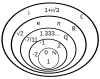
“In the third period, which lasted from the middle of the eighteenth century until late in the nineteenth century, attention was turned to critical investigations of the true nature of the number π itself, considered independently of mere analytical representations. The number was first studied in respect of its rationality or irrationality, and it was shown to be really irrational. When the discovery was made of the fundamental distinction between algebraic and transcendental numbers, i.e. between those numbers which can be, and those numbers which cannot be, roots of an algebraical equation with rational coefficients, the question arose to which of these categories the number π belongs. It was finally established by a method which involved the use of some of the most modern of analytical investigation that the number π was transcendental. When this result was combined with the results of a critical investigation of the possibilities of a Euclidean determination, the inferences could be made that the number π, being transcendental, does not admit of a construction either by a Euclidean determination, or even by a determination in which the use of other algebraic curves besides the straight line and the circle are permitted. The answer to the original question thus obtained is of a conclusive negative character; but it is one in which a clear account is given of the fundamental reasons upon which that negative answer rests.”
“Much of the skill of the true mathematical physicist and of the mathematical astronomer consists in the power of adapting methods and results carried out on an exact mathematical basis to obtain approximations sufficient for the purposes of physical measurements. It might perhaps be thought that a scheme of Mathematics on a frankly approximative basis would be sufficient for all the practical purposes of application in Physics, Engineering Science, and Astronomy, and no doubt it would be possible to develop, to some extent at least, a species of Mathematics on these lines. Such a system would, however, involve an intolerable awkwardness and prolixity in the statements of results, especially in view of the fact that the degree of approximation necessary for various purposes is very different, and thus that unassigned grades of approximation would have to be provided for. Moreover, the mathematician working on these lines would be cut off from the chief sources of inspiration, the ideals of exactitude and logical rigour, as well as from one of his most indispensable guides to discovery, symmetry, and permanence of mathematical form. The history of the actual movements of mathematical thought through the centuries shows that these ideals are the very life-blood of the science, and warrants the conclusion that a constant striving toward their attainment is an absolutely essential condition of vigorous growth. These ideals have their roots in irresistible impulses and deep-seated needs of the human mind, manifested in its efforts to introduce intelligibility in certain great domains of the world of thought.”
E. W. Hobson Quotes by Topic
Find exactly what you are looking for by browsing this categorized list of E. W. Hobson quotes by topic.
E. W. Hobson on Mathematical analysis 2 quotes
“[D]uring the last half-century, number and measurable quantity have been separated... the idea of number alone has been recognized as the foundation upon which Mathematical Analysis rests, and the theory of extensive magnitude is now regarded as a separate department in which the methods of Analysis are applicable, but as no longer forming part of the foundation upon which Analysis itself rests.”

E. W. Hobson on History of science 2 quotes
“In former times the Mathematician and the Physicist were usually one and the same man. Even as late as the eighteenth century this was very generally the case; it was in the nineteenth century that the increasing complexity of both Sciences produced that separation of the two departments which has become continually more marked, and has reached its extreme point in our own time. ...The chief drawback is that each specialist, from lack of interest in, and knowledge of, the progress of the other great department, is apt to miss that large source of inspiration in his own study which is supplied by the other one.”

E. W. Hobson on Utilitarianism
“The utilitarian notion...has the fatal limitation that it attempts to assign limits to what is, or may in the future become, useful, in accordance with a more or less arbitrarily restricted standard of what constitutes utility.”

E. W. Hobson on Mathematics
“Who has studied the works of such men as Euler, Lagrange, Cauchy, Riemann, Sophus Lie, and Weierstrass, can doubt that a great mathematician is a great artist? The faculties possessed by such men, varying greatly in kind and degree with the individual, are analogous with those requisite for constructive art. Not every mathematician possesses in a specially high degree that critical faculty which finds its employment in the perfection of form, in conformity with the ideal of logical completeness; but every great mathematician possesses the rarer faculty of constructive imagination.”
E. W. Hobson on Philosophy of science
“The Philosopher, in his reflections on spatial and temporal relations, on number and quantity, on matter and motion, is in a region of thought in which the boundary between his own domain and that of the Mathematician is almost non-existent. The Epistemologist has always to take Mathematical knowledge as a kind of touchstone on which to test his theories of the nature of knowledge. The dominant views in various departments of philosophical thinking have been modified in important points by the results of recent Mathematical research, and will, I think, in the future, be further modified from the same quarter.”
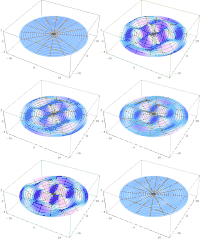
E. W. Hobson on Bessel function
“I remember... at a Board meeting at Cambridge, the subject of Bessel's functions came into the discussion... to include them in an examination syllabus. Their utility in connection with Applied Mathematics having been referred to, a very great Pure Mathematician who was present ejaculated—"Yes, Bessel's functions are very beautiful functions, in spite of their having practical applications." It would have been interesting to have heard what this great man would have said if he had known that Professor Perry would one day propose the desecration of these beautiful functions by recommending them as suitable playthings for young boys.”
E. W. Hobson on History of mathematics
“If the question be raised, why such an apparently special problem, as that of the quadrature of the circle, is deserving of the sustained interest which has attached to it, and which it still possesses, the answer is only to be found in a scrutiny of the history of the problem, and especially in the closeness of the connection of that history with the general history of Mathematical Science. It would be difficult to select another special problem, an account of the history of which would afford so good an opportunity of obtaining a glimpse of so many of the main phases of the development of general Mathematics; and it is for that reason, even more than on account of the intrinsic interest of the problem, that I have selected it...”

E. W. Hobson on History of trigonometry
“The second part of the book... contains an exposition of the first principles of the theory of complex quantities; hitherto, the very elements of this theory have not been easily accessible to the English student, except recently in Prof. Chrystal's excellent treatise on Algebra. The subject of Analytical Trigonometry has been too frequently presented to the student in the state in which it was left by Euler, before the researches of Cauchy, Abel, Gauss, and others, had placed the use of imaginary quantities, and especially the theory of infinite series and products, where real or complex quantities are involved, on a firm scientific basis. In the Chapter on the exponential theorem and logarithms, I have ventured to introduce the term "generalized logarithm" for the doubly infinite series of values of the logarithm of a quantity.”

E. W. Hobson on History of optics
“Perhaps the most striking example of the services which have been rendered to Science by the contemplation of various models, many or all of which have ultimately been found to be inadequate for complete representation, is to be found in the history of Optics. The various forms of the corpuscular theory, and of the wave theory, of Light were all attempts to represent the phenomena by models, the value of which had to be estimated by developing their Mathematical consequences, and comparing these consequences with the results of experiments. The adynamical theory of Fresnel, the elastic solid theory of the ether developed by Navier, Cauchy, Poisson, and Green, the labile ether theory developed by Cauchy and Kelvin, and the rotational ether theory of MacCullagh were all efforts of the kind... indicated; they were all successful in some greater or less degree in the representation of the phenomena, and they all stimulated Physicists to further efforts to obtain more minute knowledge of those phenomena. Even such an inadequate theory as that of Fresnel led to the very interesting observation by Humphry Lloyd of the phenomenon of conical refraction in crystals, as the result of the prediction by Rowan Hamilton that the phenomenon was a necessary consequence of the Mathematical fact that Fresnel's wave surface in a biaxal crystal possesses four conical points.”

E. W. Hobson on History of calculus
“The foundations of the new analysis were laid in the second half of the seventeenth century when Newton... and Leibnitz... founded the Differential and Integral Calculus, the ground having been to some extent prepared by the labours of Huyghens, Fermat, Wallis, and others. By this great invention of Newton and Leibnitz, and with the help of the brothers James Bernoulli... and John Bernoulli... the ideas and methods of the Mathematicians underwent a radical transformation which naturally had a profound effect upon our problem. The first effect of the new analysis was to replace the old geometrical or semi-geometrical methods of calculating pi by others in which analytical expressions formed according to definite laws were used, and which could be employed for the calculation of pi to any assigned degree of approximation. The first result of this kind was due to John Wallis... undergraduate at Emmanuel College, Fellow of Queen's College, and afterwards Savilian Professor of Geometry at Oxford. He was the first to formulate the modern arithmetic theory of limits, the fundamental importance of which, however, has only during the last half century received its due recognition; it is now regarded as lying at the very foundation of analysis. Wallis gave in his Arithmetica Infinitorum the expressionfrac{pi}{2} = frac {2}{1}cdotfrac {2}{3}cdotfrac {4}{3}cdotfrac {4}{5}cdotfrac {6}{5}cdotfrac {6}{7}cdotfrac {8}{7}cdotfrac {8}{9}cdotsfor pi as an infinite product, and he shewed that the approximation obtained at stopping at any fraction in the expression on the right is in defect or in excess of the value frac{pi}{2} according as the fraction is proper or improper. This expression was obtained by an ingenious method depending on the expression for frac{pi}{8} the area of a semi-circle of diameter 1 as the definite integral intlimits_{0}^{1}sqrt{x-x^2}dx. The expression has the advantage over that of Vieta that the operations required are all rational ones.”

E. W. Hobson on Generalized coordinates
“In the history of Science it is possible to find many cases in which the tendency of Mathematics to express itself in the most abstract forms has proved to be of ultimate service in the physical order of ideas. Perhaps the most striking example is to be found in the development of abstract Dynamics. The greatest treatise which the world has seen, on this subject, is Lagrange's Mécanique Analytique, published in 1788. ...conceived in the purely abstract Mathematical spirit ...Lagrange's idea of reducing the investigation of the motion of a dynamical system to a form dependent upon a single function of the generalized coordinates of the system was further developed by Hamilton and Jacobi into forms in which the equations of motion of a system represent the conditions for a stationary value of an integral of a single function. The extension by Routh and Helmholtz to the case in which "ignored co-ordinates" are taken into account, was a long step in the direction of the desirable unification which would be obtained if the notion of potential energy were removed by means of its interpretation as dependent upon the kinetic energy of concealed motions included in the dynamical system. The whole scheme of abstract Dynamics thus developed upon the basis of Lagrange's work has been of immense value in theoretical Physics, and particularly in statistical Mechanics... But the most striking use of Lagrange's conception of generalized co-ordinates was made by Clerk Maxwell, who in this order of ideas, and inspired on the physical side by... Faraday, conceived and developed his dynamical theory of the Electromagnetic field, and obtained his celebrated equations. The form of Maxwell's equations enabled him to perceive that oscillations could be propagated in the electromagnetic field with the velocity of light, and suggested to him the Electromagnetic theory of light. Heinrich Herz, under the direct inspiration of Maxwell's ideas, demonstrated the possibility of setting up electromagnetic waves differing from those of light only in respect of their enormously greater length. We thus see that Lagrange's work... was an essential link in a chain of investigation of which one result... gladdens the heart of the practical man, viz. wireless telegraphy.”
E. W. Hobson on Statistical mechanics
“In the history of Science it is possible to find many cases in which the tendency of Mathematics to express itself in the most abstract forms has proved to be of ultimate service in the physical order of ideas. Perhaps the most striking example is to be found in the development of abstract Dynamics. The greatest treatise which the world has seen, on this subject, is Lagrange's Mécanique Analytique, published in 1788. ...conceived in the purely abstract Mathematical spirit ...Lagrange's idea of reducing the investigation of the motion of a dynamical system to a form dependent upon a single function of the generalized coordinates of the system was further developed by Hamilton and Jacobi into forms in which the equations of motion of a system represent the conditions for a stationary value of an integral of a single function. The extension by Routh and Helmholtz to the case in which "ignored co-ordinates" are taken into account, was a long step in the direction of the desirable unification which would be obtained if the notion of potential energy were removed by means of its interpretation as dependent upon the kinetic energy of concealed motions included in the dynamical system. The whole scheme of abstract Dynamics thus developed upon the basis of Lagrange's work has been of immense value in theoretical Physics, and particularly in statistical Mechanics... But the most striking use of Lagrange's conception of generalized co-ordinates was made by Clerk Maxwell, who in this order of ideas, and inspired on the physical side by... Faraday, conceived and developed his dynamical theory of the Electromagnetic field, and obtained his celebrated equations. The form of Maxwell's equations enabled him to perceive that oscillations could be propagated in the electromagnetic field with the velocity of light, and suggested to him the Electromagnetic theory of light. Heinrich Herz, under the direct inspiration of Maxwell's ideas, demonstrated the possibility of setting up electromagnetic waves differing from those of light only in respect of their enormously greater length. We thus see that Lagrange's work... was an essential link in a chain of investigation of which one result... gladdens the heart of the practical man, viz. wireless telegraphy.”

What E. W. Hobson Said About Others
Discover personal opinions E. W. Hobson shared regarding contemporaries.
E. W. Hobson on Augustus De Morgan
“A very interesting detailed account of the peculiarities of the circle squarer, and of the futility of the attempts on the part of the Mathematicians to convince him of his errors, will be found in Augustus De Morgan's Budget of Paradoxes.”

E. W. Hobson on William Thomson
“The man of true Physical instincts, endowed with the great faculty of scientific imagination, possessed for example by Lord Kelvin in a very remarkable degree, is for ever imagining models which shall enable him by their working to represent and depict the course of actual physical processes. The possibility and consistency of such models require Mathematical Analysis for their investigation.”
E. W. Hobson on Jacob Bernoulli
“The foundations of the new analysis were laid in the second half of the seventeenth century when Newton... and Leibnitz... founded the Differential and Integral Calculus, the ground having been to some extent prepared by the labours of Huyghens, Fermat, Wallis, and others. By this great invention of Newton and Leibnitz, and with the help of the brothers James Bernoulli... and John Bernoulli... the ideas and methods of the Mathematicians underwent a radical transformation which naturally had a profound effect upon our problem.”

E. W. Hobson on Leonhard Euler
“Who has studied the works of such men as Euler, Lagrange, Cauchy, Riemann, Sophus Lie, and Weierstrass, can doubt that a great mathematician is a great artist? The faculties possessed by such men, varying greatly in kind and degree with the individual, are analogous with those requisite for constructive art. Not every mathematician possesses in a specially high degree that critical faculty which finds its employment in the perfection of form, hi conformity with the ideal of logical completeness; but every great mathematician possesses the rarer faculty of constructive imagination.”

E. W. Hobson on Joseph Louis Lagrange
“Who has studied the works of such men as Euler, Lagrange, Cauchy, Riemann, Sophus Lie, and Weierstrass, can doubt that a great mathematician is a great artist? The faculties possessed by such men, varying greatly in kind and degree with the individual, are analogous with those requisite for constructive art. Not every mathematician possesses in a specially high degree that critical faculty which finds its employment in the perfection of form, hi conformity with the ideal of logical completeness; but every great mathematician possesses the rarer faculty of constructive imagination.”

About E. W. Hobson
Ernest William Hobson FRS (27 October 1856 – 19 April 1933) was an English mathematician, now remembered mostly for his books, some of which broke new ground in their coverage in English of topics from mathematical analysis.