Link Copied!
E. P. Thompson Quotes (1924-1993)
Writer, King

About E. P. Thompson
Edward Palmer Thompson (3 February 1924 – 28 August 1993), usually cited as E. P. Thompson, was a British historian, writer, socialist and peace campaigner. He is best remembered for his historical work on the British radical movements in the late 18th and early 19th centuries, in particular The Making of the English Working Class (1963).
Best E. P. Thompson Quotes
Shortest
Earliest
Explore our curated collection of the most famous and impactful E. P. Thompson quotes.
“We must commence to act as if a united, neutral and pacific Europe already exists. We must learn to be loyal, not to 'East' or 'West' but to each other, and we must disregard the prohibitions and limitations imposed by any national state.”
“[I]n the early eighties, I was turned aside once again, by the emergency of the “second cold war” and by the heavy demands of the peace movement. I do not regret this: I am convinced that the peace movement made a major contribution to dispersing the cold war, which had descended like a polluting cloud on every field of political and social life.”

“John Mortimer: Now that nuclear weapons exist, you have to face the fact that you would rather be conquered by, say, the Russians than have the world blown up?
Thompson: Yes, I think so. Don't you?
Mortimer: Better red than dead?
Thompson: Yes.
Mortimer: So, if nuclear weapons had existed in 1939, we would have had to accept conquest by Hitler to save a nuclear war?
Thompson: Yes.”
Thompson: Yes, I think so. Don't you?
Mortimer: Better red than dead?
Thompson: Yes.
Mortimer: So, if nuclear weapons had existed in 1939, we would have had to accept conquest by Hitler to save a nuclear war?
Thompson: Yes.”
“We are going to stop those piffling cruise missiles, you know, on land if not on sea. What we have to do is seize this moment of mass consciousness to move directly into the structures of the Cold War themselves, the blocs behind the missiles. We have to keep to some very large and simple ideas – like remaking Europe and putting peace and liberty together... This is the most serious political work I have ever done or will ever do in my life. It won't last long. If we succeed a little, the politicians will move in and take it off us.”
“I am seeking to rescue the poor stockinger, the Luddite cropper, the "obsolete" hand-loom weaver, the "Utopian" artisan, and even the deluded follower of Joanna Southcott, from the enormous condescension of posterity. Their crafts and traditions may have been dying. Their hostility to the new industrialism may have been backward-looking. Their communitarian ideals may have been fantasies. Their insurrectionary conspiracies may have been foolhardy. But they lived through these times of acute social disturbance, and we did not. Their aspirations were valid in terms of their own experience; and, if they were casualties of history, they remain, condemned in their own lives, as casualties.”

“...class happens when some men, as a result of common experiences (inherited or shared), feel and articulate the identity of their interests as between themselves, and as against other men whose interests are different from (and usually opposed to) theirs. The class experience is largely determined by the productive relations into which men are born—or enter involuntarily. Class-consciousness is the way in which these experiences are handled in cultural terms: embodied in traditions, value-systems, ideas, and institutional forms. If the experience appears as determined, class-consciousness does not. We can see a logic in the responses of similar occupational groups undergoing similar experiences, but we cannot predicate any law. Consciousness of class arises in the same way in different times and places, but never in just the same way.”
E. P. Thompson Quotes by Topic
Find exactly what you are looking for by browsing this categorized list of E. P. Thompson quotes by topic.
E. P. Thompson on Freedom of thought
“Liberty of conscience was the one great value which the common people had preserved from the Commonwealth. The countryside was ruled by the gentry, the towns by corrupt corporations, the nation by the corruptest corporation of all: but the chapel, the tavern and the home were their own. In the "unsteepled" places of worship there was room for a free intellectual life and for democratic experiments with "members unlimited". Against the background of London Dissent, with its fringe of deists and earnest mystics, William Blake seems no longer the cranky untutored genius that he must seem to those who know only the genteel culture of the time. On the contrary, he is the original yet authentic voice of a long popular tradition. If some of the London Jacobins were strangely unperturbed by the execution of Louis and Marie Antoinette it was because they remembered that their own forebears had once executed a king. No one with Bunyan in their bones could have found many of Blake's aphorisms strange: "The strongest poison ever known Game from Caesar's laurel crown."”

E. P. Thompson on Consumerism
“In urban and rural communities alike, a consumer consciousness preceded other forms of political or industrial antagonism. Not wages, but the cost of bread, was the most sensitive indicator of popular discontent. Artisans, self-employed craftsmen, or such groups as the Cornish tin miners (where the traditions of the "free" miner coloured responses until the 19th century), saw their wages as regulated by custom or by their own bargaining. They expected to buy their provisions in the open market, and even in times of shortage they expected prices to be regulated by custom also. (The God-provided "laws" of supply and demand, whereby scarcity inevitably led to soaring prices, had by no means won acceptance in the popular mind, where older notions of face-to-face bargaining still persisted.) Any sharp rise in prices precipitated riot. An intricate tissue, of legislation and of custom regulated the "Assize of Bread", the size and quality of the loaf. Even the attempt to impose the standard Winchester measure for the sale of wheat, in the face of some customary measure, could ensue in riots.”

E. P. Thompson on Paternalistic conservatism
“Hence the final years of the 18th century saw a last desperate effort by the people to reimpose the older moral economy as against the economy of the free market. In this they received some support from old-fashioned J.P.s, who threatened to prosecute forestallers, tightened controls over markets, or issued proclamations against engrossers who brought up growing corn in the fields. The Speenhamland decision of 1795, to subsidise wages in relation to the price of bread, must be seen as arising out of this background; where the custom of the market-place was in dissolution, paternalists attempted to evoke it in the scale of relief. But the old customary notions died hard. There was a scatter of prosecutions for forestalling between 1795 and 1800; in 1800 a number of private prosecuting societies were formed, which offered rewards for convictions; and an important conviction for forestalling was upheld in the High Courts, to the evident satisfaction of Lord Kenyon. But this was the last attempt to enforce the old paternalist consumer-protection. Thereafter the total break-down of customary controls contributed much to popular bitterness against a Parliament of protectionist landlords and laissez-faire commercial magnates.”

E. P. Thompson on Unitarian Universalism
“By the mid-century many of the younger educated ministers prided themselves on their broad-minded rational theology. The Calvinist self-righteousness of the persecuted sect was left behind, and they gravitated through Arian and Socinian "heresy" towards Unitarianism. From Unitarianism it was only a further step to Deism, although few took this step until the 1790s; and even fewer in the second half of the 18th century wished or dared to make a public avowal of scepticism—in 1763 the seventy-year-old schoolmaster, Peter Annet, was imprisoned and stocked for translating Voltaire and for publishing "free-thinking" tracts in popular form, while shortly afterwards the sceptical Robin Hood debating society was closed down. It was from Socinian or Unitarian positions that liberal principles were argued: the famous figures are Dr. Price, whose Observations on Civil Liberty (1776) at the time of the American War achieved the remarkable sale of 60,000 within a few months, and who lived to enrage Burke by his sermon in welcome to the French Revolution; Dr. Priestley himself; and a score of lesser figures, several of whom— Thomas Cooper of Bolton and William Frend of Cambridge— took an active part in the reform agitation of the 1790s.”

E. P. Thompson on Glorious Revolution
“To which Ireton and Cromwell replied with arguments that seem like prescient apologetics for the compromise of 1688. The common solider had fought for three things: the limitation of the prerogative of the Crown to infringe his personal rights and liberty of conscience: the right to be governed by representatives, even though he had no part in choosing them: and the “freedom of trading to get money, to get estates by”—and of entering upon political rights in this way. On such terms, “Liberty may be had and property not be destroyed.” For 100 years after 1688 this compromise—the oligarchy of landed and commercial property—remained unchallenged, although with a thickening texture of corruption, purchase, and interest whose complexities have been lovingly chronicled by Sir Lewis Namier and his school. The Leveller challenge was altogether dispersed—although the spectre of a Leveller revival was often conjured up, as the Scylla to the Charybdis of Papists and Jacobites between which the good ship Constitution must steer her course. But until the last quarter of the 18th century the temperate republican and libertarian impulses of the “Eighteenth-Century Commonwealthsman” seem to be transfixed within the limits of Ireton’s definition.”

E. P. Thompson on London
“At one end, then, the London Corresponding Society reached out to the coffee-houses, taverns and Dissenting Churches of Piccadilly, Fleet Street, and the Strand, where the self-educated journeyman might rub shoulders with the printer, the shopkeeper, the engraver or the young attorney. At the other end, to the east, and south of the river, it touched those older working-class communities—the waterside workers of Wapping, the silk-weavers of Spitalfields, the old Dissenting stronghold of Southwark. For 200 years “Radical London” had always been more heterogeneous and fluid in its social and occupational definition than the Midlands or Northern centres grouped around two or three staple industries. Popular movements in London have often lacked the coherence and stamina which results from the involvement of an entire community in common occupational and social tensions. On the other hand, they have generally been more subject to intellectual and “ideal” motivations. A propaganda of ideas has had a larger audience than in the North. London Radicalism early acquired a greater sophistication from the need to knit diverse agitations into a common movement. New theories, new arguments, have generally first effected a junction with the popular movement in London, and travelled outwards from London to the provincial centres.”

E. P. Thompson on Crime
“We may isolate two ways in which these "sub-political" traditions affect the early working-class movement: the phenomena of riot and of the mob, and the popular notions of an Englishman's "birthright". For the first, we must realise that there have always persisted popular attitudes towards crime, amounting at times to an unwritten code, quite distinct from the laws of the land. Certain crimes were outlawed by both codes: a wife or child murderer would be pelted and execrated on the way to Tyburn. Highwaymen and pirates belonged to popular ballads, part heroic myth, part admonition to the young. But other crimes were actively condoned by whole communities—coining, poaching, the evasion of taxes (the window tax and tithes) or excise or the press-gang. Smuggling communities lived in a state of constant war with authority, whose unwritten rules were understood by both sides; the authorities might seize a ship or raid the village, and the smugglers might resist arrest—"but it was no part of the smuggling tactics to carry war farther than defence, or at times a rescue, because of the retaliatory measures that were sure to come... On the other hand, other crimes, which were easily committed and yet which struck at the livelihood of particular communities—sheep-stealing or stealing cloth off the tenters in the open field—excited popular condemnation”

E. P. Thompson on Freedom
“"Not to be thought of" : and yet, at this very time, freedom of the press, of, public meeting, of trade union organisation, of political organisation and of election, were either severely limited or in abeyance. What, then, did the common Englishman's "birthright" consist in? "Security of property!" answered Mary Wollstonecraft: "Behold . . . the definition of English liberty". And yet the rhetoric of liberty meant much more— first of all, of course, freedom from foreign domination. And, within this enveloping haze of patriotic self-congratulation, there were other less distinct notions which Old Corruption felt bound to flatter and yet which were to prove dangerous to it in the long run. Freedom from absolutism (the constitutional monarchy), freedom from arbitrary arrest, trial by jury, equality before the law, the freedom of the home from arbitrary entrance and search, some limited liberty of thought, of speech, and of conscience, the vicarious participation in liberty (or in its semblance) afforded by the right of parliamentary opposition and by elections and election tumults (although the people had no vote they had the right to parade, huzza and jeer on the hustings), as well as freedom to travel, trade, and sell one's own labour. Nor were any of these freedoms insignificant; taken together, they both embody and reflect a moral consensus in which authority at times shared, and of which at all times it was bound to take account.”

E. P. Thompson on Patriotism
“The shift in emphasis is related to popular notions of "independence", patriotism, and the Englishman's "birthright". The Gordon Rioters of 1780 and the "Church and King" rioters in Birmingham in 1791 had this in common: they felt themselves, in some obscure way, to be defending the "Constitution" against alien elements who threatened their "birthright". They had been taught for so long that the Revolution settlement of 1688, embodied in the Constitution of King, Lords and Commons, was the guarantee of British independence and liberties, that the reflex had been set up — Constitution equals Liberty—upon which the unscrupulous might play. And yet it is likely that the very rioters who destroyed Dr. Priestley's precious library and laboratory were proud to regard themselves as "free-born Englishmen". Patriotism, nationalism, even bigotry and repression, were all clothed in the rhetoric of liberty. Even Old Corruption extolled British liberties; not national honour, or power, but freedom was the coinage of patrician, demagogue and radical alike. In the name of freedom Burke denounced, and Paine championed, the French Revolution: with the opening of the French Wars (1793), patriotism and liberty occupied every poetaster: "Thus Britons guard their ancient fame, Assert their empire o'er the sea, And to the envying world proclaims, One nation still is brave and free— Resolv'd to conquer or to die, True to their KING, their LAWS, their LIBERTY."”

E. P. Thompson on Whigs (British political party)
“Indefinite as such a notion as "moral consensus" may be, this question of the limits beyond which the Englishman was not prepared to be "pushed around", and the limits beyond which authority did not dare to go, is crucial to an understanding of this period. The stance of the common Englishman was not so much democratic, in any positive sense, as anti-absolutist. He felt himself to be an individualist, with few affirmative rights, but protected by the laws against the intrusion of arbitrary power. More obscurely, he felt that the Glorious Revolution afforded a constitutional precedent for the right to riot in resistance to oppression. And this indeed was the central paradox of the 18 h century, in both intellectual and practical terms: constitutionalism was the "illusion of the epoch". Political theory, of traditionalists and reformers alike, was transfixed within the Whiggish limits established by the 1688 settlement, by Locke or by Blackstone. For Locke, the chief ends of government were the maintenance of civil peace, and the security of the person and of property. Such a theory, diluted by self-interest and prejudice, might provide the propertied classes with a sanction for the most bloody code penalising offenders against property; but it provided no sanction for arbitrary authority, intruding upon personal or property rights, and uncontrolled by the rule of law. Hence the paradox, which surprised many foreign observers, of a bloody penal code alongside a liberal and, at times, meticulous administration and interpretation of the laws. The 18th century was indeed a great century for constitutional theorists, judges and lawyers. The poor man might often feel little protection when caught up in the law's toils. But the jury system did afford a measure of protection, as Hardy, Home Tooke, Thelwall and Binns discovered. Wilkes was able to defy King, Parliament and administration—and to establish important new precedents—by using alternately the law courts and the mob. There was no droit administratif, no right of arbitrary arrest or search. Even in the 1790s, each attempt to introduce a "continental" spy system, each suspension of Habeas Corpus, each attempt to pack juries, aroused an outcry beyond the reformers' own ranks. If any—faced by the records of Tyburn and of repression—are inclined to question the value of these limits, they should contrast the trial of Hardy and his colleagues with the treatment of Muir, Gerrald, Skirving and Palmer in 1793-4 in the Scottish courts.”

What E. P. Thompson Said About Others
Discover personal opinions E. P. Thompson shared regarding contemporaries.
E. P. Thompson on William Morris
“So he still paces ahead of us, no longer ‘lonely’ but still in the van — beckoning us forward to the measureless bounty of life. He is one of those men whom history will never overtake.”

E. P. Thompson on Charles James Fox
“Fox's Libel Act had reached the statute book in the temperate early months of 1792, making the jury the judge of the matter as well as of the fact. It was, perhaps, Fox's greatest service to the common people, passed at the eleventh hour before the tide turned towards repression.”

E. P. Thompson on William Pitt the Younger
“The actual occasions for war (the execution of Louis and the control of the Scheldt) came at the conclusion of twelve months which had transformed Pitt from the Prime Minister of economic retrenchment, peace, and piecemeal reform into the diplomatic architect of European counterrevolution. And this transformation was not of one man but of a class; of the patricians as well as of the commercial and manufacturing bourgeoisie who had seen in Pitt their hope for economic rationalisation and cautious political reform.”

E. P. Thompson on William Cobbett
“Cobbett, the greatest tribune of the labourers... The emergence of an independent Radical press after the [Napoleonic] Wars was in great degree his personal triumph... It was Cobbett who created this Radical intellectual culture...in the sense that he found the tone, the style, and the arguments which could bring the weaver, the schoolmaster, and the shipwright, into a common discourse. Out of the diversity of grievances and interests he brought a Radical consensus... Cobbett did more than any other writer to preserve the Radicals and Chartists from becoming the camp-followers of Utilitarians or of Anti-Corn Law League. He nourished the culture of a class, whose wrongs he felt, but whose remedies he could not understand.”

E. P. Thompson on Thomas Paine
“[T]he Rights of Man is a foundation-text of the English working-class movement... Paine speaks for the governed, and assumes that the authority of government derives from conquest and inherited power in a class-based society... What he gave to the people was a new rhetoric of radical egalitarianism, which touched the deepest responses of the ‘free-born Englishman’ and which penetrated the sub-political attitude of the urban working people... [T]he Paine tradition runs strongly through the popular journalism of the nineteenth century... It is strongly challenged in the 1880s, but the tradition and the rhetoric are still alive in Blatchford and in the popular appeal of Lloyd George. We can almost say that Paine established a new framework within which Radicalism was confined for nearly 100 years.”

E. P. Thompson on John Wesley
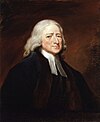
“As preachers and evangelists, Whitefield and other early field-preachers were more impressive than Wesley. But it was Wesley who was the superlatively energetic and skillful organiser, administrator, and law-giver. He succeeded in combining in exactly the right proportions democracy and discipline, doctrine and emotionalism; his achievement lay not so much in the hysterical revivalist meetings (which were not uncommon in the century of Tyburn) but in the organisation of self-sustaining Methodist societies in trading and market centres, and in mining, weaving, and labouring communities, the democratic participation of whose members in the life of the Church was both enlisted and strictly superintended and disciplined. He facilitated entry to these societies by sweeping away all barriers of sectarian doctrines.”
E. P. Thompson on William Wilberforce
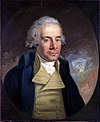
“The sensibility of the Victorian middle class was nurtured in the 1790s by frightened gentry who had seen miners, potters and cutiers reading Rights of Man, and its foster-parents were William Wilberforce and Hannah More. It was in these counter-revolutionary decades that the humanitarian tradition became warped beyond recognition. The abuses which Howard had exposed in the prisons in the 1770s and 1780s crept back in the 1790s and 1800s; and Sir Samuel Romilly, in the first decade of the 19th century, found that his efforts to reform the criminal law were met with hostility and timidity; the French Revolution had produced (he recalled) —"among the higher orders ... a horror of every kind of innovation". "Everything rung and was connected with the Revolution in France," recalled Lord Cockburn (of his Scottish youth): "Everything, not this thing or that thing, but literally everything, was soaked in this one event."”
E. P. Thompson on Adam Smith
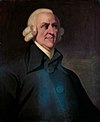
“Few intellectual victories have been more overwhelming than that which the proponents of the new political economy won in the matter of the regulation of the internal corn trade... The "unlimited, unrestrained freedom of the corn trade" was...the demand of Adam Smith. The new economy entailed a de-moralizing of the theory of trade and consumption no less far-reaching than the more widely-debated dissolution of restrictions upon usury... [T]he new political economy was disinfested of intrusive moral imperatives... The prejudices against forestallers Smith dismissed curtly as superstitions on a level with witchcraft... In some respects Smith's model conformed more closely to eighteenth-century realities than did the paternalist; and in symmetry and scope of intellectual construction it was superior. But one should not overlook the specious air of empirical validation which the model carries. Whereas the first appeals to a moral norm—what ought to be men's reciprocal duties—the second appears to say: "this is the way things work, or would work if the State did not interfere". And yet if one considers these sections of The Wealth of Nations they impress less as an essay in empirical enquiry than as a superb, self-validating essay in logic.”
Quotes About E. P. Thompson
Gain deeper perspective through quotes about E. P. Thompson from others.
Ian Bradley on E. P. Thompson
“The man who has done more than anyone else to rouse the national conscience over nuclear weapons is E. P. Thompson... Like Gladstone, who felt himself called away from writing about the Christine doctrine of eternal punishment to lead the agitation over the Bulgarian atrocities, Thompson abandoned his scholar's desk and the book that he is writing on William Blake last autumn to devote himself to the anti-nuclear cause.”
Eric J. Evans on E. P. Thompson
“The distinctive contribution of working people to the agitation for Reform between 1789 and 1832 is brilliantly invoked in E. P. Thompson, The Making of the English Working Class.”
Michael Foot on E. P. Thompson
“He once called himself the Muggletonian Marxist, and the title is too tempting to resist. He claimed some special affinity with one associate of the sect, William Blake, and all those who ever heard him lecture on the subject must at least draw some comfort from the fact that he completed this volume before his death. Almost every page offers fresh evidence, not merely of his vast, overflowing erudition, but of his wit, his humanity, his soaring historical imagination, the combination of qualities which made the publication of The Making of the English Working Class such an event not merely in the writing of English history but in the politics of our century.”

R. A. D. Grant on E. P. Thompson
“Unlike the extreme radical, the Peace Movement does not make light of physical death. In fact, it feeds almost entirely upon the age-old fear of it. A few half-hearted realists (E.P. Thompson among them) admit that the probable consequence of unilateralist policies would be Soviet domination in some form. They know also that, much more than socialism (which they favour), it would be the end of most of what we, and even they themselves, value. But that, apparently, is less important than saving our own skins.”
Boyd Hilton on E. P. Thompson
“[W]orking-class consciousness is no longer the talismanic concept it once was among historians. In retrospect it is clear that E. P. Thompson's magical evocation in The Making of the English Working Class (1963; rev. edn. 1968) brought a prominent line of inquiry to its culmination. Perhaps this should have been obvious at the time, given the author's determination to define class, not in material terms, but as a product of the daily experience of individual men and women.”
Eric Hobsbawm on E. P. Thompson
“Thompson's work combined passion and intellect, the gifts of the poet, the narrator and the analyst. He was the only historian I knew who had not just talent, brilliance, erudition and the gift of writing, but the capacity to produce something qualitatively different from the rest of us, not to be measured on the same scale. Let us simply call it genius, in the traditional sense of the word. None of his mature works could have been written by anyone else.”

Mary Kaldor on E. P. Thompson
“When the dust settles from the end of the Cold War, EP Thompson will be viewed, along with Mikhail Gorbachev and Vaclav Havel, as one of the key individuals who influenced the course of events in the 1980s.”
Paul Langford on E. P. Thompson
“E. P. Thompson, ‘The Moral Economy of the English Crowd in the Eighteenth Century’...has set the tone for much writing about popular protest.”
The Times on E. P. Thompson
“The life and work of E. P. Thompson exemplified the social and cultural struggles that were taking place in the Britain of the 1950s and 1960s, a period which gave the working class access to higher education in a way that had never happened before. His writings, polemical, astringent and tough minded, had an imaginative sweep which questioned social complacencies and compelled institutions and individuals to look beyond their own narrow concerns and their conception of their past.”

About E. P. Thompson
Edward Palmer Thompson (3 February 1924 – 28 August 1993), usually cited as E. P. Thompson, was a British historian, writer, socialist and peace campaigner. He is best remembered for his historical work on the British radical movements in the late 18th and early 19th centuries, in particular The Making of the English Working Class (1963).