Link Copied!
E. O. Wilson Quotes (1929-2021)


About E. O. Wilson
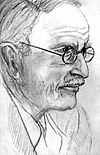
Edward Osborne Wilson (10 June 1929 – 26 December 2021) was an American entomologist and biologist known for his work on ecology, evolution, and sociobiology. A two-time winner of the Pulitzer Prize for General Non-Fiction, Wilson is also known for his advocacy for environmentalism, and his secular-humanism ideas pertaining to religious and ethical matters.
Best E. O. Wilson Quotes
Shortest
Earliest
Explore our curated collection of the most famous and impactful E. O. Wilson quotes.
“The key to the sociobiology of mammals is milk.”
“Old beliefs die hard even when demonstrably false.”
“The emergence of civilization has everywhere followed a definable sequence.”

“The ideal scientist thinks like a poet and only later works like a bookkeeper.”
“The evolutionary epic is probably the best myth we will ever have.”

“To know how scientists engage in visual imagery is to understand how they think creatively.”

“Nothing fundamental separates the course of human history from the course of physical history.”

“We are not compelled to believe in biological uniformity in order to affirm human freedom and dignity.”
“Nationalism and racism, to take two examples, are the culturally nurtured outgrowths of simple tribalism.”

“The selection pressures of hunter-gatherer existence have persisted for over 99 percent of human evolution.”
“God remains a viable hypothesis as the prime mover, however undefinable and untestable that conception may be.”

“Most kinds of aggressive behavior among members of the same species are responsive to crowding in the environment.”
“My definition of a scientist is that you can complete the following sentence: ‘he or she has shown that…’,””

“Be prepared mentally for some amount of chaos and failure. Waste and frustration often attend the earliest stages.”
“The essence of humanity's spiritual dilemma is that we evolved genetically to accept one truth and discovered another.”
“Wonderful theory, wrong species. (On Marxism, which he considered more suited to ants than to humans.)”
“We seem to be able to be fully comfortable only when the remainder of humanity can be labeled as members versus nonmembers.”
“Self-knowledge will reveal the elements of biological human nature from which modern social life proliferated in all its strange forms.”
“We can search among the unconscious, emotion-laden learning rules for the kind of behavior most directly influenced by genetic evolution.”
“The most peaceable tribes of today were often ravagers of yesteryear and will probably again produce soldiers and murderers in the future.”
“The fraction of Americans working in occupations concerned primarily with information has increased from 20 to nearly 50 percent of the work force.”
E. O. Wilson Quotes by Topic
Find exactly what you are looking for by browsing this categorized list of E. O. Wilson quotes by topic.
E. O. Wilson on Overpopulation 2 quotes
“The pattern of human population growth in the 20th century was more bacterial than primate. When Homo sapiens passed the six billion mark we had already exceeded by perhaps as much as 100 times the biomass of any large animal species that had ever existed on the land. We and the rest of life cannot afford another one hundred years like that.”
E. O. Wilson on Predation
E. O. Wilson on Contradiction
“The essence of humanity's spiritual dilemma is that we evolved genetically to accept one truth and discovered another. Is there a way to erase the dilemma, to resolve the contradictions between the transcendentalist and the empiricist world views?”
E. O. Wilson on Demonstration
“Companies that are willing to share, to withhold in order to further the growth of the company, willing to try to get a better atmosphere through a demonstration of democratic principles, fairness and cooperation, a better product, those will win in the end.”
E. O. Wilson on Economic growth
“Few will doubt that humankind has created a planet-sized problem for itself. No one wished it so, but we are [not] the first species to become a geophysical force, altering Earth's climate, a role previously [known to be] reserved for tectonics, sun flares, and glacial cycles. [But] We are also the greatest destroyer of life since the ten-kilometer-wide meteorite that landed near Yucatan and ended the Age of Reptiles sixty-five million years ago. Through overpopulation we have put ourselves in danger of running out of food and water. So a very Faustian choice is upon us: whether to accept our corrosive and risky behavior as the unavoidable price of population and economic growth, or to take stock of ourselves and search for a new environmental ethic.”
E. O. Wilson on Eugenics
“Since each individual produced by the sexual process contains an unique set of genes, very exceptional combinations of genes are unlikely to appear twice even within the same family. So if genius is to any extent hereditary, it winks on and off through the gene pool in a way that would be difficult to measure or predict. Like Sisyphus rolling his boulder up to the top of the hill only to have it tumble down again, the human gene pool creates hereditary genius in many ways in many places only to have it come apart in the next generation... For this reason alone, we are justified in considering the preservation of the entire gene pool as a contingent primary value until such time as an almost unimaginably greater knowledge of human heredity provides us with the option of a democratically contrived eugenics.”

E. O. Wilson on Marxism
“Marxism is still regarded by purists as a form of scientific materialism, but it is not. The perception of history as an inevitable class struggle proceeding to the emergence of a lightly governed egalitarian society with production in control of the workers is supposed to be based on an understanding of the subterranean forces of pure economic process. In fact, it is equally based on an inaccurate interpretation of human nature. Marx, Engels, and all the disciples and deviationists after them, however sophisticated, have operated on a set of larger hidden premises about the deeper desires of human beings and the extent to which human behavior can be molded by social environments. These premises have never been tested. To the extent that they can be made explicit, they are inadequate or simply wrong. They have become the hidden wards of the historicist dogma they were supposed to generate. Marxism is sociobiology without biology. The strongest opposition to the scientific study of human nature has come from a small number of Marxist biologists and anthropologists who are committed to the view that human behavior arises from a very few unstructured drives. They believe that nothing exists in the untrained human mind that cannot be readily channeled to the purposes of the revolutionary socialist state. When faced with the evidence of greater structure, their response has been to declare human nature off limits to further scientific investigation. A few otherwise very able scholars have gone so far as to suggest that merely to talk about the subject is dangerous, at least to their concept of progress. I hope that I have been able to show that this perception is profoundly wrong. At the same time, anxiety about the health of Marxism as a theory and a belief system is justified. Although Marxism was formulated as the enemy of ignorance and superstition, to the extent that it has become dogmatic it has faltered in that commitment and is now mortally threatened by the discoveries of human sociobiology.”

What E. O. Wilson Said About Others
Discover personal opinions E. O. Wilson shared regarding contemporaries.
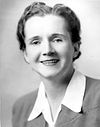
E. O. Wilson on Rachel Carson
“Forty years ago, Silent Spring delivered a galvanic jolt to public consciousness and, as a result, infused the environmental movement with new substance and meaning...It was Rachel Carson's achievement to synthesize this knowledge into a single image that everyone, scientists and the general public alike, could easily understand...We are still poisoning the air and water and eroding the biosphere, albeit less so than if Rachel Carson had not written. Today we understand better than ever why we must press the effort to save the environment all the way home, true to the mind and spirit of the valiant author of Silent Spring.”
Quotes About E. O. Wilson
Gain deeper perspective through quotes about E. O. Wilson from others.
Sylvia Earle "My wish on E. O. Wilson
“Protected areas provide hope that the creatures of Ed Wilson's dream of an encyclopedia of life, or the census of marine life, will live not just as a list, a photograph, or a paragraph.”
Robert Finch on E. O. Wilson
“His critics accuse him of a reductionist and mechanistic view of culture and morality, with dangerous eugenic and racist overtones, while his admirers claim that his work is Darwinian in scope and that... he is the target of philistines who object to his conclusions on ethical and emotional, rather than scientific, grounds.”
Massimo Introvigne on E. O. Wilson
“Wilson himself argued that it would be in the best interest of humanity if organized religions as we know them would disappear. There is, however, a misunderstanding. Wilson was not an atheist, nor was he against asking religious questions. Since his main interest were ants, it is to his interesting 2010 novel Anthill we should turn to understand more about his ideas on religion.”

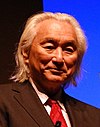
Michio Kaku on E. O. Wilson
“Religion, Wilson theorizes, is so prevalent because it provided a definite evolutionary advantage for those early humans who adopted it. ...when our apelike ancestors gradually became more intelligent, individuals could rationally begin to question the power of their leader. ...a dangerous, dissipative force on the tribe. ...Thus, according to Wilson, a selective pressure was placed on intelligent apes to suspend reason and blindly obey the leader and his myths...”
Raghavendra Gadagkar on E. O. Wilson
“You see, if E. O. Wilson says that Indian scientists should do taxonomy, now of course, someone will say that you are preventing them from doing the sort of high science that is done elsewhere. So it should not come from there, it should come from us. I think that we must recognize where we have the advantages and where we have the disadvantages.”

Gerda Lerner on E. O. Wilson
“Recently, E.O. Wilson's sociobiology has offered the traditionalist view on gender in an argument which applies Darwinian ideas of natural selection to human behavior. Wilson and his followers reason that human behaviors which are "adaptive" for group survival become encoded in the genes, and they include in these behavjors such complex traits as altruism, loyalty, and maternalism. They not only reason that groups practicing a sex-based division of labor in which women function as child-rearers and nurturers have an evolutionary advantage, but they claim such behavior somehow becomes part of our genetic heritage, in that the necessary psychological and physical propensities for such societal arrangements are selectively developed and genetically selected. Mothering is not only a socially assigned role but one fitting women's physical and psychological needs. Here, once again, biological determinism becomes prescriptive, in fact a political defense of the status quo in scientific language. Feminist critics have revealed the circular reasoning, absence of evidence and unscientific assumptions of Wilsonian sociobiology. From the point of view of the nonscientist, the most obvious fallacy of sociobiologists is their ahistoricity in disregarding the fact that modern men and women do not live in a state of nature. The history of civilization describes the process by which humans have distanced themselves from nature by inventing and perfecting culture. Traditionalists ignore technological changes, which have made it possible to bottle-feed infants safely and raise them to adulthood with caretakers other than their own mothers. They ignore the implications of changing life spans and changing life cycles. Until communal hygiene and modern medical knowledge cut infant mortality to a level where parents could reasonably expect each child born to them to live to adulthood, women did indeed have to bear many children in order for a few of them to survive. Similarly, longer life expectancy and lower infant mortality altered the life cycles of both men and women. These developments were connected with industrialization and occurred in Western civilization (for whites) toward the end of the nineteenth century, occurring later for the poor and for minorities due to the uneven distribution of health and social services. Whereas up to 1870 child-rearing and marriage were co-terminus-that is, one or both parents could expect to die before the youngest child reached adulthood-in modern American society husbands and wives can expect to live together for twelve years after their youngest child has reached adulthood, and women can expect to outlive their husbands by seven years." Nevertheless, traditionalists expect women to follow the same roles and occupations that were functional and species-essential in the Neolithic.”

Richard Machalek on E. O. Wilson
“Specifically, sociobiology entails using explanatory principles and empirical findings derived from evolutionary biology to describe and explain social behavior among animals, including humans. It also draws on and incorporates thinking and research in ecology, especially behavioral ecology. The contributions of biologists such as R. A. Fisher, W. D. Hamilton, Robert Trivers, and George Williams were foundational for the development and emergence of sociobiology, and that emergence culminated with the publication of Sociobiology: The Modern Synthesis by Edward O. Wilson in 1975. This chapter explores the impact of sociobiology on theory and research in sociology during the nearly four decades since the publication of Wilson’s opus. Wilson’s book is a tome, stretching to twenty-seven chapters and 697 pages of text. Had it not been for the fact that the title and subject of Chapter 27 was “Man: From Sociobiology to Sociology,” it might have been recorded in the annals of science as a magisterial synthesis of much of what was then known about the evolution of social behavior in animals, but its influence may not have extended much beyond a few other fields such as biological anthropology or comparative psychology. But by expanding the scope of his analysis to include humans, Wilson provoked one of the great intellectual and scientific debates of the late twentieth century and helped stimulate the development of entirely new programs of research in the social and behavioral sciences.”
Momme von Sydow on E. O. Wilson
“Wilson clearly laid down a radical biosociological research programme, claiming that sociology should be reduced to biology. This idea has profoundly influenced sociobiology and its reception in the larger public. Because of his claims to 'biologicize' culture and even ethics and the changes in evolutionary biology, which he at least co-provoked, sociobiology was soon singled out for criticism. But this challenge to other subject areas also inspired interesting new theories for instance in psychology or in philosophy.”
James Watson on E. O. Wilson
“Since 1978, when a pail of water was dumped over my Harvard friend E. O. Wilson for saying that genes influence human behaviour, the assault against human behavioural genetics by wishful thinking has remained vigorous. But irrationality must soon recede. It will soon be possible to read individual genetic messages at costs which will not bankrupt our health systems. In so doing, I hope we see whether changes in DNA sequence, not environmental influences, result in behaviour differences. Finally, we should be able to establish the relative importance of nature as opposed to nurture.”
About E. O. Wilson
Edward Osborne Wilson (10 June 1929 – 26 December 2021) was an American entomologist and biologist known for his work on ecology, evolution, and sociobiology. A two-time winner of the Pulitzer Prize for General Non-Fiction, Wilson is also known for his advocacy for environmentalism, and his secular-humanism ideas pertaining to religious and ethical matters.