Link Copied!
E. H. Carr Quotes (1892-1982)


About E. H. Carr
Edward Hallett "Ted" Carr, CBE (28 June 1892 – 3 November 1982) was an English historian, diplomat, journalist and international relations theorist.
Best E. H. Carr Quotes
Shortest
Earliest
Explore our curated collection of the most famous and impactful E. H. Carr quotes.
“It is nonsense to say that generalization is foreign to history; history thrives on generalizations.”

“The renewed interest of the past two decades in "the rights of man", itself the product of notorious historical events, shows that mankind is at another of the great turning-points of history.”
“Recognition of the truth behind the over-statements of revolutionary propaganda has long penetrated to circles which cannot be brought by any stretch of imagination within the orbit of socialism.”

“In short, with the triumph of the industrial revolution and its inevitable consequence, the rise of the class-conscious proletariat, nothing could ever be the same again-not even political revolutions.”
“The vogue of Marxism in Great Britain and France, which began on a modest scale after the success of the Bolshevik revolution in Russia, rapidly gathered momentum, particularly among intellectuals, after 1934, when it was discovered that Soviet Russia was a potential military ally against Germany.”

“The essential result of the French revolution was to establish the doctrine of popular sovereignty as the foundation of modern Europe, though with no more precise definition of that elusive category "the people" than that popular sovereignty was the antithesis of the personal authority of the monarch.”

“It was 1848 which shattered this comfortable dream. The dynastic principle, finally destroyed in France, was called in question and discredited all over central Europe; and, with popular sovereignty being now everywhere invoked as the basis of political authority, new nations began to make their voice heard.”
“History properly so-called can be written only by those who find and accept a sense of direction in history itself. The belief that we have come from somewhere is closely linked with the belief that we are going somewhere. A society which has lost belief in its capacity to progress in the future will quickly cease to concern itself with its progress in the past.”
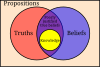
“The historian and the facts of history are necessary to one another. The historian without his facts is rootless and futile; the facts without their historian are dead and meaningless. My first answer therefore to the question, What is History?, is that it is a continuous process of interaction between the historian and his facts, an unending dialogue between the present and the past.”
“The dilemma of reconciling political equality with political liberty was always resolved, down to the time of J. S. Mill, by defining liberty as freedom to do everything that did not restrict the liberty of others. But when equality comes to mean economic equality―or at any rate some enforced mitigation of economic inequality―and when liberty comes to mean something like liberty of opportunity, or free and equal access to the good things which society has to offer, the relation between equality and liberty takes on a new and much more baffling complexion.”

“History therefore is a process of selection in terms of historical significance. To borrow Talcott Parsons’s phrase once more, history is ‘a selective system’ not only of cognitive, but of causal, orientations to reality. Just as from the infinite ocean of facts the historian selects those which are significant for his purpose, so from the multiplicity of sequences of cause and effect he extracts those, and only those, which are historically significant; and the standard of historical significance is his ability to fit them into his pattern of rational explanation and interpretation.”

“History, then, in both senses of the word – meaning both the enquiry conducted by the historian and the facts of the past into which he enquires – is a social process, in which individuals are engaged as social beings; and the imaginary antithesis between society and the individual is no more than a red herring drawn across our path to confuse our thinking. The reciprocal process of interaction between the historian and his facts, what I have called the dialogue between present and past, is a dialogue not between abstract and isolated individuals, but between the society of today and the society of yesterday.”

“Scientists, social scientists and historians are all engaged in different branches of the same study: the study of man and his environment, of the effects of man on his environment and of his environment on man. The object of the study is the same: to increase man’s understanding of, and mastery over, his environment. The presuppositions and the methods of the physicist, the geologist, the psychologist and the historian differ widely in detail; nor do I wish to commit myself to the proposition that, in order to be more scientific, the historian must follow more closely the methods of physical science. But historian and physical scientist are united in the fundamental purpose of seeking to explain, and in the fundamental procedure of question and answer.”
“The main casualty of this transformation in the foundations of society has been the theory and practice of liberalism, of the old liberal democracy and the old liberal nationalism. The fundamental tenet of a liberal. creed was the belief in the power of individual reason and in the reasonableness of man. Rational discussion and argument, the interchange of individual opinions, was the sure way to find the answer to any problem; and, since men were reasonable, difficulties could always be solved by compromise, not by fighting it out. Nationalism, in the liberal creed, meant the rational desire of men of the same race and kind for freedom to live together and run their affairs in common; those who enjoyed this freedom themselves would naturally respect it in others.”

“History is the long struggle of man, by the exercise of his reason, to understand his environment and to act upon it. But the modern period has broadened the struggle in a revolutionary way. Man now seeks to understand, and to act on, not only his environment, but himself; and this has added, so to speak, a new dimension to reason, and a new dimension to history. The present age is the most historically minded of all ages. Modern man is to an unprecedented degree self-conscious and therefore conscious of history. He peers eagerly back into the twilight out of which he has come in the hope that its faint beams will illuminate the obscurity into which he is going; and, conversely, his aspirations and anxieties about the path that lies ahead quicken his insight into what lies behind. Past, present and future are linked together in the endless chain of history.”
“At a moment when the world is changing its shape more rapidly and more radically than at any time in the last 400 years, this seems to me a singular blindness, which gives ground for apprehension, not that the world-wide movement will be stayed, but that this country – and perhaps other English-speaking countries – may lag behind the general advance, and relapse helplessly and uncomplainingly into some nostalgic backwater. For myself I remain an optimist; and when Sir Lewis Namier warns me to eschew programmes and ideals, and Professor Oakeshott tells me that we are going nowhere in particular and that all that matters is to see that nobody rocks the boat, and Professor Popper wants to keep that dear old T-model on the road by dint of a little piecemeal engineering, and Professor Trevor-Roper knocks screaming radicals on the nose, and Professor Morison pleads for history written in a sane conservative spirit, I shall look out on a world in tumult and a world in travail, and shall answer in the well-worn words of a great scientist: ‘And yet – it moves.’”

“Facts cannot be derived from values. This is partly true, but may also be misleading, and requires qualification. When we seek to know the facts, the questions which we ask, and therefore the answers which we obtain, are prompted by our system of values. Our picture of the facts of our environment is moulded by our values, i.e. by the categories through which we approach the facts; and this picture is one of the important facts of which we have to take into account. Values enter into the facts and are an essential part of them. Our values are an essential part of our equipment as human beings. It is through our values that we have that capacity to adapt ourselves to our environment, and to adapt our environment to ourselves, to acquire that mastery over our environment, which has made history a record of progress. But do not, in dramatizing the struggle of man with his environment, set up a false antithesis and a false separation between facts and values. Progress in history is achieved through the interdependence and interaction of facts and values. The objective historian is the historian who penetrates most deeply into this reciprocal process.”
“The historian, then, is an individual human being. Like other individuals, he is also a social phenomenon, both the product and the conscious or unconscious spokesman of the society to which he belongs; it is in this capacity that he approaches the facts of the historical past. We sometimes speak of the course of history as a ‘moving procession’. The metaphor is fair enough, provided it does not tempt the historian to think of himself as an eagle surveying the scene from a lonely crag or as a V.I.P. at the saluting base. Nothing of the kind! The historian is just another dim figure trudging along in another part of the procession. And as the procession winds along, swerving now to the right and now to the left, and sometimes doubling back on itself, the relative positions of different parts of the procession are constantly changing, so that it may make perfectly good sense to say, for example, that we are nearer today to the Middle Ages than were our great-grandfathers a century ago, or that the age of Caesar is nearer to us than the age of Dante. New vistas, new angles of vision, constantly appear as the procession – and the historian with it – moves along. The historian is part of history. The point in the procession at which he finds himself determines his angle of vision over the past.”
E. H. Carr Quotes by Topic
Find exactly what you are looking for by browsing this categorized list of E. H. Carr quotes by topic.
E. H. Carr on History 4 quotes
“History consists of a corpus ascertained facts. The facts are available to the historian in documents, inscriptions and so on, like fish in the fishmonger's slab. The historian collects them, takes them home, and cooks and serves them in whatever style appeals to him.”
E. H. Carr on French Revolution
“The essential result of the French revolution was to establish the doctrine of popular sovereignty as the foundation of modern Europe, though with no more precise definition of that elusive category "the people" than that popular sovereignty was the antithesis of the personal authority of the monarch.”

E. H. Carr on Marxism
“The development of Marxism from the form in which it was evolved by Marx himself, before 1848 in Germany and France and afterwards in England, through the glosses of Engels and through Lenin's reformulation of the doctrine in the early years of the present century, down to its apotheosis as the ideology of the victorious Russian revolution, first under Lenin, later under Stalin, is a fascinating study. Nowadays the impact of current emotions has unfortunately made it fashionable to tell the story in terms of betrayal. According to some, true Marxism was betrayed by Lenin when he proclaimed the socialist revolution in an economically backward, predominantly peasant, country. According to others, Lenin, the faithful disciple of Marx, had his legacy betrayed and distorted by Stalin. Only the stalwarts dare to pretend that there has been no "betrayal" at all.”

What E. H. Carr Said About Others
Discover personal opinions E. H. Carr shared regarding contemporaries.
E. H. Carr on György Lukács 2 quotes
“The work of Lukacs is important, not because he solves but because he poses in its sharpest and most acute form the fundamental dilemma of the Marxist conception of class and of the proletariat, the dilemma of the gap between the proletariat as an empirical entity and the role assigned by history to the proletariat as a class—the gap which Marx revealed, but did not explore, when he invented the dismissive category of the "Lumpenproletariat".”

E. H. Carr on Lewis Namier 2 quotes
“Namier's choice of a second subject was equally significant. Namier by-passed the great modern revolutions, English, French and Russian...and elected to give us a penetrating study of the European revolutions of 1848 – a revolution that failed, a set-back all over Europe for the rising hopes of liberalism, a demonstration of the hollowness of ideas in face of armed force, of democrats when confronted with soldiers. The intrusion of ideas into the serious business of politics is futile and dangerous: Namier rubbed in the moral by calling this humiliating failure "the revolution of the intellectuals". Nor is our conclusion a matter of inference alone; for, though Namier wrote nothing systematic on the philosophy of history, he expressed himself in an essay published a few years ago with his usual clarity and incisiveness. "The less, therefore," he wrote, "man clogs the free play of his mind with political doctrine and dogma, the better for his thinking."”

E. H. Carr on Jean-Jacques Rousseau
“If the author of the romantic creed was Rousseau, its popularizer and vulgarizer was George Sand.”

E. H. Carr on George Sand
“If the author of the romantic creed was Rousseau, its popularizer and vulgarizer was George Sand.”

E. H. Carr on Joseph Stalin
“Stalin hailed as triumphs, and converted into a system, compromises, concessions and abuses which Lenin, if he had been driven to accept them, would have treated as harsh and temporary sacrifices.”

E. H. Carr on Georg Wilhelm Friedrich Hegel
“Hegel clothed his absolute in the mystical shape of a world spirit, and made the cardinal error of bringing the course of history to an end in the present instead of projecting it into the future. He recognized a process of continuous evolution in the past, and incongruously denied it in the future.”

E. H. Carr on Harold Laski
“If Laski was not, in any ordinary sense of the word, a politician, he was also no thinker. He had an unbounded verve and versatility in the acquisition of knowledge. But, where he skimmed everything, he never plunged deep. The extent of his reading was colossal, even if one assures that he did not more than turn the pages of some of the works which he mentions.”

E. H. Carr on Benjamin Disraeli
“The great European figures of the later nineteenth century were Disraeli and Bismarck, who strove to weld together the "two nations" into one through the agencies of the social service state, popular education and imperialism, refuted the taunt that "the worker has no country", and paved the way for "national labour", "national socialism" and even "national communism".”

E. H. Carr on Otto von Bismarck
“The great European figures of the later nineteenth century were Disraeli and Bismarck, who strove to weld together the "two nations" into one through the agencies of the social service state, popular education and imperialism, refuted the taunt that "the worker has no country", and paved the way for "national labour", "national socialism" and even "national communism".”

Quotes About E. H. Carr
Gain deeper perspective through quotes about E. H. Carr from others.
Niall Ferguson on E. H. Carr
“It was the editorials of The Times as much as its reporting that made it more influential than its modest circulation might suggest. (As Lord Beaverbrook, the proprietor of the Daily Express once remarked, 'The popular Press is nothing, in the way of propaganda, when compared with the unpopular newspapers.') Here Dawson could rely on the misanthropic former diplomat and historian Edward Hallett Carr, of all the proponents of appeasement perhaps the most sophisticated. To Carr, international relations were about power, not morality. As the balance of power in the world shifted, with some powers rising and others declining, the only question was whether adjustments should be violent or peaceful. Carr's view was that the latter were preferable. Appeasement was therefore a matter of adjusting peacefully to the reality of German (and later Soviet) power in the least bloody way, just as the British political system had adjusted to the reality of working-class power without the need for a revolution.”

A. J. P. Taylor on E. H. Carr 3 quotes
“There is no moral condemnation of communism; and no suggestion that the failure of communism may be due to the moral revolt of mankind, not to the blunders in tactics... To write about evil with detachment is to be on the side of evil.”

About E. H. Carr
Edward Hallett "Ted" Carr, CBE (28 June 1892 – 3 November 1982) was an English historian, diplomat, journalist and international relations theorist.