Link Copied!
E. M. S. Namboodiripad Quotes (1909-1998)
Author, Activist, Leader

About E. M. S. Namboodiripad
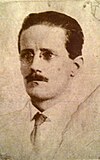
E. M. S. Namboodiripad, born Elamkulam Manakkal Sankaran Namboodiripad, (Malyalam: ഏലങ്കുളം മനക്കല് ശങ്കരന് നമ്പൂതിരിപ്പാട്; June 13, 1909 – March 19, 1998), popularly called E. M. S., was an Indian Communist leader, Socialist-Marxist theorist, revolutionary, author, historian, and social commentator. He was the first non-Indian National Congress Chief Minister in Kerala in the Republic of India as the leader of the first democratically elected Communist government in India.
Best E. M. S. Namboodiripad Quotes
Shortest
Earliest
Explore our curated collection of the most famous and impactful E. M. S. Namboodiripad quotes.
“associated himself with the masses, their lives, their problems, sentiments and aspirations.”

“I am proud of my individuality as a Communist that |Arundhati sees as a flaw and my lack of deviant sexuality that Arundhati sees as a matter of credit,''”

“When we own up our mistakes some people interpret as if we alone were in the wrong. The fact is that just as we did, they also committed mistakes. If in the debate on Roopa Bhadrata we erred, people like Mundassery also erred equally.”
“Sankara was one of the tallest of India's (and the world's) idealist philosophers; his Advaita Vedanta is one of the richest contributions India has made to the treasury of human knowledge.”

“Like several other historical personages, Gandhi had a highly complex personality, his teachings, too, are incapable of over-simplified assessments on the lines of his being 'the inspirer of the national movement who roused the masses to anti-imperialist action', 'the counter-revolutionary who did all he could to prevent the development of our national movement on revolutionary lines', etc."”
“But when people like Mundassery tried to correct us, they viewed form and content as two separate categories and argued for perfection in both. That was their theory. In fact the form and content are not so separate of conflicting categories. For progressive content there must be progressive form. The progressive form is the same as perfect form. Those like Mundassery did not realize the relation between the two.”
“Why and how did our country fall from its brilliant antiquity to the degradation of pre-British days? The answer is that defeat of the oppressed castes at the hands of the Brahminic overlordship, of materialism by idealism, constituted the beginning of the fall of India’s civilization and culture which in the end led to the loss of national independence.”


“This new theory of Dravidian superiority is as unscientific as the theory of Aryan superiority. For, it goes against all the accepted conclusions of historical research, which have conclusively proved the indivisible links between social and family institutions on the one hand and the stage of civilization on the other.”

“We had then and still have to fight a two-front battle. Ranged against us on the one hand are those who denounce us for our alleged ‘departure from the principles of nationalism and socialism’, since we are championing ‘sectarian’ causes like those of oppressed castes and religious minorities. On the other hand are those who, in the name of defending the oppressed caste masses, in fact, isolate them from the mainstream of the united struggle of the working people irrespective of caste, communities and so on.”
“...the Buddha whose near-materialist philosophy gripped the mass of suppressed humanity…those belonging to the materialist school had to fight an unequal fight and were therefore defeated...the defeat of the materialists in this unequal battle was the beginning of a millennium-long age of intellectual and socio-political backwardness which culminated in the establishment of British rule in our land.”
“It is far from the truth to say that the rebellion was a communal riot, that the objective of the rebels was the destruction of Hindu religion and that the six months of rebellion were six months of anti-Hindu atrocities... All this, however, does not mean that religious fanaticism was totally absent in the rebellion. The numbers of forced conversions which did take place cannot by any stretch of imagination be explained by any other motive than religious fanaticism... One can and should, however, state explicitly that the main force behind the rebellion was not fanaticism which was simply a by-product...”

“As opposed to this two-stage transformation-slave to feudal and feudal to capitalist-in Europe, India remained tied to the same old order under which the overwhelming majority of the people belonged to the oppressed and backward castes. This is the essence of what Marx called India’s ‘unchanging’ society where the village was not touched by the wars and upheavals at the higher levels, the British conquest being the first revolution.”
“It is the fact of life that a truth emerges out of a conflict between two wrongs. The development of society is through contradictions. Thus the Roopa Bhadrata argument which arose out of our conflict was wrong, in another sense it was correct too. Evaluating the worth of literature we should never confine ourselves to content alone. Mundassery was correct in insisting that form too is to be evaluated. In his own words it is not enough to have perfect content, it must also have perfect form. That is Roopa Bhadrata. Is that not correct? Yes, it is. We accept that we were wrong on that count. Those of us who founded the Jeevat Sahitya Sanghom were political workers. We looked at literature too through political eyes. So we did not pay sufficient attention to the artistic structure of literature. That was our mistake.”

Quotes About E. M. S. Namboodiripad
Gain deeper perspective through quotes about E. M. S. Namboodiripad from others.
Quoted on E. M. S. Namboodiripad
“Namboodiripad's engagement with history was not academic but an inevitable part of his involvement with politics.”
Chandrashekarendra Saraswati on E. M. S. Namboodiripad
“Namboodiripad was by birth a brahmin,that too from the most exclusive and ancient namboodiri community of kerala,yet if he had not been from this community,communism leave alone E.M.S the man would have never become a by-word in Kerala”

Praksah Karat on E. M. S. Namboodiripad
“EMS was uniquely positioned to analyze the various phases of the national movement and the role of Gandhi. He began his political life as an ardent Gandhian. Through out his life, while d adhering to the Marxist world outlook, he practiced many of the Gandhian principles of simplicity and personal austerity that are cherished by Indians.”
N.Ram on E. M. S. Namboodiripad
“Between December 1991 and March 1998, octogenarian E.M.S. Namboodiripad wrote 128 columns for Frontline on an impressive-indeed awesome-range of subjects. For these seven years and more, his was simply the most dependable contribution from the standpoint of the editorial desk....He was a Master at handling history on the wing...EMS wrote one column a month for Frontline.... ‘Perspective’, the EMS column ranged over politics, philosophy, economics, education, social movements, literature, cultural affairs, religion and books.”
Prakash Karat quoted on E. M. S. Namboodiripad
“E.M.S. Namboodiripad straddled the history of twentieth century Kerala and the Indian Communist movement in a manner which invokes awe. The word ‘history’ is what recurs in the Malayalam media while paying tributes to him. History maker, history’s man, epochal figure: these are some of the terms which underline the recognition that EMS was something bigger than a political leader.”
About E. M. S. Namboodiripad
E. M. S. Namboodiripad, born Elamkulam Manakkal Sankaran Namboodiripad, (Malyalam: ഏലങ്കുളം മനക്കല് ശങ്കരന് നമ്പൂതിരിപ്പാട്; June 13, 1909 – March 19, 1998), popularly called E. M. S., was an Indian Communist leader, Socialist-Marxist theorist, revolutionary, author, historian, and social commentator. He was the first non-Indian National Congress Chief Minister in Kerala in the Republic of India as the leader of the first democratically elected Communist government in India.