David on Austen Chamberlain
← Back to David Profile
“Chamberlain is a Liberal.”
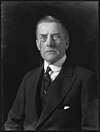
“His was rather the excellence of character than of capacity.”
“The most famous and significant conference of the 1920s took place at Locarno, on Lake Maggiore in northern Italy, in October 1925. The principals were the foreign ministers of Britain, France and Germany—Austen Chamberlain, Aristide Briand and Gustav Stresemann. Their great achievements were to guarantee the Rhineland borders of France and Germany and to bring Germany into the League of Nations. The so-called spirit of Locarno became a benchmark for diplomacy. In retrospect, however, Locarno looks more ambiguous. Stresemann had succeeded in bringing Germany in from the cold without abandoning any of its demands for lost territory in the east. These demands, particularly over Poland, were to prove the fuel for the next war.”
“But at the time praise was showered on Chamberlain for brokering the deal. On his return from Locarno, he received a special welcome at Victoria Station and, in further similarity to Disraeli in 1878, was immediately made a Knight of the Garter. Prime Minister Stanley Baldwin praised him for resolving an issue that had “so far defied the efforts of every statesman since the war.” One of Baldwin’s predecessors, Lord Arthur Balfour, said that Chamberlain’s name would be “indissolubly associated” with this probable “turning point in civilisation.” A few months later Chamberlain was awarded the Nobel Peace Prize. For a politician who had grown up in the shadow of his famous father, “Radical Joe,” it was an intoxicating apotheosis. “I am astonished and a little frightened by the completeness of my success and by its immediate recognition everywhere,” Chamberlain told his sister On October 22, 1925, he dined alone with his younger half-brother Neville, who noted in his diary that Austen "talked almost without stopping from 8 till 11.00 on Locarno. Very naturally, perhaps, the rest of the world does not exist for him . . . Looking back he felt that no mistake had been made from beginning to end." Neville found it hard to conceal his envy at Austen’s success. Nor, as we shall see, did he forget it.”