Link Copied!
D. H. Lawrence Quotes (1885-1930)
Poet, Painter, Playwright










About D. H. Lawrence
David Herbert Lawrence (11 September 1885 – 2 March 1930) was an English novelist, poet, playwright, essayist, literary critic and painter who published as D. H. Lawrence. His collected works, among other things, represent an extended reflection upon the dehumanising effects of modernity and industrialisation. In them, some of the issues Lawrence explores are emotional health, vitality, spontaneity and instinct.
Best D. H. Lawrence Quotes
Shortest
Earliest
Explore our curated collection of the most famous and impactful D. H. Lawrence quotes.


“God is only a great imaginative experience.”



“To the Puritan all things are impure, as somebody says.”
“Pornography is the attempt to insult sex, to do dirt on it.”


“It's the man who dares to take, who is independent, not he who gives.”
“Of course Celia shits! Who doesn't? And how much worse if she didn't.”
“Money poisons you when you've got it, and starves you when you haven't.”


“But better die than live mechanically a life that is a repetition of repetitions.”

“The more scholastically educated a man is generally, the more he is an emotional boor.”
“I hold that the parentheses are by far the most important parts of a non-business letter.”
“Folks should do their own fuckin', then they wouldn't want to listen to a lot of clatfart about another man's.”


“I can't stand Willy wet-leg,
can't stand him at any price.
He's resigned, and when you hit him
he lets you hit him twice.”
can't stand him at any price.
He's resigned, and when you hit him
he lets you hit him twice.”

D. H. Lawrence Quotes by Topic
Find exactly what you are looking for by browsing this categorized list of D. H. Lawrence quotes by topic.
D. H. Lawrence on Mexico 3 quotes
“"It is a country where men despise sex, and live for it," said Ramon. "Which is suicide."”

D. H. Lawrence on Love 2 quotes
“Those that go searching for love only make manifest their own lovelessness, and the loveless never find love, only the loving find love, and they never have to seek for it.”

D. H. Lawrence on Artemis
D. H. Lawrence on England
D. H. Lawrence on Self-pity
“I never saw a wild thing Sorry for itself. A small bird will drop frozen dead from a bough without ever having felt sorry for itself.”

D. H. Lawrence on Intuition
D. H. Lawrence on Etruscan civilization
“Is it the secret of the long-nosed Etruscans? The long-nosed, sensitive-footed, subtly-smiling Etruscans Who made so little noise outside the cypress groves?”

D. H. Lawrence on Poetry about love
D. H. Lawrence on California
“California is a queer place — in a way, it has turned its back on the world, and looks into the void Pacific. It is absolutely selfish, very empty, but not false, and at least, not full of false effort.”

D. H. Lawrence on Australia
““You feel free in Australia.” And so you do. There is a great relief in the atmosphere, a relief from tension, from pressure. An absence of control or will or form. The sky is open above you, and the air is open around you. Not the old closing-in of Europe. But what then? The vacancy of this freedom is almost terrifying.”

D. H. Lawrence on Places
“Every continent has its own great spirit of place. Every people is polarized in some particular locality, which is home, the homeland. Different places on the face of the earth have different vital effluence, different vibration, different chemical exhalation, different polarity with different stars: call it what you like. But the spirit of place is a great reality.”
What D. H. Lawrence Said About Others
Discover personal opinions D. H. Lawrence shared regarding contemporaries.
D. H. Lawrence on George Eliot 2 quotes
“You see, it was really George Eliot who started it all... It was she who started putting all the action inside.”

D. H. Lawrence on Adam and Eve 2 quotes
“The true unconscious is the well-head, the fountain of real motivity. The sex of which Adam and Eve became conscious derived from the very God who bade them be not conscious of it.”

D. H. Lawrence on Frederick Rolfe
“He seems to have been a serpent of serpents in the bosom of all the nineties. That in itself endears him to one.”

D. H. Lawrence on William Shakespeare
D. H. Lawrence on Moses
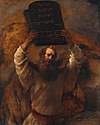
“Whitman, the one man breaking a way ahead. Whitman, the one pioneer. And only Whitman. No English pioneers, no French. . . The same in America. . . Whitman, like a strange, modern, American Moses.”
D. H. Lawrence on Richard Aldington
“Richard Aldington is exactly the same inside, murder, suicide, rape—with a desire to be raped very strong—same thing really—just like you—only he doesn't face it, and gilds his perverseness.”

D. H. Lawrence on Claude Debussy
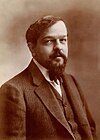
“I love Italian opera — it’s so reckless. Damn Richard Wagner, and his bellowings at Fate and death. Damn Debussy, and his averted face. I like the Italians who run all on impulse, and don’t care about their immortal souls, and don’t worry about the ultimate.”
D. H. Lawrence on Maria Edgeworth
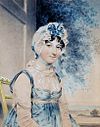
“That is the great clue to bourgeois psychology: the reward business. It is screamingly obvious in Maria Edgeworth's tales, which must have done unspeakable damage to ordinary people.—Be good, and you'll have money. Be wicked, and you'll be utterly penniless at last, and the good ones will have to offer you a little charity.”
D. H. Lawrence on Herman Melville
“THE greatest seer and poet of the sea for me is Melville. His vision is more real than Swinburne's, because he doesn't personify the sea, and far sounder than Joseph Conrad's, because Melville doesn't sentimentalize the ocean and the sea's unfortunates. Melville at his best invariably wrote from a sort of dreamself, so that events which he relates as actual fact have indeed a far deeper reference to his own soul, his own inner life. Melville was, at the core, a mystic and an idealist.”
D. H. Lawrence on John Galsworthy
“The Man of Property has the elements of a very great novel, a very great satire. It sets out to reveal the social being in all his strength and inferiority. But the author has not the courage to carry it through. The greatness of the book rests in its new and sincere and amazingly profound satire. It is the ultimate satire on modern humanity, and done from the inside, with really consummate skill and sincere creative passion, something quite new. It seems to be a real effort to show up the social being in all his weirdness. And then it fizzles out.”

Quotes About D. H. Lawrence
Gain deeper perspective through quotes about D. H. Lawrence from others.
Catherine Carswell on D. H. Lawrence
“The picture of D.H Lawrence suggested by the obituary notices of ‘competent critics’ is of a man morose, frustrated, tortured, even a sinister failure. Perhaps this is because any other view of him would make his critics look rather silly...Lawrence was as little morose as an open clematis flower, as little tortured or sinister, or hysterical as a humming bird. Gay, skilful, clever at everything, furious when he felt like it but never grieved or upset, intensely amusing, without sentimentality or affection, almost always right in his touch for the content of things or persons, he was at once the most harmonious and the most vital person I ever saw.”
Roxanne Dunbar-Ortiz on D. H. Lawrence
“The British novelist and critic D. H. Lawrence, who lived in northern New Mexico for two years, conceptualized the US origin myth, invoking Cooper's frontiersman character Deerslayer: "You have there the myth of the essential America. All the other stuff, the love, the democracy, the floundering into lust, is a sort of by-play. The essential American soul is hard, isolate, stoic, and a killer. It has never yet melted. "”

E. M. Forster on D. H. Lawrence
“Now he is dead, and the low-brows whom he scandalized have united with the high-brows whom he bored to ignore his greatness. This cannot be helped; no one who alienates both Mrs Grundy and Aspatia [sic] can hope for a good obituary press. All that we can do...is to say straight out that he was the greatest imaginative novelist of our generation. The rest must be left where he would have wished it to be left – in the hands of the young.”

Carl Freedman on D. H. Lawrence
“there are moments in The Dispossessed when I am reminded of Lawrence: for instance, a wonderful scene of lovemaking...It almost reads like Lawrence minus the sexism.”
Zulfikar Ghose on D. H. Lawrence
Josephine Herbst "The Ruins of Memory" on D. H. Lawrence
“many writers seem intent on what D. H. Lawrence called "doing dirt on life."”
Aldous Huxley on D. H. Lawrence 2 quotes
“Lawrence’s special and characteristic gift was an extraordinary sensitiveness to what Wordsworth called “unknown modes of being.” He was always intensely aware of the mystery of the world, and the mystery was always for him a numen, divine. Lawrence could never forget, as most of us almost continuously forget, the dark presence of the otherness that lies beyond the boundaries of man’s conscious mind. This special sensibility was accompanied by a prodigious power of rendering the immediately experienced otherness in terms of literary art.”

F. R. Leavis on D. H. Lawrence
“Is there no name later than Conrad's to be included in the Great Tradition? There is, I am convinced, one: D.H. Lawrence. Lawrence, in the English language, was the great genius of our time (I mean the age, or climatic phase, following Conrad's).”

Hugh MacDiarmid on D. H. Lawrence

Anaïs Nin on D. H. Lawrence
“I had a feeling that Pandora's box contained the mysteries of woman's sensuality, so different from man's and for which man's language was inadequate. The language of sex had yet to be invented. The language of the senses was yet to be explored. D. H. Lawrence began to give instinct a language, he tried to escape the clinical, the scientific, which only captures what the body feels.”

The Diary of Anaïs Nin on D. H. Lawrence
“You live like this, sheltered, in a delicate world, and you believe you are living. Then you read a book (Lady Chatterley, for instance), or you take a trip, or you talk with Richard, and you discover that you are not living, that you are hibernating. The symptoms of hibernating are easily detectable: first, restlessness. The second symptom (when hibernating becomes dangerous and might degenerate into death): absence of pleasure. That is all. It appears like an innocuous illness. Monotony, boredom, death. Millions live like this (or die like this) without knowing it. They work in offices. They drive a car. They picnic with their families. They raise children. And then some shock treatment takes place, a person, a book, a song, and it awakens them and saves them from death.”
Marge Piercy on D. H. Lawrence
“The way he writes about flowers and birds and turtles always gets me. I like it much better than when he writes about sex in people. It's much less self-serving (You don't want that orgasm, Frieda, really you don't) and rooted in empathy.”
Bertrand Russell on D. H. Lawrence
“He had a mystical philosophy of "blood" which I disliked. "There is," he said, "another seat of consciousness than the brain and nerves. There is a blood consciousness which exists in us independently of the ordinary mental consciousness. One lives, knows and has one's being in the blood, without any reference to nerves and brain. This is one half of life belonging to the darkness. When I take a woman, then the blood percept is supreme. My blood knowing is overwhelming. We should realize that we have a blood being, a blood consciousness, a blood soul complete and apart from a mental and nerve consciousness." This seemed to me frankly rubbish, and I rejected it vehemently, though I did not then know that it led straight to Auschwitz.”

Rex Warner on D. H. Lawrence
“It seems to us now that his system, for all its fervour, was largely negative, a mere assertion of his denial of the system of his upbringing. His God, for instance, must be the exact opposite of the 'gentle Jesus' of his childhood. There must be nothing at all gentle about the "dark" force to which the dark independent outlaws of his dreams would owe a sort of reverence. . . .The community to which Lawrence looked forward, the leaders and the led, is established. Men act, instead of wasting their energies in abstract thought. And yet, if Lawrence had seen it, he would have been appalled. Fascism finally succeeded, at least temporarily, in making the synthesis that eluded Lawrence.”
Ed Zern on D. H. Lawrence
“Although written many years ago, Lady Chatterley's Lover has just been reissued by Grove Press, and this fictional account of the day-by-day life of an English gamekeeper is still of considerable interest to outdoor-minded readers, as it contains many passages on pheasant-raising, the apprehending of poachers, ways to control vermin, and other chores and duties of the professional gamekeeper. Unfortunately, one is obliged to wade through many pages of extraneous material in order to discover and savour these sidelights on the management of a Midland shooting estate, and in this reviewer's opinion this book cannot take the place of J. R. Miller's Practical Gamekeeping.”
About D. H. Lawrence
David Herbert Lawrence (11 September 1885 – 2 March 1930) was an English novelist, poet, playwright, essayist, literary critic and painter who published as D. H. Lawrence. His collected works, among other things, represent an extended reflection upon the dehumanising effects of modernity and industrialisation. In them, some of the issues Lawrence explores are emotional health, vitality, spontaneity and instinct.