Correlli Barnett on Gilbert Murray
← Back to Correlli Barnett Profile
“Gilbert Murray...delivered a series of lectures in 1928 whose general burden was to affirm a passionate belief in the League of Nations, and yet which contained penetrating, even lethal, criticisms of it. He noted the weakness of conciliation as a means of solving international disputes... To solve this problem he proposed that all nations should agree to submit disputes to compulsory arbitration by the International Court, so that "if things came to the worst, the last resort would be Law and not Force". But here Murray was relying once more on belief in the power of parchment, for a determined and unscrupulous aggressor was hardly likely to honour its obligations to submit to arbitration when force offered more certain results... Murray ruled out the use of the most powerful and readily available armed forces at the disposal of the League... First disarm the French army and the Royal Navy, in order that all nations should be equally weak and then, wrote Murray, sanctions become both a genuine expression of the will of the community of nations and a safe and a necessary part of the Covenant. It was an argument of less than Murray's usual clarity.”
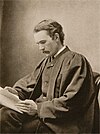
“The problem...was...how to induce the nations to disarm while they were afraid to do so, because, as Murray all too clearly perceived, "war can still be made, and there is no certainty that the nation attacked will be defended by the rest of the League". Nor were stricter and more elaborate obligations to support the League the answer...because, Murray pointed out, the present obligations were perfectly adequate, if only – if only – the members of the League lived up to them. That a man like Gilbert Murray could see so plainly the paradox on which the League of Nations was insecurely built, and yet remain the League's wholehearted supporter and propagandist, indicates how easy it was for faith in the League to blind the faithful... For the League of Nations itself the Japanese aggression raised as an urgent practical issue that fundamental question of power – military and naval power – which had so troubled Gilbert Murray in theory, but which had always been ignored or played down by most other moralising internationalists. Here was a bandit state engaged in open robbery; now therefore was the time for the law-abiding powers of the world to uphold the law against the wrongdoer; to act as policemen. Unfortunately the policemen had been persuaded to give up their truncheons.”