Link Copied!
Colin Powell Quotes (1937-2021)
President, Politician, King



-100px.jpg)





About Colin Powell
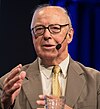
Colin Luther Powell (b. 5 April 1937– d. 18 October 2021) was an American politician, diplomat and four-star general who served as the 65th United States Secretary of State from 2001 to 2005. He was the first African-American Secretary of State. Prior to the election of Barack Obama as president in 2008, he and his successor, Condoleezza Rice, were the highest-ranking African Americans in the history of the federal executive branch (by virtue of the Secretary of State standing fourth in the presidential line of succession). He served as the 16th United States National Security Advisor from 1987 to 1989 and as the 12th Chairman of the Joint Chiefs of Staff from 1989 to 1993.
Best Colin Powell Quotes
Shortest
Earliest
Explore our curated collection of the most famous and impactful Colin Powell quotes.

“That's not really a number I'm terribly interested in.”
“Being responsible sometimes means pissing people off.”
“Every organization should tolerate rebels who tell the emperor he has no clothes.”
“Always do your very best. Even when no one else is looking, you always are. Don't disappoint yourself.”
“Leadership is the art of accomplishing more than the science of management says is possible.”

“The healthiest competition occurs when average people win by putting in above-average effort.”

“You can't make good decisions unless you have good information and can separate facts from opinion and speculation.'''”

“There can be no doubt that Saddam Hussein has biological weapons and the capability to rapidly produce more, many more.”
“There are no secrets to success. It is the result of preparation, hard work and learning from failure.”


“There is only one China. Taiwan is not independent. It does not enjoy sovereignty as a nation, and that remains our policy, our firm policy.”

“We want to see both sides not take unilateral action that would prejudice an eventual outcome, a reunification that all parties are seeking.”
“I wonder what will happen if we put half a million troops on the ground, and scour Iraq from one corner to the other, and find no weapons of mass destruction?”
“There's also a dark vein of intolerance in some parts of the party. What do I mean by that? What I mean by that is they still sort of look down on minorities.”
“If you are going to achieve excellence in big things, you develop the habit in little matters. Excellence is not an exception, it is a prevailing attitude.”
“If I were a member of Congress, I would not vote for the proposed amendment and would fully understand and respect the views of those who would. For or against, we all love our flag with equal devotion.”
“The United Nations will spearhead our efforts to manage the new conflicts (that afflict our world)....Yes the principles of the United Nations Charter are worth our lives, our fortunes, and our sacred honor.”

“The information I presented to the U.N. was vetted by the CIA. Every word came from the CIA. And they stood behind all that information.
(From a 2009 interview by Sam Husseini of the Institute for Public Accuracy )”
(From a 2009 interview by Sam Husseini of the Institute for Public Accuracy )”
“Americans revere their flag as a symbol of the Nation. Indeed, it is because of that reverence that the amendment is under consideration. Few countries in the world would think of amending their Constitution for the purpose of protecting such a symbol.”

“If a [helicopter] spotted a peasant in black pajamas who looked remotely suspicious, a possible MAM, the pilot would circle and fire in front of him. If he moved, his movement was judged evidence of hostile intent, and the next burst was not in front, but at him.”
“Nothing was spun to me... What really upset me more than anything else was that there were people in the intelligence community that had doubts about some of this sourcing, but those doubts never surfaced up to us. (Powell told David Frost in a BBC television interview)”

“Many of my generation, the career captains, majors, and lieutenant colonels seasoned in that war [Vietnam], vowed that when our turn came to call the shots, we would not quietly acquiesce in halfhearted warfare for half-baked reasons that the American people could not understand.”

“As you will see, there are no conclusions or recommendations, just my observations. The chapters are freestanding. You can read them straight through or jump in anywhere. Everyone has life lessons and stories. These are mine. All I can say is that they worked for me.”
“Dear Senator Leahy, thank you for your recent letter asking my views on the proposed flag protection amendment. I love our flag, our Constitution and our country with a love that has no bounds. I defended all three for 35 years as a soldier and was willing to give my life in their defense.”
“I wouldn't characterize it the way Larry has, calling it a cabal... what Larry is suggesting in his comments is that very often maybe Mr. Rumsfeld and Vice President Cheney would take decisions in to the president that the rest of us weren't aware of. That did happen, on a number of occasions.”

“We are rightfully outraged when anyone attacks or desecrates our flag. Few Americans do such things and when they do they are subject to the rightful condemnation of their fellow citizens. They may be destroying a piece of cloth, but they do no damage to our system of freedom which tolerates such desecration.”
“I believe that when you first take over a new outfit, start out trusting the people there unless you have real evidence not to. If you trust them, they will trust you, and those bonds will strengthen over time. They will work hard to make sure you do well. They will protect you and cover you. They will take care of you.”

“The people had fled at our approach, except for an old woman too feeble to move... We burned down the thatched huts, starting the blaze with Ronson and Zippo cigarette lighters... [because] Ho Chi Minh had said the people were like the sea in which his guerrillas swam... We tried to solve the problem by making the whole sea uninhabitable.”

“Verified facts don't always come pure, but with qualifiers. My warning radar always goes on alert when qualifiers are attached to facts. Qualifiers like: My best judgement... I think... As best I can tell... Usually reliable sources say... For the most part... We've been told... and the like. I don't dismiss facts so qualified; but I'm cautious about taking them to the bank.”
“Capital is a coward. It flees from corruption and bad policies, conflict and unpredictability. It shuns ignorance, disease and illiteracy. Capital goes where it is welcomed and where investors can be confident of a return on the resources they have put at risk. It goes to countries where women can work, children can read, and entrepreneurs can dream.”
“In the "heat of battle"- whether military or corporate- kindness, like calmness, reassures followers and holds their confidence. Kindness connects you with other human beings in a bond of mutual respect. If you care for your followers and show them kindness, they will reciprocate and care for you. They will not let you down or let you fail. They will accomplish whatever you have put in front of them.”

“Facts are verified information that is then presented as objective reality. The rub here is the verified part. How do you verify verified? Facts are slippery, and so is verification. Today's verification may not be tomorrow's. It turns out that facts may not really be facts; they can change as the verification changes; they may only tell part of the story, not the whole story; or they may be so qualified by verifiers that they're empty of information.”

“It is the human gesture that counts. Yes, medals, stock options, promotions, bonuses, and pay raises are fine. But to really reach people, you need to touch them. A kind word, a pat on the back, a "well done," provided one-on-one and not by mob email is the way you share credit. It is the way you appeal to the dreams, inspirations, anxieties, and fears of your followers. They want to be the best they can be; a good leader lets them know it when they are.”
“Whenever I'm faced with a difficult choice, my approach has always been to make an estimate of the situation- a familiar military process. What's the situation? What's the mission? What are the different courses of action? Which looks most likely to succeed? Now, follow your informed instinct, decide, and execute forcefully; throw the mass of your forces and energy behind the choice. Then take a deep breath and hope it works, remembering that "hope is a bad supper, but makes a good breakfast."”
“When I was a young second lieutenant, I loved my job. I loved the Army. I put everything I had into doing the job well. And I was content. Nothing was promised, and I had few expectations. Count on maybe becoming a lieutenant colonel and retiring with twenty years of service at half pay, I was told. Just be thankful for anything that comes after that and thank your soldiers for making it happen. If you hit the walls of the pyramid, find satisfaction there. Be happy with that prospect. And I was.”

“The policies — determining who would be drafted and who would be deferred, who would serve and who would escape, who would die and who would live — were an antidemocratic disgrace ... I am angry that so many of the sons of the powerful and well placed ... managed to wangle slots in reserve and National Guard units. Of the many tragedies of Vietnam, this raw class discrimination strikes me as the most damaging to the ideal that all Americans are created equal and owe equal allegiance to their country.”
“But leaders are not gods. Their understanding is never totally clear, totally accurate, totally certain. Every leader is human... imperfectly human. Water-walkers sometimes fail, and quiet walkers sometimes end up on top. Leaders need to watch all their subordinate; work with all of them, encourage the hotshots, but invest in the others. Always be prepared to change your mind, however firmly made up, when dealing with those infinitely faceted beings we call people. The leader must never forget that he may end up working for one of them.”
“I understand how strongly so many of my fellow veterans and citizens feel about the flag and I understand the powerful sentiment in state legislatures for such an amendment. I feel the same sense of outrage. But I step back from amending the Constitution to relieve that outrage. The First Amendment exists to insure that freedom of speech and expression applies not just to that with which we agree or disagree, but also that which we find outrageous. I would not amend that great shield of democracy to hammer a few miscreants. The flag will be flying proudly long after they have slunk away.”
“The sanctions exist — not for the purpose of hurting the Iraqi people, but for the purpose of keeping in check Saddam Hussein's ambitions toward developing weapons of mass destruction ... And frankly they have worked. He has not developed any significant capability with respect to weapons of mass destruction. He is unable to project conventional power against his neighbors. So in effect, our policies have strengthened the security of the neighbors of Iraq.”
“Success ultimately rests on small things, lots of small things. Leaders have to have a feel for small things — a feel for what is going in in the depths of an organization where small things reside. The more senior you become, the more you are isolated by pomp and staff, and the harder and more necessary it becomes to know what is going on six floors down. One way is to leave the top floor and its grand accoutrements and get down into the bowels for real. Don't tell anyone you are coming. Avoid advance notices that produce crash cleanups, frantic preparations, and PowerPoint presentations.”

“When things go badly, it is your fault, not theirs. You are responsible. Analyze how it happened, make the necessary fixes, and move on. No mass punishments or floggings. Fire people if you need to, train harder, insist on a higher level of performance, give halftime rants if that shakes a group up. But never forget that failure is your responsibility. Share the credit, take the blame, and quietly find out and fix things that went wrong. A psychotherapist who owned a school for severely troubled kids had a rule: "Whenever you place the cause of one of your actions outside yourself, it's an excuse and not a reason." This rule works for everybody, but it works especially for leaders.”
“Naysayers are everywhere. They feel it's the safest position to be in. It's the easiest armor to wear... And they may be right in their negativity; reality may be on their side. But chances are very good that it's not. You can only use their naysaying as one line in the spectrum of inputs to your decision. Listen to everyone you need to, and then go with your fearless instinct. Each of us must work to become a hardheaded realist, or else we risk wasting our time and energy pursuing impossible dreams. Yet constant naysayers pursue no less impossible dreams. Their fear and cynicism move nothing forward. They kill progress. How many cynics built empires, great cities, or powerful corporations?”
“In the Army, we are measured constantly and exhaustively. We get evaluation reports annually and every time we change jobs or our supervisor changes jobs. Our immediate supervisor evaluates us. So does our next higher superior, and his evaluation compares us with all our peers who serve under him. Our school performance is graded. Our spouses are silently observed. Our careers are obsessively examined and managed. The reason is simple and obvious. We do not hire from outside. If we need a battalion commander fifteen years from now, we have to grow one now from a promising new second lieutenant. Sergeants major are not hired in from Walmart or Hertz. It takes many years to grow them from basic training recruits.”
“Far from being the Great Satan, I would say that we are the Great Protector. We have sent men and women from the armed forces of the United States to other parts of the world throughout the past century to put down oppression. We defeated Fascism. We defeated Communism. We saved Europe in World War I and World War II. We were willing to do it, glad to do it. We went to Korea. We went to Vietnam. All in the interest of preserving the rights of people.
And when all those conflicts were over, what did we do? Did we stay and conquer? Did we say, "Okay, we defeated Germany. Now Germany belongs to us? We defeated Japan, so Japan belongs to us"? No. What did we do? We built them up. We gave them democratic systems which they have embraced totally to their soul. And did we ask for any land? No, the only land we ever asked for was enough land to bury our dead. And that is the kind of nation we are.”
And when all those conflicts were over, what did we do? Did we stay and conquer? Did we say, "Okay, we defeated Germany. Now Germany belongs to us? We defeated Japan, so Japan belongs to us"? No. What did we do? We built them up. We gave them democratic systems which they have embraced totally to their soul. And did we ask for any land? No, the only land we ever asked for was enough land to bury our dead. And that is the kind of nation we are.”

“Don't get me wrong. I don't look down on intelligence gatherers, and I don't mean to condemn any specific intelligence staff or the intelligence community. It's a hard, stressful, vitally necessary job. During my career I've worked with intelligence agencies and experts of every kind, from a young lieutenant, battalion-level intelligence officer to all sixteen branches of the U.S. intelligence community. With rare exceptions, intelligence analysts do all they can to give you the information and facts you need to understand the enemy and the situation and come up with the best decision. I found over the years that my intelligence staffs told the best story when I worked with them as they were putting it together. I questioned them constantly; I sent written analyses back, loaded with scribbles in the margins; I challenged them to defend their analyses. Staffs appreciated the challenge. They wanted to get the story right as much as I did.”
“My heart grieves when I think about the situation in the Middle East. I've worked very hard on this for two years, and for years before that. But trust is broken down. We have to do everything we can in our power — all of us, the United States, the European Union, any other nation that has the ability to influence the situation in the Middle East — to work with the Palestinians to put in place a leadership that is responsible, with representative institutions of government that will clamp down on terrorism, that will say to its people, "Terrorism is not getting us anywhere. It is not producing what we want: a Palestinian state. It is keeping us away from a Palestinian state."
And we also have to say to our Israeli friends that you have to do more to deal with the humanitarian concerns of the Palestinian people, and you have to understand that a Palestinian state, when it's created, must be a real state, not a phony state that's diced into a thousand different pieces.”
And we also have to say to our Israeli friends that you have to do more to deal with the humanitarian concerns of the Palestinian people, and you have to understand that a Palestinian state, when it's created, must be a real state, not a phony state that's diced into a thousand different pieces.”

“There is nothing in American experience or in American political life or in our culture that suggests we want to use hard power. But what we have found over the decades is that unless you do have hard power — and here I think you're referring to military power — then sometimes you are faced with situations that you can't deal with.
I mean, it was not soft power that freed Europe. It was hard power. And what followed immediately after hard power? Did the United States ask for dominion over a single nation in Europe? No. Soft power came in the Marshall Plan. Soft power came with American GIs who put their weapons down once the war was over and helped all those nations rebuild. We did the same thing in Japan.
So our record of living our values and letting our values be an inspiration to others I think is clear. And I don't think I have anything to be ashamed of or apologize for with respect to what America has done for the world.
We have gone forth from our shores repeatedly over the last hundred years and we've done this as recently as the last year in Afghanistan and put wonderful young men and women at risk, many of whom have lost their lives, and we have asked for nothing except enough ground to bury them in, and otherwise we have returned home to seek our own, you know, to seek our own lives in peace, to live our own lives in peace. But there comes a time when soft power or talking with evil will not work where, unfortunately, hard power is the only thing that works.”
I mean, it was not soft power that freed Europe. It was hard power. And what followed immediately after hard power? Did the United States ask for dominion over a single nation in Europe? No. Soft power came in the Marshall Plan. Soft power came with American GIs who put their weapons down once the war was over and helped all those nations rebuild. We did the same thing in Japan.
So our record of living our values and letting our values be an inspiration to others I think is clear. And I don't think I have anything to be ashamed of or apologize for with respect to what America has done for the world.
We have gone forth from our shores repeatedly over the last hundred years and we've done this as recently as the last year in Afghanistan and put wonderful young men and women at risk, many of whom have lost their lives, and we have asked for nothing except enough ground to bury them in, and otherwise we have returned home to seek our own, you know, to seek our own lives in peace, to live our own lives in peace. But there comes a time when soft power or talking with evil will not work where, unfortunately, hard power is the only thing that works.”

“I'm also troubled by, not what Senator McCain says, but what members of the party say. And it is permitted to be said such things as, "Well, you know that Mr. Obama is a Muslim." Well, the correct answer is, he is not a Muslim, he's a Christian. He's always been a Christian. But the really right answer is, what if he is? Is there something wrong with being a Muslim in this country? The answer's no, that's not America. Is there something wrong with some seven-year-old Muslim-American kid believing that he or she could be president? Yet, I have heard senior members of my own party drop the suggestion, "He's a Muslim and he might be associated terrorists." This is not the way we should be doing it in America.
I feel strongly about this particular point because of a picture I saw in a magazine. It was a photo essay about troops who are serving in Iraq and Afghanistan. And one picture at the tail end of this photo essay was of a mother in Arlington Cemetery, and she had her head on the headstone of her son's grave. And as the picture focused in, you could see the writing on the headstone. And it gave his awards — Purple Heart, Bronze Star — showed that he died in Iraq, gave his date of birth, date of death. He was 20 years old. And then, at the very top of the headstone, it didn't have a Christian cross, it didn't have the Star of David, it had crescent and a star of the Islamic faith. And his name was Kareem Rashad Sultan Khan, and he was an American. He was born in New Jersey. He was 14 years old at the time of 9/11, and he waited until he can go serve his country, and he gave his life. Now, we have got to stop polarizing ourself in this way.”
I feel strongly about this particular point because of a picture I saw in a magazine. It was a photo essay about troops who are serving in Iraq and Afghanistan. And one picture at the tail end of this photo essay was of a mother in Arlington Cemetery, and she had her head on the headstone of her son's grave. And as the picture focused in, you could see the writing on the headstone. And it gave his awards — Purple Heart, Bronze Star — showed that he died in Iraq, gave his date of birth, date of death. He was 20 years old. And then, at the very top of the headstone, it didn't have a Christian cross, it didn't have the Star of David, it had crescent and a star of the Islamic faith. And his name was Kareem Rashad Sultan Khan, and he was an American. He was born in New Jersey. He was 14 years old at the time of 9/11, and he waited until he can go serve his country, and he gave his life. Now, we have got to stop polarizing ourself in this way.”

Colin Powell Quotes by Topic
Find exactly what you are looking for by browsing this categorized list of Colin Powell quotes by topic.
Colin Powell on Leadership 6 quotes
“Leadership is the art of accomplishing more than the science of management says is possible.”
Colin Powell on United States 3 quotes
“I love our flag, our constitution, and our country, with a love that has no bounds. I defended all three for 35 years as a soldier and was willing to give my life in their defense. Americans revere their flag as a symbol of the nation.”

Colin Powell on Taiwan 2 quotes
“There is only one China. Taiwan is not independent. It does not enjoy sovereignty as a nation, and that remains our policy, our firm policy.”

Colin Powell on Foreign policy of the United States 2 quotes
“There is only one China. Taiwan is not independent. It does not enjoy sovereignty as a nation, and that remains our policy, our firm policy.”

Colin Powell on United States Armed Forces 2 quotes
“I love our flag, our Constitution and our country with a love that has no bounds. I defended all three for 35 years as a soldier and was willing to give my life in their defense.”

What Colin Powell Said About Others
Discover personal opinions Colin Powell shared regarding contemporaries.
Colin Powell on George C. Marshall 2 quotes
“The quiet power of the man lay in his utter selflessness. It lay in the dignity that emerges from every photograph you've ever seen of him. It lay in his hard work and his immense personal sacrifice. It lay in his compassion, his wisdom. George Marshall practically defined those virtues. Yet he would have thought it odd if you had tried to congratulate him for these things. To him, those virtues were simply expected of a citizen of this country.”

Colin Powell on Hillary Clinton
“Everything HRC touches she kind of screws up with hubris.”

Colin Powell on Karl Popper
“Leadership is solving problems. The day soldiers stop bringing you their problems is the day you have stopped leading them. They have either lost confidence that you can help or concluded you do not care. Either case is a failure of leadership.”
Colin Powell on Lawrence Wilkerson
“I wouldn't characterize it the way Larry has, calling it a cabal...Now what Larry is suggesting in his comments is that very often maybe Mr. Rumsfeld and Vice President Cheney would take decisions in to the president that the rest of us weren't aware of. That did happen, on a number of occasions.”

Quotes About Colin Powell
Gain deeper perspective through quotes about Colin Powell from others.
Medea Benjamin on Colin Powell
“During the transition to the new Clinton administration, Madeleine Albright famously asked Gen. Colin Powell, then chair of the Joint Chiefs of Staff, "What's the point of having this superb military you're always talking about if we can't use it?"”

Judith Butler Interview on Colin Powell
“There was a brief moment after 9/11 when Colin Powell said “we should not rush to satisfy the desire for revenge.” It was a great moment, an extraordinary moment, because what he was actually asking people to do was to stay with a sense of grief, mournfulness, and vulnerability.”
Ann Coulter on Colin Powell
“After touring the South, General Colin Powell concluded that there was no impediment to a black being elected president in America, noting that he received his strongest support from white Southerners.”

Breaking Ranks Larry Wilkerson Attacked the Iraq War. In the Process, He Lost the Friendship of Colin Powell. on Colin Powell
“Why didn't the doubts reach Powell? Perhaps because then he wouldn't have given the speech at all? "That's right," Wilkerson says, shooting a hard, solemn stare across the restaurant table. "That's right." He also says, "I am prepared to entertain the idea that they used him."”
Lawrence Wilkerson on Colin Powell
“I can tell you that having been intimately involved in the preparation of Secretary Powell for his five February 2003 presentation at the UN Security Council, neither of those dissents in any fashion or form were registered with me or the Secretary by the DCI, George Tenent, by the DDCI, John McLaughlin, or by any of their many analysts who were in the room with us for those five, six days and nights at the Central Intelligence Agency... In fact it was presented in the firmest language possible that the mobile biological labs and the sketches we had drawn of them for the Secretary's presentation were based on the iron clad evidence of multiple sources.”
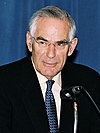



About Colin Powell
Colin Luther Powell (b. 5 April 1937– d. 18 October 2021) was an American politician, diplomat and four-star general who served as the 65th United States Secretary of State from 2001 to 2005. He was the first African-American Secretary of State. Prior to the election of Barack Obama as president in 2008, he and his successor, Condoleezza Rice, were the highest-ranking African Americans in the history of the federal executive branch (by virtue of the Secretary of State standing fourth in the presidential line of succession). He served as the 16th United States National Security Advisor from 1987 to 1989 and as the 12th Chairman of the Joint Chiefs of Staff from 1989 to 1993.