Clement Attlee on Stanley Baldwin
← Back to Clement Attlee Profile
“I believe I am voicing the feelings of all hon. Members irrespective of party when I say that we all greatly regret his departure from our midst... [I]t is the hope of all of us that he may long be spared to enjoy health and happiness and the rest and the leisure which he has amply earned. This is not the occasion on which to attempt any appraisal of his work as a statesman and public man; it is, indeed, unfinished. Future historians will, no doubt, disagree, as we in this House disagree, about the merits or demerits of his policy and his actions, but I am certain they will be at one in acclaiming him as a great parliamentarian who possessed in a singular degree the faculty of judging the temper of this House and responding to its mood. They will, I think, also recall him as one who inspired affection as a man even in those who were opposed to him as a politician.”
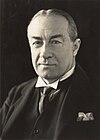
“I always felt myself, when he was speaking, that although he disagreed with us, he understood better than any man on the other side, the reasons and emotions that inspired our actions. In this understanding I think his earlier experience helped. On the one hand, his family connections with a circle that included William Morris, on the other, his work as one of the heads of a great industrial enterprise, gave him a broad outlook... He had a keen sense of duty to the country that he loved so well. He had a high sense of social obligation... He had a vision of the Britain he wanted to see. He was, I think, nostalgic for the past; he looked back with regret to the past when relationships between employer and worker were more personal than is generally the case today. I recall him telling me once that when his men were on strike, he took care that the women and children should have food... [H]e appeared to be in many ways a typical Englishman alike in his virtues and his failings. I was for many years his political opponent, but I always regarded him not only with respect but with affection, and I enjoyed those friendly personal relations which we cherish in our political life.”